Results by title
71 books match the query 'Cancer' and 6 start with f
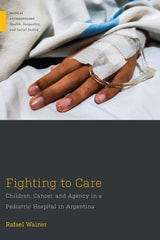
Fighting to Care
Children, Cancer, and Agency in a Pediatric Hospital in ArgentinaRafael Wainer
Rutgers University Press, 2027
Fighting to Care explores the lived experiences of children with pediatric blood cancer in Argentina, centering the struggles to care from the moment a child is labelled as experiencing "strangeness in the blood.” The book focuses on the notion of "permeable bodies" to understand children’s corporeal and subjective dynamic experience of cancer treatment and interpersonal care. Despite their vulnerability, throughout the course of demanding treatment, children display significant agency, actively navigating their medical journeys through various forms of communication and action. Fighting to Care also highlights the collective forms of care and the personal and interpersonal pain experienced by children, their families, and healthcare professionals in contexts of urgency and against health bureaucracies. In Argentina, caregiving, that is, fighting to care, is deeply intertwined with fighting for health rights within a public healthcare system that, while historically universal and free, is complex and impacted by recurring economic crises and social inequalities.
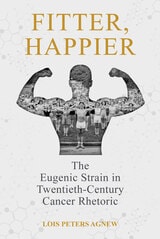
Fitter, Happier
The Eugenic Strain in Twentieth-Century Cancer RhetoricLois Peters Agnew
University of Alabama Press, 0
A critical investigation into how eugenic logics quietly animated twentieth‑century cancer rhetoric, reshaping cultural narratives of health, risk, and human worth.
Fitter, Happier: The Eugenic Strain in Twentieth-Century Cancer Rhetoric is a thought-provoking exploration of the relationship between cancer rhetoric, American ideals, and eugenic influences in the twentieth century. This groundbreaking work delves into the paradoxical interplay between acknowledging the genuine threat of cancer and the ingrained American ethos of confidence and control.
Agnew’s meticulous research traces the topic’s historical context, unveiling how cancer discourses evolved from a hushed personal concern to a public issue thanks to the rise of cancer research centers and advocacy organizations. However, she unearths a troubling dimension to these discussions—subtle yet persistent eugenic ideologies that taint cancer arguments and advocacy groups. By dissecting prevailing cancer narratives, Agnew brings into focus how ideals rooted in eliminating imperfections and embracing progress converge with concerns for safeguarding societal fitness.
Fitter, Happier scrutinizes the military origins and metaphors that permeate government policies and medical research, the transformation of cancer’s association with melancholy into a rallying cry for a positive outlook, and the nuanced implications of prevention-focused dialogues. Reflecting on the varied experiences of actual cancer patients, Agnew resists the neat assimilation of these stories into a eugenic framework. Agnew’s insights prompt readers to contemplate the societal meanings of disease and disability as well as how language constructs our shared reality.
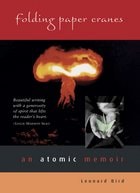
Folding Paper Cranes
An Atomic MemoirLeonard Bird
University of Utah Press, 2005
Among the monuments to tragedy and hope in Hiroshima’s Peace Park stands a statue of Sadako Sasaki holding a crane in her outstretched arms. Sadako was two years old when the atomic bomb was dropped on her city; she was diagnosed with leukemia ten years later. According to popular Japanese belief, folding a thousand paper cranes brings good fortune. Sadako spent the last months of her young life folding hundreds of paper cranes. She folded 644 before she died.
As he journeys from the Geiger counters, radioactive dust, and mushroom clouds of the Nevada desert to the bronze and ivory memorials for the dead in Japan, Bird—himself a survivor of radiation-induced cancer—seeks to make peace with his past and with a future shadowed by nuclear proliferation. His paper cranes are the poetry and prose of this haunting memoir.
Fractured Borders
Reading Women's Cancer LiteratureMary K. DeShazer
University of Michigan Press, 2010
Fractured Borders: Reading Women's Cancer Literature surveys a wide range of contemporary writing about breast, uterine, and ovarian cancer, including works by Marilyn Hacker, Margaret Edson, Carole Maso, Audre Lorde, Eve Sedgwick, Mahasweta Devi, Lucille Clifton, Alicia Ostriker, Jayne Anne Phillips, Terry Tempest Williams, and Jeanette Winterson, among many others. DeShazer's readings bring insights from body theory, performance theory, feminist literary criticism, French feminisms, and disability studies to bear on these works, shining new light on a literary subject that is engaging more and more writers.
"An important and useful book that will appeal to people in a variety of fields and walks of life, including scholars, teachers, and anyone interested in this subject."
--Suzanne Poirier, University of Illinois at Chicago
"A book on a timely and important topic, wisely written beyond scholarly boundaries and crossing many theoretical and disciplinary lines."
--Patricia Moran, University of California, Davis
Freddie Steinmark
Faith, Family, FootballBy Bower Yousse and Thomas J. Cryan
University of Texas Press, 2015
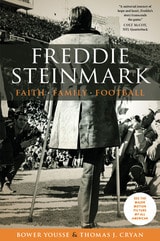
Freddie Steinmark tells the story of a legendary University of Texas football player whose courage on the field and in battling cancer still inspires the Longhorn nation.
Freddie Steinmark started at safety for the undefeated University of Texas Longhorns in 1969. In the thrilling “Game of the Century,” a come-from-behind victory against Arkansas that ensured Texas the national championship, Steinmark played with pain in his left leg. Two days later, X-rays revealed a bone tumor so large that it seemed a miracle Steinmark could walk, let alone play football. Within a week of the Arkansas game, his leg was amputated.
A gritty, undersized player, Steinmark had quickly become a fan favorite at Texas. What he endured during the Longhorns’ memorable 1969 season, and what he encountered afterward, captivated not only Texans but the country at large. Americans watched closely as Steinmark confronted life’s ultimate challenge, and his openness during his battle against savage odds helped reframe the national conversation surrounding cancer and the ongoing race for a cure.
Written with unfettered access to the Steinmark family and archives, Freddie Steinmark: Faith, Family, Football is the exploration of a brief but full life, one that began humbly but ended on a grand stage. It is a fitting tribute to a legendary Longhorn whose photograph, emblazoned with the word “Heart,” flashes on the Freddie Steinmark Scoreboard’s Jumbotron prior to each home football game in UT’s Darrell K Royal–Texas Memorial Stadium at Joe Jamail Field.
From Pink to Green
Disease Prevention and the Environmental Breast Cancer MovementLey, Barbara L
Rutgers University Press, 2009
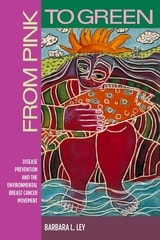
Challenging the broader cultural milieu of pink ribbon symbolism and breast cancer "awareness" campaigns, this movement has grown from a handful of community-based organizations into a national entity, shaping the cultural, political, and public health landscape. Much of the activists' everyday work revolves around describing how the so called "cancer industry" downplays possible environmental links to protect their political and economic interests and they demand that the public play a role in scientific, policy, and public health decision-making to build a new framework of breast cancer prevention.
From Pink to Green successfully explores the intersection between breast cancer activism and the environmental health sciences, incorporating public and scientific debates as well as policy implications to public health and environmental agendas.