Results by title
975 books match the query 'Case studies' and 33 start with f
Faculty Brat
A Memoir of AbuseDominic Bucca
University of Iowa Press, 2020
At the most prestigious preparatory schools in the United States, the children of educators are referred to as “faculty brats.” Though generally lacking the privilege of the institution’s wealthy students, faculty brats enjoy access to the school’s extensive grounds and facilities and are part of everyday campus life.
Dominic Bucca’s art teacher mother married his music teacher stepfather twice, and the young boy wondered if the union might be twice as strong as a result. Instead, this faculty brat quickly discovered that the marriage was twice as flawed. When Dominic was nine years old, his stepfather began sexually abusing him in the faculty housing attached to the boys’ dorm his parents oversaw. Years later, he found escape by reaching out to his biological father, and learned to split his life between two realities.
For nearly twenty-five years, Bucca hid the secret of his stepfather’s abuse from his mother and sisters. When he decided to tell, hoping to prevent his stepfather from continuing to teach young boys, Bucca discovered the limits of both his family and the legal system.
Failed States and Fragile Societies
A New World Disorder?Ingo Trauschweizer
Ohio University Press, 2014
Since the end of the Cold War, a new dynamic has arisen within the international system, one that does not conform to established notions of the state’s monopoly on war. In this changing environment, the global community must decide how to respond to the challenges posed to the state by military threats, political and economic decline, and social fragmentation. This insightful work considers the phenomenon of state failure and asks how the international community might better detect signs of state decay at an early stage and devise legally and politically legitimate responses.
This collection of essays brings military and social historians into conversation with political and social scientists and former military officers. In case studies from the former Yugoslavia, Somalia, Iraq, and Colombia, the distinguished contributors argue that early intervention to stabilize social, economic, and political systems offers the greatest promise, whereas military intervention at a later stage is both costlier and less likely to succeed.
Contributors: David Carment, Yiagadeesen Samy, David Curp, Jonathan House, James Carter, Vanda Felbab-Brown, Robert Rotberg, and Ken Menkhaus.
Faith and Community
How Engagement Strengthens Members, Places of Worship, and SocietyRebecca A. Glazier
Temple University Press, 2024
Faith and Community shows the benefits of religious people taking action in their communities. Through more than a decade of multi-method data collection, Rebecca Glazier surveyed over 4,000 congregants and nearly 500 clergy in Little Rock, Arkansas to gather opinions from members and leaders on community issues and engagement. Together with interviews and case studies, her findings indicate that active congregants are happier and more civically involved.
Faith and Community provides valuable insights into the relationship between religion and community engagement. The data illustrates how community engagement benefits individuals, congregations, and democracy and offers one solution to what ails religion in America today.
Familial Undercurrents
Untold Stories of Love and Marriage in Modern IranAfsaneh Najmabadi
Duke University Press, 2022

Family Fantasies and Community Space
Aitken, Stuart C
Rutgers University Press, 1998
Family forms are changing rapidly in Western society, and with them, the microenvironments within which men, women, and children live together. Stuart Aitken argues that, whether environment is taken as physical space or as a metaphor for the social, economic, and psychological basis of families, there remains a tendency to keep defining the meaning of families and communities in terms of older, traditional, "imagined," and idealized structures of politics, gender, and geography.
Using the stories of several families in San Diego, Aitken describes geographies of everyday life that contest definitions of cities and communities as mosaics reflecting patterns of social relations. He begins inside the family circle, looking at patriarchal power and the subordination of women, men, and children. Moving beyond the household, he then stresses the importance of place in defining the social and political character of communities and families' interplay within them--whether "communities" are viewed as neighborhoods, towns, or organizations that provide space for fellowship and common purpose. In turn, he shows that as the individual child reaches beyond family life to find a place in these communities, political cultures are reproduced through the child.
Aitken suggests ways in which individual and family identities are complexly intertwined with the cultural politics of communities, cities, and regions. He concludes that family and community spaces reproduce and reconstruct themselves daily according to divisions of race, class, gender, and differential access to housing, work, and child-care.

Family Fortunes
Men and Women of the English Middle Class, 1780-1850Leonore Davidoff and Catherine Hall
University of Chicago Press, 1987
"The book explores how the middle class constructed its own institutions, material culture and values during the industrial revolution, looking at two settings—urban manufacturing Birmingham and rural Essex—both centers of active capitalist development. The use of sources is dazzling: family business records, architectural designs, diaries, wills and trusts, newspapers, prescriptive literature, sermons, manuscript census tracts, the papers of philanthropic societies, popular fiction, and poetry.
"Family Fortunes occupies a place beside Mary Ryan's The Cradle of the Middle Class and Suzanne Lebsock's Free Women of Petersburg. It provides scholars with a definitive study of the middle class in England, and facilitates a comparative perspective on the history of middle-class women, property, and the family."—Judith Walkowitz, Johns Hopkins University
Famine in the Remaking
Food System Change and Mass Starvation in Hawaii, Madagascar, and CambodiaStian Rice
West Virginia University Press, 2020
Famine in the Remaking examines the relationship between the reorganization of food systems and large-scale food crises through a comparative historical analysis of three famines: Hawaii in the 1820s, Madagascar in the 1920s, and Cambodia in the 1970s. This examination identifies the structural transformations—that is, changes to the relationships between producers and consumers—that make food systems more vulnerable to failure. Moving beyond the economic and political explanations for food crisis that have dominated the literature, Stian Rice emphasizes important socioecological interactions, developing a framework for crisis evolution that identifies two distinct temporal phases and five different types of causal mechanisms involved in food system failure. His framework contributes to current work in famine prevention and, animated by a commitment to social justice, offers the potential for early intervention in emerging food crises.
Fantastic Antone Succeeds
Experiences in Educating Children with Fetal Alcohol SyndromeJudith Kleinfeld
University of Alaska Press, 1993
The book consists of separate chapters written in a popular and accessible style by psychologists, teachers, and birth and adoptive parents of alcohol-affected children. Many chapters are personal stories with emotional power. A birth mother, for example, tells of her anguish when she realizes that she has recovered from her own alcoholism but her daughter cannot. This mother describes how she dealt with her grief, how she told her daughter the truth, her daughter's relief at finally understanding what was wrong, and how they both developed ways of overcoming her daughter's learning problems.
Other chapters describe how experienced teachers have learned to organize classrooms where alcohol-affected children can thrive and how therapists have learned to work with parents. One chapter summarizes medical knowledge of FAS/FAE and offers information useful for understanding a child's learning and behavioral problems and devising educational approaches. The book includes lists of important resources, organizations to contact, and descriptions of effective classroom practices for teachers.
Without minimizing the seriousness of FAS/FAE and the first priority prevention, Fantastic Antone Succeeds provides practical tools and strategies that can help alcohol-affected individuals and their families lead happier, more productive lives.
Farm Boys
Lives of Gay Men from the Rural MidwestCollected and Edited by William D. Fellows
University of Wisconsin Press, 1998
“When I was fifteen, the milkman who came to get our milk was beautiful. This is when I was really getting horny to do something with another guy. I waited every day for him to come. I couldn’t even talk to him, couldn’t think of anything to say. I just stood there, watching him, wondering if he knew why.”—Henry Bauer, Minnesota
“When I go back home, I feel a real connection with the land—a tremendous feeling, spiritual in a way. It makes me want to go out into a field and take my shoes off and put my feet right on the dirt, establish a real physical connection with that place. I get homesick a lot, but I don’t know if I could ever go back there and live. It’s not the kind of place that would welcome me if I lived openly, the way that I would like to live. I would be shunned.”—Martin Scherz, Nebraska
“If there is a checklist to see if your kid is queer, I must have hit every one of them—all sorts of big warning signs. I was always interested in a lot of the traditional queen things—clothes, cooking, academics, music, theater. A farm boy listening to show tunes? My parents must have seen it coming.”—Joe Shulka, Wisconsin
“My favorite show when I was growing up was ‘The Waltons’. The show’s values comforted me, and I identified with John-Boy, the sensitive son who wanted to be a writer. He belonged there on the mountain with his family, yet he sensed that he was different and that he was often misunderstood. Sometimes I still feel like a misfit, even with gay people.”—Connie Sanders, Illinois
“Agriculture is my life. I like working with farm people, although they don’t really understand me. When I retire I want the word to get out [that I’m gay] to the people I’ve worked with—the dairy producers, the veterinarians, the feed salesmen, the guys at the co-ops. They’re going to be shocked, but their eyes are going to be opened.”—James Heckman, Indiana

Fate in My Hands
The Death Penalty in the Soviet UnionYana Skorobogatov
University of Chicago Press, 2026
A striking examination of the death penalty in the Soviet Union that documents in heart-rending detail how its citizens, hopeful for a new life post-Stalin, lost faith that their transgressions could be forgiven.
From 1954 to 1991 in the Soviet Union, nearly forty thousand citizens were executed after the death penalty was reinstated as a punishment for homicide. Fate in My Hands introduces readers to the many citizens in this period—women and men of all ages and backgrounds—who found themselves on death row and tried to escape it in the only way available to them: asking for forgiveness.
Examining the letters and objects the dead left behind, Skorobogatov recovers their voices and allows them to speak anew. She offers a striking portrait of life in the Soviet Union and the citizens who dreamed of new possibilities even as they faced their tragic end. Using a corpus of never-before-accessed criminal court records, Fate in My Hands brings readers not just into the police interrogation rooms, courthouses, and cells where the condemned awaited their fates, but into the homes, workplaces, and psychiatric hospitals where families and friends alike came together to pursue an elusive, bitter justice in the wake of violent tragedy.

Fatherhood in the Borderlands
A Daughter's Slow ApproachDomino Renee Perez
University of Texas Press, 2022
2026 Best Book Award, Association for Borderlands Studies
2023 Finalist, Best Academic Themed Book, College Level – English, International Latino Book Awards
A contemplative exploration of cultural representations of Mexican American fathers in contemporary media.
As a young girl growing up in Houston, Texas, in the 1980s, Domino Perez spent her free time either devouring books or watching films—and thinking, always thinking, about the media she consumed. The meaningful connections between these media and how we learn form the basis of Perez’s “slow” research approach to race, class, and gender in the borderlands. Part cultural history, part literary criticism, part memoir, Fatherhood in the Borderlands takes an incisive look at the value of creative inquiry while it examines the nuanced portrayal of Mexican American fathers in literature and film.
Perez reveals a shifting tension in the literal and figurative borderlands of popular narratives and shows how form, genre, and subject work to determine the roles Mexican American fathers are allowed to occupy. She also calls our attention to the cultural landscape that has allowed such a racialized representation of Mexican American fathers to continue, unopposed, for so many years. Fatherhood in the Borderlands brings readers right to the intersection of the white cultural mainstream in the United States and Mexican American cultural productions, carefully considering the legibility and illegibility of Brown fathers in contemporary media.
Federalism and Regional Development
Case Studies on the Experience in the United States and the Federal Republic of GermanyEdited by George W. Hoffman
University of Texas Press, 1981
Federalism and Regional Development is the resuit of the first German-American geography seminar, held at the University of Texas in September 1979. The chapters deal with the impact of geographic policy planning by various governmental agencies in both the Federal Republic of Germany and the United States, two countries with federal systems of government. Although various bureaucratic offices at the federal, state, county, and city levels became involved in spatial planning in both countries, no overall coordination of development planning existed. The contributors to this volume offer many theoretical and empirical perspectives on the evolution of federal policies and programs and their impact on geographic planning activities at all levels of government. The topics covered range from actual regional case studies in both countries to the framework of the agencies concerned with spatial planning. Numerous maps and tables document the data resources of the contributors and yield useful insights on the workings of the federal system.
Federalism and Social Policy
Patterns of Redistribution in 11 DemocraciesEdited by Scott L. Greer and Heather Elliott
University of Michigan Press, 2019
Feeding the Family
The Social Organization of Caring as Gendered WorkMarjorie L. DeVault
University of Chicago Press, 1991
Drawing from interviews conducted in 1982-83 in a diverse group of American households, DeVault reveals the effort and skill behind the "invisible" work of shopping, cooking, and serving meals. She then shows how this work can become oppressive for women, drawing them into social relations that construct and maintain their subordinate position in household life.

Finding Amy
A True Story of Murder in MaineJoseph K. Loughlin and Kate Clark Flora
University Press of New England, 2011
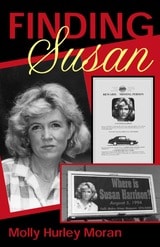
Finding Susan
Molly Hurley Moran
Southern Illinois University Press, 2006
A woman’s heartrending search for her sister
Advancing with the suspense and deft reportage of the true-crime genre and fueled by the poignancy of a literary memoir, Finding Susan is Molly Hurley Moran’s pointed exploration of the disappearance of her sister and her family’s descent into the surreal world of psychics and detectives they once dismissed as the stuff of Lifetime movies.
Susan Hurley Harrison disappeared from upscale Ruxton, Maryland on August 5, 1994. Her body was discovered in the woods of northern Maryland two years later and her death was ruled a homicide. Although Susan’s case drew substantial media attention—including a spot on Unsolved Mysteries—no one, to date, has ever been charged with her murder. In piecing together a mosaic of Susan’s final years, Moran grew to believe her sister was a victim of domestic violence.
An academic by trade, Moran employs a scholar’s precision and razor-sharp feminist analysis in this valiant effort to come to terms with Susan’s life and death and to understand her sister in a way she did not when she was alive. “Finding” Susan refers to both the search for Susan's body and the search for the formative forces of her life.
Mirroring elements of high-profile cases from Laci Peterson to Nicole Brown Simpson, Finding Susan is one woman’s chronicle of loss and remembrance that arrestingly details the helplessness experienced by families of missing persons and calls critical attention to our alarming blindness to domestic abuse. Including appendixes of domestic violence resources, Finding Susan serves as a guide for concerned family members and friends of at-risk women to help identify the warning signs of domestic abuse. Thirty-six illustrations are a powerful complement to the volume.
Finding the Movement
Sexuality, Contested Space, and Feminist ActivismFinn Enke
Duke University Press, 2007
By considering the development of feminism through an analysis of public space, Enke expands and revises the historiography of second-wave feminism. She suggests that the movement was so widespread because it was built by people who did not identify themselves as feminists as well as by those who did. Her focus on claims to public space helps to explain why sexuality, lesbianism, and gender expression were so central to feminist activism. Her spatial analysis also sheds light on hierarchies within the movement. As women turned commercial, civic, and institutional spaces into sites of activism, they produced, as well as resisted, exclusionary dynamics.
Five Steps of Outcome-Based Planning & Evaluation for Youth Services
Melissa Gross, Cindy Mediavilla, and Virginia A. Walter
American Library Association, 2022
Outcome-based planning and evaluation (OBPE), with its straightforward approach built on a flexible framework, is the perfect model to enable youth services professionals to deliver effective services regardless of uncertainties. An outcome-based approach can help youth services stay grounded in producing desired outcomes with and for youth through responsive programs, services, and processes that can adapt to changing conditions. Clarifying the relationship between planning, program development, and evaluation, the five simple steps outlined in this book will help youth services staff conduct solid community assessments and integrate OBPE into their work. Inside its pages you will learn
- a short history of OBPE and its evolution;
- why it is crucially important to involve youth in all stages of program development, with guidance on navigating challenges;
- how to think about planning as the need to react quickly, whether due to natural or human-made disasters, changing demographics, or economic swings;
- the five steps of OBPE, from gathering information about your community and determining the outcomes that will serve your community to crafting accurate outcome statements, developing an evaluation plan, and maximizing the results of successful outcome-based programs;
- how to visualize the steps needed to successfully plan, implement, and evaluate an outcome-based program, using the template included in the book;
- ways to share your data to let people know the library’s important role in the community; and
- additional useful tools to bolster your work, including environmental scan forms and ideas for creating relevant family storytimes.

Five Steps of Outcome-Based Planning and Evaluation for Public Libraries
Melissa Gross, Cindy Mediavilla, Virginia A. Walter
American Library Association, 2016

Floating Power
Energy, Infrastructure, and South-South RelationsGökçe Günel
Duke University Press, 2026
Fluid Geographies
Water, Science, and Settler Colonialism in New MexicoK. Maria D. Lane
University of Chicago Press, 2024
Maria Lane’s Fluid Geographies traces New Mexico’s transition from a community-based to an expert-led system of water management during the pre-statehood era. To understand this major shift, Lane carefully examines the primary conflict of the time, which pitted Indigenous and Nuevomexicano communities, with their long-established systems of irrigation management, against Anglo-American settlers, who benefitted from centralized bureaucratic management of water. The newcomers’ system eventually became settled law, but water disputes have continued throughout the district courts of New Mexico’s Rio Grande watershed ever since.
Using a fine-grained analysis of legislative texts and nearly two hundred district court cases, Lane analyzes evolving cultural patterns and attitudes toward water use and management in a pivotal time in New Mexico’s history. Illuminating complex themes for a general audience, Fluid Geographies helps readers understand how settler colonialism constructed a racialized understanding of scientific expertise and legitimized the dispossession of nonwhite communities in New Mexico.
Foreign Policy Rhetorics in a Global Era
Concepts and Case StudiesAllison M. Prasch
Michigan State University Press, 2024
Among the cases researched in this collection are foreign policy rhetoric from Cold War foreign policy in Latin America, the rhetoric of Vladimir Putin’s Ukraine war messages, and the development challenges of the Ford Foundation and the Kenya Women Finance Trust, among many others.
Forever Foreigners or Honorary Whites?
The Asian Ethnic Experience TodayMia Tuan
Rutgers University Press, 1999
What does it mean to be an Asian-American in the United States today? Are Asian-Americans considered "honorary whites" or forever thought of as "foreigners?"
Mia Tuan examines the salience and meaning of ethnicity for later generation Chinese- and Japanese-Americans, and asks how their concepts of ethnicity differ from that of white ethnic Americans. She interviewed 95 middle-class Chinese and Japanese Californians and analyzes the importance of ethnic identities and the concept of becoming a "real" American for both Asian and white ethnics. She asks her subjects about their early memories and experiences with Chinese/Japanese culture; current lifestyle and emerging cultural practices; experiences with racism and discrimination; and attitudes toward current Asian immigration.
Formations of Violence
The Narrative of the Body and Political Terror in Northern IrelandAllen Feldman
University of Chicago Press, 1991
"A sophisticated and persuasive late-modernist political analysis that consistently draws the reader into the narratives of the author and those of the people of violence in Northern Ireland to whom he talked. . . . Simply put, this book is a feast for the intellect"—Thomas M. Wilson, American Anthropologist
"One of the best books to have been written on Northern Ireland. . . . A highly imagination and significant book. Formations of Violence is an important addition to the literature on political violence."—David E. Schmitt, American Political Science Review
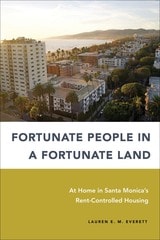
Fortunate People in a Fortunate Land
At Home in Santa Monica's Rent-Controlled HousingLauren E. M. Everett
Temple University Press, 2025
Everett seeks to understand the extent to which individuals feel at home or not at home and what factors contribute to those experiences. She also explores the nexus of Santa Monica’s tenant protection policies, infrastructure, and resources and the extent to which they inform stability—both perceived and actual—and life decisions.
The first scholarly book to take a tenant-centered approach to examining the benefits and problems of rent control, Fortunate People in a Fortunate Land examines the residential experience in this specific local context and explains how it relates to policy and other externalities in cities where homeownership is not financially viable for most renters.
In the series Urban Life, Landscape, and Policy

Franchising Dreams
The Lure of Entrepreneurship in AmericaPeter M. Birkeland
University of Chicago Press, 2002
Peter M. Birkeland worked for three years in the front-line operations of franchise units for three companies, met with CEOs and executives, and attended countless trade shows, seminars, and expositions. All this firsthand experience gave him unprecedented access to the hopes and aspirations of franchisees. His book closely traces different franchisees and follows them as their dreams of wealth and independence buckle beneath the weight of frustrating logistics and contractual technicalities. Through extensive interviews and research, Birkeland not only discovers what makes franchisees succeed or fail, he uncovers the difficulties in running a business according to someone else's system and values. Bearing witness to a market flooded with fierce competitors and dependent on the inscrutable whims of consumers, he uncovers the numerous challenges that franchisees face in making their businesses succeed.

Fray
Art and Textile PoliticsJulia Bryan-Wilson
University of Chicago Press, 2017
Closely examining how amateurs and fine artists in the United States and Chile turned to sewing, braiding, knotting, and quilting amid the rise of global manufacturing, Julia Bryan-Wilson argues that textiles unravel the high/low divide and urges us to think flexibly about what the politics of textiles might be. Her case studies from the 1970s through the 1990s—including the improvised costumes of the theater troupe the Cockettes, the braided rag rugs of US artist Harmony Hammond, the thread-based sculptures of Chilean artist Cecilia Vicuña, the small hand-sewn tapestries depicting Pinochet’s torture, and the NAMES Project AIDS Memorial Quilt—are often taken as evidence of the inherently progressive nature of handcrafted textiles. Fray, however, shows that such methods are recruited to often ambivalent ends, leaving textiles very much “in the fray” of debates about feminized labor, protest cultures, and queer identities; the malleability of cloth and fiber means that textiles can be activated, or stretched, in many ideological directions.
The first contemporary art history book to discuss both fine art and amateur registers of handmaking at such an expansive scale, Fray unveils crucial insights into how textiles inhabit the broad space between artistic and political poles—high and low, untrained and highly skilled, conformist and disobedient, craft and art.
From Cuenca to Queens
An Anthropological Story of Transnational MigrationBy Ann Miles
University of Texas Press, 2004
Transnational migration is a controversial and much-discussed issue in both the popular media and the social sciences, but at its heart migration is about individual people making the difficult choice to leave their families and communities in hopes of achieving greater economic prosperity. Vicente Quitasaca is one of these people. In 1995 he left his home in the Ecuadorian city of Cuenca to live and work in New York City. This anthropological story of Vicente's migration and its effects on his life and the lives of his parents and siblings adds a crucial human dimension to statistics about immigration and the macro impact of transnational migration on the global economy.
Anthropologist Ann Miles has known the Quitasacas since 1989. Her long acquaintance with the family allows her to delve deeply into the factors that eventually impelled the oldest son to make the difficult and dangerous journey to the United States as an undocumented migrant. Focusing on each family member in turn, Miles explores their varying perceptions of social inequality and racism in Ecuador and their reactions to Vicente's migration. As family members speak about Vicente's new, hard-to-imagine life in America, they reveal how transnational migration becomes a symbol of failure, hope, resignation, and promise for poor people in struggling economies. Miles frames this fascinating family biography with an analysis of the historical and structural conditions that encourage transnational migration, so that the Quitasacas' story becomes a vivid firsthand illustration of this growing global phenomenon.
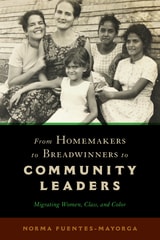
From Homemakers to Breadwinners to Community Leaders
Migrating Women, Class, and ColorNorma Fuentes-Mayorga
Rutgers University Press, 2022
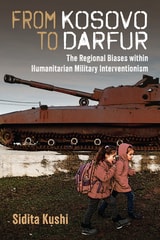
From Kosovo to Darfur
The Regional Biases within Humanitarian Military InterventionismSidita Kushi
University of Michigan Press, 2025
Using in-depth case studies and new data on all post–Cold War internal armed conflicts matched to third-party responses, From Kosovo to Darfur offers the first regionally sensitive analysis of humanitarian military intervention since the end of the Cold War. It shows that international military interventions in the context of acute humanitarian crises are driven by different pathways within the Western versus the non-Western world and fueled by elite perceptions of the crisis, making interventions closer to the geographic and cultural West most probable and most intense. As our international community becomes increasingly interdependent and aware of human suffering across borders, From Kosovo to Darfur points to new pathways of conflict trajectories and reveals vital implications for leaders, scholars, and nongovernmental actors advocating for or against international military intervention as a policy choice.
From Peones to Politicos
Class and Ethnicity in a South Texas Town, 1900–1987By Douglas E Foley, with Clarice Mota, Donald E. Post, and Ignacio Lozano
University of Texas Press, 1988
How does a relatively powerless ethnic group deal with the problems of economic inequality and racial discrimination? How do they gain power in the community? From Peones to Politicos examines these questions in detail, focusing on the changes in Mexicano-Anglo relations in one small South Texas community called North Town. These changes are typical of evolving Mexicano-Anglo relations in much of Texas and the Southwest.
The authors divide their study into three historical periods: the rancho era (1900–1930), the colonia era (1930–1970), and the contemporary period (1970–1977). They trace how Mexicano-Anglo relations have evolved away from the extremely exploitative, paternalistic sharecropper system of the rancho era, when open racism, strict social segregation, and effective Anglo political machines prevailed. They reveal, by contrast, how Mexicanos have become a power to be reckoned with by developing their own economic and political leaders and ethnic political organizations and challenging the Anglo control of the city, school, and county governments. The study also shows how Mexican American family practices have been changed by this transformation of the local political economy.
This revised edition of From Peones to Politicos presents updated fieldwork and additional discussion of class theory and the study of racial orders. Of special interest are reactions to the study by North Town residents themselves, which appear in the new Part IV.
Frontier Romance
Environment, Culture, and Alaska IdentityJudith Kleinfeld
University of Alaska Press, 2012
Fundamentals of Managing Reference Collections
Carol A. Singer
American Library Association, 2012