475 books match the query 'Catholic' and 19 start with f
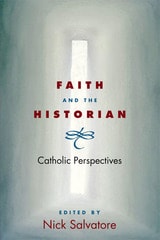
cover of Faith and the Historian: CATHOLIC PERSPECTIVES

Faith and the Historian

CATHOLIC PERSPECTIVES

Edited by Nick Salvatore

University of Illinois Press, 2006

Faith and the Historian collects essays from eight experienced historians discussing the impact of being "touched" by Catholicism on their vision of history. That first graduate seminar, these essays suggest, did not mark the inception of one's historical sensibilities; rather, that process had deeper, and earlier, roots. The authors--ranging from "cradle to the grave" Catholics to those who haven’t practiced for forty years, and everywhere in between--explicitly investigate the interplay between their personal lives and beliefs and the sources of their professional work. A variety of heartfelt, illuminating, and sometimes humorous experiences emerge from these stories of intelligent people coming to terms with their Catholic backgrounds as they mature and enter the academy. Contributors include: Philip Gleason, David Emmons, Maureen Fitzgerald, Joseph A. McCartin, Mario T. Garcia, Nick Salvatore, James R. Barrett, and Anne M. Butler. 
[more]
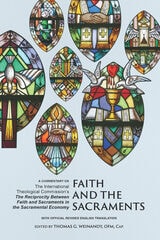
cover of Faith and the Sacraments: A Commentary on The International Theological Commission's <i>The Reciprocity of Faith and Sacraments in the Sacramental Economy</i>: With Official Revised English Translation

Faith and the Sacraments

A Commentary on The International Theological Commission's <i>The Reciprocity of Faith and Sacraments in the Sacramental Economy</i>: With Official Revised English Translation

Thomas G. International Theological Comission

Catholic University of America Press, 2022
In September of 2014 thirty new members were appointed for a five-year term to the Vatican’s International Theological Commission. These theologians, clerical and lay, were chosen from twenty-six different countries and from five continents. The commission was charged with composing three documents of contemporary theological importance, one of which was that of the relationship between faith and the sacraments. This finished document was published, with the approval of the Congregation for the Doctrine of the Faith and by Pope Francis in Spanish in early 2020 under the title: La Reciprocidad entre Fe y Sacramentos en la Economía Sacramental. A subsequent English translation was published thereafter under the title The Reciprocity Between Faith and Sacraments in the Sacramental Economy. This present volume contains the text of the English translation. There follows an introduction by a member of the ITC, Thomas G. Weinandy, OFM, Cap., and subsequently followed by six explanatory and interpretive commentaries on various chapters of the document. Dr. John Yocum considers the contemporary relevance of the topic. Dr. Christopher Ruddy examines the dialogical nature of the sacramental economy of salvation. Dr. Jennifer Holmes Martin discusses the relationship between faith and the sacraments of initiation. There are two commentaries for section four concerning faith and the sacrament of marriage. Professor John Grabowski treats the strictly theological issues relating to faith and marriage. Canonist Timothy Cavanaugh takes up the canonical issues regarding faith and its relationship to enacting a valid sacramental marriage. Dr. Daniel Keating rounds off the commentaries by surveying the conclusion of the document, that is, the present need for evangelization so as to enliven the faith of the faithful, and the present relevance of the new ecclesial movements within the Church today. These commentaries are aimed at aiding priests and seminarians as they address or prepare to address the pastoral and theological concerns they encounter or will encounter on a daily basis. This volume could also be used in parish adult education groups as well, wherein the laity could better understand the relationship between faith and the sacraments.
[more]
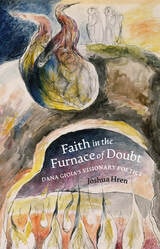
cover of Faith in the Furnace of Doubt: Dana Gioia's Poetics of Belief

Faith in the Furnace of Doubt

Dana Gioia's Poetics of Belief

Joshua Hren

Catholic University of America Press, 2025
Dana Gioia’s characters and verses cry from the depths, their faith tried—and purified—in the furnace of doubt. Enchanted by Gioia’s visionary poetics, the reader discovers that deep faithfulness comes only by way of the via negativa: profundity is preceded by privation; suffering is the school of sure hope; a lover who cannot conquer evil’s great absence has never—has he?—ever really loved. Gioia’s poetry is an ideal site for thoughtful exposition of spiritual searching undertaken in a contemporary idiom. Faith in the Furnace of Doubt: Dana Gioia's Poetics of Belief draws on the wisdom of St. Augustine and Søren Kierkegaard, René Girard and Jacques Maritain (all of whom Gioia cites as influences) to make intelligible the mystical unveilings and complex movements of faith and doubt that mark Gioia’s poems—from his early verse “The Burning Ladder” to his magnum opus in-progress “The Underworld.” This first full-length, in-depth study of Gioia’s poetry grants extended interpretation of the meanings a Catholic vision makes manifest. Hren conducts a close reading of poems whose spiritual charges are better grasped when read by the lights of those theologians, philosophers, and poets who have—to paraphrase T.S. Eliot—raided the inarticulate: from Dante to St. Teresa of Avila, from Gerard Manley Hopkins to Nietzsche, from Dionysius the Areopagite to Dostoevsky, from St. John of the Cross to St. John Henry Newman. Gioia’s litanies take all comers to the frayed edges of belief—a cliff that extends over the limits of language, the abyss of unknowing. Maybe at its highest, under the muse of divine madness, poetry can coax us across to the Word, the Lord of language, the “choreographer / of entrances and exits” who speaks all the worries and wonders we’ve left—for all those “midnight / whispers traveling the wires”—unsaid.
[more]
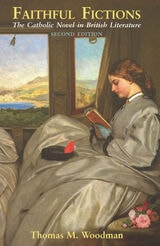
cover of Faithful Fictions: The Catholic Novel in British Literature

Faithful Fictions

The Catholic Novel in British Literature

Thomas M. Woodman

Catholic University of America Press, 2022
Catholic writers have made a rich contribution to British fiction, despite their minority status. Evelyn Waugh, Graham Greene, and Muriel Spark are well-known examples, but there are many other significant novelists whose work has a Catholic aspect. This is the first book to survey the whole range of this material and examine whether valid generalizations can be made about it. In charting such fiction from its development in the Victorian period through to the work of contemporaries such as David Lodge, the author analyses its complex relationships with changes in British society and the international Church. There is more than one way of being a Catholic, as Woodman shows, but he also demosntrates that many of these writers share common themes and a distinctive perspective. They often wish in particular to use their religion as a weapon against what they portray as a complacent Protestant or secular society. Their consciousness of writing in the midst of such a society gives a special edge to their treatments of the perennial Catholic themes of suffering, sin and sex. It also has implications for literary form and relates to what has been seen as the extremist mode of Catholic fiction. The final question that Woodman puts is whether the changes in the Church since the Second Vatican Council must inevitably lead to the loss of this distinctive Catholic contribution to the novel.
[more]
cover of Faithful Passages: American Catholicism in Literary Culture, 1844–1931

Faithful Passages

American Catholicism in Literary Culture, 1844–1931

James Emmett Ryan

University of Wisconsin Press, 2013

Roman Catholic writers in colonial America played only a minority role in debates about religion, politics, morality, national identity, and literary culture. However, the commercial print revolution of the nineteenth century, combined with the arrival of many European Catholic immigrants, provided a vibrant evangelical nexus in which Roman Catholic print discourse would thrive among a tightly knit circle of American writers and readers. James Emmett Ryan’s pathbreaking study follows the careers of important nineteenth-century religionists including Orestes Brownson, Isaac Hecker, Anna Hanson Dorsey, and Cardinal James Gibbons, tracing the distinctive literature that they created during the years that non-Catholic writers like Herman Melville and Emily Dickinson were producing iconic works of American literature.
    Faithful Passages also reveals new dimensions in American religious literary culture by moving beyond the antebellum period to consider how the first important cohort of Catholic writers shaped their message for subsequent generations of readers in the late nineteenth and early twentieth centuries. Perhaps most strikingly, Ryan shows that by the early twentieth century, Roman Catholic themes and traditions in American literature would be advanced in complex ways by mainstream, non-Catholic modernist writers like Kate Chopin and Willa Cather.
    Catholic literary culture in the United States took shape in a myriad of ways and at the hands of diverse participants. The process by which Roman Catholic ideas, themes, and moralities were shared and adapted by writers with highly differentiated beliefs, Ryan contends, illuminates a surprising fluidity of religious commitment and expression in early U.S. literary culture.
[more]
cover of Far Too Easily Pleased: A Theology of Play, Contemplation, and Festivity

Far Too Easily Pleased

A Theology of Play, Contemplation, and Festivity

James V., SJ Schall

Catholic University of America Press, 2020
Far Too Easily Pleased was originally published in 1976, although it is just as relevant today. Catholic Education Press is thrilled to be able to bring this book back into print. To summarize the volume we can do better than to excerpt part of Fr. Schall’s introduction to the 1976 edition: This book is intended to be a helpful stimulus to incite the reader to survey the truly exciting literature in this field and to assist in organizing personal reflection about the basic themes of game, play, wonder, rite, contemplation and festivity, themes that the theology of play naturally suggests. For it can be truly said that those who have not yet been initiated into this style of religious and cultural thought have been missing highly liberating and ennobling levels of our heritage. For those who already know what rewards are to be found in play and game, it is hoped that this book can again be a fresh and different approach to wonder and fascination, to the curiously marvelous life we have been given. James V. Schall, SJ, (1928-2019) was an American Jesuit Roman Catholic priest, teacher, writer, and philosopher. He retired in 2012 after a long tenure as a professor of political philosophy at Georgetown University Among his many books are The Universe We Think In; Political Philosophy and Revelation: A Catholic Reading; The Mind That Is Catholic: Philosophical and Political Essays; Schall on Chesterton: Timely Essays on Timeless Paradoxes and At the Limits of Political Philosophy: From “Brilliant Errors” To Things of Uncommon Importance (all CUA Press).
[more]
cover of Festal Letters 1-12

Festal Letters 1-12

St. Cyril of Alexandria

Catholic University of America Press, 2013
No description available
[more]
cover of Festal Letters 13-30

Festal Letters 13-30

St. Cyril of Alexandria

Catholic University of America Press, 2013
Twenty-nine in all, these letters cover all but three of Cyril's years as a bishop. The first twelve were published in 2009 (Fathers of the Church 118). The present volume completes the set. Festal letters were used in Alexandria primarily to announce the beginning of Lent and the date of Easter. They also served a catechetical purpose, however, allowing the Patriarch an annual opportunity to write pastorally not just about issues facing the entire see, but also about the theological issues of the day.
[more]
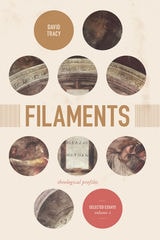
cover of Filaments: Theological Profiles: Selected Essays, Volume 2

Filaments

Theological Profiles: Selected Essays, Volume 2

David Tracy

University of Chicago Press, 2020

Two volumes of selected essays from the most important Catholic theologian in North America.

In the second volume of his two-volume collection of essays from the 1980s to 2018, renowned Catholic theologian David Tracy gathers profiles of significant theologians, philosophers, and religious thinkers. These essays, he suggests, can be thought of in terms of Walt Whitman’s “filaments,” which are thrown out from the speaking self to others—ancient, medieval, modern, and contemporary—in order to be caught elsewhere.

Filaments arranges its subjects in rough chronological order, from choices in ancient theology, such as Augustine, through the likes of William of St. Thierry in the medieval period and Martin Luther and Michelangelo in the early modern, and, finally, to modern and contemporary thinkers, including Bernard Lonergan, Paul Tillich, Simone Weil, Karl Rahner, Reinhold Niebuhr, and Iris Murdoch. Taken together, these essays can be understood as a partial initiation into a history of Christian theology defined by Tracy’s key virtues of plurality and ambiguity. Filaments bring the work of one of North America’s most important religious thinkers once again to the forefront to be celebrated by long-time readers and new ones alike.
[more]
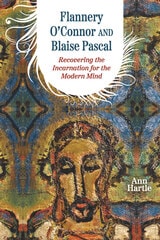
cover of Flannery O'Connor and Blaise Pascal: Recovering the Incarnation for the Modern Mind

Flannery O'Connor and Blaise Pascal

Recovering the Incarnation for the Modern Mind

Ann Hartle

Catholic University of America Press, 2025
Flannery O’Connor is a guide for the Catholic who seeks to gain a deeper understanding of what it means to live the life of faith in the modern world. O’Connor describes herself as a Catholic burdened by the modern consciousness which the psychologist Carl Gustav Jung views as “unhistorical, solitary, and guilty.” Ann Hartle understands O’Connor’s fiction as her confrontation with this specifically modern form of consciousness. The seventeenth-century philosopher Blaise Pascal helps us to experience the meaning of O’Connor’s fiction because Pascal confronted that same consciousness in its origins in Montaigne’s philosophy. O’Connor recognizes in Pascal a truly Catholic modern philosopher who speaks to the experience of the searching mind of modern man. Flannery O'Connor and Blaise Pascal approaches O’Connor’s fiction from a philosophical perspective rather than the perspective of a literary critic. The goal of this volume is to deepen the experience of the meaning of her stories insofar as they are addressed to a specifically modern audience burdened with the form of consciousness that is highly skeptical of the historical reality of the Christian mystery. Hartle's argument is that modern consciousness rests on the “spiritualization” of the Incarnation. Both Montaigne and Jung abstract a purely human meaning from the historical embodied reality of the Incarnation and place that meaning in the service of modern man’s attempt at self-creation and self-redemption. O’Connor presents us with an especially vivid picture of Jung’s truly modern individual in Hazel Motes, Hulga Hopewell, George Rayber, and The Misfit. In her comic art, O’Connor brings out the possibility of grace against the background of the pervasive psychological attitude toward human conduct. She shows us how the modern distortions of the human personality can be addressed in a specifically Catholic way, that is, through the meaning of the Catholic sacramental view of life and the Catholic principle of mutual interdependence.
[more]
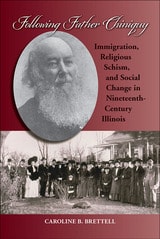
cover of Following Father Chiniquy: Immigration, Religious Schism, and Social Change in Nineteenth-Century Illinois

Following Father Chiniquy

Immigration, Religious Schism, and Social Change in Nineteenth-Century Illinois

Caroline B. Brettell

Southern Illinois University Press, 2015

Winner, ISHS Certificate of Excellence, 2016

In the late 1850s and early 1860s, the attention of the Catholic and Protestant religious communities around the world focused on a few small settlements of French Canadian immigrants in northeastern Illinois. Soon after arriving in their new home, a large number of these immigrants, led by Father Charles Chiniquy, the charismatic Catholic priest who had brought them there, converted to Protestantism. In this anthropological history, Caroline B. Brettell explores how Father Chiniquy took on both the sacred and the secular authority of the Catholic Church to engineer the religious schism and how the legacy of this rift affected the lives of the immigrants and their descendants for generations. This intriguing study of a nineteenth-century migration of French Canadians to the American Midwest offers an innovative perspective on the immigrant experience in America.

Brettell chronicles how Chiniquy came to lead approximately one thousand French Canadian families to St. Anne, Illinois, in the early 1850s and how his conflict with the Catholic hierarchy over the ownership and administration of church property, delivery of the mass in French instead of Latin, and access to the Bible by laymen led to his excommunication. Drawing on the concept of social drama—a situation of intensely lived conflict that emerges within social groups—Brettell explains the religious schism in terms of larger ethnic and religious disagreements that were happening elsewhere in the United States and in Canada. Brettell also explores legal disputes, analyzes the reemergence of Catholicism in St. Anne in the first decade of the twentieth century, addresses the legacy of Chiniquy in both the United States and Quebec, and closely examines the French Canadian immigrant communities, focusing on the differences between the people who converted to Protestantism and those who remained Catholic.

Occurring when nativism was pervasive and the anti-immigrant Know-Nothing Party was at its height, Chiniquy’s religious schism offers an opportunity to examine a range of important historical and anthropological issues, including immigration, ethnicity, and religion; changes in household and family structure; the ways social identities are constructed and reconstructed through time; and the significance of charismatic leadership in processes of social and religious change. Through its multidisciplinary approach, Brettell’s enlightening study provides a pioneering assessment of larger national tensions and social processes, some of which are still evident in modern immigration to the United States.
[more]
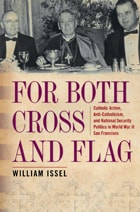
cover of For Both Cross and Flag: Catholic Action, Anti-Catholicism, and National Security Politics in World War II San Francisco

For Both Cross and Flag

Catholic Action, Anti-Catholicism, and National Security Politics in World War II San Francisco

Authored by William Issel

Temple University Press, 2010

Against a backdrop of war and anti-Catholic sentiment, one man loses his rights because he is falsely accused
In this fascinating, detailed history, William Issel recounts the civil rights abuses suffered by Sylvester Andriano, an Italian American Catholic civil leader whose religious and political activism in San Francisco provoked an Anti-Catholic campaign against him. A leading figure in the Catholic Action movement, Andriano was falsely accused in state and federal Un-American Activities Committee hearings of having Fascist sympathies prior to and during World War II. As his ordeal began, Andriano was subjected to a hostile investigation by the FBI, whose confidential informants were his political rivals. Furthermore, the U.S. Army ordered him to be relocated on the grounds that he was a security risk.

For Both Cross and Flag provides a dramatic illustration of what can happen when parties to urban political rivalries, rooted in religious and ideological differences, seize the opportunity provided by a wartime national security emergency to demonize their enemy as “a potentially dangerous person.”

Issel presents a cast of characters that includes archbishops, radicals, the Kremlin, and J. Edgar Hoover, to examine the significant role faith-based political activism played in the political culture that violated Andriano’s constitutional rights. Exploring the ramifications of this story, For Both Cross and Flag presents interesting implications for contemporary events and issues relating to urban politics, ethnic groups, and religion in a time of war.
[more]
cover of Fragments: The Existential Situation of Our Time: Selected Essays, Volume 1

Fragments

The Existential Situation of Our Time: Selected Essays, Volume 1

David Tracy

University of Chicago Press, 2020

Two volumes of selected essays from the most important Catholic theologian in North America.
 
David Tracy is widely considered one of the most important religious thinkers in North America, known for his pluralistic vision and disciplinary breadth. His first books in more than twenty years, Fragments and Filaments reflect Tracy’s range and erudition, collecting essays from the 1980s to 2018 into a two-volume work.

In the first volume, Fragments, Tracy gathers his most important essays on broad theological questions, beginning with the problem of suffering across Greek tragedy, Christianity, and Buddhism. The volume goes on to address the Infinite, and the many attempts to categorize and name it by Plato, Aristotle, Rilke, Heidegger, and others. In the remaining essays, he reflects on questions of the invisible, contemplation, hermeneutics, and public theology. Throughout, Tracy evokes the potential of fragments (understood both as concepts and events) to shatter closed systems and open us to difference and Infinity. Covering science, literature, philosophy, psychoanalysis, and non-Western religious traditions, Tracy provides in Fragments a guide for any open reader to rethink our fragmenting contemporary culture.
[more]
cover of From the Dust of the Earth: Benedict XVI, the Bible , and the Theory of Evolution

From the Dust of the Earth

Benedict XVI, the Bible , and the Theory of Evolution

Matthew J. Ramage

Catholic University of America Press, 2022
The claim that evolution undermines Christianity is standard fare in our culture. Indeed, many today have the impression that the two are mutually exclusive and that a choice must be made between faith and reason—rejecting Christianity on the one hand or evolutionary theory on the other. Is there a way to square advances in this field of study with the Bible and Church teaching? In this book—his fourth dedicated to applying Joseph Ratzinger/Benedict XVI’s wisdom to pressing theological difficulties—Matthew Ramage answers this question decidedly in the affirmative. Distinguishing between evolutionary theory properly speaking and the materialist attitude that is often conflated with it, Ramage’s work meets the challenge of evolutionary science to Catholic teaching on human origins, guided by Ratzinger’s conviction that faith and evolutionary theory mutually enrich one another. Pope Benedict gifted the Church with many pivotal yet often-overlooked resources for engaging evolution in the light of faith, especially in those instances where he addressed the topic in connection with the Book of Genesis. Ramage highlights these contributions and also makes his own by applying Ratzinger’s principles to such issues as the meaning of man’s special creation, the relationship between sin and death, and the implications of evolution for eschatology. Notably, Ramage shows that many apparent conflicts between Christianity and evolutionary theory lose their force when we interpret creation in light of the Paschal Mystery and fix our gaze on Jesus, the New Adam who reveals man to himself. Readers of this text will find that it does more than merely help to resolve apparent contradictions between faith and modern science. Ramage’s work shows that discoveries in evolutionary biology are not merely difficulties to be overcome but indeed gifts that yield precious insight into the mystery of God’s saving plan in Christ.
[more]
cover of From the Trinity : The Coming of God in Revelation and Theology

From the Trinity

The Coming of God in Revelation and Theology

Piero Coda

Catholic University of America Press, 2020

From the Trinity provides an overall view of the history and the philosophical and theological significance of God the Trinity, not only from a religious point of view but from an anthropological and socio-cultural view as well. The perspective is that of Christian doctrine, specifically Catholic, in dialogue with the cultural sensitivity of our times and with the religious pluralism that characterizes it. Following the generative-progressive method proposed by Vatican II, the book begins with a phenomenological reading of the signs of the times, with special focus upon the performative aspect of the announcement and the doctrine of faith. In particular, constant attention to the contribution made by the mystics and great charisms (from Augustine of Hippo to Francis of Assisi and Theresa of Avila up until Therese of Lisieux, Edith Stein and Chaira Lubich) toward a deeper understanding of the Trinitarian truth. From the Trinity is unique in what it offers not only for Trinitarian theology, but also for other theological disciplines (Christology, Pneumatology, Anthropology, Ecclesiology, etc.) – in which the Trinity shines forth as the central and enlightening truth – as well as for philosophy, the humanities and the natural sciences. This perspective is especially developed in terms of a Trinitarian ontology (see Part V) by which reality is understood in light of the revelation of the Trinity. The implications of the incarnation of the Son of God and the gift of the Holy Spirit are taken seriously in studying the truth of all things as they are perceived in the space created by living and thinking “in” Jesus, united to the Father in the Spirit, as suggested by the title of the book, looking upon reality “From the Trinity.”
[more]
cover of Frozen Embryos: A Catholic Moral Evaluation of Embryo Adoption, Cryopreservation, Rehydration & Artifical Wombs

Frozen Embryos

A Catholic Moral Evaluation of Embryo Adoption, Cryopreservation, Rehydration & Artifical Wombs

Irene Alexander

Catholic University of America Press, 2027
In the decades following the rise of in vitro fertilization, hundreds of thousands of human embryos have been cryopreserved and ultimately abandoned, raising urgent and largely unresolved ethical questions. What moral responsibilities are owed to these embryonic human lives, and what courses of action remain open to those seeking to act with integrity in the face of this technological legacy? In this work, Irene Alexander offers a careful and rigorous examination of the ethical possibilities surrounding abandoned frozen embryos. Drawing on philosophical reasoning, theological insight, and contemporary bioethical debate, she evaluates a range of proposed responses, including embryo adoption, indefinite cryopreservation, thawing without transfer, and the emerging prospect of artificial wombs. Each option is assessed not only for its practical implications but also for its coherence with a robust account of human dignity and moral responsibility. Rather than offering simplistic solutions, Alexander clarifies the moral principles at stake, illuminating the tensions between compassion, justice, and the limits of technological intervention. She situates the problem within a broader cultural and scientific context, showing how developments in reproductive technology have outpaced the ethical frameworks needed to guide them. Accessible to educated readers while grounded in serious scholarship, this book provides a much-needed framework for thinking clearly about one of the most complex bioethical dilemmas of our time. It will be of particular interest to scholars, students, and practitioners in bioethics, theology, philosophy, and medicine, as well as to anyone seeking to understand the moral contours of life in an age of unprecedented technological power.
[more]
cover of Fundamental Soteriology: On the Fullness of Life

Fundamental Soteriology

On the Fullness of Life

Michal Paluch

Catholic University of America Press, 2026
Fullness of Life is a basic introduction to the Catholic understanding of salvation. It begins with a presentation of the background against which the teaching on salvation must be situated (the contemporary context of the question of salvation, the positions of other religions, the teaching of the magisterium) (chapter one), and a concise sketch on the history of soteriology (chapter two). The following chapters are a discussion of models for interpreting salvation relating to Christ's death on the cross (chapter three) and the totality of His life (chapter four). These considerations are concluded with a presentation of St. Thomas Aquinas' interpretative proposal (chapter five), which proves to be an apt way to synthesize the discussions presented earlier. The model of salvific mediation eventually turns out to be a higher-order model that allows to close the entire presentation (chapter six). The body of the text is supplemented by appendices that discuss a chosen set of particular problems related to the reflections in the corpus, that is, the “scapegoat” as a figure of Christ, the salvific function of other religions, substitution in Aquinas, and salutary suffering. The entire text ends with a selection of relevant sources. With the help of such a structure, the book proposes a basic explanation of (sometimes distorted) interpretations of sacrifice, substitution, satisfaction, divinization. It helps to bring readers from their first steps of soteriological reflection to Aquinas’ synthesis and to help them to discover that – taking into account the contemporary discussions and problems – Aquinas’ account can still offer a very convincing way for synthesizing soteriology. The book is addressed primarily to students of theology. However, it has been written in such a way that any Christian properly motivated to deepen their faith can benefit from reading it. And since it may serve as an aid in learning how to interpret the whole of soteriology, professional theologians may also find themselves inspired by it.
[more]
cover of Fundamental Theology

Fundamental Theology

Guy Mansini, OSB

Catholic University of America Press, 2018

Fundamental Theology examines the light by which the mysteries of Christ and the Church, the Trinity and the Sacraments, are revealed to us. That light we call "revelation," and fundamental theology examines in the first place what this light shows about itself, and how it is sustained in the world. Or again, fundamental theology considers what the word of God has to say both about itself and what it has to say about where in the world it is to be heard. So, first it is a theology of Revelation (chapter 1), and second, a theology of the transmission of Revelation in Tradition, Scripture, and the Church (chapters 2, 3, and 4). Why must Revelation have the shape it does, and why must it be constituted by both word and event? Why is Tradition prior to Scripture, why must the word of God be written down, and why must Scripture come to us in two testaments? And why must the message conveyed in Tradition and Scripture have a living interpreter in the Church?

Since no word is spoken unless it is heard, fundamental theology also investigates the conditions of hearing the word of God, the very hearing itself in the assent of faith, and a necessary consequence of this hearing. The remote conditions of hearing are also what theology calls our ability to come to the knowledge of the preambula fidei- the things about God than can be known by the natural light (chapter 5). The immediate condition of hearing is the credibility of the word (chapter 6). Hearing is faith (chapter 7). And true hearing gives the hearer to recapitulate what is heard in his own wondering and thankful voice in theology (chapter 8). The introduction to theology in the last chapter is by way of considering the history of Catholic theology in the 20th century.
[more]
cover of Fundamental Theology According to Newman: The Principles of Christianity

Fundamental Theology According to Newman

The Principles of Christianity

Fernando Maria Cavaller

Catholic University of America Press, 2026

Although Newman certainly did not write the Essay on the Development of Christian Doctrine with the intention to do systematic theology, his ten principles serve as a framework for ordering the content of the essay with reference to Newman's other works. The result in this present book is a systematic analysis of the theological themes considered by Newman throughout his writing career. Newman’s writings were circumstantial in nature, written in response to controversies or needs of the moment. Nevertheless, he was able to shed light on those specific situations by appealing to timeless theological insights. The originality of this book consists in placing these insights in a systematic context. The arrangement is structured as a fundamental theology, following the usual discourse on God's revelation and faith as a response, with a brief intermediate exposition of fundamental Christology and ecclesiology. In order to give it Newman's own imprint, the author has provided only brief introductions or comments, as well as references to other authors, giving priority to Newman's own texts. In this way the work serves as an introduction to the thought and even to the life of John Henry Newman, whose literary style denotes the union of theological questions with a living faith.
[more]