236 books match the query 'Children's Studies' and 14 start with f
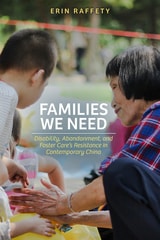
cover of Families We Need: Disability, Abandonment, and  Foster Care’s Resistance in Contemporary China

Families We Need

Disability, Abandonment, and Foster Care’s Resistance in Contemporary China

Erin Raffety

Rutgers University Press, 2023
Set in the remote, mountainous Guangxi Autonomous Region and based on ethnographic fieldwork, Families We Need traces the movement of three Chinese foster children, Dengrong, Pei Pei, and Meili, from the state orphanage into the humble, foster homes of Auntie Li, Auntie Ma, and Auntie Huang. Traversing the geography of Guangxi, from the modern capital Nanning where Pei Pei and Meili reside, to the small farming village several hours away where Dengrong is placed, this ethnography details the hardships of social abandonment for disabled children and disenfranchised, older women in China, while also analyzing the state’s efforts to cope with such marginal populations and incorporate them into China’s modern future. The book argues that Chinese foster families perform necessary, invisible service to the Chinese state and intercountry adoption, yet the bonds they form also resist such forces, exposing the inequalities, privilege, and ableism at the heart of global family making.
[more]
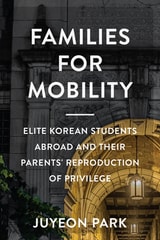
cover of Families for Mobility: Elite Korean Students Abroad and Their Parents' Reproduction of Privilege

Families for Mobility

Elite Korean Students Abroad and Their Parents' Reproduction of Privilege

Juyeon Park

Rutgers University Press, 2025
Families for Mobility documents elite Korean transnational families, focusing on how they use elite education abroad as a tool for class reproduction. Drawing on over 100 interviews with both parents and children at elite U.S. colleges, the book explores the desires, aspirations, and expectations that shape these education-driven transnational family arrangements. By triangulating the perspectives of children, mothers, and fathers, Families for Mobility argues that gendered transnational parenting—by both mothers and fathers—plays a crucial role in the intergenerational transmission of mobility and cosmopolitan lifestyles. The analysis shows how class and gender shape both parents’ and children’s approaches to their transnational ‘family projects,’ with fathers and sons appearing more resourceful and ambitious than mothers and daughters, reflecting the gender achievement gap even among the elite. The book challenges stereotypes of Asian high achievers and ‘tiger’ parenting, providing a more nuanced understanding of who thrives in the hierarchical realms of global education and business, as well as the familial support systems behind their success.
[more]
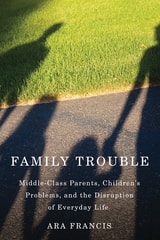
cover of Family Trouble: Middle-Class Parents, Children's Problems, and the Disruption of Everyday Life

Family Trouble

Middle-Class Parents, Children's Problems, and the Disruption of Everyday Life

Francis, Ara

Rutgers University Press, 2015

Our children mean the world to us. They are so central to our hopes and dreams that we will do almost anything to keep them healthy, happy, and safe. What happens, then, when a child has serious problems? In Family Trouble, a compelling portrait of upheaval in family life, sociologist Ara Francis tells the stories of middle-class men and women whose children face significant medical, psychological, and social challenges. 
 
Francis interviewed the mothers and fathers of children with such problems as depression, bi-polar disorder, autism, learning disabilities, drug addiction, alcoholism, fetal alcohol syndrome, and cerebral palsy. Children’s problems, she finds, profoundly upset the foundations of parents’ everyday lives, overturning taken-for-granted expectations, daily routines, and personal relationships. Indeed, these problems initiated a chain of disruption that moved through parents’ lives in domino-like fashion, culminating in a crisis characterized by uncertainty, loneliness, guilt, grief, and anxiety. Francis looks at how mothers and fathers often differ in their interpretation of a child’s condition, discusses the gendered nature of child rearing, and describes how parents struggle to find effective treatments and to successfully navigate medical and educational bureaucracies. But above all, Family Trouble examines how children’s problems disrupt middle-class dreams of the “normal” family. It captures how children’s problems “radiate” and spill over into other areas of parents’ lives, wreaking havoc even on their identities, leading them to reevaluate deeply held assumptions about their own sense of self and what it means to achieve the good life.  

Engagingly written, Family Trouble offers insight to professionals and solace to parents. The book offers a clear message to anyone in the throes of family trouble: you are in good company, and you are not as different as you might feel...
[more]
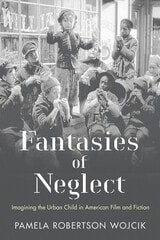
cover of Fantasies of Neglect: Imagining the Urban Child in American Film and Fiction

Fantasies of Neglect

Imagining the Urban Child in American Film and Fiction

Pamela Robertson Wojcik

Rutgers University Press, 2016
In our current era of helicopter parenting and stranger danger, an unaccompanied child wandering through the city might commonly be viewed as a victim of abuse and neglect. However, from the early twentieth century to the present day, countless books and films have portrayed the solitary exploration of urban spaces as a source of empowerment and delight for children. 
 
Fantasies of Neglect explains how this trope of the self-sufficient, mobile urban child originated and considers why it persists, even as it goes against the grain of social reality. Drawing from a wide range of films, children’s books, adult novels, and sociological texts, Pamela Robertson Wojcik investigates how cities have simultaneously been demonized as dangerous spaces unfit for children and romanticized as wondrous playgrounds that foster a kid’s independence and imagination. Charting the development of free-range urban child characters from Little Orphan Annie to Harriet the Spy to Hugo Cabret, and from Shirley Temple to the Dead End Kids, she considers the ongoing dialogue between these fictional representations and shifting discourses on the freedom and neglect of children. 
 
While tracking the general concerns Americans have expressed regarding the abstract figure of the child, the book also examines the varied attitudes toward specific types of urban children—girls and boys, blacks and whites, rich kids and poor ones, loners and neighborhood gangs. Through this diverse selection of sources, Fantasies of Neglect presents a nuanced chronicle of how notions of American urbanism and American childhood have grown up together. 
 
[more]
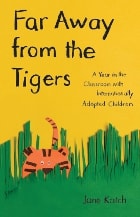
cover of Far Away from the Tigers: A Year in the Classroom with Internationally Adopted Children

Far Away from the Tigers

A Year in the Classroom with Internationally Adopted Children

Jane Katch

University of Chicago Press, 2011

Over the past three decades, more than a quarter of a million children have become citizens of the United States through international adoption. Kindergarten teacher Jane Katch recently found herself with three such children in her class: Katya, born in Russia, Jasper, from Cambodia, and Caleb, from Romania. Each child had spent early years in an orphanage, and each had unique educational and emotional needs. How Katch came to recognize and respond to those needs makes up the journey of discovery in this moving and insightful book.

Interspersing vignettes from the classroom and conversations with the children’s parents, Far Away from the Tigers first explores Katch’s misunderstandings and mistakes as she struggles to help the children adjust to school. As Katch learns more about each child’s preadoption past, she gradually realizes that they were deprived of some basic learning experiences and she needs to find ways to fill those gaps. Before Caleb can learn to read or write, he must improve his verbal skills by learning nursery rhymes, stories, and songs. Katya, who came from an overcrowded orphanage, now needs to be the center of attention; before learning how to form real friendships, she first must gain control over more basic functions such as eating and sleeping. And the youngest, Jasper, needs steady encouragement to play with classmates instead of sitting alone practicing his handwriting.

Slowly, through trial and error and by drawing on the deep understanding and intense commitment of the children’s parents, Katch discovers the importance—and joy—of allowing each child time to develop in his or her own way. Beautifully told, wise, and candid, Far Away from the Tigers is a gift for parents, teachers, and anyone who cares for children growing up in a new home.
[more]
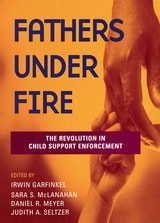
cover of Fathers Under Fire: The Revolution in Child Support Enforcement

Fathers Under Fire

The Revolution in Child Support Enforcement

Irwin Garfinkel

Russell Sage Foundation, 1998
"This important and highly informative collection of studies on nonresidentfathers and child support should be of great value to scholars and policymakers alike." —American Journal of Sociology Over half of America's children will live apart from their fathers at some point as they grow up, many in the single-mother households that increasingly make up the nation's poor. Federal efforts to improve the collection of child support from fathers appear to have little effect on payments, and many critics have argued that forcing fathers to pay does more harm than good. Much of the uncertainty surrounding child support policies has stemmed from a lack of hard data on nonresident fathers. Fathers Under Fire presents the best available information on the financial and social circumstances of the men who are at the center of the debate. In this volume, social scientists and legal scholars explore the issues underlying the child support debate, chief among them on the potential repercussions of stronger enforcement. Who are nonresident fathers? This volume calls upon both empirical and theoretical data to describe them across a broad economic and social spectrum. Absentee fathers who do not pay child support are much more likely to be school dropouts and low earners than fathers who pay, and nonresident fathers altogether earn less than resident fathers. Fathers who start new families are not significantly less likely to support previous children. But can we predict what would happen if the government were to impose more rigorous child support laws? The data in this volume offer a clearer understanding of the potential benefits and risks of such policies. In contrast to some fears, stronger enforcement is unlikely to push fathers toward. But it does seem to have more of an effect on whether some fathers remarry and become responsible for new families. In these cases, how are subsequent children affected by a father's pre-existing obligations? Should such fathers be allowed to reduce their child support orders in order to provide for their current families? Should child support guidelines permit modifications in the event of a father's changed financial circumstances? Should government enforce a father's right to see his children as well as his obligation to pay support? What can be done to help under- or unemployed fathers meet their payments? This volume provides the information and insight to answer these questions. The need to help children and reduce the public costs of welfare programs is clear, but the process of achieving these goals is more complex. Fathers Under Fire offers an indispensable resource to those searching for effective and equitable solutions to the problems of child support.
[more]
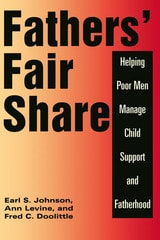
cover of Fathers' Fair Share: Helping Poor Men Manage Child Support and Fatherhood

Fathers' Fair Share

Helping Poor Men Manage Child Support and Fatherhood

Earl S. Johnson

Russell Sage Foundation, 1999

One of the most challenging goals for welfare reformers has been improving the collection of child support payments from noncustodial parents, usually fathers. Often vilified as deadbeats who have dropped out of their children's lives, these fathers have been the target of largely punitive enforcement policies that give little consideration to the complex circumstances of these men's lives. Fathers' Fair Share presents an alternative to these measures with an in-depth study of the Parents Fair Share Program. A multi-state intervention run by the Manpower Demonstration Research Corporation, the program was designed to better the life skills of nonpaying fathers with children on public assistance, in the belief that this would encourage them to improve their level of child support. The men chosen for the program frequently lived on the margins of society. Chronically unemployed or underemployed, undereducated, and often earning their money on the streets, they bore the scars of drug or alcohol abuse, troubled family lives, and arrest records. Among those of African American and Hispanic descent, many felt a deep-rooted distrust of the mainstream economy. The Parents Fair Share Program offered these men the chance not only to learn the social skills needed for stable employment but to participate in discussions about personal difficulties, racism, and problems in their relationships with their children and families. Fathers' Fair Share details the program's mix of employment training services, peer support groups, and formal mediation of disputes between custodial and noncustodial parents. Equally important, the authors explore the effect of the participating fathers' expectations and doubts about the program, which were colored by their often negative views about the child support and family law system. The voices heard in Fathers' Fair Share provides a rare look into the lives of low-income fathers and how they think about their struggles and prospects, their experiences in the workplace, and their responsibilities toward their families. Parents Fair Share demonstrated that, in spite of their limited resources, these men are more likely to make stronger efforts to improve support payments and to become greater participants in their children's lives if they encounter a less adversarial and arbitrary enforcement system. Fathers' Fair Share offers a valuable resource to the design of social welfare programs seeking to reach out to this little-understood population, and addresses issues of tremendous importance for those concerned about welfare reform, child support enforcement, family law, and employment policy.
[more]
cover of Feeding the Future: School Lunch Programs as Global Social Policy

Feeding the Future

School Lunch Programs as Global Social Policy

Rutledge, Jennifer Geist

Rutgers University Press, 2016
A century ago, only local charities existed to feed children. Today 368 million children receive school lunches in 151 countries, in programs supported by state and national governments. In Feeding the Future, Jennifer Geist Rutledge investigates how and why states have assumed responsibility for feeding children, chronicling the origins and spread of school lunch programs around the world, starting with the adoption of these programs in the United States and some Western European nations, and then tracing their growth through the efforts of the World Food Program.
 
The primary focus of Feeding the Future is on social policy formation: how and why did school lunch programs emerge? Given that all countries developed education systems, why do some countries have these programs and others do not? Rutledge draws on a wealth of information—including archival resources, interviews with national policymakers in several countries, United Nations data, and agricultural statistics—to underscore the ways in which a combination of ideological and material factors led to the creation of these enduringly popular policies. She shows that, in many ways, these programs emerged largely as an unintended effect of agricultural policy that rewarded farmers for producing surpluses. School lunches provided a ready outlet for this surplus. She also describes how, in each of the cases of school lunch creation, policy entrepreneurs, motivated by a commitment to alleviate childhood malnutrition, harnessed different ideas that were relevant to their state or organization in order to funnel these agricultural surpluses into school lunch programs.  
 
The public debate over how we feed our children is becoming more and more politically charged. Feeding the Future provides vital background to these debates, illuminating the history of food policies and the ways our food system is shaped by global social policy.  
 
[more]
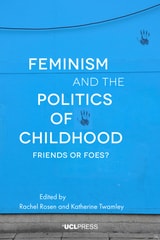
cover of Feminism and the Politics of Childhood: Friends or Foes?

Feminism and the Politics of Childhood

Friends or Foes?

Edited by Rachel Rosen and Katherine Twamley

University College London, 2018
Feminism and the Politics of Childhood explores commonalities and conflicts between the various forms of feminism and the politics of childhood. This innovative collection introduces authors from a range of geographical contexts, social science disciplines, activist organizations, and theoretical perspectives. The wide variety of subjects covered includes refugee camps, care labor, family violence, and childhood education. Taken together, the contributions provide ways to conceptualize relations between women and children, addressing injustices faced by both groups.
[more]
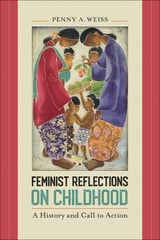
cover of Feminist Reflections on Childhood: A History and Call to Action

Feminist Reflections on Childhood

A History and Call to Action

Penny A. Weiss

Temple University Press, 2021

In Feminist Reflections on Childhood, Penny Weiss rediscovers the radically feminist tradition of advocating for the liberatory treatment of youth. Weiss looks at both historical and contemporary feminists to understand what issues surrounding the inequality experienced by both women and children were important to the authors as feminist activists and thinkers. She uses the writings of Mary Wollstonecraft, Elizabeth Cady Stanton, and Simone de Beauvoir to show early feminist arguments for the improved status and treatment of youth. Weiss also shows how Charlotte Perkins Gilman, a socialist feminist, and Emma Goldman, an anarchist feminist, differently understood and re-visioned children’s lives, as well as how children continue to show up on feminist agendas and in manifestos that demand better conditions for children’s lives.

Moving to contemporary theory, Feminist Reflections on Childhood also looks at how feminist disability theory is well-positioned to recognize the voices of children, and how queer theory provides lessons on contemporary trends that provide visions and strategies for more constructive adult-child relations. Weiss, who includes her own experiences as a mother and foster mother throughout the book, closes her distinctively feminist takes on childhood with a consideration of speculative fiction stories that offer examples of what feminists think makes childhood (un)livable.
[more]
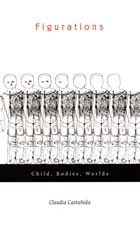
cover of Figurations: Child, Bodies, Worlds

Figurations

Child, Bodies, Worlds

Claudia Castañeda

Duke University Press, 2002

Always in the process of becoming, inherently incomplete, the child is a remarkably malleable figure. In Figurations, Claudia Castañeda shows how this malleability is itself generated—how the child is "made" by different constituencies and how the resulting historically, geographically, and culturally specific figures are put to widely divergent uses, often to very powerful effect. Situated at the intersection of feminist, postcolonial, cultural, and science and technology studies, this book provides a remarkable map of the child's meaning and movement across transnational circuits of exchange.

Castañeda investigates the construction of the child as both a natural and cultural body, the character of its embodiment, and its imaginative appeal in various settings. The sites through which she tracks the bodily production and deployment of the child include nineteenth-century developmental science; cognitive neuroscience in the late twentieth century; international adoption; rumors and media coverage of child-organ stealing; and poststructuralist theory. Her work reveals the extent to which the child's cultural significance and value lie in its status as a body whose incompleteness makes it "available" for such varied uses. Figurations establishes the child as a key figure for understanding and rethinking the politics of nature, culture, bodies, and subjects in changing "global" worlds.

[more]
cover of For the Children?: Protecting Innocence in a Carceral State

For the Children?

Protecting Innocence in a Carceral State

Erica R. Meiners

University of Minnesota Press, 2016

“Childhood has never been available to all.” In her opening chapter of For the Children?, Erica R. Meiners stakes the claim that childhood is a racial category often unavailable to communities of color. According to Meiners, this is glaringly evident in the U.S. criminal justice system, where the differentiation between child and adult often equates to access to stark disparities. And what is constructed as child protection often does not benefit many young people or their communities. Placing the child at the heart of the targeted criminalization debate, For the Children? considers how perceptions of innocence, the safe child, and the future operate in service of the prison industrial complex.

The United States has the largest prison population in the world, with incarceration and policing being key economic tools to maintain white supremacist ideologies. Meiners examines the school-to-prison pipeline and the broader prison industrial complex in the United States, arguing that unpacking child protection is vital to reducing the nation’s reliance on its criminal justice system as well as building authentic modes of public safety. Rethinking the meanings and beliefs attached to the child represent a significant and intimate thread of the work to dismantle facets of the U.S. carceral state. 

Taking an interdisciplinary approach and building from a scholarly and activist platform, For the Children? engages fresh questions in the struggle to build sustainable and flourishing worlds without prisons. 

[more]
cover of Freud in Oz: At the Intersections of Psychoanalysis and Children’s Literature

Freud in Oz

At the Intersections of Psychoanalysis and Children’s Literature

Kenneth B. Kidd

University of Minnesota Press, 2011

Children’s literature has spent decades on the psychiatrist’s couch, submitting to psychoanalysis by scores of scholars and popular writers alike. Freud in Oz turns the tables, suggesting that psychoanalysts owe a significant and largely unacknowledged debt to books ostensibly written for children. In fact, Kenneth B. Kidd argues, children’s literature and psychoanalysis have influenced and interacted with each other since Freud published his first case studies.

In Freud in Oz, Kidd shows how psychoanalysis developed in part through its engagement with children’s literature, which it used to articulate and dramatize its themes and methods, turning first to folklore and fairy tales, then to materials from psychoanalysis of children, and thence to children’s literary texts, especially such classic fantasies as Peter Pan and Alice’s Adventures in Wonderland. He traces how children’s literature, and critical response to it, aided the popularization of psychoanalytic theory. With increasing acceptance of psychoanalysis came two new genres of children’s literature—known today as picture books and young adult novels—that were frequently fashioned as psychological in their forms and functions.

Freud in Oz offers a history of reigning theories in the study of children’s literature and psychoanalysis, providing fresh insights on a diversity of topics, including the view that Maurice Sendak and Bruno Bettelheim can be thought of as rivals, that Sendak’s makeover of monstrosity helped lead to the likes of the Muppets, and that “Poohology” is its own kind of literary criticism—serving up Winnie the Pooh as the poster bear for theorists of widely varying stripes.
[more]
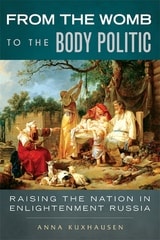
cover of From the Womb to the Body Politic: Raising the Nation in Enlightenment Russia

From the Womb to the Body Politic

Raising the Nation in Enlightenment Russia

Anna Kuxhausen

University of Wisconsin Press, 2012

In Russia during the second half of the eighteenth century, a public conversation emerged that altered perceptions of pregnancy, birth, and early childhood. Children began to be viewed as a national resource, and childbirth heralded new members of the body politic. The exclusively female world of mothers, midwives, and nannies came under the scrutiny of male physicians, state institutions, a host of zealous reformers, and even Empress Catherine the Great.
    Making innovative use of obstetrical manuals, belles lettres, children’s primers, and other primary documents from the era, Anna Kuxhausen draws together many discourses—medical, pedagogical, and political—to show the scope and audacity of new notions about childrearing. Reformers aimed to teach women to care for the bodies of pregnant mothers, infants, and children according to medical standards of the Enlightenment. Kuxhausen reveals both their optimism and their sometimes fatal blind spots in matters of implementation. In examining the implication of women in public, even political, roles as agents of state-building and the civilizing process, From the Womb to the Body Politic offers a nuanced, expanded view of the Enlightenment in Russia and the ways in which Russians imagined their nation while constructing notions of childhood.
[more]