496 books match the query 'Christian Theology' and 17 start with f
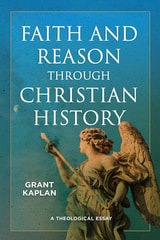
cover of Faith and Reason through Christian History: A Theological Essay

Faith and Reason through Christian History

A Theological Essay

Grant Kaplan

Catholic University of America Press, 2022
It is impossible to understand the history of Christian theology without taking into account the relationship between faith and reason. Many works give an overview of faith and reason, or outline key principles, while others put forward a thesis about how one should understand the relationship between faith and reason. In this theological essay, Grant Kaplan revisits the key figures and debates that shape how faith and reason relate. Divided into three parts, Kaplan invites readers into a conversation rather than a drive-by. Readers will encounter the words and arguments of some of Christianity’s greatest thinkers, some well-known (Augustine, Aquinas, Newman) and others nearly forgotten. Readings of these figures bring them to life in an accessible manner. In Faith and Reason through Christian History, the roughly fifty figures treated are given sufficient room to breathe. Rather than simply summarizing their thought, Kaplan traces their arguments through key texts. This book will appeal to a range of audiences: theologians and philosophers, instructors, graduate students, seminarians, lay study groups, and undergraduate theology majors. No book today accomplishes what this book does!
[more]
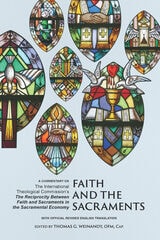
cover of Faith and the Sacraments: A Commentary on The International Theological Commission's <i>The Reciprocity of Faith and Sacraments in the Sacramental Economy</i>: With Official Revised English Translation

Faith and the Sacraments

A Commentary on The International Theological Commission's <i>The Reciprocity of Faith and Sacraments in the Sacramental Economy</i>: With Official Revised English Translation

Thomas G. International Theological Comission

Catholic University of America Press, 2022
In September of 2014 thirty new members were appointed for a five-year term to the Vatican’s International Theological Commission. These theologians, clerical and lay, were chosen from twenty-six different countries and from five continents. The commission was charged with composing three documents of contemporary theological importance, one of which was that of the relationship between faith and the sacraments. This finished document was published, with the approval of the Congregation for the Doctrine of the Faith and by Pope Francis in Spanish in early 2020 under the title: La Reciprocidad entre Fe y Sacramentos en la Economía Sacramental. A subsequent English translation was published thereafter under the title The Reciprocity Between Faith and Sacraments in the Sacramental Economy. This present volume contains the text of the English translation. There follows an introduction by a member of the ITC, Thomas G. Weinandy, OFM, Cap., and subsequently followed by six explanatory and interpretive commentaries on various chapters of the document. Dr. John Yocum considers the contemporary relevance of the topic. Dr. Christopher Ruddy examines the dialogical nature of the sacramental economy of salvation. Dr. Jennifer Holmes Martin discusses the relationship between faith and the sacraments of initiation. There are two commentaries for section four concerning faith and the sacrament of marriage. Professor John Grabowski treats the strictly theological issues relating to faith and marriage. Canonist Timothy Cavanaugh takes up the canonical issues regarding faith and its relationship to enacting a valid sacramental marriage. Dr. Daniel Keating rounds off the commentaries by surveying the conclusion of the document, that is, the present need for evangelization so as to enliven the faith of the faithful, and the present relevance of the new ecclesial movements within the Church today. These commentaries are aimed at aiding priests and seminarians as they address or prepare to address the pastoral and theological concerns they encounter or will encounter on a daily basis. This volume could also be used in parish adult education groups as well, wherein the laity could better understand the relationship between faith and the sacraments.
[more]
cover of Faithful Efforts: Education, Formation and the Church

Faithful Efforts

Education, Formation and the Church

Bram de Muynck,

Central European University Press, 2026

This book brings together selected lectures presented at the Education, Formation and the Church conference held in Kampen, August 2018. The key issue tackled by all contributors is how we can properly understand formation in the formative contexts of school and Church. The urgency of the topic is experienced by many people committed to the faith development of children and young people. Changes in society bring uncertainty and anxiety to churches, schools and families. Some Christian communities are inclined to protect their members from the perceived negative influences of the post-Christian age, while others equip them with tools to become virtuous disciples of Christ in modern society. These all are faithful efforts that seek the best for the future generation. Different responses to the challenges in society affect the various contexts in which formation is at stake, including schools, youth work, catechism and the training of pastors. The reflections in this book are intended to support people involved in these contexts in their future efforts. If you would like to order the book for delivery outside of the Netherlands, please email orders@aup.nl
[more]
cover of Faithful Efforts: Education, Formation and the Church

Faithful Efforts

Education, Formation and the Church

Bram de Muynck,

Central European University Press, 2026
This book brings together selected lectures presented at the Education, Formation and the Church conference held in Kampen, August 2018. The key issue tackled by all contributors is how we can properly understand formation in the formative contexts of school and Church. The urgency of the topic is experienced by many people committed to the faith development of children and young people. Changes in society bring uncertainty and anxiety to churches, schools and families. Some Christian communities are inclined to protect their members from the perceived negative influences of the post-Christian age, while others equip them with tools to become virtuous disciples of Christ in modern society. These all are faithful efforts that seek the best for the future generation. Different responses to the challenges in society affect the various contexts in which formation is at stake, including schools, youth work, catechism and the training of pastors. The reflections in this book are intended to support people involved in these contexts in their future efforts. If you would like to order the book for delivery outside of the Netherlands, please email orders@aup.nl
[more]
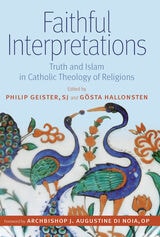
cover of Faithful Interpretations: Truth and Islam in Catholic Theology of Religions

Faithful Interpretations

Truth and Islam in Catholic Theology of Religions

Philip Geister

Catholic University of America Press, 2021
”Theology of Religions” is among the most burning issues within Christian theology today. The challenge to study and discuss different ways of handling conflicting truth claims and religious narratives between religions is taken up by a growing number of theologians across denominational boundaries. This is a common and ecumenical effort undertaken by Christian theologians all over the world. And yet, the impact of specific ecclesiastical or theological traditions on different concepts of theology of religions should not be underestimated. As well known, the Second Vatican council with its pivotal decree Nostra Aetate (On the relation to other religions) not only set the agenda for Catholic theology, but even influenced the wider discussion on the topic. The papers of this volume were all given at a conference in Uppsala, Sweden in October 2017. The structure of Faithful Interpretations follows closely the way the conference was conducted. A general introduction to the development and present status of ”Theology of Religions” by Marianne Moyaert opens the book. Archbishop J Augustine Di Noia of the Vatican Congregation for the Doctrine of Faith then treats the recent developments in the teaching of the Magisterium regarding theology of religions. Anna Bonta Moreland adresses the issue of Muhammad and Christian Prophecy. Diego R Sarrió Cucarella focuses on early Christian theological views of Islam and concludes that Islam has been from the begining a ”disturbing” factor in the Christian view of salvation history. Wilhelmus G B M Valkenberg discusses the impact of Nostra Aetate on the Church’s relation to Muslims, using especially the precedent of Nicolaus of Cues as regards a constructive approach to Islam. Klaus von Stosch adresses a sensitive issue in Muslim-Christian relations and illustrates the advantages of the comparative theology approach for the theology of religions. Complementing this perspective, Peter Jonkers offers a hermeneutical perspective on truth claims, and reflects on ”the religious Other” with references to Jacques Derrida among others. Reinhold Bernhardt argues in favour of a biblically grounded “relational-existential” theory of truth, which would be most helpful with regard to other religions. To conclude, the prominent Catholic specialist on Theology of Religions, Gavin D’Costa, widened the perspective by addressing the relation to Judaism from the point of view of the covenant and the promises of the land. Altogether, the papers of this volume give a clear impression of the status of Roman Catholic Theology of Religions.
[more]
cover of Fiction And Incarnation: Rhetoric, Theology, and Literature in the Middle Ages

Fiction And Incarnation

Rhetoric, Theology, and Literature in the Middle Ages

Alexandre Leupin

University of Minnesota Press, 2002

A fresh look at the relationship between theology and rhetoric.

Focusing on the Incarnation-the only dogma original to Christianity, in which God becomes man and history-this book offers a wide-ranging and theoretically sophisticated investigation of the relationship between Christian discourse and literature from Roman antiquity to the fourteenth century through a look at texts by Cicero, Quintilian, Martianus Capella, Tertullian, Saint Augustine, Alain of Lille, Guillaume de Machaut, and others.

Alexandre Leupin asks if it is possible to go beyond the dialectics of the Incarnated God and the Devil without harking back to the beautiful but partially obsolete truths of paganism and sophistry. Employing a method inspired by psychoanalysis, Leupin repudiates the sophistry and relativism of postmodern theory while calling into question old commonplaces that have been invalidated by modernity. He does so by attending to the larger and deeper structures hidden within the discourses of theology, rhetoric, literature, and psychoanalysis. The result is an innovative perspective on the Middle Ages, an original and promising view of the problems of Western literature in relation to theology and rhetoric. Alexandre Leupin is Gregorie Professor in French studies at Louisiana State University. He is the author of many books, including, in English translation, Barbarolexis: Medieval Literature and Sexuality (1989).David Laatsch is a Ph.D. candidate in the French department of Louisiana State University.
[more]
cover of Filaments: Theological Profiles: Selected Essays, Volume 2

Filaments

Theological Profiles: Selected Essays, Volume 2

David Tracy

University of Chicago Press, 2020

Two volumes of selected essays from the most important Catholic theologian in North America.

In the second volume of his two-volume collection of essays from the 1980s to 2018, renowned Catholic theologian David Tracy gathers profiles of significant theologians, philosophers, and religious thinkers. These essays, he suggests, can be thought of in terms of Walt Whitman’s “filaments,” which are thrown out from the speaking self to others—ancient, medieval, modern, and contemporary—in order to be caught elsewhere.

Filaments arranges its subjects in rough chronological order, from choices in ancient theology, such as Augustine, through the likes of William of St. Thierry in the medieval period and Martin Luther and Michelangelo in the early modern, and, finally, to modern and contemporary thinkers, including Bernard Lonergan, Paul Tillich, Simone Weil, Karl Rahner, Reinhold Niebuhr, and Iris Murdoch. Taken together, these essays can be understood as a partial initiation into a history of Christian theology defined by Tracy’s key virtues of plurality and ambiguity. Filaments bring the work of one of North America’s most important religious thinkers once again to the forefront to be celebrated by long-time readers and new ones alike.
[more]
cover of Four Anti-Pelagian Writings

Four Anti-Pelagian Writings

Saint Augustine

Catholic University of America Press, 1992
No description available
[more]
cover of Fragments of Bone: Neo-African Religions in a New World

Fragments of Bone

Neo-African Religions in a New World

Edited by Patrick Bellegarde-Smith

University of Illinois Press, 2005

In Fragments of Bone, thirteen essayists discuss African religions as forms of resistance and survival in the face of Western cultural hegemony and imperialism. The collection presents scholars working outside of the Western tradition with backgrounds in a variety of disciplines, genders, and nationalities. These experts draw on research, fieldwork, personal interviews, and spiritual introspection to support a provocative thesis: that fragments of ancestral traditions are fluidly interwoven into New World African religions as creolized rituals, symbolic systems, and cultural identities.

Contributors: Osei-Mensah Aborampah, Niyi Afolabi, Patrick Bellegarde-Smith, Randy P. Conner, T. J. Desch-Obi, Ina Johanna Fandrich, Kean Gibson, Marilyn Houlberg, Nancy B. Mikelsons, Roberto Nodal, Rafael Ocasio, Miguel "Willie" Ramos, and Denise Ferreira da Silva
[more]
cover of Fragments: The Existential Situation of Our Time: Selected Essays, Volume 1

Fragments

The Existential Situation of Our Time: Selected Essays, Volume 1

David Tracy

University of Chicago Press, 2020

Two volumes of selected essays from the most important Catholic theologian in North America.
 
David Tracy is widely considered one of the most important religious thinkers in North America, known for his pluralistic vision and disciplinary breadth. His first books in more than twenty years, Fragments and Filaments reflect Tracy’s range and erudition, collecting essays from the 1980s to 2018 into a two-volume work.

In the first volume, Fragments, Tracy gathers his most important essays on broad theological questions, beginning with the problem of suffering across Greek tragedy, Christianity, and Buddhism. The volume goes on to address the Infinite, and the many attempts to categorize and name it by Plato, Aristotle, Rilke, Heidegger, and others. In the remaining essays, he reflects on questions of the invisible, contemplation, hermeneutics, and public theology. Throughout, Tracy evokes the potential of fragments (understood both as concepts and events) to shatter closed systems and open us to difference and Infinity. Covering science, literature, philosophy, psychoanalysis, and non-Western religious traditions, Tracy provides in Fragments a guide for any open reader to rethink our fragmenting contemporary culture.
[more]
cover of Freedom Made Manifest

Freedom Made Manifest

Peter Joseph Fritz

Catholic University of America Press, 2019
Freedom Made Manifest explicates Rahner’s theology of freedom by elucidating its configuration and sources. Much of its inquiry centers on the fundamental option: each human person’s eternal decision made, paradoxically, in time, as a definitive answer to God’s personally-tailored call to salvation. This idea stems from three principal sources: Catholic conversations with transcendental-idealist philosophy, penitential theology and practice, and Ignatian spirituality. Rahner’s unique redeployment of these sources inflects the fundamental option with theologies of concupiscence, mercy and forgiveness (especially as ecclesially mediated), and devotion to Jesus Christ. Awareness of these inflections can show how Rahner’s theology of freedom may assist in theological reflection on freedom’s susceptibility to injury and trauma.
[more]
cover of From Popular to Insurgent Intellectuals: Peasant Catechists in the Salvadoran Revolution

From Popular to Insurgent Intellectuals

Peasant Catechists in the Salvadoran Revolution

Leigh Binford

Rutgers University Press, 2023
From Popular to Insurgent Intellectuals explains how a group of Catholic lay catechists educated in liberation theology came to take up arms and participate on the side of the rebel FMLN during El Salvador’s revolutionary war (1980-92). In the process they became transformed from popular intellectuals to insurgent intellectuals who put their organizational and cognitive skills at the service of a collective effort to create a more egalitarian and democratic society. The book highlights the key roles that peasant catechists in northern Morazán played in disseminating liberation theology before the war and supporting the FMLN during it—as quartermasters, political activists, and musicians, among other roles. Throughout, From Popular to Insurgent Intellectuals highlights the dialectical nature of relations between Catholic priests and urban revolutionaries, among others, in which the latter learned from the former and vice-versa. Peasant catechists proved capable at making independent decisions based on assessment of their needs and did not simply follow the dictates of those with superior authority, and played an important role for the duration of the twelve-year military conflict. 
[more]
cover of From the Dust of the Earth: Benedict XVI, the Bible , and the Theory of Evolution

From the Dust of the Earth

Benedict XVI, the Bible , and the Theory of Evolution

Matthew J. Ramage

Catholic University of America Press, 2022
The claim that evolution undermines Christianity is standard fare in our culture. Indeed, many today have the impression that the two are mutually exclusive and that a choice must be made between faith and reason—rejecting Christianity on the one hand or evolutionary theory on the other. Is there a way to square advances in this field of study with the Bible and Church teaching? In this book—his fourth dedicated to applying Joseph Ratzinger/Benedict XVI’s wisdom to pressing theological difficulties—Matthew Ramage answers this question decidedly in the affirmative. Distinguishing between evolutionary theory properly speaking and the materialist attitude that is often conflated with it, Ramage’s work meets the challenge of evolutionary science to Catholic teaching on human origins, guided by Ratzinger’s conviction that faith and evolutionary theory mutually enrich one another. Pope Benedict gifted the Church with many pivotal yet often-overlooked resources for engaging evolution in the light of faith, especially in those instances where he addressed the topic in connection with the Book of Genesis. Ramage highlights these contributions and also makes his own by applying Ratzinger’s principles to such issues as the meaning of man’s special creation, the relationship between sin and death, and the implications of evolution for eschatology. Notably, Ramage shows that many apparent conflicts between Christianity and evolutionary theory lose their force when we interpret creation in light of the Paschal Mystery and fix our gaze on Jesus, the New Adam who reveals man to himself. Readers of this text will find that it does more than merely help to resolve apparent contradictions between faith and modern science. Ramage’s work shows that discoveries in evolutionary biology are not merely difficulties to be overcome but indeed gifts that yield precious insight into the mystery of God’s saving plan in Christ.
[more]
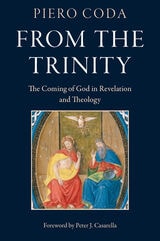
cover of From the Trinity : The Coming of God in Revelation and Theology

From the Trinity

The Coming of God in Revelation and Theology

Piero Coda

Catholic University of America Press, 2020
From the Trinity provides an overall view of the history and the philosophical and theological significance of God the Trinity, not only from a religious point of view but from an anthropological and socio-cultural view as well. The perspective is that of Christian doctrine, specifically Catholic, in dialogue with the cultural sensitivity of our times and with the religious pluralism that characterizes it. Following the generative-progressive method proposed by Vatican II, the book begins with a phenomenological reading of the signs of the times, with special focus upon the performative aspect of the announcement and the doctrine of faith. In particular, constant attention to the contribution made by the mystics and great charisms (from Augustine of Hippo to Francis of Assisi and Theresa of Avila up until Therese of Lisieux, Edith Stein and Chaira Lubich) toward a deeper understanding of the Trinitarian truth. From the Trinity is unique in what it offers not only for Trinitarian theology, but also for other theological disciplines (Christology, Pneumatology, Anthropology, Ecclesiology, etc.) – in which the Trinity shines forth as the central and enlightening truth – as well as for philosophy, the humanities and the natural sciences. This perspective is especially developed in terms of a Trinitarian ontology (see Part V) by which reality is understood in light of the revelation of the Trinity. The implications of the incarnation of the Son of God and the gift of the Holy Spirit are taken seriously in studying the truth of all things as they are perceived in the space created by living and thinking “in” Jesus, united to the Father in the Spirit, as suggested by the title of the book, looking upon reality “From the Trinity.”
[more]
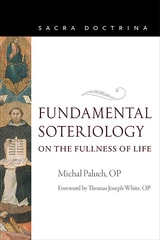
cover of Fundamental Soteriology: On the Fullness of Life

Fundamental Soteriology

On the Fullness of Life

Michal Paluch

Catholic University of America Press, 2026
Fullness of Life is a basic introduction to the Catholic understanding of salvation. It begins with a presentation of the background against which the teaching on salvation must be situated (the contemporary context of the question of salvation, the positions of other religions, the teaching of the magisterium) (chapter one), and a concise sketch on the history of soteriology (chapter two). The following chapters are a discussion of models for interpreting salvation relating to Christ's death on the cross (chapter three) and the totality of His life (chapter four). These considerations are concluded with a presentation of St. Thomas Aquinas' interpretative proposal (chapter five), which proves to be an apt way to synthesize the discussions presented earlier. The model of salvific mediation eventually turns out to be a higher-order model that allows to close the entire presentation (chapter six). The body of the text is supplemented by appendices that discuss a chosen set of particular problems related to the reflections in the corpus, that is, the “scapegoat” as a figure of Christ, the salvific function of other religions, substitution in Aquinas, and salutary suffering. The entire text ends with a selection of relevant sources. With the help of such a structure, the book proposes a basic explanation of (sometimes distorted) interpretations of sacrifice, substitution, satisfaction, divinization. It helps to bring readers from their first steps of soteriological reflection to Aquinas’ synthesis and to help them to discover that – taking into account the contemporary discussions and problems – Aquinas’ account can still offer a very convincing way for synthesizing soteriology. The book is addressed primarily to students of theology. However, it has been written in such a way that any Christian properly motivated to deepen their faith can benefit from reading it. And since it may serve as an aid in learning how to interpret the whole of soteriology, professional theologians may also find themselves inspired by it.
[more]
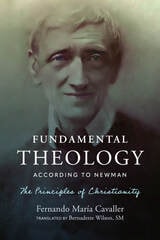
cover of Fundamental Theology According to Newman: The Principles of Christianity

Fundamental Theology According to Newman

The Principles of Christianity

Fernando Maria Cavaller

Catholic University of America Press, 2026
Although Newman certainly did not write the Essay on the Development of Christian Doctrine with the intention to do systematic theology, his ten principles serve as a framework for ordering the content of the essay with reference to Newman's other works. The result in this present book is a systematic analysis of the theological themes considered by Newman throughout his writing career. Newman’s writings were circumstantial in nature, written in response to controversies or needs of the moment. Nevertheless, he was able to shed light on those specific situations by appealing to timeless theological insights. The originality of this book consists in placing these insights in a systematic context. The arrangement is structured as a fundamental theology, following the usual discourse on God's revelation and faith as a response, with a brief intermediate exposition of fundamental Christology and ecclesiology. In order to give it Newman's own imprint, the author has provided only brief introductions or comments, as well as references to other authors, giving priority to Newman's own texts. In this way the work serves as an introduction to the thought and even to the life of John Henry Newman, whose literary style denotes the union of theological questions with a living faith.
[more]
cover of Funeral Orations

Funeral Orations

Saint Gregory Nazianzen

Catholic University of America Press, 1953

No description available
[more]