Results by title
90 books match the query 'Civil' and 5 start with f

Fault Diagnosis of Induction Motors
Jawad Faiz
The Institution of Engineering and Technology, 2017
Induction motors are still among the most reliable and important electrical machines. The wide range of their use involves various electrical, magnetic, thermal and mechanical stresses which results in the need for fault diagnosis as part of the maintenance. A yet unreached goal is the development of a generalized, practical approach enabling industry to accurately diagnose different potential induction motor faults.
[more]

Flooded
Development, Democracy, and Brazil’s Belo Monte DamPeter Taylor Klein
Rutgers University Press, 2022
Winner of the 2023 Marysa Navarro Best Book Prize from the New England Council for Latin American studies
In the middle of the twentieth century, governments ignored the negative effects of large-scale infrastructure projects. In recent decades, many democratic countries have continued to use dams to promote growth, but have also introduced accompanying programs to alleviate these harmful consequences of dams for local people, to reduce poverty, and to promote participatory governance. This type of dam building undoubtedly represents a step forward in responsible governing. But have these policies really worked?
Flooded provides insights into the little-known effects of these approaches through a close examination of Brazil’s Belo Monte hydroelectric facility. After three decades of controversy over damming the Xingu River, a tributary of the Amazon, the dam was completed in 2019 under the left-of-center Workers’ Party, becoming the world’s fourth largest. Billions of dollars for social welfare programs accompanied construction. Nonetheless, the dam brought extensive social, political, and environmental upheaval to the region. The population soared, cost of living skyrocketed, violence spiked, pollution increased, and already overextended education and healthcare systems were strained. Nearly 40,000 people were displaced and ecosystems were significantly disrupted. Klein tells the stories of dam-affected communities, including activists, social movements, non-governmental organizations, and public defenders and public prosecutors. He details how these groups, as well as government officials and representatives from private companies, negotiated the upheaval through protests, participating in public forums for deliberation, using legal mechanisms to push for protections for the most vulnerable, and engaging in myriad other civic spaces. Flooded provides a rich ethnographic account of democracy and development in the making. In the midst of today’s climate crisis, this book showcases the challenges and opportunities of meeting increasing demands for energy in equitable ways.
[more]
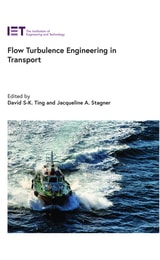
Flow Turbulence Engineering in Transport
David S-K. Ting
The Institution of Engineering and Technology, 2026
Turbulence in transportation occurs in the aerodynamics of vehicles, hydrodynamics of watercrafts, and combustion engines, amongst others. Turbulent flows can greatly affect the performance of vehicles, from air and water resistance, noise, and combustion quality - but it can also be exploited to improve the efficiency of the involved engineering operations. Understanding how turbulence effects occur within various transport modes can help engineers build better performing and safer vehicles, and overall improve transport networks.
[more]
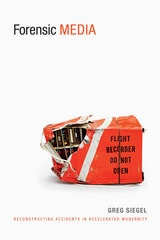
Forensic Media
Reconstructing Accidents in Accelerated ModernityGreg Siegel
Duke University Press, 2014
In Forensic Media, Greg Siegel considers how photographic, electronic, and digital media have been used to record and reconstruct accidents, particularly high-speed crashes and catastrophes. Focusing in turn on the birth of the field of forensic engineering, Charles Babbage's invention of a "self-registering apparatus" for railroad trains, flight-data and cockpit voice recorders ("black boxes"), the science of automobile crash-testing, and various accident-reconstruction techniques and technologies, Siegel shows how "forensic media" work to transmute disruptive chance occurrences into reassuring narratives of causal succession. Through historical and philosophical analyses, he demonstrates that forensic media are as much technologies of cultural imagination as they are instruments of scientific inscription, as imbued with ideological fantasies as they are compelled by institutional rationales. By rethinking the historical links and cultural relays between accidents and forensics, Siegel sheds new light on the corresponding connections between media, technology, and modernity.
[more]
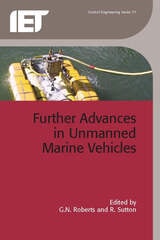
Further Advances in Unmanned Marine Vehicles
G.N. Roberts
The Institution of Engineering and Technology, 2012
The previous volume Advances in Unmanned Marine Vehicles brought together eighteen chapters describing research and developments in unmanned marine vehicles (UMVs). It was observed that almost without exception research groups worldwide were developing and working on real UMVs which means that they are able to test, evaluate and re-evaluate their designs in relatively quick succession, thereby rapidly reporting new approaches, techniques, designs and successes. This rapid design-evaluation cycle is the prime mover for progress, not only for consolidating designs but also leading to new design ideas and innovation. Since its publication in 2006, Advances in Unmanned Marine Vehicles has proven to be a useful and popular source of reference. However, the rapid design-evaluation cycle means further advances have been made which need to be reported. Thus, the seventeen chapters contained in this volume cover further advances in autonomous underwater vehicles, remotely operated vehicles, semi-submersibles, unmanned surface vessels whilst operating autonomously and/or in co-operation with other types of UMV. This book will be of interest to undergraduates, postgraduates, researchers and industrialists who are involved in the design and development of UMVs.
[more]