Results by title
122 books match the query 'Climatic changes' and 5 start with f
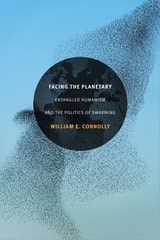
Facing the Planetary
Entangled Humanism and the Politics of SwarmingWilliam E. Connolly
Duke University Press, 2017
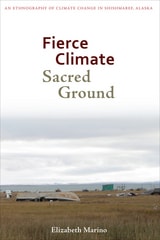
Fierce Climate, Sacred Ground
An Ethnography of Climate Change in Shishmaref, AlaskaElizabeth Marino
University of Alaska Press, 2015
Publications from the New York Times to Esquire have covered this disappearing village, yet few have taken the time to truly show the community and the two millennia of traditions at risk. In Fierce Climate, Sacred Ground, Elizabeth Marino brings Shishmaref into sharp focus as a place where people in a close-knit, determined community are confronting the realities of our changing planet every day. She shows how physical dangers challenge lives, while the stress and uncertainty challenge culture and identity. Marino also draws on Shishmaref’s experiences to show how disasters and the outcomes of climate change often fall heaviest on those already burdened with other social risks and often to communities who have contributed least to the problem. Stirring and sobering, Fierce Climate, Sacred Ground proves that the consequences of unchecked climate change are anything but theoretical.
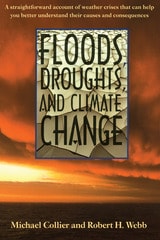
Floods, Droughts, and Climate Change
Michael Collier and Robert H. Webb
University of Arizona Press, 2002
This book shows that floods and droughts don't happen by accident but are the products of patterns of wind, temperature, and precipitation that produce meteorologic extremes. It introduces the mechanics of global weather, puts these processes into the longer-term framework of climate, and then explores the evolution of climatic patterns through time to show that floods and droughts, once considered isolated "acts of God," are often related events driven by the same forces that shape the entire atmosphere.
Michael Collier and Robert Webb offer a fresh, insightful look at what we know about floods, droughts, and climate variability—and their impact on people—in an easy-to-read text, with dramatic photos, that assumes no previous understanding of climate processes. They emphasize natural, long-term mechanisms of climate change, explaining how floods and droughts relate to climate variability over years and decades. They also show the human side of some of the most destructive weather disasters in history.
As Collier and Webb ably demonstrate, "climate" may not be the smooth continuum of meteorologic possibilities we supposed but rather the sum of multiple processes operating both regionally and globally on different time scales. Amid the highly politicized discussion of our changing environment, Floods, Droughts, and Climate Change offers a straightforward scientific account of weather crises that can help students and general readers better understand the causes of climate variability and the consequences for their lives.
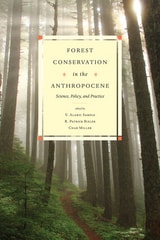
Forest Conservation in the Anthropocene
Science, Policy, and PracticeV. Alaric Sample
University Press of Colorado, 2016
Forest Conservation in the Anthropocene provides thought-provoking insight into the ongoing environmental crises that climate change is generating and raises critical questions about how public and private land managers in North America will adapt to the climatological disruptions that are already transforming the ecological structures of these forests.
In this pathbreaking anthology, a team of leading environmental researchers probes the central dilemmas that ecologists, forest land managers, state and federal agencies, and grassroots organizations are confronting—and will continue to confront—in the coming century. Each chapter examines strategies that are currently being tested across the country as scientists, citizen-scientists, policy makers, academics, and activists work to grasp their options and opportunities for a future that will be shaped by ongoing environmental upheaval.
Successful adaptation to the challenges of climate change requires a transdisciplinary perspective. Forest Conservation in the Anthropocene provides a compelling set of arguments and case studies that underscores the need for innovative policies and energetic actions.
Contributors: Craig D. Allen, Mark Anderson, Susan Beecher, R. Travis Belote, Timothy J. Brown, Anne A. Carlson, Tim Caro, Grace K. Charles, Dave Cleaves, Dena J. Clink, Ayesha Dinshaw, R. Kasten Dumroese, Jonas Epstein, Alexander M. Evans, Todd Gartner, Jessica E. Halofsky, Nels Johnson, Linda A. Joyce, Paige Lewis, Laura Falk McCarthy, Heather McGray, Constance I. Millar, James Mulligan, Chadwick Dearing, David L. Peterson, Will Price, Janine M. Rice, Jason Riggio, Tania Schoennagel, Mark L. Shaffer, Curt Stager, Scott L. Stephens, Thomas W. Swetnam, Gary M. Tabor, Christopher Topik, Monica G. Turner, Thomas T. Veblen, Alexandra M. Weill, Anthony L. Westerling, Carolyn Whitesell, Mary I. Williams
Framing the Problem
Causes and Consequences of a Shrinking Great Salt LakeKevin D. Perry
University of Utah Press, 2024