Results by title
233 books match the query 'Cold War' and 11 start with f
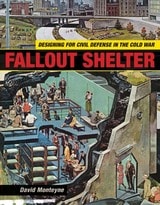
Fallout Shelter
Designing for Civil Defense in the Cold WarDavid Monteyne
University of Minnesota Press, 2011
In 1961, reacting to U.S. government plans to survey, design, and build fallout shelters, the president of the American Institute of Architects, Philip Will, told the organization’s members that “all practicing architects should prepare themselves to render this vital service to the nation and to their clients.” In an era of nuclear weapons, he argued, architectural expertise could “preserve us from decimation.”
In Fallout Shelter, David Monteyne traces the partnership that developed between architects and civil defense authorities during the 1950s and 1960s. Officials in the federal government tasked with protecting American citizens and communities in the event of a nuclear attack relied on architects and urban planners to demonstrate the importance and efficacy of both purpose-built and ad hoc fallout shelters. For architects who participated in this federal effort, their involvement in the national security apparatus granted them expert status in the Cold War. Neither the civil defense bureaucracy nor the architectural profession was monolithic, however, and Monteyne shows that architecture for civil defense was a contested and often inconsistent project, reflecting specific assumptions about race, gender, class, and power.
Despite official rhetoric, civil defense planning in the United States was, ultimately, a failure due to a lack of federal funding, contradictions and ambiguities in fallout shelter design, and growing resistance to its political and cultural implications. Yet the partnership between architecture and civil defense, Monteyne argues, helped guide professional design practice and influenced the perception and use of urban and suburban spaces. One result was a much-maligned bunker architecture, which was not so much a particular style as a philosophy of building and urbanism that shifted focus from nuclear annihilation to urban unrest.
Farewell to Prosperity
Wealth, Identity, and Conflict in Postwar AmericaLisle A. Rose
University of Missouri Press, 2014
Fate in My Hands
The Death Penalty in the Soviet UnionYana Skorobogatov
University of Chicago Press, 2026
A striking examination of the death penalty in the Soviet Union that documents in heart-rending detail how its citizens, hopeful for a new life post-Stalin, lost faith that their transgressions could be forgiven.
From 1954 to 1991 in the Soviet Union, nearly forty thousand citizens were executed after the death penalty was reinstated as a punishment for homicide. Fate in My Hands introduces readers to the many citizens in this period—women and men of all ages and backgrounds—who found themselves on death row and tried to escape it in the only way available to them: asking for forgiveness.
Examining the letters and objects the dead left behind, Skorobogatov recovers their voices and allows them to speak anew. She offers a striking portrait of life in the Soviet Union and the citizens who dreamed of new possibilities even as they faced their tragic end. Using a corpus of never-before-accessed criminal court records, Fate in My Hands brings readers not just into the police interrogation rooms, courthouses, and cells where the condemned awaited their fates, but into the homes, workplaces, and psychiatric hospitals where families and friends alike came together to pursue an elusive, bitter justice in the wake of violent tragedy.
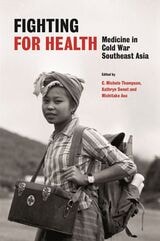
Fighting for Health
Medicine in Cold War Southeast AsiaEdited by C. Michele Thompson, Kathryn Sweet, and Michitake Aso
National University of Singapore Press, 2024
For far too long, Southeast Asia has been treated as a static backdrop for the exploits and discoveries of Western biomedical doctors. Yet, Southeast Asians have been vital to the significant developments in the prevention and treatment of diseases that have taken place in the region and beyond. Many of the institutions and people that shaped subsequent responses to outbreaks, epidemics, and pandemics first began their work in Southeast Asia during the Cold War. The diversity of approaches to health and medicine during that era also reminds us of the possibilities, and limits, of human intervention in the face of political, social, economic, and microbial realities. The people and places of Southeast Asia have provided clinical trials for different health regimes. Fighting for Health highlights new perspectives and methods that have evolved from research presented at regional conferences, including the History of Medicine in Southeast Asia (HOMSEA) series. These insights serve to challenge dominant models of the medical humanities.
Flash Effect
Science and the Rhetorical Origins of Cold War AmericaDavid J. Tietge
Ohio University Press, 2002
The ways science and technology are portrayed in advertising, in the news, in our politics, and in the culture at large inform the way we respond to these particular facts of life. The better we are at recognizing the rhetorical intentions of the purveyors of information and promoters of mass culture, the more adept we become at responding intelligently to them.
Flash Effect, a startling book by David J. Tietge, documents the manner in which those at the highest levels of our political and cultural institutions conflated the rhetoric of science and technology with the rhetorics of religion and patriotism to express their policies for governance at the onset of the Cold War and to explain them to the American public.
Professor Tietge details our cultural attitudes about science in the early years of the Cold War, when on the heels of a great technological victory Americans were faced with the possibility of destruction by the very weapons that had saved them.
In Flash Effect we learn how, by symbolizing the scientist as both a father figure and a savior—and by celebrating the technological objects of his labor—the campaign to promote science took hold in the American consciousness. The products of that attitude are with us today more than ever.
For Might and Right
Cold War Defense Spending and the Remaking of American DemocracyMichael Brenes
University of Massachusetts Press, 2020
How did the global Cold War influence American politics at home? For Might and Right traces the story of how Cold War defense spending remade participatory politics, producing a powerful and dynamic political coalition that reached across party lines. This “Cold War coalition” favored massive defense spending over social welfare programs, bringing together a diverse array of actors from across the nation, including defense workers, community boosters, military contractors, current and retired members of the armed services, activists, and politicians. Faced with neoliberal austerity and uncertainty surrounding America's foreign policy after the 1960s, increased military spending became a bipartisan solution to create jobs and stimulate economic growth, even in the absence of national security threats.
Using a rich array of archival sources, Michael Brenes draws important connections between economic inequality and American militarism that enhance our understanding of the Cold War's continued impact on American democracy and the resilience of the military-industrial complex, up to the age of Donald Trump.
Foreign Intervention in Africa after the Cold War
Sovereignty, Responsibility, and the War on TerrorElizabeth Schmidt
Ohio University Press, 2018
In Foreign Intervention in Africa after the Cold War—interdisciplinary in approach and intended for nonspecialists—Elizabeth Schmidt provides a new framework for thinking about foreign political and military intervention in Africa, its purposes, and its consequences. She focuses on the quarter century following the Cold War (1991–2017), when neighboring states and subregional, regional, and global organizations and networks joined extracontinental powers in support of diverse forces in the war-making and peace-building processes. During this period, two rationales were used to justify intervention: a response to instability, with the corollary of responsibility to protect, and the war on terror.
Often overlooked in discussions of poverty and violence in Africa is the fact that many of the challenges facing the continent today are rooted in colonial political and economic practices, in Cold War alliances, and in attempts by outsiders to influence African political and economic systems during the decolonization and postindependence periods. Although conflicts in Africa emerged from local issues, external political and military interventions altered their dynamics and rendered them more lethal. Foreign Intervention in Africa after the Cold War counters oversimplification and distortions and offers a new continentwide perspective, illuminated by trenchant case studies.
Forsaken Causes
Liberal Democracy and Anticommunism in Cold War LaosRyan Wolfson-Ford
University of Wisconsin Press, 2024
Forsaken Causes offers a groundbreaking intellectual history of the Royal Lao Government (RLG) from 1945 to 1975. In Ryan Wolfson-Ford’s account, the Lao people emerge as not merely pawns of the superpowers but agents in their own right, with the Lao elite wielding particular influence over the nation’s trajectory. Their prevailing ideologies—liberal democracy and anticommunism—were not imposed from outside, but rather established by Lao themselves in the fight against French colonialism. These ideologies were rooted in Lao culture, which prized its traditional monarchy, Buddhist faith, French learning, and nationalist conception of a Lao race. Against histories that have dismissed Lao elites as instruments of foreign powers, Wolfson-Ford shows that the RLG charted its own course, guided by complex motivations, rationales, and beliefs. During this time Lao enjoyed unprecedented democratic freedoms, many of which have not been seen since the government fell to communist takeover in 1975.
By recentering the Lao in their own history, Wolfson-Ford restores our understanding of this robust but often forgotten liberal democracy, recovers lost voices, and broadens our understanding of postcolonial and Cold War Southeast Asia as a whole.
Framing History
The Rosenberg Story and the Cold WarVirginia Carmichael
University of Minnesota Press, 1993
From Solidarity to Martial Law
The Polish Crisis of 1980–1981The National Security Archive Paczkowski
Central European University Press, 2007
From Union Halls to the Suburbs
Americans for Democratic Action and the Transformation of Postwar LiberalismScott Kamen
University of Massachusetts Press, 2023
For decades, Americans for Democratic Action (ADA) exerted an outsized pull on the political stage. Formed in 1947 by anticommunist liberals such as economist John Kenneth Galbraith and historian Arthur Schlesinger Jr., the ADA established itself as the most prominent liberal organization in the United States for more than a quarter century. Shaped by the ADA, the New Politics movement upended Democratic Party politics with its challenge to the Vietnam War, demands for redistributive economic policies, and development of a far-reaching politics of race, gender, and sexuality.
By bringing the ADA and its influential public intellectuals into the story of the New Politics movement, Scott Kamen reveals how American liberalism shifted away from the working-class concerns of the New Deal era and began to cater to the interests of a new, suburban professional class. By the 1980s, many Democratic politicians, activists, and voters had embraced a neoliberal ideology that coupled socially liberal attitudes with market-based solutions, eschewing an older progressive politics steeped in labor issues.