Results by title
146 books match the query 'Collections, Catalogs, Exhibitions' and 7 start with f
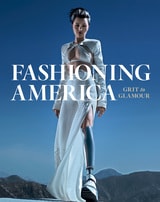
Fashioning America
Grit to GlamourMichelle Tolini Finamore
University of Arkansas Press, 2022
With nearly one hundred illustrations of garments and accessories that span two centuries of design, Fashioning America celebrates the achievements of a wide array of makers—especially immigrants, Native Americans, and Black Americans. Incorporating essays by fashion historians, curators, and journalists, this volume takes a fresh look at the country’s fashion history while exploring its close relationship with Hollywood and media in general, illuminating the role that American designers have played in shaping global visual culture and demonstrating why American fashion has long resonated around the world.

Figuration Never Died
New York Painterly Painting, 1950–1970Karen Wilkin
The Artist Book Foundation, 2020
By 1950, forward-looking New York painting was seen as synonymous with abstraction, especially charged, gestural Abstract Expressionism. But there was also a strong group of dissenters; artists, all born in the 1920s and many of them students of Hans Hofmann, who never lost their enthusiasm for recognizable imagery, without rejecting Abstract Expressionism's love of malleable oil paint. Although most of them began as abstract artists, they all evolved into painters working from observation, using a fluid, urgent touch to translate their perceptions into eloquent, highly individualized visual languages, almost always informed by the hand; that is, unlike the Color Field and Minimalist artists, these artists remained, for the most part, "painterly" painters. In light of their important contributions to twentieth-century American art, The Artist Book Foundation presents the cataloge for the Brattleboro Museum & Art Center's eponymous 2020 exhibition, Figuration Never Died: New York Painterly Painting, 1950–1970.
These rebellious artists include Lois Dodd, Jane Freilicher, Paul Georges, Grace Hartigan, Wolf Kahn, Alex Katz, Albert Kresch, Robert de Niro Sr., Paul Resika, and Anne Tabachnick. The compelling figurative work they made between about 1950 and 1970, in contrast to the prevailing Abstract Expressionism of the time, constitutes a significat chapter in the history of recent American Modernism. Their work not only greatly expands our conception of the story of New York painting, but it also presages and contextualizes today's multiplicity of artistic concepts and processes. Given both the aesthetic diversity of today's New York art world and the dependence of many younger artists on digital media or the appearance of digital media, it seems an appropriate moment to reconsider the work of these daring pioneers, as both precursor and opposition to current norms.
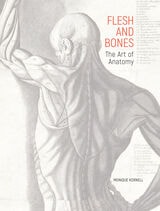
Flesh and Bones
The Art of AnatomyMonique Kornell
J. Paul Getty Trust, The, 2022
This illustrated volume examines the different methods artists and anatomists used to reveal the inner workings of the human body and evoke wonder in its form.
For centuries, anatomy was a fundamental component of artistic training, as artists such as Leonardo da Vinci and Michelangelo sought to skillfully portray the human form. In Europe, illustrations that captured the complex structure of the body—spectacularly realized by anatomists, artists, and printmakers in early atlases such as Andreas Vesalius’s De humani corporis fabrica libri septem of 1543—found an audience with both medical practitioners and artists.
Flesh and Bones examines the inventive ways anatomy has been presented from the sixteenth through the twenty-first century, including an animated corpse displaying its own body for study, anatomized antique sculpture, spectacular life-size prints, delicate paper flaps, and 3-D stereoscopic photographs. Drawn primarily from the vast holdings of the Getty Research Institute, the over 150 striking images, which range in media from woodcut to neon, reveal the uncanny beauty of the human body under the skin.
This volume is published to accompany an exhibition on view at the Getty Research Institute at the Getty Center from February 22 to July 10, 2022.

Foreign Exchange
(Or the Stories You Wouldn't Tell a Stranger)Edited by Clémentine Deliss, Yvette Mutumba, and the Weltkulturen Museum
Diaphanes, 2014
Developed through artistic research in the Weltkulturen Museum’s Weltkulturen Labor research lab, Foreign Exchange raises questions about the relationship between the museum’s educational and scientific aims and global trade. Together, essays by anthropologists, art historians, artists, and curators form an extended conversation around the historical accumulation and commodification of artifacts and, in particular, the representation of the human body in ethnographic photographs. Rounding out the volume are many previously unpublished photographs of works discussed. Contributing authors and artist include Peggy Buth, Minerva Cuevas, Gabriel Gbadamosi, David Lau, Tom McCarthy, David Weber-Krebs, and Luke Willis-Thompson.

French Daguerreotypes
Janet E. Buerger
University of Chicago Press, 1989
Lavishly illustrated, this volume is the first complete catalog of the French daguerreotype collection of the International Museum of Photography at George Eastman House. Janet E. Buerger uses this remarkable collection of images to produce a cultural history of the daguerreotype's most learned following—an elite group of mid-nineteenth-century intellectuals who sought to understand and develop the usefulness, potential, and beauty of this camera image. This varied group, including entrepreneurs, painters, scientists, and historians, enables Buerger to trace the influence of photography into virtually every area of nineteenth-century European intellectual life.
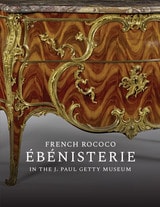
French Rococo Ébénisterie in the J. Paul Getty Museum
Gillian Wilson
J. Paul Getty Trust, The, 2021
The first comprehensive catalogue of the Getty Museum’s significant collection of French Rococo ébénisterie furniture.
This catalogue focuses on French ébénisterie furniture in the Rococo style dating from 1735 to 1760. These splendid objects directly reflect the tastes of the Museum’s founder, J. Paul Getty, who started collecting in this area in 1938 and continued until his death in 1976.
The Museum’s collection is particularly rich in examples created by the most talented cabinet masters then active in Paris, including Bernard van Risenburgh II (after 1696–ca. 1766), Jacques Dubois (1694–1763), and Jean-François Oeben (1721–1763). Working for members of the French royal family and aristocracy, these craftsmen excelled at producing veneered and marquetried pieces of furniture (tables, cabinets, and chests of drawers) fashionable for their lavish surfaces, refined gilt-bronze mounts, and elaborate design. These objects were renowned throughout Europe at a time when Paris was considered the capital of good taste.
The entry on each work comprises both a curatorial section, with description and commentary, and a conservation report, with construction diagrams. An introduction by Anne-Lise Desmas traces the collection’s acquisition history, and two technical essays by Arlen Heginbotham present methodologies and findings on the analysis of gilt-bronze mounts and lacquer.
The free online edition of this open-access publication is available at www.getty.edu/publications/rococo/ and includes zoomable, high-resolution photography. Also available are free PDF, EPUB, and Kindle/MOBI downloads of the book, and JPG downloads of the main catalogue images.
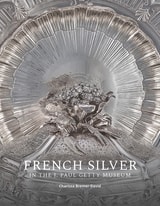
French Silver in the J. Paul Getty Museum
Charissa Bremer-David
J. Paul Getty Trust, The, 2023
The collection of seventeenth- and eighteenth-century French silver at the J. Paul Getty Museum is of exceptional quality and state of preservation. Each piece is remarkable for its beauty, inventive form, skillful execution, illustrious provenance, and the renown of its maker. This volume is the first complete study of these exquisite objects, with more than 250 color photographs bringing into focus extraordinary details such as minuscule makers’ marks, inscriptions, and heraldic armorials.
The publication details the formation of the Museum’s collection of French silver, several pieces of which were selected by J. Paul Getty himself, and discusses the regulations of the historic Parisian guild of gold- and silversmiths that set quality controls and consumer protections. Comprehensive entries catalogue a total of thirty-three pieces with descriptions, provenance, exhibition history, and technical information. The related commentaries shed light on the function of these objects and the roles they played in the daily lives of their prosperous owners. The book also includes maker biographies and a full bibliography.
The free online edition of this open-access publication is available at getty.edu/publications/french-silver/ and includes 360-degree views and zoomable high-resolution photography. Also available are free PDF and EPUB downloads of the book, and JPG downloads of the main catalogue images.