Results by title
65 books match the query 'Comedy' and 6 start with f
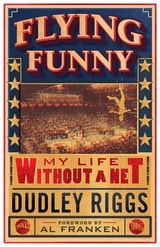
Flying Funny
My Life without a NetDudley Riggs
University of Minnesota Press, 2017
The unusual, gravity-defying first act of improvisational theater’s founding father—now in paperback
Dudley Riggs didn’t have to run away from home to join the circus: home was the circus. Son of the acclaimed aerial flyers Riggs and Riggs, he made his circus debut as a polar prince parading in a wagon pulled by a polar bear. At the age of five, he graduated to a risqué vaudeville act during the circus off- season; at eight, he outgrew his cutes (and his child stardom) and joined his high-flying parents on the trapeze. Eventually he had to learn to “fly funny” because he grew too tall to fly straight. In one way or another, Riggs has been flying ever since.
The rest, as they say, is history. And what a story it is. In Flying Funny, Riggs shares many highs and lows while describing circus life and the evolution of America’s popular entertainment during the twentieth century. From his early life in circus and vaudeville to his creation of the Brave New Workshop, we see how his show business experience and instincts helped him create in Minneapolis what became the “next wave” in American entertainment—improvisation.
As a young man, Riggs lost everything in a tornado, got an education on the fly, and sailed with the All American circus to post–war Japan. On a slow boat home and restless about his future, he developed the idea of Word Jazz—creating a script on stage as it is being performed—and shortly after he opened the Instant Theater in New York. Later, he moved to Minneapolis where he founded the Brave New Workshop, launching the careers of comic greats such as Penn and Teller, The Flying Karamazov Brothers, Louie Anderson, Peter Tolan, Pat Proft, Nancy Steen, Liz Winstead, Al Franken and many others. Today, the Brave New Workshop thrives as the longest running improvisational theater in America.
From flying funny on the trapeze to theater without a net, Dudley Riggs’s story is filled with hearty laughs and eyebrow-raising insights. With a wry sense of humor and infectious warmth, he shares the exhilaration of flying whether through the air or on the stage.
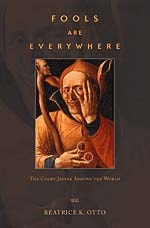
Fools Are Everywhere
The Court Jester Around the WorldBeatrice K. Otto
University of Chicago Press, 2001
Most of the work on the court jester has concentrated on Europe; Otto draws on previously untranslated classical Chinese writings and other sources to correct this bias and also looks at jesters in literature, mythology, and drama. Written with wit and humor, Fools Are Everywhere is the most comprehensive look at these roguish characters who risked their necks not only to mock and entertain but also to fulfill a deep and widespread human and social need.
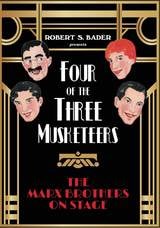
Four of the Three Musketeers
The Marx Brothers on StageRobert S. Bader
Northwestern University Press, 2022
An updated paperback version of the book heralded as “a new benchmark in Marx scholarship” by the Los Angeles Times
Before film made them international comedy legends, the Marx Brothers developed their comic skills on stage for twenty-five years. In Four of the Three Musketeers: The Marx Brothers on Stage, Robert S. Bader offers the first comprehensive history of the foursome’s hardscrabble early years honing their act in front of live audiences.
From Groucho’s debut in 1905 to their final live performances of scenes from A Night in Casablanca in 1945, the brothers’ stage career shows how their characters and routines evolved before their arrival in Hollywood. Four of the Three Musketeers draws on an unmatched array of sources, many not referenced elsewhere. Bader’s detailed portrait of the struggling young actors both brings to vivid life a typical night on the road for the Marx Brothers and illuminates the inner workings of the vaudeville business, especially during its peak in the 1920s.
As Bader traces the origins of the characters that would later come to be beloved by filmgoers, he also skillfully scrapes away the accretion of rumors and mythology perpetuated not only by fans and writers but by the Marx Brothers themselves. Revealing, vital, and entertaining, Four of the Three Musketeers has taken its place as an essential reference for this legendary American act. Now, the updated edition adds newly discovered performances—some submitted by readers—and additional information provided by descendants of long-departed vaudevillians mentioned in the book.
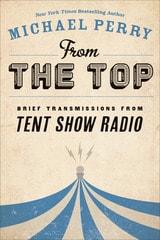
From the Top
Brief Transmissions from Tent Show RadioMichael Perry
Wisconsin Historical Society Press, 2013
“Bottom line is, I’m the kind of guy who’s happy to go to the opera, but I should like to be allowed to wear steel-toed boots with my evening suit. I like to read Harper’s with a chaser of Varmint Hunter Magazine. Maybe that’s why I enjoy a good show under canvas. Here we sit, brain-deep in arts and culture, but we’re also just people hanging out in a tent, some of us wearing boots, a few of us wearing Birkenstocks, but best of all we’re breathing free fresh air filled with music.”
From Scandihoovian Spanglish to snickering chickens, New York Times bestselling author and humorist Michael Perry navigates a wide range of topics in this collection of brief essays drawn from his weekly appearances on the nationally syndicated Tent Show Radio program. Fatherhood, dumpster therapy, dangerous wedding rings, Christmas trees, used cars, why you should have bacon in your stock portfolio, loggers in clogs—whatever the subject, Perry has a rare ability to touch both the funny bone and the heart.
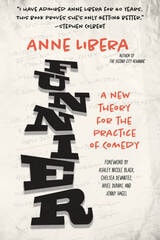
Funnier
A New Theory for the Practice of ComedyAnne Libera
Northwestern University Press, 2026
A roadmap for understanding and creating comedy from the visionary Second City comedy director
Great comedy can feel ineffable—and unlearnable. Debunking the myth that “either you are funny, or you aren’t,” Libera breaks the magic of comedy down into an innovative theory and practical toolkit. Developed over the course of thirty years as a director for The Second City and professor of comedy studies in their training center, Libera’s approach is effective across stand-up, sketch, film, and television comedy, as evidenced by her powerhouse students: Amy Poehler, Kristen Schaal, Steven Yeun, and many more of your favorites.
This book starts with a way to think about comedy and then guides you through concrete strategies for making your work smarter, richer, funnier. Libera covers everything from generating material to revising and performing to fostering social connection through comedy. In the book’s final section, Libera draws from her personal life to make a profound case for why future comedy writers should consider the ethics of their art and their responsibility to their fellow human beings in the audience. Readers won’t just be funnier because of this book—they’ll be better people.
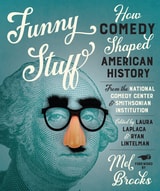
Funny Stuff
How Comedy Shaped American HistoryLaura LaPlaca
Rutgers University Press, 2026
A Junior Library Guild Gold Standard Selection
The National Comedy Center and Smithsonian Institution hold unparalleled collections of artifacts that illustrate the vitality and importance of comedy in American life, from vaudeville, silent films, and TV sitcoms to stand-up, sketch, and cartoons. Now, for the first time, these collections are brought together in vibrant photographs and illuminating essays that tell the story of how comedy shaped American history.
Written by historians responsible for safeguarding these cultural treasures, the book takes readers behind the scenes to uncover the stories behind American heirlooms like Groucho Marx’s tailcoat, George Carlin’s joke files, Carol Burnett’s “Went with the Wind” dress, Johnny Carson’s monologues, and the very first Saturday Night Live script, alongside materials from cultural touchstones like The Simpsons, The Muppet Show, In Living Color, All In the Family, and I Love Lucy.
With a foreword by comedy legend Mel Brooks, this dynamic work offers pop culture aficionados, history lovers, and comedy nerds alike a new perspective on America’s past and who we are as a nation through our comedy.