Results by title
58 books match the query 'Commercial policy' and 2 start with f
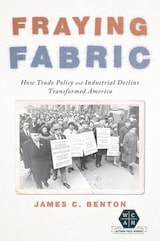
Fraying Fabric
How Trade Policy and Industrial Decline Transformed AmericaJames C. Benton
University of Illinois Press, 2022
The decline of the U.S. textile and apparel industries between the 1940s and 1970s helped lay the groundwork for the twenty-first century's potent economic populism in America. James C. Benton looks at how shortsighted trade and economic policy by labor, business, and government undermined an employment sector that once employed millions and supported countless communities. Starting in the 1930s, Benton examines how the New Deal combined promoting trade with weakening worker rights. He then moves to the ineffective attempts to aid textile and apparel workers even as imports surged, the 1974 pivot by policymakers and big business to institute lowered trade barriers, and the deindustrialization and economic devastation that followed. Throughout, Benton provides the often-overlooked views of workers, executives, and federal officials who instituted the United States’ policy framework in the 1930s and guided it through the ensuing decades. Compelling and comprehensive, Fraying Fabric explains what happened to textile and apparel manufacturing and how it played a role in today's politics of anger.
[more]

From Here to Free Trade
Essays in Post-Uruguay Round Trade StrategyErnest H. Preeg
University of Chicago Press, 1998
In his new book, Ernest Preeg analyzes international trade and investment in the 1990s and lays out a comprehensive U.S. trade strategy for the uncertain period ahead. He examines the influence of the World Trade Organization (WTO) and argues that economic globalization is beneficial to the U.S. economy in the short- to medium-term while raising important questions about national sovereignty and security over the longer term. Preeg believes regional free trade agreements will soon encompass the majority of world trade, but they can conflict with the WTO's multilateral objectives. The central challenge for U.S. trade strategy, then, is to integrate the now largely separate multilateral and regional tracks of the world trading system.
The first essay assesses U.S. interests in economic globalization, the second examines recent steps toward free trade at the multilateral and regional levels, and the next three offer an in-depth critique of U.S. regional free trade objectives in the Americas, across the Pacific, and possibly with Europe. The final essay presents a multilateral/regional synthesis for going from here to free trade over the coming decade.
The first essay assesses U.S. interests in economic globalization, the second examines recent steps toward free trade at the multilateral and regional levels, and the next three offer an in-depth critique of U.S. regional free trade objectives in the Americas, across the Pacific, and possibly with Europe. The final essay presents a multilateral/regional synthesis for going from here to free trade over the coming decade.
[more]