Results by title
214 books match the query 'Constitutional' and 7 start with f
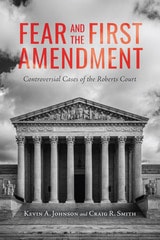
Fear and the First Amendment
Controversial Cases of the Roberts CourtKevin A. Johnson and Craig R. Smith
University of Alabama Press, 2024
DISTINGUISHED PUBLICATION AWARD FOR THE NATIONAL COMMUNICATION ASSOCIATION'S COMMUNICATION AND LAW DIVISION
The First Amendment: protected by law, threatened by fear in the Roberts Supreme Court.
In Fear and the First Amendment: Controversial Cases of the Roberts Court, Kevin A. Johnson and Craig R. Smith offer a deeply considered examination of the ways fear figures in First Amendment questions. Bringing together literature on theories of fear in rhetorical and philosophical traditions, Johnson and Smith focus on the rulings from the Roberts Court, which form a pivotal era of dramatic precedents. Each chapter analyzes one or more First Amendment cases and a variety of related fears—whether evidentiary or not—that pertain to a given case.
These cases include Morse v. Frederick, which takes up the competing fears of school administrators’ loss of authority and students’ loss of free speech rights. The authors touch on corporate funding of elections in Citizens United v. Federal Elections Commission, from the fear of corporate influence on electoral politics to corporate fears of alienating their consumers by backing political candidates. They explore religious freedom and fears of homosexuality in Christian Legal Society v. Martinez. Similarly, in Snyder v. Phelps, the authors delve further into fears of God, death, emotional distress, failing as a parent, and losing one’s reputation. Next, they investigate parents’ anxieties about violence in video games in Brown v. Entertainment Merchants Association. Finally, Johnson and Smith examine the role of fear in indecent, obscene, and graphic communication in three cases: FCC v. Fox Television Stations, Ashcroft v. American Civil Liberties Union, and United States v. Stevens.
Together these cases reveal fear to be an endemic factor in the rhetoric of First Amendment cases. This fascinating and original work will appeal to current legal practitioners and students of law, rhetoric, philosophy, and the First Amendment.
Federalism
A DialogueDavid L. Shapiro
Northwestern University Press, 1995
First Amendment Studies in Arkansas
The Richard S. Arnold Prize EssaysStephen Smith
University of Arkansas Press, 2016
This collection of fourteen essays written by young communication scholars at the University of Arkansas presents unique insights into how First Amendment issues have played out in the state. Rather than exploring the particular legal issues and the constitutional principles enunciated by the courts, First Amendment Studies tells the stories of actual people expressing challenged or unpopular points of view and reveals the ways that constitutional controversies arise from the actions of local officials and individual citizens.
Drawing on public documents as well as extensive interviews with participants, these essays demonstrate the dynamics of democratic dissent—on college campuses, in public schools, in churches, on the streets, in the forests and on the farms, and in legislative chambers and courtrooms.
Each essay was selected for the Richard S. Arnold Prize in First Amendment Studies, an endowed fund established in 1999 to encourage University of Arkansas graduate students in communication and the liberal arts to explore and examine questions about freedom of speech and freedom of religion.
Flunking Democracy
Schools, Courts, and Civic ParticipationMichael A. Rebell
University of Chicago Press, 2018
In Flunking Democracy, Michael A. Rebell makes the case that this is not a recent problem, but rather that for generations now, America’s schools have systematically failed to prepare students to be capable citizens. Rebell analyzes the causes of this failure, provides a detailed analysis of what we know about how to prepare students for productive citizenship, and considers examples of best practices. Rebell further argues that this civic decline is also a legal failure—a gross violation of both federal and state constitutions that can only be addressed by the courts. Flunking Democracy concludes with specific recommendations for how the courts can and should address this deficiency, and is essential reading for anyone interested in education, the law, and democratic society.
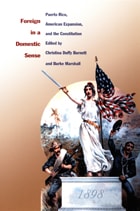
Foreign in a Domestic Sense
Puerto Rico, American Expansion, and the ConstitutionChristina Duffy Burnett and Burke Marshall, eds.
Duke University Press, 2001
More than four million U.S. citizens currently live in five “unincorporated” U.S. territories. The inhabitants of these vestiges of an American empire are denied full representation in Congress and cannot vote in presidential elections. Focusing on Puerto Rico, the largest and most populous of the territories, Foreign in a Domestic Sense sheds much-needed light on the United States’ unfinished colonial experiment and its legacy of racially rooted imperialism, while insisting on the centrality of these “marginal” regions in any serious treatment of American constitutional history. For one hundred years, Puerto Ricans have struggled to define their place in a nation that neither wants them nor wants to let them go. They are caught in a debate too politicized to yield meaningful answers. Meanwhile, doubts concerning the constitutionality of keeping colonies have languished on the margins of mainstream scholarship, overlooked by scholars outside the island and ignored by the nation at large.
This book does more than simply fill a glaring omission in the study of race, cultural identity, and the Constitution; it also makes a crucial contribution to the study of American federalism, serves as a foundation for substantive debate on Puerto Rico’s status, and meets an urgent need for dialogue on territorial status between the mainland and the territories.
Contributors. José Julián Álvarez González, Roberto Aponte Toro, Christina Duffy Burnett, José A. Cabranes, Sanford Levinson, Burke Marshall, Gerald L. Neuman, Angel R. Oquendo, Juan Perea, Efrén Rivera Ramos, Rogers M. Smith, E. Robert Statham Jr., Brook Thomas, Richard Thornburgh, Juan R. Torruella, José Trías Monge, Mark Tushnet, Mark Weiner
Free Expression and Democracy in America
A HistoryStephen M. Feldman
University of Chicago Press, 2008
Charting the course of free expression alongside the nation’s political evolution, from the birth of the Constitution to the quagmire of the Vietnam War, Stephen M. Feldman argues that our level of freedom is determined not only by the Supreme Court, but also by cultural, social, and economic forces. Along the way, he pinpoints the struggles of excluded groups—women, African Americans, and laborers—to participate in democratic government as pivotal to the development of free expression. In an age when our freedom of speech is once again at risk, this momentous book will be essential reading for legal historians, political scientists, and history buffs alike.
Free Speech, The People's Darling Privilege
Struggles for Freedom of Expression in American HistoryMichael Kent Curtis
Duke University Press, 2000
Curtis analyzes three crucial political struggles: the controversy that surrounded the 1798 Sedition Act, which raised the question of whether criticism of elected officials would be protected speech; the battle against slavery, which raised the question of whether Americans would be free to criticize a great moral, social, and political evil; and the controversy over anti-war speech during the Civil War. Many speech issues raised by these controversies were ultimately decided outside the judicial arena—in Congress, in state legislatures, and, perhaps most importantly, in public discussion and debate. Curtis maintains that modern proposals for changing free speech doctrine can usefully be examined in the light of this often ignored history. This broader history shows the crucial effect that politicians, activists, ordinary citizens—and later the courts—have had on the American understanding of free speech.
Filling a gap in legal history, this enlightening, richly researched historical investigation will be valuable for students and scholars of law, U.S. history, and political science, as well as for general readers interested in civil liberties and free speech.