Results by title
90 books match the query 'Constitutional history' and 2 start with f

Federalism
A DialogueDavid L. Shapiro
Northwestern University Press, 1995
David Shapiro explores the virtues and defects of federalism as it has developed in this country from a variety of perspectives that include historical, constitutional, economic, social, and political considerations. Using the dialectical form adopted by advocates trying a case before a court, Shapiro not only examines the strongest arguments on the two principal sides of the issue but also probes the potential value of the dialectical process itself.
[more]
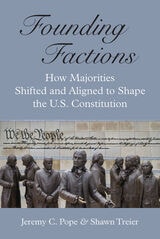
Founding Factions
How Majorities Shifted and Aligned to Shape the U.S. ConstitutionJeremy C. Pope and Shawn Treier
University of Michigan Press, 2020
The fundamental importance of the 1787 Constitutional Convention continues to affect contemporary politics. The Constitution defines the structure and limits of the American system of government, and it organizes contemporary debates about policy and legal issues—debates that explicitly invoke the intentions and actions of those delegates to the Convention. Virtually all scholarship emphasizes the importance of compromise between key actors or factions at the Convention. In truth, the deep structure of voting at the Convention remains somewhat murky because the traditional stories are incomplete. There were three key factions at the Convention, not two. The alliance of the core reformers with the slave interests helped change representation and make a stronger national government. When it came time to create a strong executive, a group of small state delegates provided the crucial votes. Traditional accounts gloss over the complicated coalition politics that produced these important compromises, while this book shows the specific voting alignments. It is true that the delegates came with common purposes, but they were divided by both interests and ideas into three crosscutting factions. There was no persistent dominant coalition of reformers or nationalists; rather, there was a series of minority factions allying with one another on the major issues to fashion the compromise. Founding Factions helps us understand the nature of shifting majorities and how they created the American government.
[more]