Results by title
244 books match the query 'Crime' and 6 start with f

Fiction, Crime, and Empire
CLUES TO MODERNITY AND POSTMODERNISMJon Thompson
University of Illinois Press, 1993
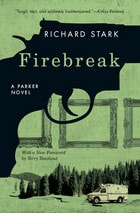
Firebreak
A Parker NovelRichard Stark
University of Chicago Press, 2011
Parker becomes a lover of art (to heist, that is) in this slam-bang entry in the classic hard-boiled crime series
Richard Stark's Parker novels are the hardest of hard-boiled, classic crime novels where the heists are huge, the body counts are high, and the bad guys usually win.
The Parker novels have been a huge influence on countless writers and filmmakers, including Quentin Tarantino, Stephen King, George Pelecanos, Colson Whitehead, Lucy Sante, John Banville, and many more. Their stripped-down language and hard-as-nails amorality create an unforgettable world where the next score could be the big one, but your next mistake could also be your last. There's nothing else like them.
Between Parker’s 1961 debut and his return in the late 1990s, the whole world of crime changed. Now fake IDs and credit cards had to be purchased from specialists; increasingly sophisticated policing made escape and evasion tougher; and, worst of all, money had gone digital—the days of cash-stuffed payroll trucks were long gone.
But cash isn’t everything: Firebreak takes Parker to a palatial Montana “hunting lodge” where a dot-com millionaire hides a gallery of stolen old masters—which will fetch Parker a pretty penny if his team can just get it past the mansion’s tight security. The forests of Montana are an inhospitable place for a heister when well-laid plans fall apart, but no matter how untamed the wilderness, Parker’s guaranteed to be the most dangerous predator around.
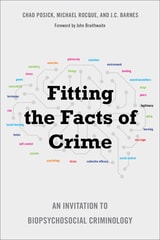
Fitting the Facts of Crime
An Invitation to Biopsychosocial CriminologyChad Posick, Michael Rocque, and J.C. Barnes
Temple University Press, 2022
Biosocial criminology—and biosocial criminologists—focuses on both the environmental and biological factors that contribute to antisocial behavior. Importantly, these two domains are not separate parts of an equation but pieces of the same puzzle that fit together for a complete picture of the causes of crime/antisocial behavior.
Fitting the Facts of Crime applies a biopsychosocial lens to the “13 facts of crime” identified by John Braithwaite in his classic book, Crime, Shame and Reintegration. The authors unpack established facts—about gender and sex, age, environment, education, class, social bonds and associations, stress, and other influences—providing both empirical research and evidence from biopsychosocial criminology to address the etiology behind these facts and exactly how they are related to deviant behavior.
With their approach, the authors show how biopsychosocial criminology can be a unifying framework to enrich our understanding of the most robust and well-established topics in the field. In so doing, they demonstrate how biological and psychological findings can be responsibly combined with social theories to lend new insight into existing inquiries and solutions. Designed to become a standard text for criminology in general, Fitting the Facts of Crime introduces key concepts and applies them to real-world situations.
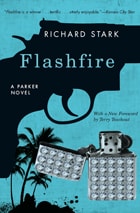
Flashfire
A Parker NovelRichard Stark
University of Chicago Press, 2011
Richard Stark's Parker novels are the hardest of hard-boiled, classic crime novels where the heists are huge, the body counts are high, and the bad guys usually win.
The Parker novels have been a huge influence on countless writers and filmmakers, including Quentin Tarantino, Stephen King, George Pelecanos, Colson Whitehead, Lucy Sante, John Banville, and many more. Their stripped-down language and hard-as-nails amorality create an unforgettable world where the next score could be the big one, but your next mistake could also be your last. There's nothing else like them.
Between Parker’s 1961 debut and his return in the late 1990s, the whole world of crime changed. Now fake IDs and credit cards had to be purchased from specialists; increasingly sophisticated policing made escape and evasion tougher; and, worst of all, money had gone digital—the days of cash-stuffed payroll trucks were long gone.
But cash isn’t everything: Flashfire (which was the basis of the Jason Statham and Jennifer Lopez film Parker) finds Parker going after a fortune in jewels in West Palm Beach. He's unexpectedly competing with a crew that has an unhealthy love of explosions, and when things go sour, Parker finds himself shot and trapped—and forced to rely on a civilian to survive.
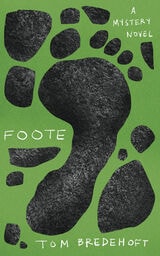
Foote
A Mystery NovelTom Bredehoft
West Virginia University Press, 2022
In the space of one weekend in Morgantown, West Virginia, private investigator Big Jim Foote finds himself at the center of two murder investigations. Suspected of one killing at a local festival, he locates the body of a missing person immediately after. The cops are watching him, and Big Jim has a secret he dares not reveal: he is a bigfoot living in plain sight, charged with keeping his people in the surrounding hills from being discovered. To protect the bigfoot secret, he must solve both murders—and convince himself it wasn’t a bigfoot who pulled the trigger.
Through the course of his investigations, Big Jim is helped by unique and well-rendered characters and friends in both his bigfoot and human communities. Readers are introduced to Appalachian mountain folk and traditional culture in new ways, even while Big Jim experiences the impact of the opioid epidemic on his own bigfoot kin. By centering a mythical creature as the unlikely protagonist in this enchanting literary murder mystery, Foote offers a winsome redefinition of a cryptid “monster” and breathes new life into the PI genre.

From Fear to Fraternity
A Russian Tale of Crime, Economy and ModernityPatricia Rawlinson
Pluto Press, 2010
The end of communism marked the re-emergence of a huge rise in organised crime across Russia and Eastern Europe. High-profile efforts to combat it have met with little success.
Patricia Rawlinson argues that burgeoning crime rates result not only from the failures of communism but also from the problems of free market economies.
Drawing on interviews with members of the Russian criminal underworld, the business community, journalists and the militia, she argues that organised crime provides us with a barometer of economic well-being, not just for Russia but for any market economy.