Results by title
434 books match the query 'Criticism & Theory' and 20 start with f
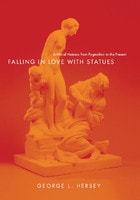
Falling in Love with Statues
Artificial Humans from Pygmalion to the PresentGeorge L. Hersey
University of Chicago Press, 2009
Hersey’s history of statue love begins in Cyprus, home of the legendary sculptor Pygmalion, who famously grew enamored of his own creation. Examining the island’s prehistoric images of Aphrodite—the love goddess who brought Pygmalion’s sculpture to life—Hersey traces the origins of statue love back to the Cypriot followers who adored her terra-cotta likenesses. He goes on to explore ideas about human replicas in the works of Empedocles, Aristotle, Lucretius, and Ovid, whose definitive account of the Pygmalion myth introduced the notion that statues have the potential to induce physical responses in their viewers. Finding avatars of Ovid’s living image in everything from pagan idols and early Christian statuary to eighteenth-century painting to modern action figures and marionettes, Hersey concludes by investigating the concern that these automata will eventually replace humans.
In the process, he narrates a powerful history of artificial life at a moment when—with the development of robot soldiers, ever more sophisticated genetic engineering, and a continually expanding digital universe—it seems more real than ever.
Far From Respectable
Dave Hickey and His ArtDaniel Oppenheimer
University of Texas Press, 2021
Finalist, 2021 Writers’ League of Texas Book Award
Regarded as both a legend and a villain, the critic Dave Hickey has inspired generations of artists, art critics, musicians, and writers. His 1993 book The Invisible Dragon became a cult hit for its potent and provocative critique of the art establishment and its call to reconsider the role of beauty in art. His next book, 1997’s Air Guitar, introduced a new kind of cultural criticism—simultaneously insightful, complicated, vulnerable, and down-to-earth—that propelled Hickey to fame as an iconoclastic thinker, loved and loathed in equal measure, whose influence extended beyond the art world.
Far from Respectable is a focused, evocative exploration of Hickey’s work, his impact on the field of art criticism, and the man himself, from his Huck Finn childhood to his drug-fueled periods as both a New York gallerist and Nashville songwriter to, finally, his anointment as a tenured professor and MacArthur Fellow. Drawing on in-person interviews with Hickey, his friends and family, and art world comrades and critics, Daniel Oppenheimer examines the controversial writer’s distinctive takes on a broad range of subjects, including Norman Rockwell, Robert Mapplethorpe, academia, Las Vegas, basketball, country music, and considers how Hickey and his vision of an “ethical, cosmopolitan paganism” built around a generous definition of art is more urgently needed than ever before.
Fashion, Culture, and Identity
Fred Davis
University of Chicago Press, 1992
Much of what we assume to be individual preference, Davis shows, really reflects deeper social and cultural forces. Ours is an ambivalent social world, characterized by tensions over gender roles, social status, and the expression of sexuality. Predicting what people will wear becomes a risky gamble when the link between private self and public persona can be so unstable.
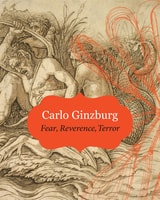
Fear Reverence Terror
Carlo Ginzburg
Seagull Books, 2017
Fear, Reverence, Terror invites us to look at images slowly, with the help of a few examples: Picasso’s Guernica, the “Lord Kitchener Wants You” World War I recruitment poster, Jacques-Louis David’s Marat, the frontispiece of Thomas Hobbes’s Leviathan, and a cup of gilded silver with scenes from the conquest of the New World. Are these political images, Carlo Ginzburg asks? Yes, because every image is, in a sense, political—an instrument of power. Tacitus once wrote, unforgettably, that we are enslaved by lies of which we ourselves are the authors. Is it possible to break this bond? Fear, Reverence, Terror will answer this question.
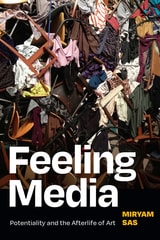
Feeling Media
Potentiality and the Afterlife of ArtMiryam Sas
Duke University Press, 2022
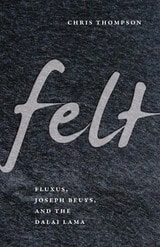
Felt
Fluxus, Joseph Beuys, and the Dalai LamaChris Thompson
University of Minnesota Press, 2010
Building from the resonance of felt, the fabric, in both Tibetan culture and in Beuys’s art, Thompson takes as his point of departure Deleuze and Guattari’s discussion in A Thousand Plateaus of felt as smooth space that is “in principle infinite, open, and unlimited in every direction,” its structure determined by chance as opposed to the planned, woven nature of most fabrics. Felt is thus seen as an alternative to the model of the network: felt’s anarchic form is not reducible to the regularity of the net, grid, or mesh, and the more it is pulled, tweaked, torn, and agitated, the greater its structural integrity.
Felt thus invents its methodology from the material that represents its object of inquiry and from this advances a reading of the avant-garde. At the same time, Thompson demonstrates that it is sometimes the failures of thought, the disappointing meetings, even the untimely deaths that open portals through which life flows into art and allows new conjunctions of life, art, and thought. Thompson explores both the well-known engagement of Fluxus artists with Eastern spirituality and the more elusive nature of Beuys’s own late interest in Tibetan culture, arriving at a sense of how such noncausal interactions—interhuman intrigue—create culture and shape contemporary art history.

Feminism in Revolt
An AnthologyCarla Lonzi
Seagull Books, 2023
Recently rediscovered in Italy and abroad, the works of Carla Lonzi tend to fall under the remit of art history or feminist theory. Art historians focus on the texts written in the 1960s, when Lonzi was still actively working as a critic, whereas feminist scholars engage with her more openly political interventions, published after her declared embrace of a separatist feminism. In 1970 Lonzi decided to leave the art world for good and dedicate herself to her newly founded feminist collective, Rivolta Femminile. While recognizing the break in Lonzi’s life and work, this anthology maps the overall arc of her intellectual and political production, giving equal weight to her seminal contributions to art criticism and her trailblazing feminist writings. A comprehensive collection of texts from the most influential and iconic figure of Italian second-wave feminism, Feminism in Revolt seeks to shed light on Lonzi’s versatile approach to literary genres and compositions by juxtaposing essayistic texts, poems, diary excerpts, and manifestos.
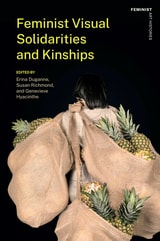
Feminist Visual Solidarities and Kinships
Erina Duganne
Rutgers University Press, 2027
Feminist Visual Solidarities and Kinships considers global feminist coalitional practices in the contemporary visual arts through three key frameworks: transnational solidarity, archives, and kinships and care. The edited volume features emerging and established scholars and artists whose diverse perspectives inspire connections as well as critical points of divergence over the meanings of “feminism,” “transnationalism,” and “art.” Representing grassroots activism, artistic practice, and scholarly and curatorial inquiry, the diversity of approaches, writing styles, and chapter lengths depart from conventional modes of academic writing and provide pedagogical opportunities for students and scholars to use these contributions in a variety of learning environments not limited to the traditional classroom.
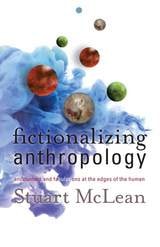
Fictionalizing Anthropology
Encounters and Fabulations at the Edges of the HumanStuart J. McLean
University of Minnesota Press, 2017
What might become of anthropology if it were to suspend its sometime claims to be a social science? What if it were to turn instead to exploring its affinities with art and literature as a mode of engaged creative practice carried forward in a world heterogeneously composed of humans and other than humans? Stuart McLean claims that anthropology stands to learn most from art and literature not as “evidence” to support explanations based on an appeal to social context or history but as modes of engagement with the materiality of expressive media—including language—that always retain the capacity to disrupt or exceed the human projects enacted through them.
At once comparative in scope and ethnographically informed, Fictionalizing Anthropology draws on an eclectic range of sources, including ancient Mesopotamian myth, Norse saga literature, Hesiod, Lucretius, Joyce, Artaud, and Lispector, as well as film, multimedia, and performance art, along with the concept of “fabulation” (the making of fictions capable of intervening in and transforming reality) developed in the writings of Bergson and Deleuze. Sharing with proponents of anthropology’s recent “ontological turn,” McLean insists that experiments with language and form are a performative means of exploring alternative possibilities of collective existence, new ways of being human and other than human, and that such experiments must therefore be indispensable to anthropology’s engagement with the contemporary world.
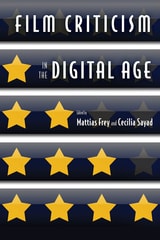
Film Criticism in the Digital Age
Frey, Mattias
Rutgers University Press, 2015
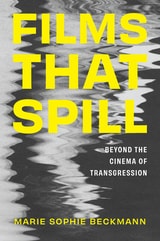
Films That Spill
Beyond the Cinema of TransgressionMarie Sophie Beckmann
Rutgers University Press, 2025
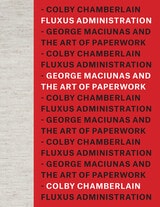
Fluxus Administration
George Maciunas and the Art of PaperworkColby Chamberlain
University of Chicago Press, 2024
Though widely recognized as the founder of the legendary Fluxus movement, George Maciunas has long been a puzzling figure in the history of twentieth-century art. Many have questioned whether he should be considered an artist at all. In Fluxus Administration, critic and art historian Colby Chamberlain reveals the consistent artistic practice hidden behind Maciunas’s varied work in architecture, music, performance, publication, graphic design, film, and real estate as an attempt to create models for community through structures of bureaucracy.
In this deeply researched study, Chamberlain traces how Maciunas’s art insinuated itself into settings as unlikely as the routes of the postal service, the fine print of copyright law, the zoning strictures of urban planning, and the corridors of hospitals. These shifting frames of reference expand our understanding of where an artistic practice can operate and what forms it might assume. In particular, Chamberlain draws on media theory to highlight Maciunas’s ingeniously crafted paperwork, much of which is beautifully reproduced here for the first time.
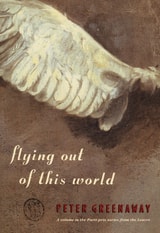
Flying Out of this World
Peter Greenaway
University of Chicago Press, 1994
As guest curator, Greenaway selected from the Louvre's collection of European prints and drawings ninety-one masterpieces that illustrate the human longing for flight. Greenaway's text, a compilation of brief commentaries that combine description, allusion, and interpretation, illuminate the images as depictions of flight desired and denied. Including works by Redon, Goya, Brueghel, Michelangelo, Mantegna, Rubens, Poussin, and Delacroix, this volume offers a combination of literary and visual art, of sight and insight.
A pursuit through the Bible, classical mythology, cosmology, theology, etymology, ornithology, and meteorology, Flying out of This World is not just an illustrated history of imagined flight, but a meditation on its meaning as a metaphor for the human condition, caught between a weighty body and a soaring spirit.
Fragile Identities
Edited by Susanne Witzgall and Kerstin Stakemeier
Diaphanes, 2016
The book Fragile Identities investigates among other things the chances and also the possible endangerments of such a fragile self and asks for the resurging urgency of a contemporary concept of subjectivity. The publication combines international artistic and scholarly contributions, discussions and project documentations in relation to the second annual theme of the cx centre for interdisciplinary studies at the Academy of Fine Arts Munich.
Framed Spaces
Photography and Memory in Contemporary Installation ArtMonica E. McTighe
Dartmouth College Press, 2012
Francis Bacon
The Logic of SensationGilles Deleuze
University of Minnesota Press, 2005
Afterword by Tom Conley
Gilles Deleuze had several paintings by Francis Bacon hanging in his Paris apartment, and the painter’s method and style as well as his motifs of seriality, difference, and repetition influenced Deleuze’s work. This first English translation shows us one of the most original and important French philosophers of the twentieth century in intimate confrontation with one of that century’s most original and important painters.
In considering Bacon, Deleuze offers implicit and explicit insights into the origins and development of his own philosophical and aesthetic ideas, ideas that represent a turning point in his intellectual trajectory. First published in French in 1981, Francis Bacon has come to be recognized as one of Deleuze’s most significant texts in aesthetics. Anticipating his work on cinema, the baroque, and literary criticism, the book can be read not only as a study of Bacon’s paintings but also as a crucial text within Deleuze’s broader philosophy of art.
In it, Deleuze creates a series of philosophical concepts, each of which relates to a particular aspect of Bacon’s paintings but at the same time finds a place in the “general logic of sensation.” Illuminating Bacon’s paintings, the nonrational logic of sensation, and the act of painting itself, this work—presented in lucid and nuanced translation—also points beyond painting toward connections with other arts such as music, cinema, and literature. Francis Bacon is an indispensable entry point into the conceptual proliferation of Deleuze’s philosophy as a whole.
Gilles Deleuze (1925–1995) was professor of philosophy at the University of Paris, Vincennes–St. Denis. He coauthored Anti-Oedipus and A Thousand Plateaus with Félix Guattari. These works, as well as Cinema 1, Cinema 2, The Fold, Proust and Signs, and others, are published in English by Minnesota.
Daniel W. Smith teaches in the Department of Philosophy at Purdue University.
From Point to Pixel
A Genealogy of Digital AestheticsMeredith Hoy
Dartmouth College Press, 2017
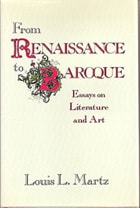
From Renaissance to Baroque
Essays on Literature and ArtLouis L. Martz
University of Missouri Press, 1991
Distinguished critic and scholar Louis L. Martz refreshingly addresses some of the central concerns in current studies of English poetry from the sixteenth and seventeenth centuries, exploring the context of religious controversy within which this poetry developed and the relationship of poetry to the visual arts.
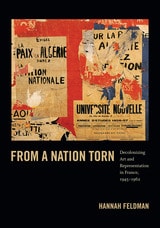
From a Nation Torn
Decolonizing Art and Representation in France, 1945-1962Hannah Feldman
Duke University Press, 2014

Future of Art in a Digital Age
From Hellenistic to Hebraic ConsciousnessMel Alexenberg
Intellect Books, 2006
This work develops the thesis that the transition from pre-modernism to postmodernism in art of the digital age represents a paradigm shift from the Hellenistic to the Hebraic roots of Western culture.
Semiotic and morphological analysis of art and visual culture demonstrate the contemporary confluence between the deep structure of Hebraic consciousness and new directions in art that arise along the interface between scientific inquiry, digital technologies, and multicultural expressions.
Complementing these two analytic methodologies, alternative methodologies of kabbalah and halakhah provide postmodern methods for extending into digital age art forms. Exemplary artworks are described in the text and illustrated with photographs.