Results by title
603 books match the query 'Description and travel' and 20 start with f
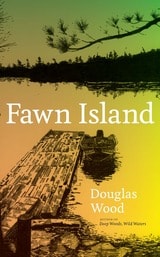
Fawn Island
Douglas Wood
University of Minnesota Press, 2018
Fawn Island is a place where crows serve as alarm clocks, white-throated sparrows leave the tracks of their songs upon the evening hush, and chickadees help a woodsman learn to whistle. The island is also a jumping-off place for journeys large and small, earthly and spiritual-to nearby Mallard Island, Gull Island, or Bald Rock, by sea kayak into the wild recesses of sprawling Voyageurs National Park, or on a midnight paddle in which the paddler can reach the silent wilderness of the stars themselves. In his latest book, best-selling author Douglas Wood guides the reader on a deep journey into the heart of the North Woods.
For Wood, Fawn Island is not merely a charming wilderness hideaway; it is the entry to realms of thought and meaning as well. From its pine-clad shores he probes for insights into the nature of neighborliness and independence, of community and solitude. Out of an ancient Ojibwe legend comes an exploration of personal loss and life after death. Wood questions the notion of being a “force of nature” and the concept of the passage of time in the context of seemingly eternal trees, lakes, rock ledges, and stars. From beneath the ascending trunks of pines comes an inquiry into the principles of optimism and, finally, a personal response to the eternal question: Is the universe a friendly place?
Embedded in the text like roots of the island’s pines is Wood’s gentle, self-effacing humor and the author’s own original pen-and-ink drawings that superbly evoke the poetry and mystery of this “small bit of rock and tree,” this “lucky place” in the wilderness.
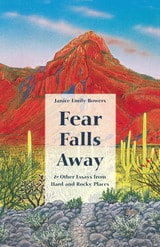
Fear Falls Away
and Other Essays from Hard and Rocky PlacesJanice Emily Bowers
University of Arizona Press, 1997
Faced with the prospect of moving to another place, Bowers finds herself thinking about the familiar world in new and unfamiliar ways. Through her eyes, too, we see how an interest in nature and the outdoors developed from early childhood and how simple curiosity has led her to the most surprising discoveries. At odd and unexpected moments, her work also seems to bring new insights into herself and her life as a writer, a wife, and a mother. These pages promise a new adventure at every turn in the trail. For sheer terror, there's a climb up the face of Baboquivari, for laughs, there's the great bagworm caper, and for some quiet truths, there are themes of gain and loss, of connection and reconcilliation. Crunching through winter snow or sweating under summer sun, we know we're in the hands of an experienced guide. And we know we couldn't ask for a better companion.
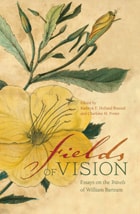
Fields of Vision
Essays on the Travels of William BartramEdited by Kathryn E. Holland Braund and Charlotte M. Porter
University of Alabama Press, 2010
A classic work of history, ethnography, and botany, and an examination of the life and environs of the 18th-century south
William Bartram was a naturalist, artist, and author of Travels through North and South Carolina, Georgia, East and West Florida, the Cherokee Country, the ExtensiveTerritories of the Muscogulees, or Creek Confederacy, and the Country of the Choctaws. The book, based on his journey across the South, reflects a remarkable coming of age. In 1773, Bartram departed his family home near Philadelphia, Pennsylvania, as a British colonist; in 1777, he returned as a citizen of an emerging nation of the United States. The account of his journey, published in 1791, established a national benchmark for nature writing and remains a classic of American literature, scientific writing, and history. Brought up as a Quaker, Bartram portrayed nature through a poetic lens of experience as well as scientific observation, and his work provides a window on 18th-century southern landscapes. Particularly enlightening and appealing are Bartram’s detailed accounts of Seminole, Creek, and Cherokee peoples.The Bartram Trail Conference fosters Bartram scholarship through biennial conferences held along the route of his travels. This richly illustrated volume of essays, a selection from recent conferences, brings together scholarly contributions from history, archaeology, and botany. The authors discuss the political and personal context of his travels; species of interest to Bartram; Creek architecture; foodways in the 18th-century south, particularly those of Indian groups that Bartram encountered; rediscovery of a lost Bartram manuscript; new techniques for charting Bartram’s trail and imaging his collections; and a fine analysis of Bartram’s place in contemporary environmental issues.
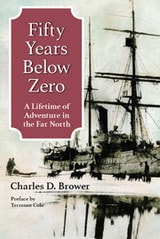
Fifty Years Below Zero
A Lifetime of Adventure in the Far NorthCharles Brower
University of Alaska Press, 1994
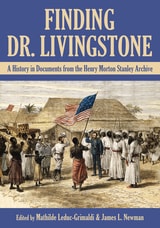
Finding Dr. Livingstone
A History in Documents from the Henry Morton Stanley ArchivesMathilde Leduc-Grimaldi
Ohio University Press, 2020
This eye-opening perspective on Stanley’s expedition reveals new details about the Victorian explorer and his African crew on the brink of the colonial Scramble for Africa.
In 1871, Welsh American journalist Henry M. Stanley traveled to Zanzibar in search of the “missing” Scottish explorer and missionary David Livingstone. A year later, Stanley emerged to announce that he had “found” and met with Livingstone on Lake Tanganyika. His alleged utterance there, “Dr. Livingstone, I presume,” was one of the most famous phrases of the nineteenth century, and Stanley’s book, How I Found Livingstone, became an international bestseller.
In this fascinating volume Mathilde Leduc-Grimaldi and James L. Newman transcribe and annotate the entirety of Stanley’s documentation, making available for the first time in print a broader narrative of Stanley’s journey that includes never-before-seen primary source documents—worker contracts, vernacular plant names, maps, ruminations on life, lines of poetry, bills of lading—all scribbled in his field notebooks.
Finding Dr. Livingstone is a crucial resource for those interested in exploration and colonization in the Victorian era, the scientific knowledge of the time, and the peoples and conditions of Tanzania prior to its colonization by Germany.
Finding Higher Ground
A Life Of TravelsCatharine Savage Brosman
University of Nevada Press, 2003
Essayist Catharine Savage Brosman explores the relationship of human beings to their environment, traveling from American deserts to dense European urban settings. Whether sipping wine in a Parisian café, partying with the jet set in Aspen, or contemplating the arid desert West that she loves, Brosman inhabits these settings, and many others, with a sense of adventure and discovery. To read these essays is to enjoy the company of a lively, thoughtful, original mind. Brosman’s "higher ground" is that place we all seek, where we can find and express our own best selves.
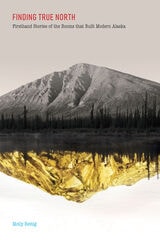
Finding True North
First-Hand Stories of the Booms that Built Modern AlaskaMolly Rettig
University of Alaska Press, 2021
Melting sea ice and rumbling volcanoes. Sled dogs racing through unnamed valleys.
These were the images that came to mind when Molly Rettig moved to Fairbanks, Alaska to work as a reporter at the local newspaper. An avid environmentalist, she couldn’t wait to explore the vast, untamed spaces that had largely been paved over on the east coast. But when her 72-year-old neighbor, Clutch, invites her on a tour of his gold mine—an 800-foot tunnel blasted into the side of his house–she begins to question many of her ideas about Alaska, and about herself.
In Finding True North, Rettig takes us on a gripping journey through Alaska's past that brings alive the state's magnificent country and its quirky, larger-than-life characters. She meets a trapper who harvests all she needs from the land, a bush pilot who taught himself how to fly, and an archaeologist who helped build an oil pipeline through pristine wilderness. While she learns how airplanes, mines, and oil fields have paved the way for newcomers like herself, she also stumbles upon a bigger question: what has this quest for Alaska’s natural resources actually cost, and how much more is at stake?
This is a book about all the ways wild places teach us about ourselves. Rettig writes both playfully and honestly about how one place can be many things to many people—and how all of it can be true.
Finding the Arctic
History and Culture Along a 2,500-Mile Snowmobile Journey from Alaska to Hudson’s BayMatthew Sturm
University of Alaska Press, 2012
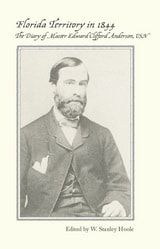
Florida Territory in 1844
The Diary of Master Edward Clifford Anderson, USNEdward Anderson, edited by W. Stanley Hoole
University of Alabama Press, 1977
Covers Edward Anderson’s service in Florida Territory from March 16 to December 31, 1844
Flow
The Life and Times of Philadelphia's Schuylkill RiverBeth Kephart
Temple University Press, 2014
Folklore in Motion
Texas Travel LoreKenneth L. Untiedt
University of North Texas Press, 2007

For the Love of Cod
A Father and Son's Search for Norwegian HappinessEric Dregni
University of Minnesota Press, 2021
A journey to find Norway’s supposed bliss makes for a comic travelogue that asks, seriously, what makes Norwegians so damn happy—and does it translate?
Norway is usually near or at the top of the World Happiness Report. But is it really one of the happiest countries on Earth? Eric Dregni had his doubts. Years ago he and his wife had lived in this country his great-great-grandfather once fled. When their son Eilif was born there, the Norwegian government paid for the birth, gave them $5,000, and deposited $150 into their bank account every month, but surely happiness was more than a generous health care system. What about all those grim months without sun? When Eilif turned fifteen, father and son decided to go back together and investigate. For the Love of Cod is their droll report on the state of purported Norwegian bliss.
Arriving in May, a month of festivals and eternal sun, the Dregnis are thrust into Norway at its merriest—and into the reality of the astronomical cost of living, which forces them to find lodging with friends and relatives. But this gives them an inside look at the secrets to a better life. It’s not the massive amounts of money flowing from the North Sea oil fields but how these funds are distributed that fuels the Norwegian version of democratic socialism—resulting in miniscule differences between rich and poor. Locals introduce them to the principles underlying their avowed contentment, from an active environmentalism that translates into flyskam (flight shame), which keeps Norwegians in the family cabin for the long vacations prescribed by law and charges a 150 percent tax on gas guzzlers (which, Eilif observes, means more Teslas seen in one hour than in a year in Minnesota!).
From a passion for dugnad or community volunteerism and sakte or “slow,” a rejection of the mad pace of modernity, to the commodification of Viking history and the dark side of Black Metal music that turns the idea of quaint, traditional Norway upside down, this idiosyncratic father and son tour lets readers, free of flyskam, see how, or whether, Norwegian happiness translates.
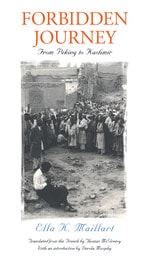
Forbidden Journey
Ella Maillart
Northwestern University Press, 2003
In 1935 Ella Maillart contemplated one of the most arduous journeys in the world: the "impossible journey" from Peking, then a part of Japanese-occupied China, through the distant province of Sinkiang (present day Tukestan), to Kashmir. Enlisting with newswriter Peter Fleming (with the caveat that his company remain tolerable), Maillart undertook a journey considered almost beyond imagination for any European and doubly so for a woman.
The trip promised hardships such as typhus and bandits, as well as the countless hazards surrounding the civil war between Chinese communists and Chiang Kai-shek's nationalists. Setting out with pockets full of Mexican money (the currency used in China at the time), Maillart encountered a way of life now lost, but one that then had gone unchanged for centuries.
Maillart describes it all with the sharp eye and unvarnished prose of a veteran reporter-the missionaries and rogues, parents binding daughters' feet with rags, the impatient Fleming lighting fires under stubborn camels. It's a hard road, not that Maillart cares. At all times she is a witty, always-enchanted guide-except when it comes to bureaucrats.
Forbidden Journey ranks among other travel narratives like Fleming's News from Tartary, (based on the same journey) and Robert Byron's The Road to Oxiana. But it is also a portrait of a fascinating woman, one of many women from the pre-WWII era who ignored convention and traveled in hidden lands. It remains a vivid account of its time and a classic of travel literature.
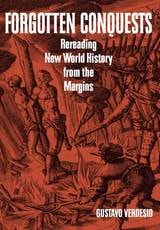
Forgotten Conquests
Rereading New World History from the MarginsGustavo Verdesio
Temple University Press, 2001
Verdesio read the key texts relating to the struggles for possession of River Plate's northern shore -- present-day Uruguay. He probes them for traces of conflicts in meaning and the agency of Amerindians, gauchos, Africans, and women -- the subjected peoples that the texts try to silence. The narrators, speaking for their culture, assume the role of knowing subject, repressing all other voices, epistemologies, and acts of resistance. Verdesio's tasks are to listen for those that the Europeans represented as an unintelligible Other, to draw them into the foreground, and to decolonize their histories.
By unpacking these texts, Verdesio shows that from the European point of view, the colonial encounter draws the New World into historical time and ushers in a new concept of knowledge. For the first time, the historian's role is to discover, to interpret eyewitness testimonies and first-hand experience, to write 'a new history of admirable things.' Even in this reconstruction of historical truth, Old World ideology drives the narratives, whose chief purpose is to justify conquest. Forgotten Conquests lays bare the discursive strategies that generated the founding texts of Latin American history and engulfed its subjected peoples in silence for 500 years.

Freud's Couch, Scott's Buttocks, Brontë's Grave
Simon Goldhill
University of Chicago Press, 2011
The Victorian era was the high point of literary tourism. Writers such as Charles Dickens, George Eliot, and Sir Walter Scott became celebrities, and readers trekked far and wide for a glimpse of the places where their heroes wrote and thought, walked and talked. Even Shakespeare was roped in, as Victorian entrepreneurs transformed quiet Stratford-upon-Avon into a combination shrine and tourist trap.
Stratford continues to lure the tourists today, as do many other sites of literary pilgrimage throughout Britain. And our modern age could have no better guide to such places than Simon Goldhill. In Freud's Couch, Scott’s Buttocks, Brontë's Grave, Goldhill makes a pilgrimage to Sir Walter Scott's baronial mansion, Wordsworth's cottage in the Lake District, the Bront ë parsonage, Shakespeare's birthplace, and Freud's office in Hampstead. Traveling, as much as possible, by methods available to Victorians—and gamely negotiating distractions ranging from broken bicycles to a flock of giggling Japanese schoolgirls—he tries to discern what our forebears were looking for at these sites, as well as what they have to say to the modern mind. What does it matter that Emily Brontë’s hidden passions burned in this specific room? What does it mean, especially now that his fame has faded, that Scott self-consciously built an extravagant castle suitable for Ivanhoe—and star-struck tourists visited it while he was still living there? Or that Freud's meticulous recreation of his Vienna office is now a meticulously preserved museum of itself? Or that Shakespeare’s birthplace features student actors declaiming snippets of his plays . . . in the garden of a house where he almost certainly never wrote a single line?
Goldhill brings to these inquiries his trademark wry humor and a lifetime's engagement with literature. The result is a travel book like no other, a reminder that even today, the writing life still has the power to inspire.
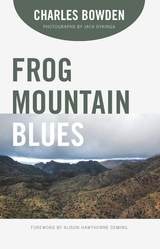
Frog Mountain Blues
Charles Bowden; Photographs by Jack Dykinga; Foreword by Alison Hawthorne Deming
University of Arizona Press, 2018
When it was first published in 1987, Frog Mountain Blues documented the creeping sprawl of new development up the Catalinas’ foothills. Today, that development is fully visible, but Charles Bowden’s prescience of the urgency to preserve and protect a sacred recreational space remains as vivid as ever. Accompanied by Jack W. Dykinga’s photographs from the original work, this book continues to convey the natural beauty of the Catalinas and warns readers that this unique wilderness could easily be lost.
As Alison Hawthorne Deming writes in the new foreword, “Frog Mountain Blues continues to be an important book for learning to read this place through the eyes of experience and history, and Bowden remains a sobering voice for facing our failures in protecting what we love in this time of global destruction, for taking seriously the power of language to set ourselves right again with the enormous task of living with purpose and presence and care on the land.”
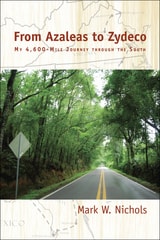
From Azaleas to Zydeco
My 4,600-Mile Journey through the SouthMark W. Nichols
Butler Center for Arkansas Studies, 2013
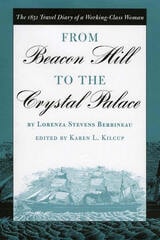
From Beacon Hill to the Crystal Palace
The 1851 Travel Diary of a Working-Class WomanLorenza Stevens Berbineau
University of Iowa Press, 2002
Because prior studies of American women’s travel writing have focused exclusively on middle-class and wealthy travelers, it has been difficult to assess the genre and its participants in a holistic fashion. One of the very few surviving working-class travel diaries, Lorenza Stevens Berbineau’s account provides readers with a unique perspective of a domestic servant in the wealthy Lowell family in Boston. Staying in luxurious hotels and caring for her young charge Eddie during her six-month grand tour, Berbineau wrote detailed and insightful entries about the people and places she saw.
Contributing to the traditions of women’s, diary, and travel literature from the perspective of a domestic servant, Berbineau's narrative reveals an arresting and intimate outlook on both her own life and the activities, places, and people she encounters. For example, she carefully records Europeans’ religious practices, working people and their behavior, and each region’s aesthetic qualities. Clearly writing in haste and with a pleasing freedom from the constraints of orthographic and stylistic convention, Berbineau offers a distinctive voice and a discerning perspective. Alert to nuances of social class, her narrative is as appealing and informative to today's readers as it no doubt was to her fellow domestics in the Lowell household.
Unobtrusively edited to retain as much as possible the individuality and texture of the author’s original manuscript, From Beacon Hill to the Crystal Palace offers readers brief framing summaries, informative endnotes, and a valuable introduction that analyzes Berbineau’s narrative in relation to gender and class issues and compares it to the published travel writing of her famous contemporary, Harriet Beecher Stowe.
From Peaks to Prairie
The Gifts of Walking in an Anxious LifeCara Chamberlain
Oregon State University Press, 2026
Along twenty-nine trails near Yellowstone National Park, Cara Chamberlain leads readers on a journey of perseverance, drawing lessons from human and natural history. She reflects on being diagnosed with generalized anxiety disorder (GAD) and obsessive-compulsive disorder (OCD) and explores how walking helps manage anxiety, opening rich pathways of perception.
In From Peaks to Prairie, Chamberlain examines her personal life, family history, and struggles as she encounters animals and plants of Montana and Wyoming. Each essay is an episode mingling the past with the present, combining sightings of bears, birds, and wildflowers with memories of her Utah childhood and family. She observes, “I walk. It’s the way I’ve found not to eliminate GAD and OCD, as I used to long to do, but to live with them.” Mountains and prairies offer strength and nurture those who need them. It is on their paths that Chamberlain finds clarity.
Frontier Romance
Environment, Culture, and Alaska IdentityJudith Kleinfeld
University of Alaska Press, 2012