Results by title
204 books match the query 'Direction & Production' and 5 start with f
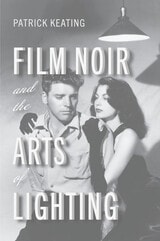
Film Noir and the Arts of Lighting
Patrick Keating
Rutgers University Press, 2024
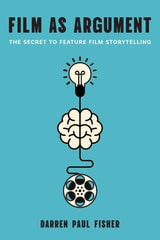
Film as Argument
The Secret to Feature Film StorytellingDarren Paul Fisher
Rutgers University Press, 2025
Is it to entertain? To move and audience? To tell a powerful story? For fame and fortune?
You may have answered yes to each, but those answers don’t account for the practice overall. Most books about screenwriting and directing are primarily concerned with craft and technique, but how can you truly understand filmmaking – or make the best films - unless you know what purpose it really serves.
So what’s the secret? As the title of this book suggests, making feature films is fundamentally the practice of making a very specific type of argument. To see how this works, we will deep-dive into how filmmakers are trained and taught to think about filmmaking, and what traditions they knowingly or unknowingly follow. We will look at hundreds of films and some major case studies, including Toy Story 3, Schindler’s List, Raiders of the Lost Ark, Amour, and mother!, to explore how and what films argue, and why knowing this can both unlock both a greater appreciation of the form, and improve the impact your films make.

Following the Score
The Ravel TrilogyOliver Smith
Intellect Books, 2024
This book frames the playtexts of The Ravel Trilogy—Bolero (2014), Concerto (2016), and Solo (2018)—alongside a series of reflective essays and provocations on contemporary dramaturgy and musicology from academics and artists in drama, music, linguistics, and fine art. It contextualizes the themes and approaches of the trilogy and serves as a critical companion to a body of devised work, stimulating a debate about dramaturgy and composition and inviting discussion about post-dramatic theater's relationship to music.
This publication marks the culmination of the trilogy and its critical legacy, exploring the work through the dual lenses of postdramatic theater and research questions articulated and addressed by the practice-research undertaken by its co-creators. The dramaturgical context for The Ravel Trilogy and the reflective essays around it allow the editors to explore the relationship between theater and music, raising questions about practice-research and notions of creating playtexts from musical scores. In this volume, Michael Pinchbeck and Ollie Smith reflect on making and performing The Ravel Trilogy and the process of researching, devising, and presenting work inspired by music where score becomes script and dynamics become stage directions.
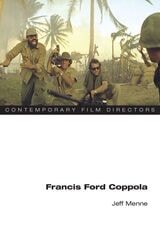
Francis Ford Coppola
Jeff Menne
University of Illinois Press, 2014
However, Jeff Menne argues that Coppola exemplifies the new breed of creative corporate person and sees the director's oeuvre as vital for reimagining the corporation in the transformation of Hollywood.
Reading auteur theory as the new American business theory, Menne reveals how Coppola's vision of a new kind of company has transformed the worker into a liberated and well-utilized artist, but has also commodified individual creativity at a level unprecedented in corporate history. Coppola negotiated the contradictory roles of shrewd businessman and creative artist by recognizing the two roles are fused in a postindustrial economy.
Analyzing films like The Godfather (1970) and the overlooked Tucker: The Man and His Dream (1988) through Coppola's use of opera, Menne illustrates how Coppola developed a defining musical aesthetic while making films that reflected the idea of a corporation as family--and how his studio American Zoetrope came to represent a new brand of auteurism and the model for post-Fordist Hollywood.
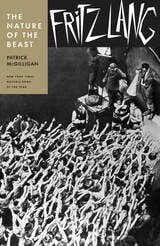
Fritz Lang
The Nature of the BeastPatrick McGilligan
University of Minnesota Press, 2013
The name of Fritz Lang—the visionary director of Metropolis, M, Fury, The Big Heat, and thirty other unforgettable films—is hallowed the world over. But what lurks behind his greatest legends and his genius as a filmmaker? Patrick McGilligan, placed among “the front rank of film biographers” by the Washington Post, spent four years in Europe and America interviewing Lang’s dying contemporaries, researching government and film archives, and investigating the intriguing life story of Fritz Lang. This critically acclaimed biography—lauded as one of the year’s best nonfiction books by Publishers Weekly—reconstructs the compelling, flawed human being behind the monster with the monocle.