Results by title
577 books match the query 'Earth Sciences' and 42 start with f

Family Fantasies and Community Space
Aitken, Stuart C
Rutgers University Press, 1998
Family forms are changing rapidly in Western society, and with them, the microenvironments within which men, women, and children live together. Stuart Aitken argues that, whether environment is taken as physical space or as a metaphor for the social, economic, and psychological basis of families, there remains a tendency to keep defining the meaning of families and communities in terms of older, traditional, "imagined," and idealized structures of politics, gender, and geography.
Using the stories of several families in San Diego, Aitken describes geographies of everyday life that contest definitions of cities and communities as mosaics reflecting patterns of social relations. He begins inside the family circle, looking at patriarchal power and the subordination of women, men, and children. Moving beyond the household, he then stresses the importance of place in defining the social and political character of communities and families' interplay within them--whether "communities" are viewed as neighborhoods, towns, or organizations that provide space for fellowship and common purpose. In turn, he shows that as the individual child reaches beyond family life to find a place in these communities, political cultures are reproduced through the child.
Aitken suggests ways in which individual and family identities are complexly intertwined with the cultural politics of communities, cities, and regions. He concludes that family and community spaces reproduce and reconstruct themselves daily according to divisions of race, class, gender, and differential access to housing, work, and child-care.
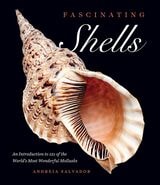
Fascinating Shells
An Introduction to 121 of the World’s Most Wonderful MollusksAndreia Salvador
University of Chicago Press, 2022
Beautiful photographs of stunning shells from London's Natural History Museum, home to one of the most significant and comprehensive collections in the world.
Collected and treasured for their beauty, used in religious rituals, or even traded as currency, shells have fascinated humans for millennia. Ancient and enchanting, dazzling in form and variety, these beautiful objects come from mollusks, one of the most diverse groups in the animal kingdom, including snails, oysters, cuttlefish, and chitons. Soft-bodied, these creatures rely on shells for protection from enemies and their environments, from snowy mountains to arid deserts, in deep-sea hydrothermal vents and the jungles of the tropics, on rocky shores, and in coral reefs.
In this book, mollusk expert Andreia Salvador profiles some of the world’s most beautiful and quirky shells, each selected from the more than eight million specimens held in the collection at London’s Natural History Museum. We lock eyes with the hundred-eyed cowry, named after "the all-seeing one," the giant Argus Panoptes of Greek mythology. We see how shells' appearances translate into defense strategies, as with the zigzag nerite, which varies its patterning to deceive and confuse predators. And we meet shell inhabitants, such as the amber snail, which eats earthworms by sucking them up like spaghetti. Reproduced in full color and striking detail, these shells have much to reveal about the history of collecting, the science of taxonomy, and the human desire to understand the natural world.
Fatal Isolation
The Devastating Paris Heat Wave of 2003Richard C. Keller
University of Chicago Press, 2015
Fatal Isolation tells the stories of these victims and the catastrophe that took their lives. It explores the multiple narratives of disaster--the official story of the crisis and its aftermath, as presented by the media and the state; the life stories of the individual victims, which both illuminate and challenge the ways we typically perceive natural disasters; and the scientific understandings of disaster and its management. Fatal Isolation is both a social history of risk and vulnerability in the urban landscape and a story of how a city copes with emerging threats and sudden, dramatic change.
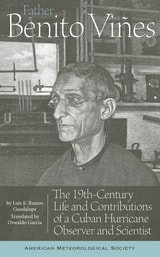
Father Benito Viñes
The 19th-Century Life and Contributions of a Cuban Hurricane Observer and ScientistLuis E. Ramos Guadalupe
American Meteorological Society, 2014
Father Benito Viñes is a fascinating look at the life of a man who worked on the cutting edge of weather science while still remaining devoted to his religious life. It explores Viñes as both pioneer in the study of tropical meteorology and a colonial Jesuit priest. With notes that put his life into modern context, this book puts a much deserved spotlight on a figure who played a crucial role in making our lives safer.
Fear of a Dead White Planet
More Worlds Collective. Joseph Masco, Tim Choy, Jake Kosek, M. Murphy
Duke University Press, 2025
Field Techniques for Sea-Ice Research
Edited by Hajo Eicken and Maya Salganek
University of Alaska Press, 2009
As much as one-tenth of the world’s oceans are covered with sea ice, or frozen ocean water, at some point during the annual cycle. Sea ice thus plays an important, often defining, role in the natural environment and the global climate system. This book is a global look at the changes in sea ice and the tools and techniques used to measure and record those changes. The first comprehensive research done on sea-ice field techniques, this volume will be indispensable for the study of northern sea ice and a must-have for scientists in the field of climate change research.
Flattening the Earth
Two Thousand Years of Map ProjectionsJohn P. Snyder
University of Chicago Press, 1997
Flattening the Earth is the first detailed history of map projections since 1863. John P. Snyder discusses and illustrates the hundreds of known projections created from 500 B.C. to the present, emphasizing developments since the Renaissance and closing with a look at the variety of projections made possible by computers.
The book contains 170 illustrations, including outline maps from original sources and modern computerized reconstructions. Though the text is not mathematically based, a few equations are included to permit the more technical reader to plot some projections. Tables summarize the features of nearly two hundred different projections and list those used in nineteenth-and twentieth-century atlases.
"This book is unique and significant: a thorough, well-organized, and insightful history of map projections. Snyder is the world's foremost authority on the subject and a significant innovator in his own right."—Mark Monmonier, author of How to Lie with Maps and Mapping It Out: Expository Cartography for the Humanities and Social Sciences.
Floods, Droughts, and Climate Change
Michael Collier and Robert H. Webb
University of Arizona Press, 2002
This book shows that floods and droughts don't happen by accident but are the products of patterns of wind, temperature, and precipitation that produce meteorologic extremes. It introduces the mechanics of global weather, puts these processes into the longer-term framework of climate, and then explores the evolution of climatic patterns through time to show that floods and droughts, once considered isolated "acts of God," are often related events driven by the same forces that shape the entire atmosphere.
Michael Collier and Robert Webb offer a fresh, insightful look at what we know about floods, droughts, and climate variability—and their impact on people—in an easy-to-read text, with dramatic photos, that assumes no previous understanding of climate processes. They emphasize natural, long-term mechanisms of climate change, explaining how floods and droughts relate to climate variability over years and decades. They also show the human side of some of the most destructive weather disasters in history.
As Collier and Webb ably demonstrate, "climate" may not be the smooth continuum of meteorologic possibilities we supposed but rather the sum of multiple processes operating both regionally and globally on different time scales. Amid the highly politicized discussion of our changing environment, Floods, Droughts, and Climate Change offers a straightforward scientific account of weather crises that can help students and general readers better understand the causes of climate variability and the consequences for their lives.
Footprints in Stone
Fossil Traces of Coal-Age TetrapodsRonald J. Buta and David C. Kopaska-Merkel
University of Alabama Press, 2016
Where ancient creatures walked—science uncovers their lasting impressions.
The Steven C. Minkin (Union Chapel) Paleozoic Footprint Site ranks among the most important fossil sites in the world today, and Footprints in Stone recounts the accidental revelation of its existence and detailed findings about its fossil record.
Currently 2,500 miles from the equator and more than 250 miles north of the Gulf of Mexico, the Minkin site was a swampy tropical forest adjacent to a tidal flat during the Coal Age or Carboniferous Period more than 300 million years ago. That fecund strand of sand and mud at the ocean’s edge teemed with the earth’s earliest reptiles as well as amphibians, fish, horseshoe crabs, spiders, jumping insects, and other fascinating organisms. Unlike dinosaurs and other large animals whose sturdy bodies left hard fossil records, most of these small, soft-bodied creatures left no concrete remains. But they did leave something else. Preserved in the site’s coal beds along with insect wings and beautifully textured patterns of primeval plants are their footprints, fossilized animal tracks from which modern paleontologists can glean many valuable insights about their physical anatomies and behaviors.
The paleontological examination of fossil tracks is now the cutting-edge of contemporary scholarship, and the Minkin site is the first and largest site of its kind in eastern North America. Discovered by a local high school science teacher, the site provides both professional and amateur paleontologists around the world with a wealth of fossil track samples along with an inspirational story for amateur explorers and collectors.
Authoritative and extensively illustrated, Footprints in Stone brings together the contributions of many geologists and paleontologists who photographed, documented, and analyzed the Minkin site’s fossil trackways. An engrossing tale of its serendipitous discovery and a detailed study of its fossil records, Footprints in Stone is a landmark publication in the history of paleontology.
For Love of Lakes
Darby Nelson
Michigan State University Press, 2011
America has more than 130,000 lakes of significant size. Ninety percent of all Americans live within fifty miles of a lake, and our 1.8 billion trips to watery places make them our top vacation choice. Yet despite this striking popularity, more than 45 percent of surveyed lakes and 80 percent of urban lakes do not meet water quality standards. For Love of Lakes weaves a delightful tapestry of history, science, emotion, and poetry for all who love lakes or enjoy nature writing. For Love of Lakes is an affectionate account documenting our species’ long relationship with lakes—their glacial origins, Thoreau and his environmental message, and the major perceptual shifts and advances in our understanding of lake ecology. This is a necessary and thoughtful book that addresses the stewardship void while providing improved understanding of our most treasured natural feature.
Fossil Ecosystems of North America
A Guide to the Sites and Their Extraordinary BiotasJohn R. Nudds and Paul A. Selden
University of Chicago Press, 2008
Fossil Ecosystems of North America describes these and eleven other sites that range across the continent.
Fossils
An Essential GuidePaul D. Taylor
University of Chicago Press, 2025
Ancient Earth seems like an alien world. But the fossil record can help reveal the mysteries of the organisms that have lived on our planet since its formation some 4,600 million years ago. In this engaging and beautifully illustrated book, world-renowned paleontologist Paul D. Taylor provides a comprehensive guide to all aspects of fossils to tell the story of life on Earth.
Taylor begins with the basics: how fossils form, how they mark geological time, and what they tell us about the origins of life and major evolutionary events like the Cambrian Explosion. He then shows the oldest fossils—single-celled bacteria in amazing, three-billion-year-old microbial rock structures—before introducing the first animals in the fossil record. From fishes to amphibians, reptiles, and mammals, we meet these animal fossils in an appropriate evolutionary parade. Next, we imagine plants long past, charting the evolution of this kingdom and learning how ephemeral botanical remains can become permanent records. While comprehensive in his coverage of fossil groups and ages, Taylor pays particular attention to specimens fossil hunters are most likely to encounter, like crinoids and the iconic ammonites. Throughout, he introduces us to fascinating fossil folklore—like the idea that ammonites are the petrified remains of coiled snakes—and helps us distinguish true fossils from fakes.
With stunning color images of many original specimens from the collections of London’s Natural History Museum, Fossils is an essential introduction, connecting life on Earth today to the ancient past.
Foundations of Biogeography
Classic Papers with CommentariesEdited by Mark V. Lomolino, Dov F. Sax, and James H. Brown
University of Chicago Press, 2004
List of Contributors
John C. Briggs, James H. Brown, Vicki A. Funk, Paul S. Giller, Nicholas J. Gotelli, Lawrence R. Heaney, Robert Hengeveld, Christopher J. Humphries, Mark V. Lomolino, Alan A. Myers, Brett R. Riddle, Dov F. Sax, Geerat J. Vermeij, Robert J. Whittaker
Foundations of Paleoecology
Classic Papers with CommentariesEdited by S. Kathleen Lyons, Anna K. Behrensmeyer, and Peter J. Wagner
University of Chicago Press, 2019
This book brings together forty-four classic papers published between 1924 and 1999 that trace the origins and development of paleoecology. The articles cross taxonomic groups, habitat types, geographic areas, and time and have made substantial contributions to our knowledge of the evolution of life. Encompassing the full breadth of paleoecology, the book is divided into six parts: community and ecosystem dynamics, community reconstruction, diversity dynamics, paleoenvironmental reconstruction, species interaction, and taphonomy. Each paper is also introduced by a contemporary expert who gives context and explains its importance to ongoing paleoecological research. A comprehensive introduction to the field, Foundations of Paleoecology will be an essential reference for new students and established paleoecologists alike.
Foundations of Stream and River Ecology
A Guide to the Classic LiteratureEdited by Wyatt F. Cross, Jonathan P. Benstead, Amy M. Marcarelli, and Ryan A. Sponseller
University of Chicago Press, 2024
The study of streams and rivers combines ecology, chemistry, hydrology, and geology to reveal the factors that control the biological diversity and functioning of these unique ecosystems. Although stream ecology is a relatively young discipline, foundational papers published over the past half century have shaped our current understanding of these ecosystems and have informed our efforts to manage and protect them. Organized by topics such as the physical template, community structure, food webs, ecosystem energetics, and nutrient dynamics, the chapters of this book offer summaries of the key literature, historical and contextual information, and insightful discussions of how past research has influenced present studies and may shape future work.
Fresh Water
E. C. Pielou
University of Chicago Press, 1998
"[A] keen and detailed look at the life and history of fresh water. . . . Dip into Fresh Water. It will both stimulate and satisfy as only good natural history can."—Toronto Globe and Mail
"Pielou's ease with her subject and her no-nonsense style of writing will satisfy and inspire the poet as well as the naturalist."—Denize Springer, Express Books
"[Pielou's] writing is didactic and definitive, in places even charming, and is buttressed by clear illustrations. . . . A welcome addition to the genre of literature designed to bridge the gap between scientists . . . and the intelligent and concerned lay public."—Daniel Hillel, Nature
"A wonderful natural history of one of life's necessities, a refreshing break from the grand theory and special pleading of many a science book. . . . Read it."—Fred Pearce, New Scientist
Freshwater Science, volume 39 number 4 (December 2020)
The University of Chicago Press
University of Chicago Press Journals, 2020
Freshwater Science, volume 41 number 4 (December 2022)
The University of Chicago Press
University of Chicago Press Journals, 2022
Freshwater Science, volume 42 number 1 (March 2023)
The University of Chicago Press
University of Chicago Press Journals, 2023
Freshwater Science, volume 42 number 2 (June 2023)
The University of Chicago Press
University of Chicago Press Journals, 2023
Freshwater Science, volume 42 number 3 (September 2023)
The University of Chicago Press
University of Chicago Press Journals, 2023
Freshwater Science, volume 42 number 4 (December 2023)
The University of Chicago Press
University of Chicago Press Journals, 2023
Freshwater Science, volume 43 number 1 (March 2024)
The University of Chicago Press
University of Chicago Press Journals, 2024
Freshwater Science, volume 43 number 2 (June 2024)
The University of Chicago Press
University of Chicago Press Journals, 2024
Freshwater Science, volume 43 number 3 (September 2024)
The University of Chicago Press
University of Chicago Press Journals, 2024
Freshwater Science, volume 43 number 4 (December 2024)
The University of Chicago Press
University of Chicago Press Journals, 2024
Freshwater Science, volume 44 number 1 (March 2025)
The University of Chicago Press
University of Chicago Press Journals, 2025
Freshwater Science, volume 44 number 2 (June 2025)
The University of Chicago Press
University of Chicago Press Journals, 2025
Freshwater Science, volume 44 number 3 (September 2025)
The University of Chicago Press
University of Chicago Press Journals, 2025
Freshwater Science, volume 44 number 4 (December 2025)
The University of Chicago Press
University of Chicago Press Journals, 2025
Freshwater Science, volume 45 number 1 (March 2026)
The University of Chicago Press
University of Chicago Press Journals, 2026
Freshwater Science, volume 45 number 2 (June 2026)
The University of Chicago Press
University of Chicago Press Journals, 2026
Freshwater Science, volume 45 number 3 (September 2026)
The University of Chicago Press
University of Chicago Press Journals, 2026

From Boom to Bubble
How Finance Built the New ChicagoRachel Weber
University of Chicago Press, 2015
In From Boom to Bubble, Rachel Weber debunks the idea that booms occur only when cities are growing and innovating. Instead, she argues, even in cities experiencing employment and population decline, developers rush to erect new office towers and apartment buildings when they have financial incentives to do so. Focusing on the main causes of overbuilding during the early 2000s, Weber documents the case of Chicago’s “Millennial Boom,” showing that the Loop’s expansion was a response to global and local pressures to produce new assets. An influx of cheap cash, made available through the use of complex financial instruments, helped transform what started as a boom grounded in modest occupant demand into a speculative bubble, where pricing and supply had only tenuous connections to the market. From Boom to Bubble is an innovative look at how property markets change and fail—and how that affects cities.
From California's Gold Fields to the Mendocino Coast
A Settlement History Across Time and PlaceSamuel M. Otterstrom
University of Nevada Press, 2017
The development of San Francisco’s outlying region from a wilderness into a prosperous village and farming mecca shows how quickly in-migration coupled with economic diversification can establish a stable settlement structure upon the landscape. Otterstrom describes an intricately woven tapestry of interrelated people who were contributing creators of a wide variety of prosperous northern California environs. He uncovers the processes that converted this sleepy post-Mexican outpost into a focal point of nearly hyperactive youthful growth. The narrative follows this crucial story of settlement development until the dawn of the twentieth century, through the interconnected framework of individual and family ingenuity, migration trajectories, and diverse geographical scales.
Multiplying individualistic experiences from across far-flung appendages of the Northern California system into larger and larger scales, Otterstrom has achieved a matchless historical and sociological study that will form the basis for any future studies of the area.
From Mineralogy to Geology
The Foundations of a Science, 1650-1830Rachel Laudan
University of Chicago Press, 1987
From Quarry to Cornfield
The Political Economy of Mississippian Hoe ProductionCharles Richard Cobb
University of Alabama Press, 2001
An innovative model for examining the technology of hoe production and its contribution to the agriculture of Mississippian communities.
Lithic specialist Charles Cobb examines the political economy in Mississippian communities through a case study of raw material procurement and hoe production and usage at the Mill Creek site on Dillow Ridge in southwest Illinois. Cobb outlines the day-to-day activities in a Mississippian chiefdom village that flourished from about A.D. 1250 to 1500. In so doing, he provides a fascinating window into the specialized tasks of a variety of "day laborers" whose contribution to the community rested on their production of stone hoes necessary in the task of feeding the village. Overlooked in most previous studies, the skills and creativity of the makers of the hoes used in village farming provide a basis for broader analysis of the technology of hoe use in Mississippian times.
Although Cobb's work focuses on Mill Creek, his findings at this site are representative of the agricultural practices of Mississippian communities throughout the eastern United States. The theoretical underpinnings of Cobb's study make a clear case for a reexamination of the accepted definition of chiefdom, the mobilization of surplus labor, and issues of power, history, and agency in Mississippian times. In a well-crafted piece of writing, Cobb distinguishes himself as one of the leaders in the study of lithic technology. From Quarry to Cornfield will find a well-deserved place in the ongoing discussions of power and production in the Mississippian political economy.

From Sea Charts to Satellite Images
Interpreting North American History through MapsEdited by David Buisseret
University of Chicago Press, 1990
"An extraordinarily wide range of maps is depicted, which makes for good browsing, pondering and close study. . . . This is a very good, highly attractive, and worthwhile book; it will have great impact on the use of old (and new!) maps in teaching. As well, this is a tantalizing survey of mapping the United States and will whet the appetites of students and encourage them to learn more about maps and their origins."—John Warketin, Cartographica
From Squaw Tit to Whorehouse Meadow
How Maps Name, Claim, and InflameMark Monmonier
University of Chicago Press, 2006
From Squaw Tit to Whorehouse Meadow probes this little-known chapter in American cartographic history by considering the intersecting efforts to computerize mapmaking, standardize geographic names, and respond to public concern over ethnically offensive appellations. Interweaving cartographic history with tales of politics and power, celebrated geographer Mark Monmonier locates his story within the past and present struggles of mapmakers to create an orderly process for naming that avoids confusion, preserves history, and serves different political aims. Anchored by a diverse selection of naming controversies—in the United States, Canada, Cyprus, Israel, Palestine, and Antarctica; on the ocean floor and the surface of the moon; and in other parts of our solar system—From Squaw Tit to Whorehouse Meadow richly reveals the map’s role as a mediated portrait of the cultural landscape. And unlike other books that consider place names, this is the first to reflect on both the real cartographic and political imbroglios they engender.
From Squaw Tit to Whorehouse Meadow is Mark Monmonier at his finest: a learned analysis of a timely and controversial subject rendered accessible—and even entertaining—to the general reader.
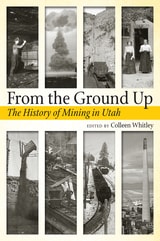
From the Ground Up
A History of Mining in Utahedited by Colleen K. Whitley
Utah State University Press, 2025
Mining had an enormous role, only partly measurable, in the history of Utah. Its multidimensional impact continues today. Economically, it made a major long-term contribution to the wealth, employment, and tax base of the state and stimulated a seemingly endless range of secondary businesses and enterprises. It helped shape the state's social history, determining the location, distribution, and composition of many communities and bringing transportation systems and a wide variety of institutions to them. It developed cultural diversity by drawing to Utah miners and families from otherwise underrepresented ethnic and national backgrounds. It ignited strife, particularly between labor and management, but those issues often spread into or connected with other conflicts in and between communities, classes, and factions. It influenced political platforms, generated candidates, and helped decide elections. Throughout the state, mining dramatically transformed the landscape, most obviously at what has been called the world's largest open-pit mine, which removed much of a mountain on the west side of Salt Lake Valley, but at innumerable other places too.
Despite all mining has done and meant, there has not been, until now, a book that surveyed its history in Utah. From the Ground Up fills that gap in a collection of essays by leading experts, among them historians Thomas G. Alexander, Martha Sonntag Bradley-Evans, James E. Fell Jr., Laurence P. James, Brigham D. Madsen, Philip F. Notarianni, Allen Kent Powell, W. Paul Reeve, Raye C. Ringholz, and Janet Burton Seegmiller and geologists J. Wallace Gwynn and William T. Parry. The book is divided into three comprehensive parts. The first looks at "The Ground of Utah Mining": the geology that has produced extractable minerals, the economic history of the industry, "father of Utah mining" Patrick E. Connor, and the lore of mines and miners. Part II reviews the history of a handful of particularly significant mineral industries: salines, coal, uranium, and beryllium. The last part takes a region-by-region approach to survey the important, primarily for hard-rock mining, areas of the state, including places from Silver Reef to Alta, the East Tintic Range to the Uinta Basin, and Park City to Frisco.
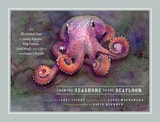
From the Seashore to the Seafloor
An Illustrated Tour of Sandy Beaches, Kelp Forests, Coral Reefs, and Life in the Ocean's DepthsJanet Voight and Peggy Macnamara
University of Chicago Press, 2022
Have you ever walked along the beach and wondered what kind of creatures can be found beneath the waves? Have you pictured what it would be like to see the ocean not from the shore but from its depths? These questions drive Janet Voight, an expert on mollusks who has explored the seas in the submersible Alvin that can dive some 14,000 feet below the water’s surface. In this book, she partners with artist Peggy Macnamara to invite readers to share her undersea journeys of discovery.
With accessible scientific descriptions, Voight introduces the animals that inhabit rocky and sandy shores, explains the fragility of coral reefs, and honors the extraordinary creatures that must search for food in the ocean’s depths, where light and heat are rare. These fascinating insights are accompanied by Macnamara’s stunning watercolors, which illuminate these ecosystems and other scenes from Voight’s research. Together, they show connections between life at every depth—and warn of the threats these beguiling places and their eccentric denizens face.
Future Sea
How to Rescue and Protect the World’s OceansDeborah Rowan Wright
University of Chicago Press, 2020
The world’s oceans face multiple threats: the effects of climate change, pollution, overfishing, plastic waste, and more. Confronted with the immensity of these challenges and of the oceans themselves, we might wonder what more can be done to stop their decline and better protect the sea and marine life. Such widespread environmental threats call for a simple but significant shift in reasoning to bring about long-overdue, elemental change in the way we use ocean resources. In Future Sea, ocean advocate and marine-policy researcher Deborah Rowan Wright provides the tools for that shift. Questioning the underlying philosophy of established ocean conservation approaches, Rowan Wright lays out a radical alternative: a bold and far-reaching strategy of 100 percent ocean protection that would put an end to destructive industrial activities, better safeguard marine biodiversity, and enable ocean wildlife to return and thrive along coasts and in seas around the globe.
Future Sea is essentially concerned with the solutions and not the problems. Rowan Wright shines a light on existing international laws intended to keep marine environments safe that could underpin this new strategy. She gathers inspiring stories of communities and countries using ocean resources wisely, as well as of successful conservation projects, to build up a cautiously optimistic picture of the future for our oceans—counteracting all-too-prevalent reports of doom and gloom. A passionate, sweeping, and personal account, Future Sea not only argues for systemic change in how we manage what we do in the sea but also describes steps that anyone, from children to political leaders (or indeed, any reader of the book), can take toward safeguarding the oceans and their extraordinary wildlife.