447 books match the query 'Eastern' and 15 start with f
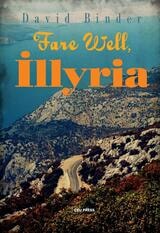
cover of Fare Well, Illyria

Fare Well, Illyria

David Binder

Central European University Press, 2014
As a reporter for the prestigious New York Times the author interviewed many of the leading political figures of the Balkans (Illyria). He also sought out the area's intellectuals, many of them critical of their leaders, and everyday people who provide a sense of daily life. He devotes a chapter to each ethnic group from Vlachs to Serbs, talks about their differences and similarities, and does so without giving offense. He also provides a short historical account of the various places he visits, which deepens our understanding of the local cultures. The reader meets people from all walks of life: politicians, poets, literary and art critics, journalists, handymen, car mechanics, fishermen and farmers. From Milovan Djilas and Nicolae Ceausescu to Markos Vafiadis and Sali Berisha to the Serbian “majstor” Misha and an un-named Bosnian bar singer, Binder's book features a remarkable gallery of people whose presence contributes authenticity and human warmth to the narrative.
[more]
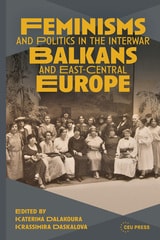
cover of Feminisms and Politics in the Interwar Balkans and East-Central Europe

Feminisms and Politics in the Interwar Balkans and East-Central Europe

Katerina Dalakoura

Central European University Press, 2026
The volume, a result of a collective research project, examines collaborations among interwar Balkan and East Central European feminist and women’s associations, as well as their engagement with intergovernmental alliances and diplomatic forums. It includes thematic case studies on the Little Entente of Women, the Unity of Slavic Women, the Balkan Women’s Conferences, and women’s participation in the mainstream Balkan Conferences. The book explores the relationship between feminist cooperation, national politics, and diplomacy in the region, the activities of the Little Entente of Women in promoting a shared political and feminist agenda, alongside other women’s and socialist collaborations. Additionally, it analyzes the reception and impact of these feminist actions in different national contexts and traces the activities of leading feminist figures across the region. The volume highlights the intricate interplay between nationalism, feminism, pacifism, and internationalism, covering key themes such as women’s citizenship, suffrage, labor rights, and the influence of socialism on feminist movements.
[more]
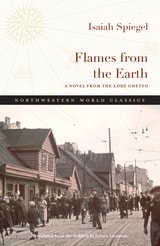
cover of Flames from the Earth: A Novel from the Lódz Ghetto

Flames from the Earth

A Novel from the Lódz Ghetto

Isaiah Spiegel, translated from the Yiddish by Julian Levinson

Northwestern University Press, 2023

An emotionally powerful, poetic Yiddish novel, available in English for the first time, that expands our understanding of Holocaust literature and testimony

Flames from the Earth: A Novel from the Łódź Ghetto is an autobiographical novel written by Isaiah Spiegel, one of the most revered Yiddish authors to survive the Holocaust. Originally published in Israel in 1966, the novel brings together material that Spiegel wrote while imprisoned in the Łódź Ghetto, which he recovered from a cellar when he returned from Auschwitz after the war. The only works by Spiegel previously available to English readers have been short stories.

In this, his first novel, Spiegel explores a complex web of characters in and around the Łódź Ghetto: Vigdor and Gitele, lovers who are involved in the ghetto resistance movement; Nicodem, a Polish priest, who hides a member of the Jewish underground; Stefan Kaczmarek, a Polish tavern keeper who betrays Nicodem to preserve his own smuggling business; Franz Jessike, a Nazi guard who blackmails local Poles for personal gain; and Chaim Vidaver, the heroic leader of the ghetto resistance. Based largely on historical events, the novel’s lyrical style echoes its emotional intensity.

Gripping and atmospheric, Flames from the Earth honors daring acts of heroism and human connections forged amid unthinkable conditions. Spiegel’s novel represents an important contribution to the archive of literary depictions of historical trauma.
 
[more]
cover of Flying Against the Arrow: An Intellectual in Ceausescu's Romania

Flying Against the Arrow

An Intellectual in Ceausescu's Romania

Horia-Roman Patapievici

Central European University Press, 2003

The ‘unbearable 80s’, as the last decade of the Ceauşescu era has been called in Romania, are in the focus of this quasi-autobiographical work. The book vividly portrays the difficulties encountered by a young intellectual trying to shape himself under the oppressive regime and provides a stark depiction of a man’s intellectual suffocation under hard-line socialist rule. 
[more]
cover of Form and Instability: Eastern Europe, Literature, Postimperial Difference

Form and Instability

Eastern Europe, Literature, Postimperial Difference

Anita Starosta

Northwestern University Press, 2015

Form and Instability: Eastern Europe, Literature, and Post-Imperial Difference busies itself with the work of accounting for this discrepancy between ostensible historical change and the persistence of anachronistic ways of thinking, a discrepancy that remains unaddressed and eludes attention; and it goes on to propose that literature—not simply as an archive of representations or a source of cultural capital but as a critical perspective in its own right—offers a way to apprehend and to redress this problem.Historical situations such as the post-1989 transitions to capitalism and liberal democracy, as well as the “Eastern” enlargement of the E.U., not only entail empirical change; they also call for and provoke intense renegotiations of cultural values and analytical concepts. Through rhetoric, reading, and translation—terms central to this book—literature will be seen to expedite and redirect such re-arrangements. It will be shown to destabilize discursively fixed categories without imposing, in turn, its own fixity.

Located at the intersection of comparative literature, area studies, and literary theory, this interdisciplinary study has a twofold commitment: to Eastern Europe on the one hand and to literature on the other. It aims to intervene in the way we conceive of Eastern Europe by seeking to develop a more equitable way of thinking, one that avoids subordinating it to Eurocentric narratives of progress. At the same time, it marshals literature as both object and method of this rethinking, in order to extend existing conceptions of the usefulness and of the proper organization of literary studies. The three terms in the title of this book mark a passage—via literature—from “Eastern Europe” as an inadequate and obsolescent category to “post-imperial difference” as a more accurate, if provisional, account of the region. By way of original readings of particular texts, and by attending to literature as a critical
[more]
cover of Fortress of My Youth: Memoir of a Terezín Survivor

Fortress of My Youth

Memoir of a Terezín Survivor

Jana Renée Friesová

University of Wisconsin Press, 2011

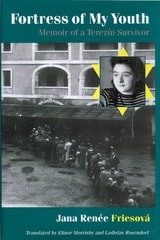
Jana Renée Friesová was fifteen when she was imprisoned by the Nazis in the Czech ghetto town of Terezín. Her memoir tells the poignantly familiar story of a young girl who, even under the most abominable circumstances, engages in intense adolescent friendships, worries with her companions over her looks, and falls in love.
Anne Frank’s diary ends with deportation to a concentration camp; Fortress of My Youth, in contrast, takes the reader deep into the horrors of daily life in a camp that were faced by a young girl and her family. But Friesová also tells of love, joy, sacrifice, and the people who shared in the most profound experiences of her life.
[more]
cover of Framing the Polish Home: Postwar Cultural Constructions of Hearth, Nation, and Self

Framing the Polish Home

Postwar Cultural Constructions of Hearth, Nation, and Self

Bozena Shallcross

Ohio University Press, 2002

As the subject of ideological, aesthetic, and existential manipulations, the Polish home and its representation is an ever-changing phenomenon that absorbs new tendencies and, at the same time, retains its centrality to Polish literature, whether written in Poland or abroad. Framing the Polish Home is a pioneering work that explores the idea of home as fundamental to the question of cultural and national identity within Poland's recent history and its tradition.

In this inaugural volume of the
Polish and Polish-American Studies Series, the Polish home emerges in its rich verbal and visual representations and multiple material embodiments, as the discussion moves from the loss of the home during wartime to the Sovietized politics of housing and from the exilic strategies of having a home to the the idyllic evocation of the abodes of the past.

Although, as Bożena Shallcross notes in her introduction, “few concepts seem to have such universal appeal as the notion of the home,” this area of study is still seriously underdeveloped. In essays from sixteen scholars, Framing the Polish Home takes a significant step to correct that oversight, covering a broad range of issues pertinent to the discourse on the home and demonstrating the complexity of the home in Polish literature and culture.
[more]
cover of Free to Hate: How Media Liberalization Enabled Right-Wing Populism in Post-1989 Bulgaria

Free to Hate

How Media Liberalization Enabled Right-Wing Populism in Post-1989 Bulgaria

Martin Marinos

University of Illinois Press, 2023

Linking neoliberalism with the Right’s global rise

Bulgaria’s media-driven pivot to right-wing populism parallels political developments taking place around the world. Martin Marinos applies a critical political economy approach to place Bulgarian right-wing populism within the structural transformation of the country’s media institutions. As Marinos shows, media concentration under Western giants like Westdeutsche Allgemeine Zeitung and News Corporation have led to a neoliberal turn of commercialization, concentration, and tabloidization across media. The Right have used the anticommunism and racism bred by this environment to not only undermine traditional media but position their own outlets to boost new political entities like the nationalist party Ataka. Marinos’s ethnographic observations and interviews with local journalists, politicians, and media experts add on-the-ground detail to his account. He also examines several related issues, including the performative appeal of populist media and the money behind it.

A timely and innovative analysis, Free to Hate reveals where structural changes in media intersect with right-wing populism.
[more]
cover of Freedom for Publishing, Publishing for Freedom

Freedom for Publishing, Publishing for Freedom

Timothy Garton Ash

Central European University Press, 1995
This is an assessment of the Central and East European Publishing Project, an initiative designed to support embattled Central and East European publishers and journals, and to punch holes through the cultural Iron Curtain by encouraging translations. The nine years of its existence straddle the largest watershed in European history since 1945, and the Project's history - told here by some of its leading participants - illuminates the nature of the recent changes in Central and Eastern Europe.
[more]
cover of From Central Planning to the Market: Transformation of the Czech Economy 1989 – 2004

From Central Planning to the Market

Transformation of the Czech Economy 1989 – 2004

Libor Zidek

Central European University Press, 2018
This book describes the process of the Czech economic transformation from the beginning of the 1990s to the country's entry into the European Union in 2004. This transformation is divided into four periods: an initial recession caused by the transformation; economic growth in the mid-1990s; a recession connected to the currency crisis of 1997; and recovery and growth from 1999 until 2004, when the analysis ends. The examination covers the main aspects of the transformation – an overall view of the process, political transition, economic policy, economic results (GDP development, inflation, unemployment), changes in outside indicators (balance of payments), privatization, transformation of the financial sector, and changes in the business sector and institutional development. The book also compares Czech development in this transformative era to those of Poland and Hungary. As in Hungary and Poland, the Czech Republic underwent an exceptional qualitative shift from a system centrally planned to one that was market-based. The book concludes that despite mistakes and hardships, the overall transformation process in Central Europe has been successful.
[more]
cover of From Class to Identity: The politics of education reforms in former Yugoslavia

From Class to Identity

The politics of education reforms in former Yugoslavia

Jana Bacevic

Central European University Press, 2014
Jana Bacevic provides an innovative analysis of education policy-making in the processes of social transformation and post-conflict development in the Western Balkans. Based on case studies of educational reform in the former Yugoslavia - from the decade before its violent breakup to contemporary efforts in post-conflict reconstruction - From Class to Identity tells the story of the political processes and motivations underlying each reform.The book moves away from technical-rational or prescriptive approaches that dominate the literature on education policy-making during social transformation, and offers an example on how to include the social, political and cultural context in the understanding of policy reforms. It connects education policy at a particular time in a particular place with broader questions such as: What is the role of education in society? What kind of education is needed for a 'good' society? Who are the 'targets' of education policies (individuals/citizens, ethnic/religious/linguistic groups, societies)? Bacevic shows how different answers to these questions influence the contents and outcomes of policies.
[more]
cover of From Good King Wenceslas to the Good Soldier Švejk: A Dictionary of Czech Popular Culture

From Good King Wenceslas to the Good Soldier Švejk

A Dictionary of Czech Popular Culture

Andrew Roberts

Central European University Press, 2005
Roberts' book follows in the tradition of recent scholarship that seeks to emphasize the importance of popular culture and the wealth of knowledge that can be gained through an analysis of the daily lives and practices of individuals. Focusing on popular songs, movie stars, famous athletes, traditional dishes, and children's games that are second nature to every Czech, Roberts' work serves as an introduction to Czech popular culture. This dictionary is a sizeable achievement as it offers an English readership an invaluable source of information to a rich body of material that has thus far remained ephemeral. The six hundred entries are cross-referenced and allow readers to pursue particular topics in greater depth. Written in a readable style this work is easily accessible to a wide readership.
[more]
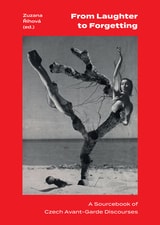
cover of From Laughter to Forgetting: A Sourcebook of Czech Avant-Garde Discourses

From Laughter to Forgetting

A Sourcebook of Czech Avant-Garde Discourses

Edited by Zuzana Ríhová

Karolinum Press, 2023

A comprehensive reader on the Czech literary avant-garde.
 
In recent years a prominent trend in the study of European modernism and the avant-garde has been increased attention to texts and traditions that have long stood in the shadow of the French, German, and British traditions that dominate the canon. Yet this more expansive view of European modernism and the avant-garde has been hindered by the limited range of texts available outside the original languages. This book addresses that problem by offering a wide-ranging selection of literary, theoretical, and documentary sources from one of the most dynamic and original European avant-garde traditions: that of the first Czechoslovak Republic and of the Bohemian lands. The Czech avant-garde is in many respects the ideal “alternative” avant-garde to present in detail to a wider readership: it tracks Central European developments and was often influential internationally while being deeply embedded in particular cultural dynamics that produced original forms. This volume returns interwar Czech avant-garde writings to their place as a firmly embedded component of the European avant-garde.
[more]
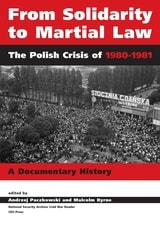
cover of From Solidarity to Martial Law: The Polish Crisis of 1980–1981

From Solidarity to Martial Law

The Polish Crisis of 1980–1981

The National Security Archive Paczkowski

Central European University Press, 2007
95 documents on the events that represent a pivotal moment in modern Polish and world history: 16 months between August 1980 when the Solidarity trade union was founded and December 1981 when Polish authorities declared martial law and crushed the nationwide opposition movement that had grown up around the union. Transcripts of Soviet and Polish Politburo meetings give a detailed picture of the goals, motivations and deliberations of the leaders of these countries. Records of Warsaw Pact gatherings, notes of bilateral sessions of the communist camp provide additional pieces to the puzzle of what Moscow and its allies had in mind. Materials are included from Solidarity, too.
[more]
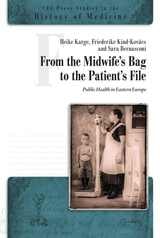
cover of From the Midwife's Bag to the Patient's File: Public Health in Eastern and Southeastern Europe

From the Midwife's Bag to the Patient's File

Public Health in Eastern and Southeastern Europe

Sara Bernasconi

Central European University Press, 2018

This volume offers an analysis of the intertwined relationship between public health and the biopolitical dimensions of state- and nation building in Central, Eastern and Southeastern Europe. It challenges the idea of diverging paths towards modernity of Europe’s western and eastern countries by not only identifying ideas, discourses and practices of “solving” public health issues that were shared among political regimes in the region; it also uncovers the ways in which, since the late nineteenth century, the biopolitical organization of the state both originated from and shaped an emerging common European framework. The broad range of local case studies stretches from Bosnia and Herzegovina, Czechoslovakia, the GDR, Greece and Hungary, to Poland, Serbia, the Soviet Union, and Yugoslavia. Taking a time span that begins in the late nineteenth century and ends in the post-socialist era, the book makes an original contribution to scholarship examining the relationship between public health, medicine, and state- and nation building in Europe’s long twentieth century. Close readings and dense descriptions of local discourses and practices of “public” health help to reflect on the transnational and global entanglements in the sphere of public health. In doing so, this volume facilitates comparisons on the regional, European, and global level.
[more]