Results by title
453 books match the query 'Economic policy' and 19 start with f
FAILURE OF PLANNING
PERMITTING SPRAWL IN SAN DIEGO SUBURBS 1RICHARD HOGAN
The Ohio State University Press, 2003

Failing Peace
Gaza and the Palestinian-Israeli ConflictSara Roy
Pluto Press, 2006
The book focuses on the Gaza Strip, an area that remains consistently neglected and misunderstood despite its political centrality. Drawing on more than two thousand interviews and extensive firsthand experience, Sara Roy chronicles the impact of Israeli occupation in Palestine over nearly a generation.
Exploring the devastating consequences of socio-economic and political decline, this is a unique and powerful account of the reality of life in the West Bank and Gaza. Written by one of the world's foremost scholars of the region, it offers an unrivalled breadth of scholarship and insight.
False Dawn
The New Deal and the Promise of Recovery, 1933–1947George Selgin
University of Chicago Press, 2025
CHOSEN AS ONE OF THE WALL STREET JOURNAL’S 10 BEST BOOKS OF 2025
A definitive history of the United States’ recovery from the Great Depression—and the New Deal's true part in it.
FDR’s New Deal has long enjoyed a special place in American history and policy—both because it redefined the government’s fundamental responsibilities and because Roosevelt’s “bold experimentation” represented a type of policymaking many would like to see repeated.
But “the thing about bold experiments,” economist George Selgin reminds us, “is that they often fail.” In False Dawn Selgin draws on both contemporary sources and numerous studies by economic historians to show that, although steps taken during the Roosevelt administration’s first days raised hopes of a speedy recovery from the Great Depression, instead of fulfilling those hopes, subsequent New Deal policies proved so counterproductive that over seventeen percent of American workers—more than the peak unemployment rate during the COVID-19 crisis—were still either unemployed or on work relief six years later.
By distinguishing the New Deal’s successes from its failures, and explaining how the U.S. finally managed to lay the specter of mass unemployment to rest, Selgin draws salient lessons for dealing with future recessions.
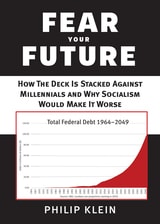
Fear Your Future
How the Deck Is Stacked against Millennials and Why Socialism Would Make It WorsePhilip Klein
Templeton Press, 2019
The aftershocks of the Great Recession, the skyrocketing cost of living, and the titanic weight of student loan debt have made the American Dream seem to be forever retreating toward the horizon. As if that weren’t enough, millennials will face the largest federal debt in history as boomers retire and extract trillions of dollars from Social Security and Medicare—far more than they contributed.
In this concise, data-driven book, Klein begins the work of brightening the future for millennials by analyzing the problem compassionately yet objectively. There are real reasons to worry about what lies ahead if nothing changes. But the facts laid out in Klein’s book can steer the conversation to realistic solutions.
Fiery Dragons
Banks, Moneylenders and Microfinance in BurmaSean Turnell
National University of Singapore Press, 2009
Fighting for Reliable Evidence
Judith M. Gueron
Russell Sage Foundation, 2013
Finance Capitalism Unveiled
Banks and the German Political EconomyRichard Deeg
University of Michigan Press, 1999
Financial Missionaries to the World
The Politics and Culture of Dollar Diplomacy, 1900-1930Emily S. Rosenberg
Duke University Press, 2003
Financial Missionaries to the World establishes the broad scope and significance of "dollar diplomacy"—the use of international lending and advising—to early-twentieth-century U.S. foreign policy. Combining diplomatic, economic, and cultural history, the distinguished historian Emily S. Rosenberg shows how private bank loans were extended to leverage the acceptance of American financial advisers by foreign governments. In an analysis striking in its relevance to contemporary debates over international loans, she reveals how a practice initially justified as a progressive means to extend “civilization” by promoting economic stability and progress became embroiled in controversy. Vocal critics at home and abroad charged that American loans and financial oversight constituted a new imperialism that fostered exploitation of less powerful nations. By the mid-1920s, Rosenberg explains, even early supporters of dollar diplomacy worried that by facilitating excessive borrowing, the practice might induce the very instability and default that it supposedly worked against.
Fiscal Institutions and Fiscal Performance
Edited by James M. Poterba and Jürgen von Hagen
University of Chicago Press, 1999
Fiscal Institutions and Fiscal Performance shifts emphasis away from narrow economic factors to more broadly defined political and institutional factors that affect government policy and national debt. This collection brings together new theoretical models, empirical evidence, and a series of in-depth case studies to analyze the effect of political institutions, fiscal regulations, and policy decisions on accumulating deficits. It provides a fascinating overview of the political and economic issues involved and highlights the role of budgetary institutions in the formation of budget deficits.
Fiscal Policy and Management in East Asia
Edited by Takatoshi Ito and Andrew K. Rose
University of Chicago Press, 2007
Fiscal Policy and Management in East Asia explores the inefficient tax systems of many developing countries, the relationship between public and private sector economic behavior, and the pressing issue of future obligations that governments have undertaken to provide pensions and health care for their citizens. Featuring both overviews and analyses of the countries discussed, this book will be of value to economists and policymakers seeking to understand fiscal policy in a global context.
Foreign Policy and Economic Dependence
By Neil R. Richardson
University of Texas Press, 1978
In an era of increasing interdependence among nations, the foreign policies of poor countries are becoming a subject of critical interest to scholars and the public alike. Neil R. Richardson adopts a political economy perspective to examine the foreign policy repercussions of international economic dependence.
Are dependent countries compliant in their foreign policies, acquiescing to the preferences of the industrial giants on which they rely for foreign trade, investment, and aid revenues? Or are they instead prepared to defy their dominant economic partners? These are the major concerns of Richardson’s rigorous investigation.
The book begins with a characterization of economic dependence and its possible impact on the foreign policy decisions of dependent governments. Ideas from both “interdependence” and dependencia scholarship are extracted in order to explain the reliance of poor countries on their rich partners. These economics are linked to the foreign policies of poorer countries by considering how the mechanisms of dependence may create pressures on foreign policymakers. Several combinations of pressures are plausible, and each set yields a differing expectation about their foreign policies.
The second part of the book is an empirical test of these foreign policy predictions for the years 1950–1973. Richardson analyzes the foreign policy behavior (as reflected in certain votes in the United Nations General Assembly) of a number of poor countries that are economically dependent on the United States to varying degrees.
The results suggest several surprising conclusions. Contrary to one common assumption, these mostly Latin American and Caribbean countries are not necessarily locked into a condition of perpetual dependence. Richardson finds that the foreign policies of the economic dependencies are not easily manipulated by the United States. Not only do annual changes in their external economic reliance fail to correspond to their U.N. voting behavior, but the dependencies as a group are no longer clear voting allies of the United States after the late 1960s. These and other results bear theoretical and policy implications that conclude the book.
Foreign Policy and Economic Dependence will be of interest to specialists in quantitative international relations and American foreign policy.

Forever Broke
How Baby Boomers are Bankrupting the Millennial GenerationAndrew Stiles
Templeton Press, 2018
Some of his key findings include:
- U.S. debt is approaching 100 percent of GDP, the highest level since World War II.
- By 2050, debt is on track to reach an unprecedented 145 percent of GDP. Under one pessimistic (but probably more realistic) scenario, CBO estimates that debt could rise to 244 percent of GDP, which means lights out.
- By 2050, federal spending is projected to exceed 29 percent of GDP, levels not seen since the height of World War II. We’re on track to spending more money on baby boomers in retirement than we did to defeat the Nazis.
- Since 1984, the median net worth for households headed by someone under the age of 35 has declined 68 percent. For retirement age households, net worth has increased 42 percent over that same period. The result is the largest generational wealth gap in history. Boomers did better than their kids in early adulthood, and will do better than their kids in retirement.
- As millennials remain childless and single for longer, they face one of the highest tax rates (16.9 percent) for their demographic in the developed world.

Forging an Integrated Europe
Barry Eichengreen and Jeffry Frieden, Editors
University of Michigan Press, 1998
Founding Choices
American Economic Policy in the 1790sEdited by Douglas A. Irwin and Richard Sylla
University of Chicago Press, 2010
The political decisions made by the founding fathers were crucial to the success of the early republic. But the economic decisions they made were just as pivotal, ensuring the general welfare and common defense of the United States for decades to come. Founding Choices explores these economic choices and their profound influence on American life, westward expansion, and influence abroad. Among the topics covered are finance, trade, and monetary and banking policy, with a focus on the factors guiding those policies and their end result.
This book redresses the relative neglect of the economic achievements of the founders. It will be essential reading for historians and economists alike.
Fragmented Lives, Assembled Parts
Culture, Capitalism, and Conquest at the U.S.-Mexico BorderBy Alejandro Lugo
University of Texas Press, 2008
Southwest Book Award, Border Regional Library Association, 2008
Association of Latina and Latino Anthropologists Book Award, 2009
Established in 1659 as Misión de Nuestra Señora de Guadalupe de los Mansos del Paso del Norte, Ciudad Juárez is the oldest colonial settlement on the U.S.-Mexico border-and one of the largest industrialized border cities in the world. Since the days of its founding, Juárez has been marked by different forms of conquest and the quest for wealth as an elaborate matrix of gender, class, and ethnic hierarchies struggled for dominance. Juxtaposing the early Spanish invasions of the region with the arrival of late-twentieth-century industrial "conquistadors," Fragmented Lives, Assembled Parts documents the consequences of imperial history through in-depth ethnographic studies of working-class factory life.
By comparing the social and human consequences of recent globalism with the region's pioneer era, Alejandro Lugo demonstrates the ways in which class mobilization is itself constantly being "unmade" at both the international and personal levels for border workers. Both an inside account of maquiladora practices and a rich social history, this is an interdisciplinary survey of the legacies, tropes, economic systems, and gender-based inequalities reflected in a unique cultural landscape. Through a framework of theoretical conceptualizations applied to a range of facets—from multiracial "mestizo" populations to the notions of border "crossings" and "inspections," as well as the recent brutal killings of working-class women in Ciudad Juárez—Fragmented Lives, Assembled Parts provides a critical understanding of the effect of transnational corporations on contemporary Mexico, calling for official recognition of the desperate need for improved working and living conditions within this community.

From Central Planning to the Market
Transformation of the Czech Economy 1989 – 2004Libor Zidek
Central European University Press, 2018
From Cotton Belt to Sunbelt
Federal Policy, Economic Development, and the Transformation of the South 1938–1980Bruce J. Schulman
Duke University Press, 1994
From Liberty to Democracy
The Transformation of American GovernmentRandall G. Holcombe
University of Michigan Press, 2002
The government's activities during two world wars and the Great Depression greatly increased its involvement in people's economic affairs, and by the time of Lyndon Johnson's Great Society, the transformation was complete. By the end of the twentieth century, the fundamental principle underlying American government had been transformed to democracy, and public policy was designed to further the will of the majority. The result has been a government that is larger and broader in scope.
From Liberty to Democracy examines American political history using the framework of public choice theory to show how American government grew more democratic, and how this resulted in an increase in the size and scope of government. It should appeal to historians, political scientists, and economists who are interested in the evolution of American government but does not assume any specialized training and can be read by anyone interested in American political history.
Randall G. Holcombe is DeVoe Moore Professor of Economics, Florida State University
From Socialism to Capitalism
Eight EssaysJanos Kornai
Central European University Press, 2008
Eight essays connected by various common strands. The most important one is the community of the main subject-matter: socialism, capitalism, democracy, change of system. These four expressions cover four phenomena of great and comprehensive importance. Each piece in the book deals with these and the connections between them.
One of the Leitmotifs is the “capitalism/socialism” pair of opposites. Capitalism has a history of several hundred years, while the socialist regime existed only for a few decades. But this pair of opposites was central to the history of the twentieth century. This antagonism put its stamp on political thinking, on the foreign policy and military preparedness of every country, and on some appallingly destructive armed conflicts. All these had great secondary influence on each country’s economic development and the standard of living and disposition of its inhabitants.
None of the studies is confined to one country—not to Hungary or to any other. Each tries to embrace the problems common to greater units. However, the greater unit comprehended is not the same in each study. One may deal with the capitalist or socialist system in general, another will all the post-socialist countries, and a third the Central East European region. But all extend the analysis beyond the borders of one country.