Results by title
271 books match the query 'Employment' and 10 start with f
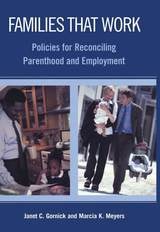
Families That Work
Policies for Reconciling Parenthood and EmploymentJanet C. Gornick
Russell Sage Foundation, 2003

Families at Work
Expanding the BoundsNaomi Gerstel
Vanderbilt University Press, 2002
To discuss work and family is also to discuss gender. Ranging from California's Silicon Valley to a remote fishing village in the northeast, part one shows how new work arrangements have created new expectations for what it means to be a woman or a man, and how slow and uneven the pace of change can be. Nowhere are the tensions of work and family more potent than around childcare. Part two takes up these tensions, showing how various "solutions" to caring for children of all ages (whether infants or teenagers) create new problems. Parts three and four turn outward to show how the new relationships between families and work are changing the relationships between families and the communities in which they live and generating new social policy dilemmas.
Fathers' Fair Share
Helping Poor Men Manage Child Support and FatherhoodEarl S. Johnson
Russell Sage Foundation, 1999

Fetal Rights, Women's Rights
Gender Equality in the WorkplaceSuzanne U. Samuels
University of Wisconsin Press, 1995
In the late 1970s and throughout the 1980s, many private employers in the United States enacted fetal protection policies that barred fertile women—that is, women who had not been surgically sterilized—from working in jobs that might expose fetuses to toxins. In Fetal Rights, Women’s Rights, Suzanne Samuels analyzes these policies and the ambiguous responses to them by federal and state courts, legislatures, administrative agencies, litigants, and interest groups. She poses provocative questions about the implicit links between social welfare concerns and paternalism in the workplace, including: are women workers or wombs?
Placing the fetal protection controversy within the larger societal debate about gender roles, Samuels argues that governmental decision-makers confuse sex, which is based solely on biological characteristics, with gender, which is based on societal conceptions. She contends that the debate about fetal protection policies brought this ambiguity into stark relief, and that the response of policy-makers was rooted in assumptions about gender roles. Judges, legislators, and regulators used gender as a proxy, she argues, to sidestep the question of whether fetal protection policies could be justified by the biological differences between women and men.
The fetal protection controversy raises a number of concerns about women's role in the workplace. Samuels discusses the effect on governmental policies of the ongoing controversy over abortion rights and the debates between egalitarian and relational feminists about the treatment of women at work. A timely and engrossing study, Fetal Rights, Women's Rights details the pattern of gender politics in the United States and demonstrates the broader ramifications of gender bias in the workplace.

Field Seasons
Reflections on Career Paths and Research in American ArchaeologyAnna Marie Prentiss
University of Utah Press, 2012
In Field Seasons, Anna Marie Prentiss chronicles her experiences as an archaeologist, providing an insider’s look at the diverse cultures, personal agendas, and career pathways associated with American archaeology since the late twentieth century. As the narrative moves from her academic training to employment in government and private consulting to her eventual professorship at a state university, several themes emerge.
This book is about career paths. Its discussion of the diverse jobs within the archaeological profession makes it valuable to students seeking guidance about their career options. It also provides insight into the cultures of American archaeology, a discipline with many schools of thought and unique subcultures. The world of archaeological field technicians is quite different from that of government bureaucrats or academics. Prentiss also explores the elements of cultural change within archaeology while she reflects on her personal evolution throughout her thirty years within the discipline.
The book’s unique personal assessment of the state of American archaeology will appeal to a broad swath of students and professionals. Students will find it an entertaining road map to possible careers while professionals will find plenty of scholarly material concerning ethics, archaeological theory, and interpretations of the archaeological record.
Finding Jobs
Work and Welfare ReformDavid Card
Russell Sage Foundation, 2000
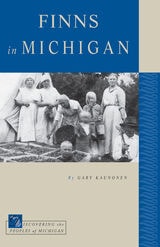
Finns in Michigan
Gary Kaunonen
Michigan State University Press, 2009
In Finns in Michigan Gary Kaunonen probes the intricacies of immigration, labor, and ideology among the members of this intriguing and historically important ethnic group. He skillfully traces the evolution of a vibrant, diverse, dramatic, and at times deeply quarrelsome people who left an indelible mark on the state's history.
Kaunonen examines the many schisms and splits that define the course of Finnish social life in Michigan. Michigan's Finns flocked to diverse cultural organizations that span a broad ideological spectrum. This book examines an extraordinarily wide range of organizations, including religious institutions, temperance societies, working-class political and labor groups, the cooperative movement, and a nationalist association of Finns.
Finns in Michigan is a study of the contributions of Michigan's Finns in the workplace, in society, and in cultural life. Unlike previous, sometimes mythologized, histories of the Finns in Michigan, Kaunonen's rendition strives to be a more accurate representation of "the good, the bad, and the other" activities of a group he calls "possibly America's most diverse family."
Five Years After
The Long-Term Effects of Welfare-to-Work ProgramsDaniel Friedlander
Russell Sage Foundation, 1995
Free Labor
Workfare and the Contested Language of NeoliberalismJohn Krinsky
University of Chicago Press, 2008
At times the fight over workfare unfolded as an argument over who had the authority to define these terms, and in Free Labor, John Krinsky focuses on changes in the language and organization of the political coalitions on either side of the debate. Krinsky’s broadly interdisciplinary analysis draws from interviews, official documents, and media reports to pursue new directions in the study of the cultural and cognitive aspects of political activism. Free Labor will instigate a lively dialogue among students of culture, labor and social movements, welfare policy, and urban political economy.
From Welfare to Work
Judith M. Gueron
Russell Sage Foundation, 1991