Results by title
60 books match the query 'Energy' and 4 start with f
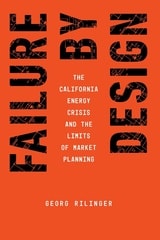
Failure by Design
The California Energy Crisis and the Limits of Market PlanningGeorg Rilinger
University of Chicago Press, 2024
The Western energy crisis was one of the great financial disasters of the past century. The crisis began in April 2000, when price spikes started to rattle California’s electricity markets. Decades later, some blame economic fundamentals and ignorant politicians, while others accuse the energy sellers who raided the markets. In Failure by Design, sociologist Georg Rilinger offers a different explanation, one that focuses on the practical challenges of market design. The unique physical attributes of electricity made it exceedingly difficult to introduce markets into the coordination of the electricity system, so market designers were brought in to construct the infrastructures that coordinate how market participants interact. An exercise in social engineering, these infrastructures were intended to guide market actors toward behavior that would produce optimal market results and facilitate grid management. Yet, though these experts spent their days worrying about incentive misalignment and market manipulation, they unintentionally created a system riddled with opportunities for destructive behavior. Rilinger’s analysis not only illuminates the California energy crisis but also develops a broader theoretical framework for thinking about markets as the products of organizational planning and the limits of social engineering, contributing broadly to sociological and economic thinking about the nature of markets.
Failure by Design
The California Energy Crisis and the Limits of Market PlanningGeorg Rilinger
University of Chicago Press, 2024
A new framework for studying markets as the product of organizational planning and understanding the practical limits of market design.
The Western energy crisis was one of the great financial disasters of the past century. The crisis began in April 2000, when price spikes started to rattle California’s electricity markets. Decades later, some blame economic fundamentals and ignorant politicians, while others accuse the energy sellers who raided the markets. In Failure by Design, sociologist Georg Rilinger offers a different explanation, one that focuses on the practical challenges of market design. The unique physical attributes of electricity made it exceedingly difficult to introduce markets into the coordination of the electricity system, so market designers were brought in to construct the infrastructures that coordinate how market participants interact. An exercise in social engineering, these infrastructures were intended to guide market actors toward behavior that would produce optimal market results and facilitate grid management. Yet, though these experts spent their days worrying about incentive misalignment and market manipulation, they unintentionally created a system riddled with opportunities for destructive behavior. Rilinger’s analysis not only illuminates the California energy crisis but also develops a broader theoretical framework for thinking about markets as the products of organizational planning and the limits of social engineering, contributing broadly to sociological and economic thinking about the nature of markets.
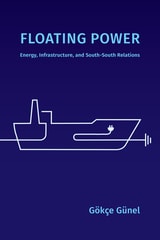
Floating Power
Energy, Infrastructure, and South-South RelationsGökçe Günel
Duke University Press, 2026

Fuel
A Speculative DictionaryKaren Pinkus
University of Minnesota Press, 2016
Fuel is an idiosyncratic, speculative dictionary of fuels, real and imagined, historical and futuristic, hopeless and utopian. Drawing on literature, film, and scientific treatises—most produced long before “climate change” was in circulation—Fuel argues for a distinction between energy (a system of power) and fuel (a substance, which can be thought of as “potentiality”) as it endeavors to undo the dream that we can simply switch to renewables and all will be golden.
From “Air” to “Zyklon B,” entries in this unusual “dictionary” include Algae, Clathrates, Dilithium, Fleece, Goats, Theology, Whale Oil, and many, many more. The tone of the entries ranges as widely as the topics: from historical anecdotes (the Ford Fiesta “boozemobile”) to eccentric readings of the classics of “energy lit” (Germinal and Oil!); from literary observations (a high octane Odyssey?) to excursions into literary theory. The dictionary draws from an eccentric canon, including works by Jules Verne, George Eliot’s Silas Marner, Paolo Bacigalupi’s Windup Girl, and the Tom Cruise vehicle Oblivion, among others.
A message from this ambitious project is that energy can be understood as a heterogeneous set of self-mystifying systems or machines that block access to thought as they fascinate us. Fuels emerge as more primal elements that the audience can grasp at various points along the way to consumption/combustion. This dictionary can help scramble our thinking about fuel—not in order to demonize energy and not in order to create a new hierarchy in which certain renewables take over from fossil fuels but instead to open up potential ways of interacting with real and imaginary substances, by wrenching them out of narrative and placing them into an idiosyncratic dictionary to be applied by readers into new narratives.