Results by title
313 books match the query 'Environmental policy' and 9 start with f
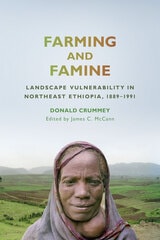
Farming and Famine
Landscape Vulnerability in Northeast Ethiopia, 1889–1991Donald E. Crummey; Edited by James C. McCann
University of Wisconsin Press, 2018
Crummey draws on photographs comparing identical landscapes in 1937 and 1997 as well as interviews with local farmers, among other sources. He reveals that forestation actually increased due to farmers' tree-planting initiatives. More broadly, he shows that, in the face of growing environmental stress, Ethiopian farmers have innovated and adapted. Yet the threat of famine remains because of constricted access to resources and erratic rainfall. To avoid future famines, Crummey suggests, Ethiopia's farmers must transform agricultural productivity, but they cannot achieve that on their own.
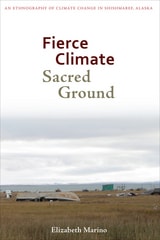
Fierce Climate, Sacred Ground
An Ethnography of Climate Change in Shishmaref, AlaskaElizabeth Marino
University of Alaska Press, 2015
Publications from the New York Times to Esquire have covered this disappearing village, yet few have taken the time to truly show the community and the two millennia of traditions at risk. In Fierce Climate, Sacred Ground, Elizabeth Marino brings Shishmaref into sharp focus as a place where people in a close-knit, determined community are confronting the realities of our changing planet every day. She shows how physical dangers challenge lives, while the stress and uncertainty challenge culture and identity. Marino also draws on Shishmaref’s experiences to show how disasters and the outcomes of climate change often fall heaviest on those already burdened with other social risks and often to communities who have contributed least to the problem. Stirring and sobering, Fierce Climate, Sacred Ground proves that the consequences of unchecked climate change are anything but theoretical.

Fighting for the Future of Food
Activists versus Agribusiness in the Struggle over BiotechnologyRachel Schurman
University of Minnesota Press, 2010
Fighting for the Future of Food tells the story of how a small group of social activists, working together across tables, continents, and the Internet, took on the biotech industry and achieved stunning success. Rachel Schurman and William A. Munro detail how the anti-biotech movement managed to alter public perceptions about GMOs and close markets to such products. Drawing strength from an alternative worldview that sustained its members' sense of urgency and commitment, the anti-GMO movement exploited political opportunities created by the organization and culture of the biotechnology industry itself.
Fighting for the Future of Food ultimately addresses society's understanding and trust (or mistrust) of technological innovation and the complexities of the global agricultural system that provides our food.
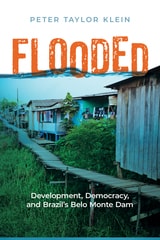
Flooded
Development, Democracy, and Brazil’s Belo Monte DamPeter Taylor Klein
Rutgers University Press, 2022
In the middle of the twentieth century, governments ignored the negative effects of large-scale infrastructure projects. In recent decades, many democratic countries have continued to use dams to promote growth, but have also introduced accompanying programs to alleviate these harmful consequences of dams for local people, to reduce poverty, and to promote participatory governance. This type of dam building undoubtedly represents a step forward in responsible governing. But have these policies really worked?
Flooded provides insights into the little-known effects of these approaches through a close examination of Brazil’s Belo Monte hydroelectric facility. After three decades of controversy over damming the Xingu River, a tributary of the Amazon, the dam was completed in 2019 under the left-of-center Workers’ Party, becoming the world’s fourth largest. Billions of dollars for social welfare programs accompanied construction. Nonetheless, the dam brought extensive social, political, and environmental upheaval to the region. The population soared, cost of living skyrocketed, violence spiked, pollution increased, and already overextended education and healthcare systems were strained. Nearly 40,000 people were displaced and ecosystems were significantly disrupted. Klein tells the stories of dam-affected communities, including activists, social movements, non-governmental organizations, and public defenders and public prosecutors. He details how these groups, as well as government officials and representatives from private companies, negotiated the upheaval through protests, participating in public forums for deliberation, using legal mechanisms to push for protections for the most vulnerable, and engaging in myriad other civic spaces. Flooded provides a rich ethnographic account of democracy and development in the making. In the midst of today’s climate crisis, this book showcases the challenges and opportunities of meeting increasing demands for energy in equitable ways.

Flows of Violence
Water, Infrastructures, and the State in Buenaventura, ColombiaFelipe Fernández
University of Arizona Press, 2025
Flows of Violence offers a profound ethnographic exploration of the intricate relationship between violence and water infrastructure in one of Colombia’s most marginalized cities. This groundbreaking work engages with the concept of “infrastructural violence,” revealing how the Colombian state’s neglect and inadequate provision of water services perpetuate inequality and suffering among Buenaventura’s residents. Through extensive fieldwork, Fernández provides rich empirical data and firsthand accounts that bring to light the daily struggles and resilience of the city’s inhabitants.
The book critically examines how everyday crime and state neglect intersect, altering the improvised practices of water storage and access among the population. It also highlights the innovative mechanisms employed by social movements and ordinary citizens to cope with and resist these challenges.
Flows of Violence is an essential read for scholars in anthropology, geography, and Latin American studies, offering valuable insights into the sociopolitical impacts of infrastructure. This timely contribution underscores the urgent need for equitable infrastructure development and social justice, making it a pivotal text for understanding urban poverty and state dynamics in Latin America and beyond.
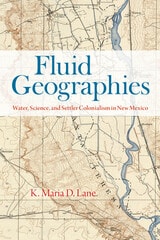
Fluid Geographies
Water, Science, and Settler Colonialism in New MexicoK. Maria D. Lane
University of Chicago Press, 2024
Maria Lane’s Fluid Geographies traces New Mexico’s transition from a community-based to an expert-led system of water management during the pre-statehood era. To understand this major shift, Lane carefully examines the primary conflict of the time, which pitted Indigenous and Nuevomexicano communities, with their long-established systems of irrigation management, against Anglo-American settlers, who benefitted from centralized bureaucratic management of water. The newcomers’ system eventually became settled law, but water disputes have continued throughout the district courts of New Mexico’s Rio Grande watershed ever since.
Using a fine-grained analysis of legislative texts and nearly two hundred district court cases, Lane analyzes evolving cultural patterns and attitudes toward water use and management in a pivotal time in New Mexico’s history. Illuminating complex themes for a general audience, Fluid Geographies helps readers understand how settler colonialism constructed a racialized understanding of scientific expertise and legitimized the dispossession of nonwhite communities in New Mexico.
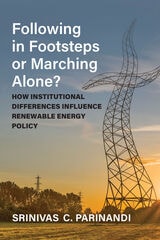
Following in Footsteps or Marching Alone?
How Institutional Differences Influence Renewable Energy PolicySrinivas C. Parinandi
University of Michigan Press, 2023
In recent years, the federal government’s increasing inability to address major societal challenges has arguably hampered America’s commitment to renewable energy initiatives. Individual U.S. states have stepped into this void and adopted their own policies, leading some to believe that the states can propel America’s renewable energy industry forward. However, we know little about how legislative and regulatory dynamics within America’s states might accelerate or hinder renewable energy policy creation.
In Following in Footsteps or Marching Alone?, Srinivas Parinandi explores how states have devised their own novel policies, and how the political workings of legislatures and public utilities commissions have impacted state renewable energy policy design. Through the meticulous study of nearly three decades of state-level renewable energy policy-making, he finds that their creation is primarily driven by legislatures, and that ideologically liberal legislatures largely push the envelope. The book suggests that having a predominantly state-driven renewable energy effort can lead to uneven and patchwork-based policy development outcomes, and a possible solution is to try to more successfully federalize these issues. Parinandi urges readers, scholars, and policy practitioners to consider whether a state-led effort is adequate enough to handle the task of building momentum for renewable energy in one of the world’s largest electricity markets.
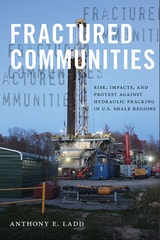
Fractured Communities
Risk, Impacts, and Protest Against Hydraulic Fracking in U.S. Shale RegionsLadd, Anthony E.
Rutgers University Press, 2017
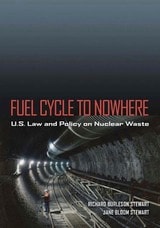
Fuel Cycle to Nowhere
U.S. Law and Policy on Nuclear WasteRichard Burleson Stewart
Vanderbilt University Press, 2011
The first comprehensive history and overview of U.S. nuclear waste law and regulation, Fuel Cycle to Nowhere traces sixty years of nuclear weapons programs, the growth of nuclear power, and their waste legacies, the rise of environmentalism, and the responses of federal agencies. Richard and Jane Stewart expertly analyze the changing policies for storing low-level waste, transuranic waste, spent nuclear fuel, and high-level waste and for regulating their transport by rail and by truck. They also chronicle "a tale of two repositories"--one, the Waste Isolation Pilot Plant in New Mexico, known as WIPP, the world's only operating deep geologic nuclear waste disposal facility, which emerged from a contentious but ultimately successful struggle between federal and state interests; the other, Yucca Mountain, mandated top down by Congress and a failure.
Fuel Cycle to Nowhere provides the critical information and analysis on the waste disposal issues and solutions that the commission, Congress, the administration, journalists, policymakers, and the public so urgently need.
This book is a project of the Consortium for Risk Evaluation with Stakeholder Participation (CRESP), a Vanderbilt University-led, multi-university consortium supported as a cooperative agreement by the U.S. Department of Energy, Office of Environmental This book is a project of the Consortium for Risk Evaluation with Stakeholder Participation (CRESP), a Vanderbilt University-led, multi-university consortium supported as a cooperative agreement by the U.S. Department of Energy, Office of Environmental Management to support safe, effective, publicly credible, risk informed management of existing and future nuclear waste from government and civilian sources through independent strategic analysis, review, applied research and education.