Results by title
151 books match the query 'Exhibitions' and 7 start with f
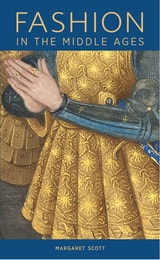
Fashion in the Middle Ages
Margaret Scott
J. Paul Getty Trust, The, 2018
From the costly velvets and furs worn by kings to the undyed wools and rough linens of the peasantry, the clothing worn by the various classes in the Middle Ages played an integral role in medieval society. In addition to providing clues to status, profession, and/or geographic origin, textiles were a crucial element in the economies of many countries and cities.
Much of what is known about medieval fashion is gleaned from the pages of manuscripts, which serve as a rich source of imagery. This volume provides a detailed look at both the actual fabrics and composition of medieval clothing as well as the period’s attitude toward fashion through an exploration of illuminated manuscripts in the collection of the J. Paul Getty Museum. The last portion of the book is dedicated to the depiction of clothing in biblical times and the ancient world as seen through a medieval lens. Throughout, excerpts from literary sources of the period help shed light on the perceived role and function of fashion in daily life.
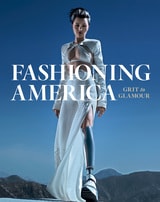
Fashioning America
Grit to GlamourMichelle Tolini Finamore
University of Arkansas Press, 2022
With nearly one hundred illustrations of garments and accessories that span two centuries of design, Fashioning America celebrates the achievements of a wide array of makers—especially immigrants, Native Americans, and Black Americans. Incorporating essays by fashion historians, curators, and journalists, this volume takes a fresh look at the country’s fashion history while exploring its close relationship with Hollywood and media in general, illuminating the role that American designers have played in shaping global visual culture and demonstrating why American fashion has long resonated around the world.
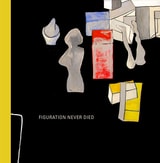
Figuration Never Died
New York Painterly Painting, 1950–1970Karen Wilkin
The Artist Book Foundation, 2020
By 1950, forward-looking New York painting was seen as synonymous with abstraction, especially charged, gestural Abstract Expressionism. But there was also a strong group of dissenters; artists, all born in the 1920s and many of them students of Hans Hofmann, who never lost their enthusiasm for recognizable imagery, without rejecting Abstract Expressionism's love of malleable oil paint. Although most of them began as abstract artists, they all evolved into painters working from observation, using a fluid, urgent touch to translate their perceptions into eloquent, highly individualized visual languages, almost always informed by the hand; that is, unlike the Color Field and Minimalist artists, these artists remained, for the most part, "painterly" painters. In light of their important contributions to twentieth-century American art, The Artist Book Foundation presents the cataloge for the Brattleboro Museum & Art Center's eponymous 2020 exhibition, Figuration Never Died: New York Painterly Painting, 1950–1970.
These rebellious artists include Lois Dodd, Jane Freilicher, Paul Georges, Grace Hartigan, Wolf Kahn, Alex Katz, Albert Kresch, Robert de Niro Sr., Paul Resika, and Anne Tabachnick. The compelling figurative work they made between about 1950 and 1970, in contrast to the prevailing Abstract Expressionism of the time, constitutes a significat chapter in the history of recent American Modernism. Their work not only greatly expands our conception of the story of New York painting, but it also presages and contextualizes today's multiplicity of artistic concepts and processes. Given both the aesthetic diversity of today's New York art world and the dependence of many younger artists on digital media or the appearance of digital media, it seems an appropriate moment to reconsider the work of these daring pioneers, as both precursor and opposition to current norms.

FitzGerald as Printmaker
A Catalogue Raisonné of the Frst Complete Exhibition of the Printed WorksHelen Coy
University of Manitoba Press, 1982
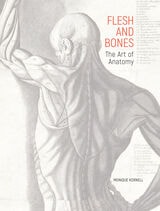
Flesh and Bones
The Art of AnatomyMonique Kornell
J. Paul Getty Trust, The, 2022
This illustrated volume examines the different methods artists and anatomists used to reveal the inner workings of the human body and evoke wonder in its form.
For centuries, anatomy was a fundamental component of artistic training, as artists such as Leonardo da Vinci and Michelangelo sought to skillfully portray the human form. In Europe, illustrations that captured the complex structure of the body—spectacularly realized by anatomists, artists, and printmakers in early atlases such as Andreas Vesalius’s De humani corporis fabrica libri septem of 1543—found an audience with both medical practitioners and artists.
Flesh and Bones examines the inventive ways anatomy has been presented from the sixteenth through the twenty-first century, including an animated corpse displaying its own body for study, anatomized antique sculpture, spectacular life-size prints, delicate paper flaps, and 3-D stereoscopic photographs. Drawn primarily from the vast holdings of the Getty Research Institute, the over 150 striking images, which range in media from woodcut to neon, reveal the uncanny beauty of the human body under the skin.
This volume is published to accompany an exhibition on view at the Getty Research Institute at the Getty Center from February 22 to July 10, 2022.
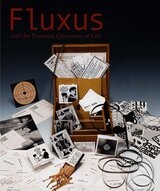
Fluxus and the Essential Questions of Life
Edited by Jacquelynn Baas
University of Chicago Press, 2011
Fluxus—from the Latin, meaning “to flow”—was a radical, international network of artists, composers, and designers in the 1960s and 1970s noted for blurring the boundaries between what we term “art” and what makes up everyday life. Following the work of American Fluxus founder George Maciunus, Fluxus and the Essential Questions of Life presents a variety of objects that express the Fluxus mission, while empowering readers to challenge the presumptions we bring to the concept and practice of art making.
Based on a large-scale traveling exhibition first organized at Dartmouth College’s Hood Museum of Art, this book chronicles the movement in the form of an art self-help book, playfully providing answers to fourteen key questions such as “Art—what is it good for?” and “What am I?” via Fluxus works. Featuring over eighty color and black-and-white illustrations, accompanied by essays from curator Jacquelynn Baas, Fluxus scholars Hannah Higgins and Jacob Proctor, and Fluxus artist Ken Friedman, this book will make an original contribution to our understanding of this provocative moment in modern art.
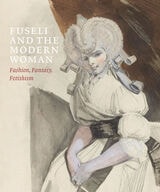
Fuseli and the Modern Woman
Fashion, Fantasy, FetishismEdited by David Solkin
Paul Holberton Publishing, 2022
Best known for his notoriously provocative painting The Nightmare, Anglo-Swiss painter Henry Fuseli (1741–1825) cultivated a reputation for eccentricity, with vividly stylized images of supernatural creatures, muscle-bound heroes, and damsels in distress. While these convinced some viewers of the greatness of his genius, others dismissed him as a charlatan, or as completely mad.
By bringing together more than fifty of his works, this volume offers unprecedented access to see one of the finest draftsmen of the Romantic period at his most innovative and exciting. Visitors to the show and readers of the lavishly illustrated catalog will further be invited to consider how Fuseli’s drawings of women, as products of the turbulent aftermath of the American and French Revolutions, speak to concerns about gender and sexuality that have never been more relevant than they are today.
The exhibition showcases drawings brought together from international collections, including the Kunsthaus Zürich, the Auckland Art Gallery in New Zealand, and other European and North American institutions.