Results by title
85 books match the query 'Experience' and 8 start with f
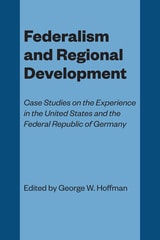
Federalism and Regional Development
Case Studies on the Experience in the United States and the Federal Republic of GermanyEdited by George W. Hoffman
University of Texas Press, 1981
Federalism and Regional Development is the resuit of the first German-American geography seminar, held at the University of Texas in September 1979. The chapters deal with the impact of geographic policy planning by various governmental agencies in both the Federal Republic of Germany and the United States, two countries with federal systems of government. Although various bureaucratic offices at the federal, state, county, and city levels became involved in spatial planning in both countries, no overall coordination of development planning existed. The contributors to this volume offer many theoretical and empirical perspectives on the evolution of federal policies and programs and their impact on geographic planning activities at all levels of government. The topics covered range from actual regional case studies in both countries to the framework of the agencies concerned with spatial planning. Numerous maps and tables document the data resources of the contributors and yield useful insights on the workings of the federal system.
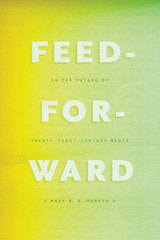
Feed-Forward
On the Future of Twenty-First-Century MediaMark B. N. Hansen
University of Chicago Press, 2014
Drawing on the speculative empiricism of philosopher Alfred North Whitehead, Hansen reveals how new media call into play elements of sensibility that greatly affect human selfhood without in any way belonging to the human. From social media to data-mining to new sensor technologies, media in the twenty-first century work largely outside the realm of perceptual consciousness, yet at the same time inflect our every sensation. Understanding that paradox, Hansen shows, offers us a chance to put forward a radically new vision of human becoming, one that enables us to reground the human in a non-anthropocentric view of the world and our experience in it.
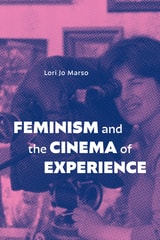
Feminism and the Cinema of Experience
Lori Jo Marso
Duke University Press, 2024
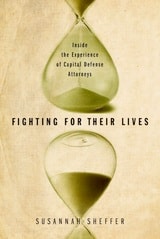
Fighting for Their Lives
Inside the Experience of Capital Defense AttorneysSusannah Sheffer
Vanderbilt University Press, 2013
Through vivid interviews amplified by the author's responses and commentary, these attorneys reveal aspects of their internal experience that they have never talked about until now. How do capital defenders manage the weight of the responsibility they carry? To what extent do they experience symptoms of trauma in the aftermath of losing a client to execution or as a result of the cumulative effects of engaging in capital defense work? What motivates them, and what do they draw upon, in order to keep engaging in such emotionally demanding work? Have they considered practicing other types of law? What can we learn from capital defenders not only about the deep and long-term effects of the death penalty but also about broader human questions of hope, effectiveness, success, failure, strength, fragility, and perseverance?
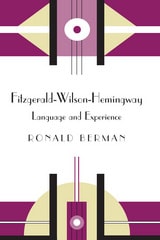
Fitzgerald-Wilson-Hemingway
Language and ExperienceRonald Berman
University of Alabama Press, 2003
In this study, Ronald Berman examines the work of the critic/novelist Edmund Wilson and the art of F. Scott Fitzgerald and Ernest Hemingway as they wrestled with the problems of language, experience, perception and reality in the "age of jazz." By focusing specifically on aesthetics—the ways these writers translated everyday reality into language—Berman challenges and redefines many routinely accepted ideas concerning the legacy of these authors.
Fitzgerald is generally thought of as a romantic, but Berman shows that we need to expand the idea of Romanticism to include its philosophy. Hemingway, widely viewed as a stylist who captured experience by simplifying language, is revealed as consciously demonstrating reality's resistance to language. Between these two renowned writers stands Wilson, who is critically influenced by Alfred North Whitehead, as well as Dewey, James, Santayana, and Freud.
By patiently mapping the correctness of these philosophers, historians, literary critics and writers, Berman aims to open a gateway into the era. This work should be of interest to scholars of American literature, philosophy and aesthetics; to academic libraries; to students of intellectual history; and to general readers interested in Fitzgerald, Hemingway and Wilson.
For All We Have and Are
Regina and the Experience of the Great WarJames M. Pitsula
University of Manitoba Press, 2008
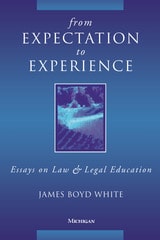
From Expectation to Experience
Essays on Law and Legal EducationJames Boyd White
University of Michigan Press, 2000
The essays here are united by two basic themes. First, the essays suggest that law can usefully be regarded not only as a set of rules designed to produce results in the material world, as it usually is regarded, but also as an imaginative and intellectual activity that has as its end the claim of meaning for human experience, both individual and collective. Second, they argue that education, including in the law, works by the constant modification of expectation by experience.
White claims that as we grow, whether as individuals or as a community, we constantly shape our expectations to our experiences. This happens with particular force and clarity in the law, which seeks to create both a certain set of expectations--this is how it works as a system of regulation--and a series of occasions and methods for their revision. White's interest is in the way these understandings can affect legal teaching, practice, and criticism.
The essays in this book examine such topics as the nature of legal education; the possibilities for writing in the law for both judges and lawyers; the relation between the practice of making and claiming meaning as it works in the law and in literatures more usually though of as imaginative, such as poetry or drama; the ways in which the law talks, and ought to talk, about business corporations, religion, and individual judgments; and the ethical possibilities of the practice of law when it is conceived of as a field for the making of meaning.
From Expectation to Experience will be of interest to lawyers, legal scholars, as well as students of law, law and literature, and ethics and literature.
James Boyd White is Hart Wright Professor of Law, Professor of English, and Adjunct Professor of Classical Studies, University of Michigan.