Results by title
520 books match the query 'Family' and 28 start with f
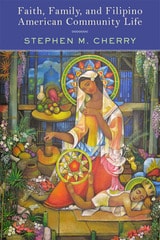
Faith, Family, and Filipino American Community Life
Cherry, Stephen M
Rutgers University Press, 2014
Stephen M. Cherry draws upon a rich set of ethnographic and survey data, collected over a six-year period, to explore the roles that Catholicism and family play in shaping Filipino American community life. From the planning and construction of community centers, to volunteering at health fairs or protesting against abortion, this book illustrates the powerful ways these forces structure and animate not only how first-generation Filipino Americans think and feel about their community, but how they are compelled to engage it over issues deemed important to the sanctity of the family.
Revealing more than intimate accounts of Filipino American lives, Cherry offers a glimpse of the often hidden but vital relationship between religion and community in the lives of new immigrants, and allows speculation on the broader impact of Filipino immigration on the nation. The Filipino American community is the second-largest immigrant community in the United States, and the Philippines is the second-largest source of Catholic immigration to this country. This ground-breaking study outlines how first-generation Filipino Americans have the potential to reshape American Catholicism and are already having an impact on American civic life through the engagement of their faith.

Faith, Family, and Flag
Branson Entertainment and the Idea of AmericaJoanna Dee Das
University of Chicago Press, 2025
Branson, Missouri, the Ozark Mountain mecca of wholesome entertainment, has been home to countless stage shows espousing patriotism and Christianity, welcoming over ten million visitors a year. Some consider it “God’s Country” and others “as close to Hell as anything on Earth.” For Joanna Dee Das, Branson is a political, religious, and cultural harbinger of a certain enduring dream of what America is. She takes Branson more seriously than the light-hearted fun it advertises—and maybe we should too.
For Das, Branson’s performers offer visions of the American Dream that embody a set of values known as the three Fs: faith, family, and flag. Branson boosters insist that these are universal values that welcome all people; the city aims to capture as many tourists as possible. But over the past several decades, faith, family, and flag have become markers of contemporary conservatism. The shows and culture of Branson, for all their fun and laughter, have been a galvanizing political force for white, working-and-middle class, Christian Americans. For social and economic conservatives alike, Branson is practically proof-of-concept for America as they want it to be.
Faith, Family, and Flag is a comprehensive history of the Branson entertainment industry, within the context of America’s long culture wars. Das reveals how and why a town known for popular entertainment, a domain associated most often with the political left (“Hollywood liberals”), came to be so important to the political right and its vision for America.
Faith, Family, and Flag
Branson Entertainment and the Idea of AmericaJoanna Dee Das
University of Chicago Press, 2025
Sons of Britches. The Great American Chuckwagon Dinner Show. The Haygoods. The Grand Jubilee. These are just a couple of the many shows performed in Branson, MO, a popular tourist destination that has played a role in the nation’s culture wars for over one hundred years.
Branson, Missouri, the Ozark Mountain mecca of wholesome entertainment, has been home to countless stage shows espousing patriotism and Christianity, welcoming over ten million visitors a year. Some consider it “God’s Country” and others “as close to Hell as anything on Earth.” For Joanna Dee Das, Branson is a political, religious, and cultural harbinger of a certain enduring dream of what America is. She takes Branson more seriously than the light-hearted fun it advertises—and maybe we should too.
For Das, Branson’s performers offer visions of the American Dream that embody a set of values known as the three Fs: faith, family, and flag. Branson boosters insist that these are universal values that welcome all people; the city aims to capture as many tourists as possible. But over the past several decades, faith, family, and flag have become markers of contemporary conservatism. The shows and culture of Branson, for all their fun and laughter, have been a galvanizing political force for white, working-and-middle class, Christian Americans. For social and economic conservatives alike, Branson is practically proof-of-concept for America as they want it to be.
Faith, Family, and Flag is a comprehensive history of the Branson entertainment industry, within the context of America’s long culture wars. Das reveals how and why a town known for popular entertainment, a domain associated most often with the political left (“Hollywood liberals”), came to be so important to the political right and its vision for America.
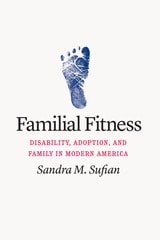
Familial Fitness
Disability, Adoption, and Family in Modern AmericaSandra M. Sufian
University of Chicago Press, 2022
Disability and child welfare, together and apart, are major concerns in American society. Today, about 125,000 children in foster care are eligible and waiting for adoption, and while many children wait more than two years to be adopted, children with disabilities wait even longer. In Familial Fitness, Sandra M. Sufian uncovers how disability operates as a fundamental category in the making of the American family, tracing major shifts in policy, practice, and attitudes about the adoptability of disabled children over the course of the twentieth century.
Chronicling the long, complex history of disability, Familial Fitness explores how notions and practices of adoption have—and haven’t—accommodated disability, and how the language of risk enters into that complicated relationship. We see how the field of adoption moved from widely excluding children with disabilities in the early twentieth century to partially including them at its close. As Sufian traces this historical process, she examines the forces that shaped, and continue to shape, access to the social institution of family and invites readers to rethink the meaning of family itself.
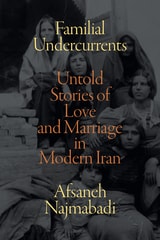
Familial Undercurrents
Untold Stories of Love and Marriage in Modern IranAfsaneh Najmabadi
Duke University Press, 2022
Family Life and School Achievement
Why Poor Black Children Succeed or FailReginald M. Clark
University of Chicago Press, 1984
To support his contentions, Clark offers ten intimate portraits of Black families in Chicago. Visiting the homes of poor one- and two-parent families of high and low achievers, Clark made detailed observations on the quality of home life, noting how family habits and interactions affect school success and what characteristics of family life provide children with "school survival skills," a complex of behaviors, attitudes, and knowledge that are the essential elements in academic success.
Clark's conclusions lead to exciting implications for educational policy. If school achievement is not dependent on family structure or income, parents can learn to inculcate school survival skills in their children. Clark offers specific suggestions and strategies for use by teachers, parents, school administrators, and social service policy makers, but his work will also find an audience in urban anthropology, family studies, and Black studies.
Family and Disability Activism
Beyond Allies and ObstaclesEdited by Pamela Block, Allison C. Carey, and Richard K. Scotch
Temple University Press, 2025
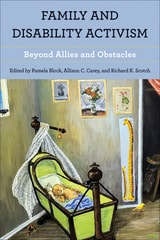
Family and Disability Activism reveals how families and disabled people who identify as BIPOC and/or LGBTQIA2S+ understand issues of rights versus justice. Contributions by Deaf and disabled activists emphasize the frequent need for either care or independence. Other chapters show how members of the disabled community and their families must navigate systemic issues of segregation, institutionalization, and access to special education services differently depending on their ethnic and racial identities.
Expanding the conversation about disability, kinship, biological and chosen families, and activism, this volume amplifies important voices in the fight for disability rights.
Contributors: Erin Compton, Diane Compton, Jaclyn Ellis, Laura LeBrun Hatcher, Elena Hung, Bridget Liang, Jenelle Rouse, Cheryl Najarian Souza, Jeneva Stone, Roger A. Stone, Lisette E. Torres, Grace Tsao, and the editors
Family and Farm in Pre-Famine Ireland
The Parish of KillashandraKevin O'Neill
University of Wisconsin Press, 1985
Now available in paperback, Kevin O’Neill’s highly praised study of rural Ireland in the years leading up to the "Great Hunger" of the 1840s explicates the social, economic, and demographic conditions of the era. He argues that overpopulation and deprivation were inextricably linked to a third variable—the rapid economic development of rural Ireland that was shaped by British interests.
Family and Frontier in Colonial Brazil
Santana de Parnaíba, 1580–1822By Alida C. Metcalf
University of Texas Press, 2005
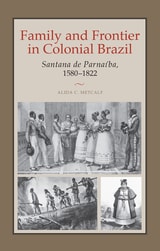
Family and Frontier in Colonial Brazil was originally published by the University of California Press in 1992. Alida Metcalf has written a new preface for this first paperback edition.
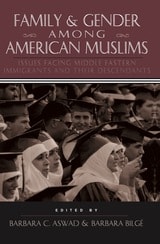
Family and Gender Among American Muslims
Issues Facing Middle Eastern Immigrants And Their DecendantsBarbara Aswad
Temple University Press, 1996
Family and Work in Everyday Ethnography
Tamara M. Brown
Temple University Press, 2013

Family in the Time of COVID
International PerspectivesEdited by Katherine Twamley, Humera Iqbal, and Charlotte Faircloth
University College London, 2023
COVID-19 turned the world as we knew it upside down, impacting families around the world in profound ways. Seeking to understand this global experience, Family in the Time of COVID brings together case studies from ten countries across the world that explore how local responses to the pandemic shaped and were shaped by understandings and practices of family life.
Carried out by an international team during the first year of the pandemic, these in-depth, longitudinal, qualitative investigations examined the impact of the pandemic on families and relationships across diverse contexts and cultures. They looked at how families made sense of complex lockdown laws, how they coped with collective worry about the unknown, managed their finances, fed themselves, and got to grips with online work and schooling to understand better how life had transformed (or not). In short, the research revealed their everyday joys and struggles in times of great uncertainty.
Each case study follows the same methodology revealing experiences in Argentina, Chile, Pakistan, Russia, Singapore, South Africa, Sweden, Taiwan, the United Kingdom, and the United States. They show how local government responses were understood and responded to by families and how different cultures and life circumstances impacted everyday life during the pandemic. Ultimately the analysis demonstrates how experiences of global social upheaval are shaped by international and local policies, as well as the sociocultural ideas and practices of diverse families.
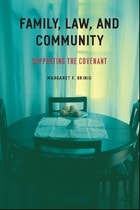
Family, Law, and Community
Supporting the CovenantMargaret F. Brinig
University of Chicago Press, 2010
In the wake of vast social and economic changes, the nuclear family has lost its dominance, both as an ideal and in practice. Some welcome this shift, while others see civilization itself in peril—but few move beyond ideology to develop a nuanced understanding of how families function in society. In this provocative book, Margaret F. Brinig draws on research from a variety of disciplines to offer a distinctive study of family dynamics and social policy.
Concentrating on legal reform, Brinig examines a range of subjects, including cohabitation, custody, grandparent visitation, and domestic violence. She concludes that conventional legal reforms and the social programs they engender ignore social capital: the trust and support given to families by a community. Traditional families generate much more social capital than nontraditional ones, Brinig concludes, which leads to clear rewards for the children. Firmly grounded in empirical research, Family, Law, and Community argues that family policy can only be effective if it is guided by an understanding of the importance of social capital and the advantages held by families that accrue it.
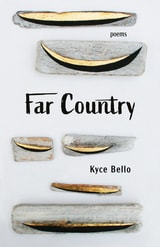
Far Country
PoemsKyce Bello
University of Nevada Press, 2025

Fatherless
A MemoirKeith Maillard
West Virginia University Press, 2019
This story begins with a phone call out of the blue: a lawyer tells a writer that his ninety-six-year-old father, with whom he has had no contact since the age of three and whom he has twice tried to find without success, has just died, leaving him nothing. Half-reluctant, half-fascinated, both angry and curious, Keith Maillard begins to research his father’s life. The result is a suspenseful work of historical reconstruction—a social history often reading like a detective story—as well as a psychologically acute portrait of the impact of a father’s absence. Walking a tightrope between the known and the unknown, and following a trail that takes him from Vancouver to Montreal to his native Wheeling, West Virginia, Keith Maillard has pulled off a book that only a novelist of his stature could write.
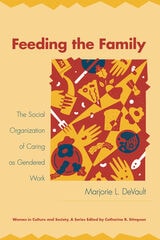
Feeding the Family
The Social Organization of Caring as Gendered WorkMarjorie L. DeVault
University of Chicago Press, 1991
Drawing from interviews conducted in 1982-83 in a diverse group of American households, DeVault reveals the effort and skill behind the "invisible" work of shopping, cooking, and serving meals. She then shows how this work can become oppressive for women, drawing them into social relations that construct and maintain their subordinate position in household life.

Finding Josie
Wendy Bilen
Wisconsin Historical Society Press, 2008
With a focus squarely on the Midwest, Wendy Bilen pieces together the history of her grandmother, Josie Broadhead, born in 1911 and raised on the North Dakota prairie. Josie married a Wisconsin farmer and moved to a large dairy farm outside La Crosse; along the way she began taking in people in need of a home: ". . . beggars and drunks and children of drunks, mentally ill children and children with mentally ill parents. Brothers and cousins and sisters and in-laws and strangers."
By taking on these challenges that no one else wanted, Josie left an almost mythical legacy. Years after Josie's death, Bilen embarks on a journey to unearth Josie's story and quickly realizes that the search is about her, too. As she discovers her grandmother's complicated nature ("a woman proud and humble, loving and unaffectionate, strict and visionary, joyful and troubled, a woman held together by contradictions like an arch and its capstone"), she learns much about herself and her own choices. And as she breathes life into Josie and her family, friends, and neighbors, the author evokes a powerful sense of place of small towns and farms, of prairie, of Josie's home, all of which feel both fresh and satisfyingly familiar.
Much more than mere memoir or family history, this dual story about Bilen's journey illuminates the surprising ways our lives intersect with our ancestors'. An extraordinary story about a seemingly ordinary woman, Finding Josie will inspire readers to explore their own family history in their own way.

Finding Mars
Ned Rozell
University of Alaska Press, 2011
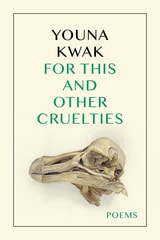
For This and Other Cruelties
Youna Kwak
University of Iowa Press, 2025
CALIBA’s 2025 Golden Poppy Book Award Winner, Poetry
The shadow of mothering has never been given a richer, fuller, more debased vision than in Youna Kwak’s For This and Other Cruelties. Kwak casts a cold eye on the splendid and cruel intransigence of maternal paradoxes in all their impossible double binds, monstrous pleasures, and profane mystifications. Shifting between lyric and prose poems, this collection throws slanted light on the ineffability of our deepest attachments, envisioning a world where mother is “a creature whose only enemy could be human.” Kwak brings us face to face with the irreconcilable facts of being mother, mothered, and alive.
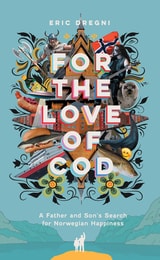
For the Love of Cod
A Father and Son's Search for Norwegian HappinessEric Dregni
University of Minnesota Press, 2021
A journey to find Norway’s supposed bliss makes for a comic travelogue that asks, seriously, what makes Norwegians so damn happy—and does it translate?
Norway is usually near or at the top of the World Happiness Report. But is it really one of the happiest countries on Earth? Eric Dregni had his doubts. Years ago he and his wife had lived in this country his great-great-grandfather once fled. When their son Eilif was born there, the Norwegian government paid for the birth, gave them $5,000, and deposited $150 into their bank account every month, but surely happiness was more than a generous health care system. What about all those grim months without sun? When Eilif turned fifteen, father and son decided to go back together and investigate. For the Love of Cod is their droll report on the state of purported Norwegian bliss.
Arriving in May, a month of festivals and eternal sun, the Dregnis are thrust into Norway at its merriest—and into the reality of the astronomical cost of living, which forces them to find lodging with friends and relatives. But this gives them an inside look at the secrets to a better life. It’s not the massive amounts of money flowing from the North Sea oil fields but how these funds are distributed that fuels the Norwegian version of democratic socialism—resulting in miniscule differences between rich and poor. Locals introduce them to the principles underlying their avowed contentment, from an active environmentalism that translates into flyskam (flight shame), which keeps Norwegians in the family cabin for the long vacations prescribed by law and charges a 150 percent tax on gas guzzlers (which, Eilif observes, means more Teslas seen in one hour than in a year in Minnesota!).
From a passion for dugnad or community volunteerism and sakte or “slow,” a rejection of the mad pace of modernity, to the commodification of Viking history and the dark side of Black Metal music that turns the idea of quaint, traditional Norway upside down, this idiosyncratic father and son tour lets readers, free of flyskam, see how, or whether, Norwegian happiness translates.
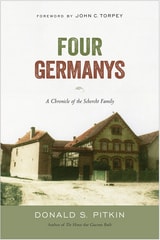
Four Germanys
A Chronicle of the Schorcht FamilyDonald S. Pitkin
Temple University Press, 2016
In this last book by the late Donald Pitkin, author of The House that Giacomo Built, comes a story of the Schorcht family, through whose fortunes and struggles one can see the transformations of Germany through the long twentieth century.
Each chapter of Four Germanys is reflective of generational rather than historical time. In 1922, Edwin Schorcht inherited his family farm, and in Part One, Pitkin traces the derivation of this farmstead. Part Two focuses on Schorcht’s children who came of age in Hitler’s Germany. Part Three has the Schorchts growing up in the Ulbricht years (1950–73) of the German Democratic Republic. The book concludes with the great-granddaughter, Maria, looking back to the past in relation to the new Germany that history had bequeathed her.
Ultimately, Four Germanys reflects the impact of critical historical events on ordinary East Germans while it also reveals how one particular family managed its own historical adaptation to these events.
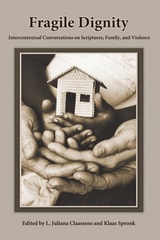
Fragile Dignity
Intercontextual Conversations on Scriptures, Family, and ViolenceL. Juliana Claassens
SBL Press, 2013

Francois Vallé and His World
Upper Louisiana before Lewis and ClarkCarl J. Ekberg
University of Missouri Press, 2002
Winner of the Kemper & Leila Williams Prize in Louisiana History for excellence in historical scholarship for the year 2002, awarded by The Historic New Orleans Collection, The Louisiana Historical Association.
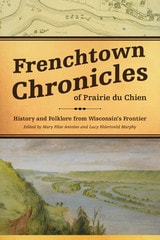
Frenchtown Chronicles of Prairie du Chien
History and Folklore from Wisconsin's FrontierMary Elise Antoine
Wisconsin Historical Society Press, 2016
Albert Coryer, the grandson of a fur trade voyageur-turned-farmer, had a gift for storytelling. Born in 1877, he grew up in Prairie du Chien hearing tales of days gone by from his parents, grandparents, and neighbors who lived in the Frenchtown area. Throughout his life, Albert soaked up the local oral traditions, including narratives about early residents, local landmarks, interesting and funny events, ethnic customs, myths, and folklore.
Late in life, this lively man who had worked as a farm laborer and janitor drew a detailed illustrated map of the Prairie du Chien area and began to write his stories out longhand, in addition to sharing them in an interview with a local historian and folklore scholar. The map, stories, and interview transcript provide a colorful account of Prairie du Chien in the late nineteenth century, when it was undergoing significant demographic, social, and economic change. With sharp historical context provided by editors Lucy Eldersveld Murphy and Mary Elise Antoine, Coryer’s tales offer an unparalleled window into the ethnic community comprised of the old fur trade families, Native Americans, French Canadian farmers, and their descendants.
From Parent to Child
Intrahousehold Allocations and Intergenerational Relations in the United StatesJere R. Behrman, Robert A. Pollak, and Paul Taubman
University of Chicago Press, 1995
The analyses in From Parent to Child explore these questions by developing and testing a model in which the earnings of children with different genetic endowments respond differently to investments in human capital. Behrman, Pollak, and Taubman use this model to investigate issues such as parental bias in resource allocations based on gender or birth order; the extent of intergenerational mobility in income, earnings, and schooling in the United States; the relative importance of environmental and genetic factors in determining variations in schooling; and whether parents' distributions offset the intended effects of government programs designed to subsidize children. In allocating scarce resources, parents face a trade-off between equity and efficiency, between the competing desires to equalize the wealth of their children and to maximize the sum of their earnings.
Building on the seminal work of Gary Becker, From Parent to Child integrates careful modeling of household behavior with systematic empirical testing, and will appeal to anyone interested in the economics of the family.

From Property to Family
American Dog Rescue and the Discourse of CompassionAndrei S. Markovits and Katherine N. Crosby
University of Michigan Press, 2014
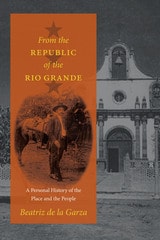
From the Republic of the Rio Grande
A Personal History of the Place and the PeopleBy Beatriz de la Garza
University of Texas Press, 2013
The Republic of the Rio Grande had a brief and tenuous existence (1838–1840) before most of it was reabsorbed by Mexico and the remainder annexed by the United States, yet this region that straddles the Rio Grande has retained its distinctive cultural identity to the present day. Born on one side of the Rio Grande and raised on the other, Beatriz de la Garza is a product of this region. Her birthplace and its people are the subjects of this work, which fuses family memoir and borderlands history.
From the Republic of the Rio Grande brings new insights and information to the study of transnational cultures by drawing from family papers supplemented by other original sources, local chronicles, and scholarly works. De la Garza has fashioned a history of this area from the perspective of individuals involved in the events recounted. The book is composed of nine sections spanning some two hundred years, beginning in the mid-1700s. Each section covers not only a chronological period but also a particular theme relating to the history of the region. De la Garza takes a personal approach, opening most sections with an individual observation or experience that leads to the central motif, whether this is the shared identity of the inhabitants, their pride in their biculturalism and bilingualism, or their deep attachment to the land of their ancestors.

Full Moon at Noontide
A Daughter's Last GoodbyeAnn Putnam
University of Iowa Press, 2015