366 books match the query 'Family & Relationships' and 28 start with f
cover of Facing Social Class: How Societal Rank Influences Interaction

Facing Social Class

How Societal Rank Influences Interaction

Susan T. Fiske

Russell Sage Foundation, 2012

Many Americans, holding fast to the American Dream and the promise of equal opportunity, claim that social class doesn't matter. Yet the ways we talk and dress, our interactions with authority figures, the degree of trust we place in strangers, our religious beliefs, our achievements, our senses of morality and of ourselves—all are marked by social class, a powerful factor affecting every domain of life. In Facing Social Class, social psychologists Susan Fiske and Hazel Rose Markus, and a team of sociologists, anthropologists, linguists, and legal scholars, examine the many ways we communicate our class position to others and how social class shapes our daily, face-to-face interactions—from casual exchanges to interactions at school, work, and home. Facing Social Class exposes the contradiction between the American ideal of equal opportunity and the harsh reality of growing inequality, and it shows how this tension is reflected in cultural ideas and values, institutional practices, everyday social interactions, and psychological tendencies. Contributor Joan Williams examines cultural differences between middle- and working-class people and shows how the cultural gap between social class groups can influence everything from voting practices and political beliefs to work habits, home life, and social behaviors. In a similar vein, Annette Lareau and Jessica McCrory Calarco analyze the cultural advantages or disadvantages exhibited by different classes in institutional settings, such as those between parents and teachers. They find that middle-class parents are better able to advocate effectively for their children in school than are working-class parents, who are less likely to challenge a teacher's authority. Michael Kraus, Michelle Rheinschmidt, and Paul Piff explore the subtle ways we signal class status in social situations. Conversational style and how close one person stands to another, for example, can influence the balance of power in a business interaction. Diana Sanchez and Julie Garcia even demonstrate that markers of low socioeconomic status such as incarceration or unemployment can influence whether individuals are categorized as white or black—a finding that underscores how race and class may work in tandem to shape advantage or disadvantage in social interactions. The United States has one of the highest levels of income inequality and one of the lowest levels of social mobility among industrialized nations, yet many Americans continue to buy into the myth that theirs is a classless society. Facing Social Class faces the reality of how social class operates in our daily lives, why it is so pervasive, and what can be done to alleviate its effects.
[more]
cover of Faculty Brat: A Memoir of Abuse

Faculty Brat

A Memoir of Abuse

Dominic Bucca

University of Iowa Press, 2020

At the most prestigious preparatory schools in the United States, the children of educators are referred to as “faculty brats.” Though generally lacking the privilege of the institution’s wealthy students, faculty brats enjoy access to the school’s extensive grounds and facilities and are part of everyday campus life.

Dominic Bucca’s art teacher mother married his music teacher stepfather twice, and the young boy wondered if the union might be twice as strong as a result. Instead, this faculty brat quickly discovered that the marriage was twice as flawed. When Dominic was nine years old, his stepfather began sexually abusing him in the faculty housing attached to the boys’ dorm his parents oversaw. Years later, he found escape by reaching out to his biological father, and learned to split his life between two realities.


For nearly twenty-five years, Bucca hid the secret of his step­father’s abuse from his mother and sisters. When he decided to tell, hoping to prevent his stepfather from continuing to teach young boys, Bucca discovered the limits of both his family and the legal system.

[more]
cover of Fall or Fly: The Strangely Hopeful Story of Foster Care and Adoption in Appalachia

Fall or Fly

The Strangely Hopeful Story of Foster Care and Adoption in Appalachia

Wendy Welch

Ohio University Press, 2017

Chaos. Frustration. Compassion. Desperation. Hope. These are the five words that author Wendy Welch says best summarize the state of foster care in the coalfields of Appalachia. Her assessment is based on interviews with more than sixty social workers, parents, and children who have gone through “the system.” The riveting stories in Fall or Fly tell what foster care is like, from the inside out.

In depictions of foster care and adoption, stories tend to cluster at the dark or light ends of the spectrum, rather than telling the day-to-day successes and failures of families working to create themselves. Who raises other people’s children? Why? What’s money got to do with it when the love on offer feels so real? And how does the particular setting of Appalachia—itself so frequently oversimplified or stereotyped—influence the way these questions play out?

In Fall or Fly, Welch invites people bound by a code of silence to open up and to share their experiences. Less inspiration than a call to caring awareness, this pioneering work of storytelling journalism explores how love, compassion, money, and fear intermingle in what can only be described as a marketplace for our nation’s greatest asset.
[more]
cover of Familial Fitness: Disability, Adoption, and Family in Modern America

Familial Fitness

Disability, Adoption, and Family in Modern America

Sandra M. Sufian

University of Chicago Press, 2022

The first social history of disability and difference in American adoption, from the Progressive Era to the end of the twentieth century.

Disability and child welfare, together and apart, are major concerns in American society. Today, about 125,000 children in foster care are eligible and waiting for adoption, and while many children wait more than two years to be adopted, children with disabilities wait even longer. In Familial Fitness, Sandra M. Sufian uncovers how disability operates as a fundamental category in the making of the American family, tracing major shifts in policy, practice, and attitudes about the adoptability of disabled children over the course of the twentieth century. 

Chronicling the long, complex history of disability, Familial Fitness explores how notions and practices of adoption have—and haven’t—accommodated disability, and how the language of risk enters into that complicated relationship. We see how the field of adoption moved from widely excluding children with disabilities in the early twentieth century to partially including them at its close. As Sufian traces this historical process, she examines the forces that shaped, and continue to shape, access to the social institution of family and invites readers to rethink the meaning of family itself.

[more]
cover of Familiar Perversions: The Racial, Sexual, and Economic Politics of LGBT Families

Familiar Perversions

The Racial, Sexual, and Economic Politics of LGBT Families

Montegary, Liz

Rutgers University Press, 2018

Winner of the 2018 Choice Outstanding Academic Title

Over the past two decades, same-sex couples raising children have become more visible within US political and popular culture. Thanks to widely circulated images of well-mannered, well-dressed, and well-off two-parent families, a select number of LGBT-identified parents have gained recognition as model American citizens. In Familiar Perversions, Liz Montegary shows how this seemingly progressive view of same-sex parenting has taken shape during a period of growing racial inequality and economic insecurity in the United States. This book evaluates the recent successes of the “family equality” movement, while asking important questions about its relationship to neoliberalism, the policing of sexual cultures, and the broader context of social justice organizing at the turn of the twenty-first century.
 
Montegary’s investigation of the politics of LGBT family life takes us on a journey that includes not only activist events and the courtrooms where landmark decisions about same-sex families were made, but also parenting workshops, cruise ships, and gay resort towns. Through its sustained historical analysis, Familiar Perversions lays critical groundwork for imagining a queer family movement that can support and strengthen the diverse networks of care, kinship, and intimacy on which our collective survival depends.
[more]
cover of Families That Work: Policies for Reconciling Parenthood and Employment

Families That Work

Policies for Reconciling Parenthood and Employment

Janet C. Gornick

Russell Sage Foundation, 2003

Parents around the world grapple with the common challenge of balancing work and child care. Despite common problems, the industrialized nations have developed dramatically different social and labor market policies—policies that vary widely in the level of support they provide for parents and the extent to which they encourage an equal division of labor between parents as they balance work and care. In Families That Work, Janet Gornick and Marcia Meyers take a close look at the work-family policies in the United States and abroad and call for a new and expanded role for the U.S. government in order to bring this country up to the standards taken for granted in many other Western nations. In many countries in Europe and in Canada, family leave policies grant parents paid time off to care for their young children, and labor market regulations go a long way toward ensuring that work does not overwhelm family obligations. In addition, early childhood education and care programs guarantee access to high-quality care for their children. In most of these countries, policies encourage gender equality by strengthening mothers' ties to employment and encouraging fathers to spend more time caregiving at home. In sharp contrast, Gornick and Meyers show how in the United States—an economy with high labor force participation among both fathers and mothers—parents are left to craft private solutions to the society-wide dilemma of "who will care for the children?" Parents—overwhelmingly mothers—must loosen their ties to the workplace to care for their children; workers are forced to negotiate with their employers, often unsuccessfully, for family leave and reduced work schedules; and parents must purchase care of dubious quality, at high prices, from consumer markets. By leaving child care solutions up to hard-pressed working parents, these private solutions exact a high price in terms of gender inequality in the workplace and at home, family stress and economic insecurity, and—not least—child well-being. Gornick and Meyers show that it is possible–based on the experiences of other countries—to enhance child well-being and to increase gender equality by promoting more extensive and egalitarian family leave, work-time, and child care policies. Families That Work demonstrates convincingly that the United States has much to learn from policies in Europe and in Canada, and that the often-repeated claim that the United States is simply "too different" to draw lessons from other countries is based largely on misperceptions about policies in other countries and about the possibility of policy expansion in the United States.
[more]
cover of Families and Food in Hard Times: European Comparative Research

Families and Food in Hard Times

European Comparative Research

Rebecca O'Connell and Julia Brannen

University College London, 2021

An examination of food poverty in austerity-era Europe.

Food is fundamental, yet food poverty has increased in the Global North. Adopting a comparative case approach, Food and Families in Hard Times addresses the global problem of economic retrenchment and the burden it places on the most vulnerable. This timely book examines food poverty in the United Kingdom, Portugal, and Norway following the 2008 financial crisis, examining the resources available to families in relation to the intersection of public policies, local institutions, and kinship networks. The book explores the ways that low income impacts household food provisioning, formal and informal support for struggling families, the provision and role of school meals, and constraints upon families’ social participation. Drawing upon extensive and intensive knowledge on the conditions and experiences of low-income families, the book also draws upon current research in European social science literature to shed light on the causes and consequences of food poverty in austerity-era Europe.
 
[more]
cover of Family Consequences of Children’s Disabilities

Family Consequences of Children’s Disabilities

Denis P. Hogan

Russell Sage Foundation, 2012

The Americans with Disabilities Act (ADA) and other national policies are designed to ensure the greatest possible inclusion of people with disabilities in all aspects of American life. But as a matter of national policy we still place the lion's share of responsibility for raising children with disabilities on their families. While this strategy largely works, sociologist Dennis Hogan maintains, the reality is that family financial security, the parents' relationship, and the needs of other children in the home all can be stretched to the limit. In Family Consequences of Children's Disabilities Hogan delves inside the experiences of these families and examines the financial and emotional costs of raising a child with a disability. The book examines the challenges families of children with disabilities encounter and how these challenges impact family life. The first comprehensive account of the families of children with disabilities, Family Consequences of Children's Disabilities employs data culled from seven national surveys and interviews with twenty-four mothers of children with disabilities, asking them questions about their family life, social supports, and how other children in the home were faring. Not surprisingly, Hogan finds that couples who are together when their child is born have a higher likelihood of divorcing than other parents do. The potential for financial insecurity contributes to this anxiety, especially as many parents must strike a careful balance between employment and caregiving. Mothers are less likely to have paid employment, and the financial burden on single parents can be devastating. One-third of children with disabilities live in single-parent households, and nearly 30 percent of families raising a child with a disability live in poverty. Because of the high levels of stress these families incur, support networks are crucial. Grandparents are often a source of support. Siblings can also assist with personal care and, consequently, tend to develop more helpful attitudes, be more inclusive of others, and be more tolerant. But these siblings are at risk for their own health problems: they are three times more likely to experience poor health than children in homes where there is no child with a disability. Yet this book also shows that raising a child with a disability includes unexpected rewards—the families tend to be closer, and they engage in more shared activities such as games, television, and meals. Family Consequences of Children's Disabilities offers access to a world many never see or prefer to ignore. The book provides vital information on effective treatment, rehabilitation, and enablement to medical professionals, educators, social workers, and lawmakers. This compelling book demonstrates that every mirror has two faces: raising a child with a disability can be difficult, but it can also offer expanded understanding. A Volume in the American Sociological Association's Rose Series in Sociology
[more]
cover of Family Trouble: Middle-Class Parents, Children's Problems, and the Disruption of Everyday Life

Family Trouble

Middle-Class Parents, Children's Problems, and the Disruption of Everyday Life

Francis, Ara

Rutgers University Press, 2015

Our children mean the world to us. They are so central to our hopes and dreams that we will do almost anything to keep them healthy, happy, and safe. What happens, then, when a child has serious problems? In Family Trouble, a compelling portrait of upheaval in family life, sociologist Ara Francis tells the stories of middle-class men and women whose children face significant medical, psychological, and social challenges. 
 
Francis interviewed the mothers and fathers of children with such problems as depression, bi-polar disorder, autism, learning disabilities, drug addiction, alcoholism, fetal alcohol syndrome, and cerebral palsy. Children’s problems, she finds, profoundly upset the foundations of parents’ everyday lives, overturning taken-for-granted expectations, daily routines, and personal relationships. Indeed, these problems initiated a chain of disruption that moved through parents’ lives in domino-like fashion, culminating in a crisis characterized by uncertainty, loneliness, guilt, grief, and anxiety. Francis looks at how mothers and fathers often differ in their interpretation of a child’s condition, discusses the gendered nature of child rearing, and describes how parents struggle to find effective treatments and to successfully navigate medical and educational bureaucracies. But above all, Family Trouble examines how children’s problems disrupt middle-class dreams of the “normal” family. It captures how children’s problems “radiate” and spill over into other areas of parents’ lives, wreaking havoc even on their identities, leading them to reevaluate deeply held assumptions about their own sense of self and what it means to achieve the good life.  

Engagingly written, Family Trouble offers insight to professionals and solace to parents. The book offers a clear message to anyone in the throes of family trouble: you are in good company, and you are not as different as you might feel...
[more]
cover of Family and Disability Activism: Beyond Allies and Obstacles

Family and Disability Activism

Beyond Allies and Obstacles

Edited by Pamela Block, Allison C. Carey, and Richard K. Scotch

Temple University Press, 2025

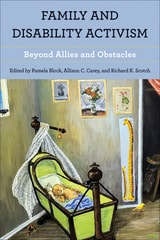
In 2020, Pamela Block, Allison C. Carey, and Richard K. Scotch published Allies and Obstacles, which examined the tensions and connections between disability activism and parents of children with disabilities. In Family and Disability Activism, they continue to examine these issues with a focus on the path-breaking advocacy by marginalized activists with intersectional lived experiences.

Family and Disability Activism reveals how families and disabled people who identify as BIPOC and/or LGBTQIA2S+ understand issues of rights versus justice. Contributions by Deaf and disabled activists emphasize the frequent need for either care or independence. Other chapters show how members of the disabled community and their families must navigate systemic issues of segregation, institutionalization, and access to special education services differently depending on their ethnic and racial identities.

Expanding the conversation about disability, kinship, biological and chosen families, and activism, this volume amplifies important voices in the fight for disability rights.

Contributors: Erin Compton, Diane Compton, Jaclyn Ellis, Laura LeBrun Hatcher, Elena Hung, Bridget Liang, Jenelle Rouse, Cheryl Najarian Souza, Jeneva Stone, Roger A. Stone, Lisette E. Torres, Grace Tsao, and the editors
[more]
cover of Family and Work in Everyday Ethnography

Family and Work in Everyday Ethnography

Tamara M. Brown

Temple University Press, 2013

Family and Work in Everyday Ethnography exposes the intimate relationship between ethnographers as both family members and researchers. The contributors to this exciting volume question and problematize the “artificial divide” between work and family that continues to permeate writing on ethnographic field work as social scientists try to juggle research and family tensions while “on the job.”
 
Essays relate experiences that mirror work-family dilemmas that all employed parents face, and show how deeply personal experiences affect social scientists’ home life and their studies. Bringing together voices of various family members—pregnant women, mothers, fathers, and children—Family and Work in Everyday Ethnography demonstrates how the mixture of work and family in this particular occupation has raised questions—both practical and theoretical—that relate to race, class, and gender.
 
Contributors include: Chris Bobel, Erynn Masi de Casanova, Randol Contreras, C. Aiden Downey, Tanya Golash-Boza, Steven Gold, Sherri Grasmuck, Barbara Katz Rothman,
Jennifer Reich, Leah Schmalzbauer, Gregory Smithsimon, and the editors.
[more]
cover of Family in the Time of COVID: International Perspectives

Family in the Time of COVID

International Perspectives

Edited by Katherine Twamley, Humera Iqbal, and Charlotte Faircloth

University College London, 2023

A global study of the effect of COVID-19 on families.

COVID-19 turned the world as we knew it upside down, impacting families around the world in profound ways. Seeking to understand this global experience, Family in the Time of COVID brings together case studies from ten countries across the world that explore how local responses to the pandemic shaped and were shaped by understandings and practices of family life.

Carried out by an international team during the first year of the pandemic, these in-depth, longitudinal, qualitative investigations examined the impact of the pandemic on families and relationships across diverse contexts and cultures. They looked at how families made sense of complex lockdown laws, how they coped with collective worry about the unknown, managed their finances, fed themselves, and got to grips with online work and schooling to understand better how life had transformed (or not). In short, the research revealed their everyday joys and struggles in times of great uncertainty.

Each case study follows the same methodology revealing experiences in Argentina, Chile, Pakistan, Russia, Singapore, South Africa, Sweden, Taiwan, the United Kingdom, and the United States. They show how local government responses were understood and responded to by families and how different cultures and life circumstances impacted everyday life during the pandemic. Ultimately the analysis demonstrates how experiences of global social upheaval are shaped by international and local policies, as well as the sociocultural ideas and practices of diverse families.
 
[more]
cover of Father Nature: Fathers as Guides to the Natural World

Father Nature

Fathers as Guides to the Natural World

Paul S. & Stan Piper & Tag

University of Iowa Press, 2003
“How do you thank the person who gave you a vantage from which to see the world?” This question is more than the opening statement of Father Nature: Fathers as Guides to the Natural World—it is the resounding theme that runs through each of the essays in this tribute to fathers and fathering and to nature, the connection that ties them together.
In addition to the editors, the contributors include Lorraine Anderson, John Bower, Brain Doyle, John Elder, Mark Harfenist, Bernd Heinrich, ted Kooser, Gretchen Legler, Charles W. Luckmann, Stephen J. Lyons, Jessica Maxwell, James McKean, Mark Menlove, John Rember, Scott Russell Sanders, David Sobel, and Frank Stewart.
Both poignant and entertaining, Father Nature is an inspiring tribute to fathers who shared one gift that can be passed down for generations—a profound love and respect for the natural world.
[more]
cover of Finding Susan

Finding Susan

Molly Hurley Moran

Southern Illinois University Press, 2006

A woman’s heartrending search for her sister

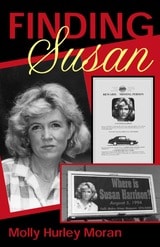
Advancing with the suspense and deft reportage of the true-crime genre and fueled by the poignancy of a literary memoir, Finding Susan is Molly Hurley Moran’s pointed exploration of the disappearance of her sister and her family’s descent into the surreal world of psychics and detectives they once dismissed as the stuff of Lifetime movies.

Susan Hurley Harrison disappeared from upscale Ruxton, Maryland on August 5, 1994. Her body was discovered in the woods of northern Maryland two years later and her death was ruled a homicide. Although Susan’s case drew substantial media attention—including a spot on Unsolved Mysteries—no one, to date, has ever been charged with her murder. In piecing together a mosaic of Susan’s final years, Moran grew to believe her sister was a victim of domestic violence.

An academic by trade, Moran employs a scholar’s precision and razor-sharp feminist analysis in this valiant effort to come to terms with Susan’s life and death and to understand her sister in a way she did not when she was alive. “Finding” Susan refers to both the search for Susan's body and the search for the formative forces of her life.

Mirroring elements of high-profile cases from Laci Peterson to Nicole Brown Simpson, Finding Susan is one woman’s chronicle of loss and remembrance that arrestingly details the helplessness experienced by families of missing persons and calls critical attention to our alarming blindness to domestic abuse. Including appendixes of domestic violence resources, Finding Susan serves as a guide for concerned family members and friends of at-risk women to help identify the warning signs of domestic abuse. Thirty-six illustrations are a powerful complement to the volume.

[more]
cover of For Love or Money: Care Provision in the United States

For Love or Money

Care Provision in the United States

Nancy Folbre

Russell Sage Foundation, 2013
As women moved into the formal labor force in large numbers over the last forty years, care work – traditionally provided primarily by women – has increasingly shifted from the family arena to the market. Child care, elder care, care for the disabled, and home care now account for a growing segment of low-wage work in the United States, and demand for such work will only increase as the baby boom generation ages. But the expanding market provision of care has created new economic anxieties and raised pointed questions: Why do women continue to do most care work, both paid and unpaid? Why does care work remain low paid when the quality of care is so highly valued? How effective and equitable are public policies toward dependents in the United States? In For Love and Money, an interdisciplinary team of experts explores the theoretical dilemmas of care provision and provides an unprecedented empirical overview of the looming problems for the care sector in the United States. Drawing on diverse disciplines and areas of expertise, For Love and Money develops an innovative framework to analyze existing care policies and suggest potential directions for care policy and future research. Contributors Paula England, Nancy Folbre, and Carrie Leana explore the range of motivations for caregiving, such as familial responsibility or limited job prospects, and why both love and money can be efficient motivators. They also examine why women tend to specialize in the provision of care, citing factors like job discrimination, social pressure, or the personal motivation to provide care reported by many women. Suzanne Bianchi, Nancy Folbre, and Douglas Wolf estimate how much unpaid care is being provided in the United States and show that low-income families rely more on unpaid family members for their child and for elder care than do affluent families. With low wages and little savings, these families often find it difficult to provide care and earn enough money to stay afloat. Candace Howes, Carrie Leana and Kristin Smith investigate the dynamics within the paid care sector and find problematic wages and working conditions, including high turnover, inadequate training and a “pay penalty” for workers who enter care jobs. These conditions have consequences: poor job quality in child care and adult care also leads to poor care quality. In their chapters, Janet Gornick, Candace Howes and Laura Braslow provide a systematic inventory of public policies that directly shape the provision of care for children or for adults who need personal assistance, such as family leave, child care tax credits and Medicaid-funded long-term care. They conclude that income and variations in states’ policies are the greatest factors determining how well, and for whom, the current system works. Despite the demand for care work, very little public policy attention has been devoted to it. Only three states, for example, have enacted paid family leave programs. Paid or unpaid, care costs those who provide it. At the heart of For Love and Money is the understanding that the quality of care work in the United States matters not only for those who receive care but also for society at large, which benefits from the nurturance and maintenance of human capabilities. As care work gravitates from the family to the formal economy, this volume clarifies the pressing need for America to fundamentally rethink its care policies and increase public investment in this increasingly crucial sector.
[more]
cover of For the Sake of the Children: The Social Organization of Responsibility in the Hospital and the Home

For the Sake of the Children

The Social Organization of Responsibility in the Hospital and the Home

Carol A. Heimer and Lisa R. Staffen

University of Chicago Press, 1998

For the Sake of the Children examines the social organization of responsibility by asking who takes responsibility for critically ill newborns. Drawing on medical records and interviews with parents and medical staff, the authors take us into two neonatal intensive care units, showing us the traumas of extreme medical measures and the sufferings of infants. The accounts are by turns heroic and disturbing as we see people trying to take charge of these infants' care, thinking about long-term plans, redefining their roles as adults and parents, and coping with sometimes awful contingencies.

Rather than treating responsibility as an ethical issue, the authors focus on how responsibility is socially produced and sustained. The authors ask: How do staff members encourage parents to take responsibility, but keep them from interfering in medical matters, and how do parents encourage staff vigilance when they are novices attempting to supervise the experts?

The authors conclude that it is not sufficient simply to be responsible individuals. Instead, we must learn how to be responsible in an organizational world, and organizations must learn how to support responsible individuals.

[more]
cover of Forcing Divorce: Intimate and Non-Intimate Coercive Control in Marriage Dissolution

Forcing Divorce

Intimate and Non-Intimate Coercive Control in Marriage Dissolution

Péter Berta

Rutgers University Press, 2027

Forcing Divorce seeks to contribute to a more nuanced understanding of what possible causes, motivations, constraints, and dynamics may lie behind forced divorce cases in various social and political contexts. This volume points out that coercive and controlling behavior plays a key role in forcing divorce and provides a detailed insight into the diverse set of strategies and tactics of marital coercive control, as well as the negative emotional, psychological, social, economic, legal , and physical consequences of their use. The chapters reveal that marital coercive control can develop not only in cases of forced divorce related to intimate partnerships, but also in non-intimate, large-scale social contexts, such as the relationship between the state and its citizens, or between religious leaders and their followers. They also highlight why contextual pressure is significant and how it operates, and why it is useful to distinguish between conducive contexts (soft contextual pressure) and coercive contexts (hard contextual pressure) in order to gain a more thorough understanding of the dynamics of restriction of individual marital choice and consent in cases of forced divorce.

[more]
cover of Forevering

Forevering

Carol Mavor

Duke University Press, 2027

Forevering is a memoir about practicing practice. When art theorist Carol Mavor’s beloved husband Kevin passed away unexpectedly, her lifelong practices collapsed. In a blend of lyric essay and poetry, Mavor reflects on living and doing after his death, relearning how to write and make art and love in a world without him. She also takes up horseback riding, giving her a new bond, a new being’s touch, and a new challenge with which she grounds herself in an unstable world. Mavor dives deep into the eternal pleasures and difficulties of learning, unlearning, and practicing the things that make up a life as she continues writing, riding, drawing, and touching, each activity bringing with it the joys and pains of remembering her life with her husband. Illustrating a journey to build and celebrate a life of endless practice, Forevering is a reflection on continuing to live in and through grief.
[more]
cover of Forget Burial: HIV Kinship, Disability, and Queer/Trans Narratives of Care

Forget Burial

HIV Kinship, Disability, and Queer/Trans Narratives of Care

Marty Fink

Rutgers University Press, 2021

Finalist for the LGBTQ Nonfiction Award from Lambda Literary

Queers and trans people in the 1980s and early ‘90s were dying of AIDS and the government failed to care. Lovers, strangers, artists, and community activists came together take care of each other in the face of state violence. In revisiting these histories alongside ongoing queer and trans movements, this book uncovers how early HIV care-giving narratives actually shape how we continue to understand our genders and our disabilities. The queer and trans care-giving kinships that formed in response to HIV continue to inspire how we have sex and build chosen families in the present. In unearthing HIV community newsletters, media, zines, porn, literature, and even vampires, Forget Burial bridges early HIV care-giving activisms with contemporary disability movements. In refusing to bury the legacies of long-term survivors and of those we have lost, this book brings early HIV kinships together with ongoing movements for queer and trans body self-determination.
 
[more]
cover of Formulas for Motherhood in a Chinese Hospital

Formulas for Motherhood in a Chinese Hospital

Suzanne Gottschang

University of Michigan Press, 2018

What happens to pregnant women when the largest country in the world implements a global health policy aimed at reorganizing hospitals and re- training health care workers to promote breastfeeding? Since 1992, the Chinese government has led the world in reorganizing more than 7,000 hospitals into “Baby- Friendly” hospitals. The initiative’s goal, overseen by UNICEF and the World Health Organization, is to promote the practice of breastfeeding by reorganizing hospital routines, spaces, and knowledge in maternity wards and obstetrics clinics. At the same time, China’s hospitals in the mid- 1990s operated as sites where the effects of economic reform and capitalism increasingly blurred the boundaries between state imperatives to produce healthy future citizens and the flexibility accorded individuals through their participation in an emerging consumer culture.

Formulas for Motherhood follows a group of women over eighteen months as they visited a Beijing Baby- Friendly Hospital over the course of their pregnancies and throughout their postpartum recoveries. The book shows how the space of the hospital operates as a microcosm of the larger social, political, and economic forces that urban Chinese women navigate in the process of becoming a mother. Relations between biomedical practices, heightened expectations of femininity and sexuality demanded by a consumer culture, alongside international and national agendas to promote maternal and child health, reveal new agents of maternal governance emerging at the very moment China’s economy heats up. This ethnography provides insight into how women’s creative pragmatism in a rapidly changing society leads to their views and decisions about motherhood.

[more]
cover of Foster Parenthood: A Role Analysis

Foster Parenthood

A Role Analysis

David Fanshel

University of Minnesota Press, 1966

Foster Parenthood was first published in 1966.Although many thousands of children in the United States live in foster family homes supervised by public or private agencies, surprisingly little attention has been focused on the men and women who serve as foster parents. This book will help to fill the gaps in our understanding of foster parents and consequently it will, it is hoped, aid in efforts to improve the administration of foster home care.Professor Fanshel inquires into the motivations of a group of foster parents and identifies psychological and sociocultural factors related to role performance. The study is based on research in depth with 101 foster families on the roster of a social agency in Pittsburgh, Pennsylvania. Data were obtained through interviews with foster mothers and fathers, administration of a parental attitude questionnaire, and ratings by caseworkers of the role performance of the foster parents.The findings of the study provide a prospectus for the guidance of child welfare workers concerned with foster home care. The book also points up the need for further research on the problems studied. In a foreword, Perry B. Hall of the National Study Service writes: “We hope that this study may stimulate other agencies to carry out similar studies and to publish their findings since all of the child welfare field with benefit therefrom.”The book will be useful not only to social workers in the field of child welfare but to social scientists who are students of role analysis and to child development specialists interested in the study of parent behavior.
[more]
cover of Fostering on the Farm: Child Placement in the Rural Midwest

Fostering on the Farm

Child Placement in the Rural Midwest

Megan Birk

University of Illinois Press, 2019

From 1870 until after World War I, reformers led an effort to place children from orphanages, asylums, and children's homes with farming families. The farmers received free labor in return for providing room and board. Reformers, meanwhile, believed children learned lessons in family life, citizenry, and work habits that institutions simply could not provide.
 
Drawing on institution records, correspondence from children and placement families, and state reports, Megan Birk scrutinizes how the farm system developed--and how the children involved may have become some of America's last indentured laborers. Between 1850 and 1900, up to one-third of farm homes contained children from outside the family. Birk reveals how the nostalgia attached to misplaced perceptions about healthy, family-based labor masked the realities of abuse, overwork, and loveless upbringings endemic in the system. She also considers how rural people cared for their own children while being bombarded with dependents from elsewhere. Finally, Birk traces how the ills associated with rural placement eventually forced reformers to transition to a system of paid foster care, adoptions, and family preservation.

[more]
cover of Foxes for Everybody: Twenty-Four Hours of Early Motherhood

Foxes for Everybody

Twenty-Four Hours of Early Motherhood

Catherine Pierce

Northwestern University Press, 2026

Meditations on time, motherhood, and the ordinary beauty of everyday life

Like a newborn’s patterns of sleeping and waking, the revelations of motherhood don’t follow a reasonable schedule, and there’s no clocking out. Organized around the hours of the day, Foxes for Everybody gives voice to the marvels, fears, absurdities, and astonishments of parenthood. These essays offer twenty-four glimpses into how we experience time, our families, our planet, and all of those small moments that aren’t small at all. In memories and reflections that weave through tornadoes and jellyfish, cemeteries and carousels, mortality, mental health, and the exquisite gift of a perfect sentence, acclaimed writer Catherine Pierce reminds us that fear and joy can and do live side by side, and urges us to stay awake—even when, especially when, we’re at the brink of exhaustion—to the possibility of wonder.

[more]
cover of From Parent to Child: Intrahousehold Allocations and Intergenerational Relations in the United States

From Parent to Child

Intrahousehold Allocations and Intergenerational Relations in the United States

Jere R. Behrman, Robert A. Pollak, and Paul Taubman

University of Chicago Press, 1995

How do parents allocate human capital among their children? To what extent do parental decisions about resource allocation determine children's eventual economic success?

The analyses in From Parent to Child explore these questions by developing and testing a model in which the earnings of children with different genetic endowments respond differently to investments in human capital. Behrman, Pollak, and Taubman use this model to investigate issues such as parental bias in resource allocations based on gender or birth order; the extent of intergenerational mobility in income, earnings, and schooling in the United States; the relative importance of environmental and genetic factors in determining variations in schooling; and whether parents' distributions offset the intended effects of government programs designed to subsidize children. In allocating scarce resources, parents face a trade-off between equity and efficiency, between the competing desires to equalize the wealth of their children and to maximize the sum of their earnings.

Building on the seminal work of Gary Becker, From Parent to Child integrates careful modeling of household behavior with systematic empirical testing, and will appeal to anyone interested in the economics of the family.

[more]
cover of From Parents to Children: The Intergenerational Transmission of Advantage

From Parents to Children

The Intergenerational Transmission of Advantage

John Ermisch

Russell Sage Foundation, 2012

Does economic inequality in one generation lead to inequality of opportunity in the next? In From Parents to Children, an esteemed international group of scholars investigates this question using data from ten countries with differing levels of inequality. The book compares whether and how parents' resources transmit advantage to their children at different stages of development and sheds light on the structural differences among countries that may influence intergenerational mobility. How and why is economic mobility higher in some countries than in others? The contributors find that inequality in mobility-relevant skills emerges early in childhood in all of the countries studied. Bruce Bradbury and his coauthors focus on learning readiness among young children and show that as early as age five, large disparities in cognitive and other mobility-relevant skills develop between low- and high-income kids, particularly in the United States and the United Kingdom. Such disparities may be mitigated by investments in early childhood education, as Christelle Dumas and Arnaud Lefranc demonstrate. They find that universal pre-school education in France lessens the negative effect of low parental SES and gives low-income children a greater shot at social mobility. Katherine Magnuson, Jane Waldfogel, and Elizabeth Washbrook find that income-based gaps in cognitive achievement in the United States and the United Kingdom widen as children reach adolescence. Robert Haveman and his coauthors show that the effect of parental income on test scores increases as children age; and in both the United States and Canada, having parents with a higher income betters the chances that a child will enroll in college. As economic inequality in the United States continues to rise, the national policy conversation will not only need to address the devastating effects of rising inequality in this generation but also the potential consequences of the decline in mobility from one generation to the next. Drawing on unparalleled international datasets, From Parents to Children provides an important first step.
[more]
cover of From Property to Family: American Dog Rescue and the Discourse of Compassion

From Property to Family

American Dog Rescue and the Discourse of Compassion

Andrei S. Markovits and Katherine N. Crosby

University of Michigan Press, 2014

In the wake of the considerable cultural changes and social shifts that the United States and all advanced industrial democracies have experienced since the late 1960s and early 1970s, social discourse around the disempowered has changed in demonstrable ways. In From Property to Family: American Dog Rescue and the Discourse of Compassion, Andrei Markovits and Katherine Crosby describe a “discourse of compassion” that actually alters the way we treat persons and ideas once scorned by the social mainstream. This “culture turn” has also affected our treatment of animals inaugurating an accompanying “animal turn”. In the case of dogs, this shift has increasingly transformed the discursive category of the animal from human companion to human family member. One of the new institutions created by this attitudinal and behavioral change towards dogs has been the breed specific canine rescue organization, examples of which have arisen all over the United States beginning in the early 1980s and massively proliferating in the 1990s and subsequent years.  While the growing scholarship on the changed dimension of the human-animal relationship attests to its social, political, moral and intellectual salience to our contemporary world, the work presented in Markovits and Crosby’s book constitutes the first academic research on the particularly important institution of breed specific dog rescue.
[more]
cover of Frontera Madre(hood): Brown Mothers Challenging Oppression and Transborder Violence at the U.S.-Mexico Border

Frontera Madre(hood)

Brown Mothers Challenging Oppression and Transborder Violence at the U.S.-Mexico Border

Edited by Cynthia Bejarano and Maria Cristina Morales

University of Arizona Press, 2024

Borderlands Regional Library Association Southwest Book Award Winner
2025 International Latino Book Award Winner

The topic of mothers and mothering transcends all spaces, from popular culture to intellectual thought and critique. This collection of essays bridges both methodological and theoretical frameworks to explore forms of mothering that challenge hegemonic understandings of parenting and traditional notions of Latinx womxnhood. It articulates the collective experiences of Latinx, Black, and Indigenous mothering from both sides of the U.S.-Mexico border.

Thirty contributors discuss their lived experiences, research, or community work challenging multiple layers of oppression, including militarization of the border, border security propaganda, feminicides, drug war and colonial violence, grieving and loss of a child, challenges and forms of resistance by Indigenous mothers, working mothers in maquiladoras, queer mothering, academia and motherhood, and institutional barriers by government systems to access affordable health care and environmental justice. Also central to this collection are questions on how migration and detention restructure forms of mothering. Overall, this collection encapsulates how mothering is shaped by the geopolitics of border zones, which also transcends biological, sociological, or cultural and gendered tropes regarding ideas of motherhood, who can mother, and what mothering personifies.

Contributors
Elva M. Arredondo
Cynthia Bejarano
Bertha A. Bermúdez Tapia
Margaret Brown Vega
Macrina Cárdenas Montaño
Claudia Yolanda Casillas
Luz Estela (Lucha) Castro
Marisa Elena Duarte
Taide Elena
Sylvia Fernández Quintanilla
Paula Flores Bonilla
Judith Flores Carmona
Sandra Gutiérrez
Ma. Eugenia Hernández Sánchez
Irene Lara
Leticia López Manzano
Mariana Martinez
Maria Cristina Morales
Paola Isabel Nava Gonzales
Olga Odgers-Ortiz
Priscilla Pérez
Silvia Quintanilla Moreno
Cirila Quintero Ramírez
Felicia Rangel-Samponaro
Coda Rayo-Garza
Shamma Rayo-Gutierrez
Marisol Rodríguez Sosa
Brenda Rubio
Ariana Saludares
Victoria M. Telles
Michelle Téllez
Marisa S. Torres
Edith Treviño Espinosa
Mariela Vásquez Tobon
Hilda Villegas

[more]
cover of Full Moon at Noontide: A Daughter's Last Goodbye

Full Moon at Noontide

A Daughter's Last Goodbye

Ann Putnam

University of Iowa Press, 2015

Full Moon at Noontide is the story of Ann Putnam’s mother and father and her father’s identical twin, and how they lived together with their courage and their stumblings, as they made their way into old age and then into death. It’s the story of the journey from one twin’s death to the other, of what happened along the way, of what it means to lose the other who is also oneself. And it’s the story of how Ann Putnam herself struggled to save them and could not, and how she dealt with the weight of guilt, of worrying that she had not done enough, said enough, stayed long enough for them all. How she learned that through this long journey all that was really needed was love.
[more]