Results by title
81 books match the query 'Farm life' and 5 start with f
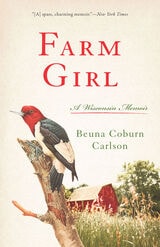
Farm Girl
A Wisconsin MemoirBeuna Coburn Carlson
University of Wisconsin Press, 2020
Farm Girl is Beuna "Bunny" Coburn Carlson's loving tribute to the gently rolling hills of western Wisconsin. With an inviting and fluid voice, she shares intimate moments of happinesses from her childhood: collecting butternuts for homemade maple candy, watching her father read by the flickering light of a kerosene lamp, and the joy of finding a juicy orange at the bottom of a Christmas stocking. Underlying each vignette is the courage of a strong family surviving adversity and finding comfort in one another. Hers is a memoir that readers can dip in and out of with pleasure.
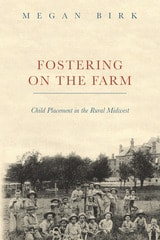
Fostering on the Farm
Child Placement in the Rural MidwestMegan Birk
University of Illinois Press, 2019
Drawing on institution records, correspondence from children and placement families, and state reports, Megan Birk scrutinizes how the farm system developed--and how the children involved may have become some of America's last indentured laborers. Between 1850 and 1900, up to one-third of farm homes contained children from outside the family. Birk reveals how the nostalgia attached to misplaced perceptions about healthy, family-based labor masked the realities of abuse, overwork, and loveless upbringings endemic in the system. She also considers how rural people cared for their own children while being bombarded with dependents from elsewhere. Finally, Birk traces how the ills associated with rural placement eventually forced reformers to transition to a system of paid foster care, adoptions, and family preservation.
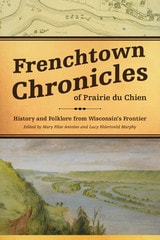
Frenchtown Chronicles of Prairie du Chien
History and Folklore from Wisconsin's FrontierMary Elise Antoine
Wisconsin Historical Society Press, 2016
Albert Coryer, the grandson of a fur trade voyageur-turned-farmer, had a gift for storytelling. Born in 1877, he grew up in Prairie du Chien hearing tales of days gone by from his parents, grandparents, and neighbors who lived in the Frenchtown area. Throughout his life, Albert soaked up the local oral traditions, including narratives about early residents, local landmarks, interesting and funny events, ethnic customs, myths, and folklore.
Late in life, this lively man who had worked as a farm laborer and janitor drew a detailed illustrated map of the Prairie du Chien area and began to write his stories out longhand, in addition to sharing them in an interview with a local historian and folklore scholar. The map, stories, and interview transcript provide a colorful account of Prairie du Chien in the late nineteenth century, when it was undergoing significant demographic, social, and economic change. With sharp historical context provided by editors Lucy Eldersveld Murphy and Mary Elise Antoine, Coryer’s tales offer an unparalleled window into the ethnic community comprised of the old fur trade families, Native Americans, French Canadian farmers, and their descendants.
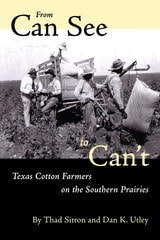
From Can See to Can’t
Texas Cotton Farmers on the Southern PrairiesBy Thad Sitton and Dan K. Utley
University of Texas Press, 1997
Cotton farming was the only way of life that many Texans knew from the days of Austin's Colony up until World War II. For those who worked the land, it was a dawn-till-dark, "can see to can't," process that required not only a wide range of specialized skills but also a willingness to gamble on forces often beyond a farmer's control—weather, insects, plant diseases, and the cotton market.
This unique book offers an insider's view of Texas cotton farming in the late 1920s. Drawing on the memories of farmers and their descendants, many of whom are quoted here, the authors trace a year in the life of south central Texas cotton farms. From breaking ground to planting, cultivating, and harvesting, they describe the typical tasks of farm families—as well as their houses, food, and clothing; the farm animals they depended on; their communities; and the holidays, activities, and observances that offered the farmers respite from hard work.
Although cotton farming still goes on in Texas, the lifeways described here have nearly vanished as the state has become highly urbanized. Thus, this book preserves a fascinating record of an important part of Texas' rural heritage.
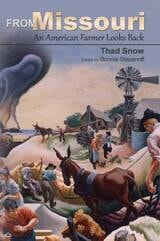
From Missouri
An American Farmer Looks BackThad Snow, Edited by Bonnie Stepenoff
University of Missouri Press, 2012
After years of subjecting the editors of St. Louis newspapers to eloquent letters on subjects as diverse as floods, tariffs, and mules, Thad Snow published his memoir From Missouri in his mid-seventies in 1954. He was barely retired from farming for more than half a century, mostly in the Missouri Bootheel, or “Swampeast Missouri,” as he called it. Now back in print with a new introduction by historian Bonnie Stepenoff, these sketches of a life, a region, and an era will delight readers new to this distinctive American voice as well as readers already familiar with this masterpiece of the American Midwest.
Snow purchased a thousand acres of southeast Missouri swampland in 1910, cleared it, drained it, and eventually planted it in cotton. Although he employed sharecroppers, he grew to become a bitter critic of the labor system after a massive flood and the Great Depression worsened conditions for these already-burdened workers. Shocking his fellow landowners, Snow invited the Southern Tenant Farmers Union to organize the workers on his land. He was even once accused of fomenting a strike and publicly threatened with horsewhipping.
Snow’s admiration for Owen Whitfield, the African American leader of the Sharecroppers’ Roadside Demonstration, convinced him that nonviolent resistance could defeat injustice. Snow embraced pacifism wholeheartedly and denounced all war as evil even as America mobilized for World War II after the attack on Pearl Harbor. In the late 1940s and early 1950s, he became involved with creating Missouri’s conservation movement. Near the end of his life, he found a retreat in the Missouri Ozarks, where he wrote this recollection of his life.
This unique and honest series of personal essays expresses the thoughts of a farmer, a hunter, a husband, a father and grandfather, a man with a soft spot for mules and dogs and all kinds of people. Snow’s prose reveals much about a way of life in the region during the first half of the twentieth century, as well as the social and political events that affected the entire nation. Whether arguing that a good stock dog should be left alone to do its work, explaining the process of making swampland suitable for agriculture, or putting forth his case for world peace, Snow’s ideas have a special authenticity because they did not come from an ivory tower or a think tank—they came From Missouri.