Results by title
72 books match the query 'Field Guide' and 26 start with f
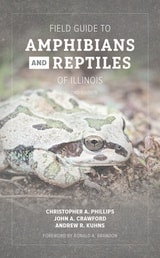
Field Guide to Amphibians and Reptiles of Illinois
Christopher A. Phillips, John A. Crawford, and Andrew R. Kuhns. Foreword by Ronald A. Brandon
University of Illinois Press, 2022
A one-of-a-kind resource, the Field Guide to Amphibians and Reptiles of Illinois is a definitive guide aimed at biologists, teachers, students, wildlife specialists, natural resource managers, conservationists, law enforcement officials, landowners, hobbyists, and everyone else eager to explore herpetology and nature in the Prairie State.
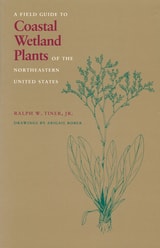
Field Guide to Coastal Wetland Plants of the Northeastern United States
Ralph W. Tiner
University of Massachusetts Press, 1987
Coastal wetlands are among our most important fish and wildlife habitats. For example, over two-thirds of our recreationally and commercially important marine fishes depend on coastal marshes and associated waters for nursery and spawning grounds.
This book is arranged in four major sections: (1) Coastal Wetland Ecology: A General Overview, (2) Identification of Coastal Wetland Plants, (3) Wetland Plant Descriptions and Illustrations, and (4) Places to Observe Coastal Wetlands, and (5) Sources of Other Information. In addition , a list of references used in preparing this book and a glossary of technical terms are provided.
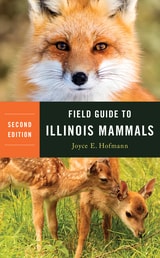
Field Guide to Illinois Mammals
Joyce E. Hofmann
University of Illinois Press, 2026
Designed to use in the field or the backyard, Field Guide to Illinois Mammals updates a singular reference for wildlife biologists, ecologists, hikers, armchair adventurers, and anyone else fascinated by the state’s wildlife.

Field Guide to New England Barns and Farm Buildings
Thomas Durant Visser
University Press of New England, 1997
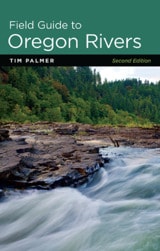
Field Guide to Oregon Rivers
Tim Palmer
Oregon State University Press, 2024
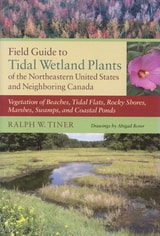
Field Guide to Tidal Wetland Plants of the Northeastern United States and Neighboring Canada
Vegetation of Beaches, Tidal Flats, Rocky Shores, Marshes, Swamps, and Coastal PondsRalph W. Tiner
University of Massachusetts Press, 2009
First published in 1987, Ralph W. Tiner's A Field Guide to Coastal Wetland Plants of the Northeastern United States soon established itself as the definitive work on its subject. Now Tiner has prepared a revised and expanded edition, broadening the coverage both botanically and geographically. It emphasizes plant identification and includes descriptions of over 700 species and illustrations of approximately 550 species. More tidal wetland types are covered (beaches, rocky shores, and tidal swamps) and the geographic scope extends as far north as Canada's Maritime Provinces.
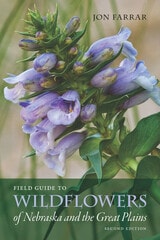
Field Guide to Wildflowers of Nebraska and the Great Plains
Second EditionJon Farrar
University of Iowa Press, 2012
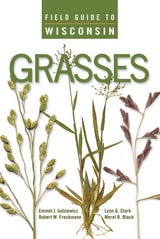
Field Guide to Wisconsin Grasses
Emmet J. Judziewicz , Robert W. Freckmann, Lynn G. Clark, Merel R. Black
University of Wisconsin Press, 2014
The book includes:
• drawings of most species
• chapters on grass morphology and grasses in natural communities
• keys to all species, including an illustrated key to genera
• a glossary of grass terminology.
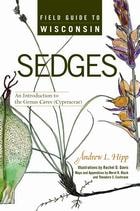
Field Guide to Wisconsin Sedges
An Introduction to the Genus Carex (Cyperaceae)Andrew L. Hipp; Illustrations by Rachel D. Davis; Maps and Appendices by Merel R. Black and Theodore S. Cochrane
University of Wisconsin Press, 2008
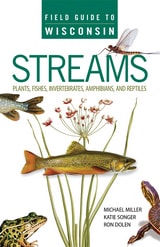
Field Guide to Wisconsin Streams
Plants, Fishes, Invertebrates, Amphibians, and ReptilesMichael A. Miller, Katie Songer, and Ron Dolen
University of Wisconsin Press, 2014
More than 1,000 images illustrate the species in this field guide. These images are augmented by detailed ecological and taxonomic notes, descriptions of look-alike species, and distribution maps. The guide identifies:
• more than 130 common plants
• all 120 fishes known to inhabit Wisconsin streams
• 8 crayfishes
• 50 mussels
• 10 amphibians
• 17 reptiles
• 70 families of insects
• other commonly found invertebrates.
Best Regional General Interest Books, selected by the American Association of School Librarians
Best Regional General Interest Books, selected by the Public Library Reviewers
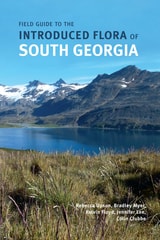
Field Guide to the Introduced Flora of South Georgia
Rebecca Upson, Bradley Myer, Kelvin Floyd, Jennifer Lee, and Colin Clubbe
Royal Botanic Gardens, Kew, 2017
This is the first field guide to comprehensively cover these species, providing full-color photographs, distribution maps, and species descriptions, plus keys to the grasses and sedges of the area. This guide is accessible even to non-botanists and also provides an opportunity for visitors to be part of a citizen science program contributing sightings and improving our knowledge of the introduced flora of South Georgia.
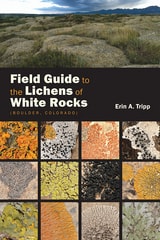
Field Guide to the Lichens of White Rocks
(Boulder, Colorado)Erin Tripp
University Press of Colorado, 2017
This extensively illustrated field guide presents detailed information on the macroscopic and microscopic features needed to identify species, as well as extensive notes on how to differentiate closely related lichens—both those present at White Rocks and those likely to be found elsewhere in western North America. This guide is one of the only complete lichen inventories of a sandstone formation in North America and covers all constituents including the crustose microlichen biota, traditionally excluded from other inventories. A short introduction and glossary equip the reader with basic information on lichen morphology, reproduction, and ecology.
Visitors to White Rocks Nature Preserve must schedule staff-led public tours or set up sponsored research projects through the City of Boulder Open Space and Mountain Parks, and there are many other outcroppings of Fox Hills sandstone across the West, making Field Guide to the Lichens of White Rocks a significant resource for anyone interested in this unique environment. This accessible, user-friendly guide will also be valuable to naturalists and lichenologists around the world as well as educators, conservationists, and land managers concerned with the growing significance of open spaces and other protected urban areas throughout North America.
The University Press of Colorado gratefully acknowledges the generous support of the University of Colorado Natural History Museum, City of Boulder Parks & Open Spaces, and the Colorado Native Plant Society board and members toward the publication of this book.
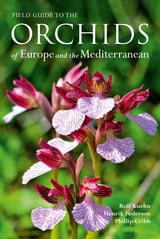
Field Guide to the Orchids of Europe and the Mediterranean
Rolf Kuehn, Henrik Pedersen, and Phillip Cribb
Royal Botanic Gardens, Kew, 2018
The book covers orchids from Europe and the Mediterranean, as well as areas in Turkey and the immediate near east of North Africa and Macaronesia. It includes thirty genera and their species including Ophrys, Cypripedium, Orchis, Dactylorhiza, Epipactis, and Serapias, as well as seventy natural hybrids. The authors emphasize the natural variability that exists in many wild species and work to eliminate the confusion that can arise due to the morphological variation. Each species includes multiple images to illustrate this diversity as well as notes on distinguishing features and distribution maps. Common names and important synonyms accompany each species alongside notes on habitat, flowering times, and distinguishing features.
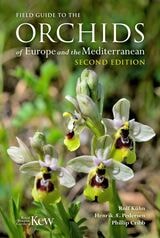
Field Guide to the Orchids of Europe and the Mediterranean
Rolf Kühn, Henrik Ærenlund Pedersen, and Phillip Cribb
Royal Botanic Gardens, Kew, 2024
Field Guide to the Orchids of Europe and the Mediterranean: Second Edition is a comprehensive photographic guide to the orchids of the region written by leading experts, who between them have decades of orchid field and research experience. The book covers orchids from Europe and the Mediterranean, extending to Turkey and the immediate near east of North Africa and Macaronesia.
Many guides to orchids of this region exist, but in this completely revised second edition, the authors have drawn on the latest scientific research to bring clarity to orchid identification and names, with an emphasis on the natural variability that exists in many wild species. This edition incorporates the latest updates in taxonomy. With over 2000 color photographs and new images, the book provides the reader with an accessible and easy-to-use identification guide to the natural variability seen in these orchids.
The book covers thirty genera and their species including Ophrys, Cypripedium, Orchis, Dactylorhiza, Epipactis, and Serapias, as well as seventy natural hybrids. Much of the confusion over identification is due to the morphological variation a species can have within a habitat and across its distribution, and therefore to simplify identification, several images accompany each species to illustrate this diversity, along with notes on distinguishing features and distribution maps. Each species is also accompanied by common names and important synonyms, as well as notes on habitat, flowering times, and distinguishing features.
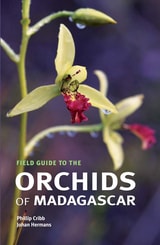
Field Guide to the Orchids of Madagascar
Phillip Cribb and Johan Hermans
Royal Botanic Gardens, Kew, 2009
As is the case with many other rare and sought-after species of plant and animal, Madagascar is one of the world’s prime locations for orchids, which make up the largest family of flowering plants on the island. Madagascar is home to nearly one thousand different species of orchids—which make up nearly ten percent of the island’s flora—nearly nine hundred of them endemic. Orchids are found in almost every habitat on the island, from the mountains to the coasts, and this field guide—the first of its kind, fully illustrated with color photographs and packed with details to aid identification—is an invaluable tool for researchers and ecotourists visiting the island.
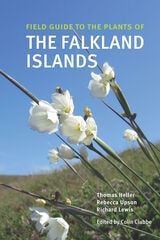
Field Guide to the Plants of the Falkland Islands
Thomas Heller, Rebecca Upson, and Richard Lewis
Royal Botanic Gardens, Kew, 2018
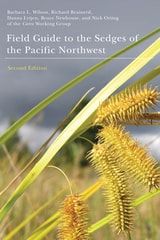
Field Guide to the Sedges of the Pacific Northwest
Second EditionBarbara J. Wilson, Richard Brainerd, Danny Lytjen, Bruce Newhouse, and Nick Otting of the Carex Working Group
Oregon State University Press, 2014
Sedges can be difficult to identify, with differences between species based on small, technical characters. This comprehensive guide contains identification keys, descriptions, more than 650 color photographs, and distribution maps for each species, providing users with helpful tools and tips for identifying the plants in this challenging group. Information about sedge ecology, habitat, management and restoration, ethnobotanical uses, and propagation enhances the guide’s utility.
Field Guide to the Sedges of the Pacific Northwest provides an invaluable resource for botanists, land managers, restoration ecologists, and plant enthusiasts. And, as the genus Carex becomes increasingly important amongst landscapers, nurseries, and gardeners, the guide will serve as a handy tool for choosing Northwest natives for the garden.
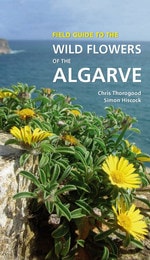
Field Guide to the Wild Flowers of the Algarve
Chris Thorogood and Simon Hiscock
Royal Botanic Gardens, Kew, 2014
With the Field Guide, visitors can find the best places and times to see the plants. The Guide also explains their habitats and vegetation types. Richly illustrated, it includes hundreds of color photos and line drawings to aid identification, plus distribution maps that make it easy to plan trips and find nearby species.
Introductory passages give environmental context and cover climate, geology, agriculture, wildflower classification, and flower morphology. Written to appeal to both amateur naturalists and professional botanists alike, this is the essential companion for anyone drawn to the rich beauty of the Algarve.
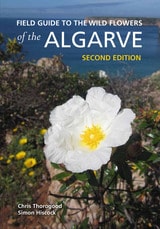
Field Guide to the Wild Flowers of the Algarve
Second EditionChris Thorogood and Simon Hiscock
Royal Botanic Gardens, Kew, 2019
This second edition is fully updated with new species and new findings. Information is provided on where and when to see plants with information on their habitat and vegetation types. Rare and unusual plants of the region are highlighted, including orchids and parasitic plants. The more than one thousand descriptions are accompanied throughout with over 650 stunning color photographs, 780 line drawings, and distribution maps.

Field Guide to the Wild Flowers of the Canary Islands
Chris Thorogood, Mark Carine, and Alfredo Reyes-Betancourt
Royal Botanic Gardens, Kew, 2024
Situated in the North Atlantic off the coast of northwestern Africa, the Canary Islands are a volcanic archipelago, comprising seven large and several smaller islands. The region attracts millions of visitors every year, with an abundance of ecotourists drawn by its famously rich flora. This book presents previously inaccessible information on the islands through the collaboration of British scientists and local experts.
This long-awaited field guide covers more than two thousand of the region’s exceptionally diverse and important plants, from the most common species to local endemics. Illustrated throughout with color photographs, each species profile includes nomenclature, description, dimensions, habitat, flowering times, and distribution.
With comprehensive, up-to-date coverage sorted by habitat, this is the essential guide for students, professional botanists, scientists, gardeners, and plant enthusiasts alike.
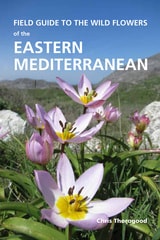
Field Guide to the Wild Flowers of the Eastern Mediterranean
Chris Thorogood
Royal Botanic Gardens, Kew, 2019
The geographic coverage of this book spans the Ionian Archipelago, mainland Greece, Peloponnese, Aegean Islands, Crete, Cyprus, Mediterranean Turkey, and the coasts of Israel, Palestine, Lebanon, and Syria. Featuring more than three thousand plants, this easy-to-use guide focuses on the most common and conspicuous species that occur in the area, with plant descriptions, color photographs, and illustrations throughout. A section on where to see wild flowers in the region is included, as well as a glossary of terms. An ideal companion for wildlife and plant enthusiasts, this guide will enable anyone to reliably identify wild flowers in the field.
Field Guide to the Wild Flowers of the Western Alps
France, Italy and SwitzerlandChristopher Grey-Wilson
Royal Botanic Gardens, Kew, 2025
The Western Alps, a large region of dramatic scenery and varied habitats, is noted for its biodiversity and beauty. From woodlands and forests, through colorful hay meadows, to the higher alpine elevations, the region boasts one of the most diverse and colorful mountain floras found anywhere on earth. This book is a celebration of the great biological diversity found in one of the most beautiful and inviting regions of Europe.
This comprehensive guide features the fascinating flora to be found across the region in the French Alps, the Massif Central and Cevennes, the Swiss Jura Mountains and the Italian Alps east to Como and Bergamo. Illustrated throughout with over 2000 photographs, each species profile includes nomenclature, description, dimensions, habitat, flowering times, and distribution.
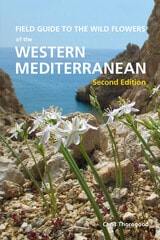
Field Guide to the Wild Flowers of the Western Mediterranean, Second Edition
Chris Thorogood
Royal Botanic Gardens, Kew, 2021
The western Mediterranean—running from Italy to Portugal and encompassing Corsica, Sardinia, the Balearic Islands, and coastal North Africa—is one of the most biodiverse regions in the world, home to more than 10,000 plant species. This updated edition of the Field Guide to the Wild Flowers of the Western Mediterranean is the most comprehensive plant identification guide to the area. Covering more than 2,500 plants, this accessible guide focuses on the most common and conspicuous species that occur in the area, with descriptions, color photographs, and illustrations throughout. The book also includes sections on where to find native plants in the wild, as well as a glossary of terms. An ideal companion for wildlife and plant enthusiasts, this guide will enable even the most botanically blind to reliably identify native flora in the sunny and coastal climes of the western Mediterranean.
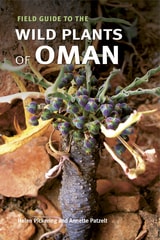
Field Guide to the Wild Plants of Oman
Helen Pickering and Annette Patzelt
Royal Botanic Gardens, Kew, 2008
This compact volume is a handy, thorough guide to the wild plants found in the small Middle Eastern nation of Oman. A short introduction provides an overview of Oman’s geography and remarkable environmental diversity, followed by catalog of more than 250 common species of plants, enhanced by color photographs designed to assist with quick identification in the field. Descriptive accounts—including details of habitat, uses, and worldwide distribution—round out the individual entries, while a glossary of botanical terms, a bibliography, and an index of scientific and vernacular names combine to make this an invaluable reference.
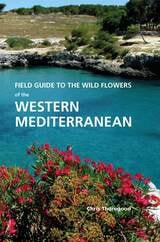
Field Guide to the Wildflowers of the Western Mediterranean
Chris Thorogood
Royal Botanic Gardens, Kew, 2016
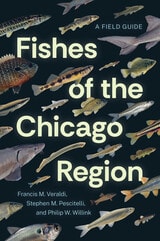
Fishes of the Chicago Region
A Field GuideFrancis M. Veraldi, Stephen M. Pescitelli, and Philip W. Willink
University of Chicago Press, 2025
“A must-have field guide for fans of Second City area fish.”—Robert Ito, The New York Times Book Review • “A treasure of hardcore fish intelligence and delightful tidbits of fish history.”—Dale Bowman, Chicago Sun-Times
Fish don’t heed state boundaries, and neither does this comprehensive, photo-filled guide to the diverse species of Chicago and beyond.
Encompassing southern Lake Michigan, northeastern Illinois, and adjacent areas of Indiana, Michigan, and Wisconsin, the Chicago Region is home to rare habitats supporting diverse fish populations. From small creeks to large rivers and from small ponds to one of the world’s largest freshwater ecosystems, Lake Michigan, these systems are home to some 164 fish species representing 31 families. In this essential field guide, the most complete and up-to-date reference for fishes in the Chicago Region, we meet them all—lampreys, sturgeon, paddlefish, gars, drum, darters, perches, sticklebacks, sculpins, and more. Written by leading local ecologists and featuring a pictorial family key, color photographs, detailed species distribution maps, and natural history observations unique to the region, this go-to guide belongs on the shelf—and in the boat—of every angler, naturalist, fisheries manager, and biologist.