Results by title
53 books match the query 'Film adaptations' and 4 start with f
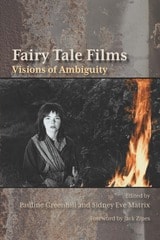
Fairy Tale Films
Visions of AmbiguityPauline Greenhill
Utah State University Press, 2010
This ISBN refers to the ebook edition of this text, available directly from the publisher. It has erroneously been listed as paperback by some online vendors. The true paperback edition is indeed available at online vendors. Paste this ISBN into the search box: 9780874217810.
In this, the first collection of essays to address the development of fairy tale film as a genre, Pauline Greenhill and Sidney Eve Matrix stress, "the mirror of fairy-tale film reflects not so much what its audience members actually are but how they see themselves and their potential to develop (or, likewise, to regress)." As Jack Zipes says further in the foreword, “Folk and fairy tales pervade our lives constantly through television soap operas and commercials, in comic books and cartoons, in school plays and storytelling performances, in our superstitions and prayers for miracles, and in our dreams and daydreams. The artistic re-creations of fairy-tale plots and characters in film—the parodies, the aesthetic experimentation, and the mixing of genres to engender new insights into art and life— mirror possibilities of estranging ourselves from designated roles, along with the conventional patterns of the classical tales.”
Here, scholars from film, folklore, and cultural studies move discussion beyond the well-known Disney movies to the many other filmic adaptations of fairy tales and to the widespread use of fairy tale tropes, themes, and motifs in cinema.
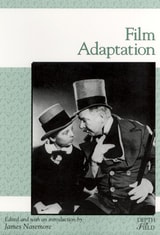
Film Adaptation
Naremore, James
Rutgers University Press, 2000
Some of the earliest feature films were derived from classic literature. Even today, most of the movies we see are adaptations of one kind or another. People who have never read Jane Austen can see her characters on the screen; but filmgoers can also see material taken from theater, television, comic books, and every other medium.
The essays in this volume, most of which have never before been published, raise fundamental questions about cinema and adaptation: what is the nature of the "literary" and the "cinematic"? Why do so many of the
films described as adaptions seem to derive from canonical literature rather than from other sources? How do the different media affect the ways stories are told?
Film Adaptation offers fresh approaches to the art, theory, and cultural politics of movie adaptations, even challenging what is meant by the term "adaptation" itself. Contributors examine the process of adaptation in both theory and practice, discussing a wide variety of films. James Naremore's introduction provides an accessible historical overview of the field and reveals the importance of adaptation study to the many different academic disciplines now attracted to the analysis of film as commodity, document, and cultural artifact.
(Contributors are André Bazin, Dudley Andrew, Robert B. Ray, Robert Stam, Richard Maltby, Guerric DeBona, O. M. B., Gilberto Perez, Michael Anderegg, Matthew Bernstein, Darlene J. Sadlier, Jonathan Rosenbaum, and Lesley Stern.)
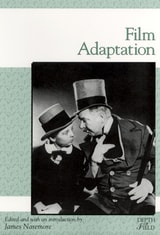
Film Adaptation
Naremore, James
Rutgers University Press, 2000
Some of the earliest feature films were derived from classic literature. Even today, most of the movies we see are adaptations of one kind or another. People who have never read Jane Austen can see her characters on the screen; but filmgoers can also see material taken from theater, television, comic books, and every other medium.
The essays in this volume, most of which have never before been published, raise fundamental questions about cinema and adaptation: what is the nature of the "literary" and the "cinematic"? Why do so many of the
films described as adaptions seem to derive from canonical literature rather than from other sources? How do the different media affect the ways stories are told?
Film Adaptation offers fresh approaches to the art, theory, and cultural politics of movie adaptations, even challenging what is meant by the term "adaptation" itself. Contributors examine the process of adaptation in both theory and practice, discussing a wide variety of films. James Naremore's introduction provides an accessible historical overview of the field and reveals the importance of adaptation study to the many different academic disciplines now attracted to the analysis of film as commodity, document, and cultural artifact.
(Contributors are André Bazin, Dudley Andrew, Robert B. Ray, Robert Stam, Richard Maltby, Guerric DeBona, O. M. B., Gilberto Perez, Michael Anderegg, Matthew Bernstein, Darlene J. Sadlier, Jonathan Rosenbaum, and Lesley Stern.)
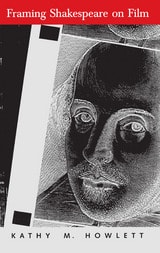
Framing Shakespeare on Film
How the Frame Reveals MeaningKathy M. Howlett
Ohio University Press, 2000
The aesthetics of frame theory form the basis of Framing Shakespeare on Film. This groundbreaking work expands on the discussion of film constructivists in its claim that the spectacle of Shakespeare on film is a problem-solving activity.
Kathy Howlett demonstrates convincingly how viewers’ expectations for understanding Shakespeare on film can be manipulated by the director’s cinematic technique. Emphasizing that the successful film can transform Shakespeare’s text while remaining rooted in Shakespearean conceptions, Howlett raises the question of how directors and audiences understand the genre of Shakespeare on film and reveals how the medium alters the patterns through which the audience views Shakespeare.