Results by title
87 books match the query 'Fire' and 14 start with f
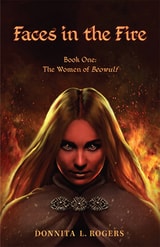
Faces in the Fire
The Women of Beowulf: Book OneDonnita L. Rogers
Arizona Center for Medieval and Renaissance Studies, 2013
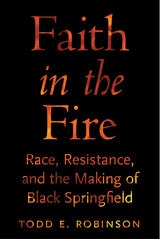
Faith in the Fire
Race, Resistance, and the Making of Black SpringfieldTodd E. Robinson
University of Massachusetts Press, 2027
An intimate history that puts the Black church at the heart of New England’s struggle with race, power, and belonging
On the eve of Barack Obama’s historic election in 2008, the Macedonia Church of God in Christ in Springfield, Massachusetts—a church built by historian Todd E. Robinson’s family—was set ablaze in an act of racial terror. This devastating event echoes a long history of attacks on Black churches, institutions that have served as vital centers of faith, civic life, and community organization.
In Faith in the Fire, Robinson charts the evolution of Springfield’s Black community from its seventeenth-century beginnings through the Great Migration and into the twenty-first century. Centering the Black church, he demonstrates how African Americans shaped the city’s industrial, cultural, and civic landscape, building social networks and organizations that became enduring anchors of community life. From the League of Gileadites, an all-Black armed anti-slavery militia, to twentieth-century initiatives like the Springfield Plan—a pioneering but short-lived experiment in interracial education—Robinson uncovers the city’s deep history of Black resistance to white supremacy. In doing so, he exposes the limits of New England’s mythic racial tolerance. Racial violence, police brutality, economic inequality, educational disparities, and housing segregation, Robinson argues, are not aberrations of the South but also enduring features of Northern life and culture.
Drawing on extensive archival research and his own family’s experience, Robinson offers a powerful and deeply personal narrative that links past and present. Through the intertwined story of Springfield’s Black community and the destruction of one of its most cherished institutions, he illuminates how the long struggle for freedom, justice, and belonging continues to shape the life of Black Americans and the nation as a whole.
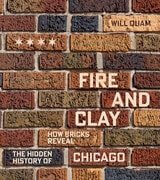
Fire and Clay
How Bricks Reveal the Hidden History of ChicagoWill Quam
University of Chicago Press, 2026
By the late 1920s, at its peak of brick making and consumption, Chicago was making over a billion bricks a year for its buildings and importing almost another billion nicer face bricks for their front facades. Throughout Chicago’s history, brick dramatically transformed from a simple fireproof building material into an integral piece of architectural design. And no one knows the hidden details and stories of this fascinating history like Chicago’s foremost brick aficionado, Will Quam.
In Fire and Clay, Quam takes us on journeys to experience the beauty and mystery of Chicago’s buildings. He also explores how developers, architects, and masons followed changing fashions as they designed and built the city, creating connections across disparate neighborhoods. The red bricks that make up Lincoln Park mansions, for example, are the same as those found on Pullman row homes and Pilsen workers’ cottages, just as Rogers Park’s colorful bricks can also be found far across the city in South Shore. Known for his popular walking tours, Quam has built his life around the appreciation, study, and evangelizing of this most humble building block’s many wonders. Here, he pours all his knowledge into the first book of its kind, beautifully illustrated with more than one hundred of his own full-color photographs.
More than just an investigation into brick, Fire and Clay gives readers a fresh lens through which to explore the city anew and find clear connections across its different neighborhoods. By the end of this lively tour through Chicago’s history, readers will never look at a brick building the same way again.
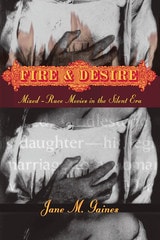
Fire and Desire
Mixed-Race Movies in the Silent EraJane M. Gaines
University of Chicago Press, 2001
Fire and Desire offers a penetrating look at the black independent film movement during the silent period. Gaines traces the profound influence that D. W. Griffith's racist epic The Birth of a Nation exerted on black filmmakers such as Oscar Micheaux, the director of the newly recovered Within Our Gates. Beginning with What Happened in the Tunnel, a movie that played with race and sex taboos by featuring the first interracial kiss in film, Gaines also explores the cinematic constitution of self and other through surprise encounters: James Baldwin sees himself in the face of Bette Davis, family resemblance is read in Richard S. Robert's portrait of an interracial family, and black film pioneer George P. Johnson looks back on Micheaux.
Given the impossibility of purity and the co-implication of white and black, Fire and Desire ultimately questions the category of "race movies" itself.
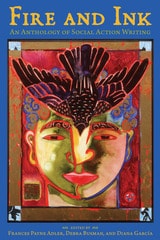
Fire and Ink
An Anthology of Social Action WritingEdited by Frances Payne Adler, Debra Busman, and Diana García
University of Arizona Press, 2009
Fire and Ink brings together, for the first time in one volume, politically engaged writing by poets, fiction writers, and essayists. Including many of our finest writers—Martín Espada, Adrienne Rich, June Jordan, Patricia Smith, Gloria Anzaldúa, Sharon Olds, Arundhati Roy, Sonia Sanchez, Carolyn Forche, Chitra Banerjee Divakaruni, Alice Walker, Linda Hogan, Gary Soto, Kim Blaeser, Minnie Bruce Pratt, Li-Young Lee, and Jimmy Santiago Baca, among others—this is an indispensable collection.
This groundbreaking anthology marks the emergence of social action writing as a distinct field within creative writing and literature. Featuring never-before-published pieces, as well as reprinted material, Fire and Ink is divided into ten sections focused on significant social issues, including identity, sexuality and gender, the environment, social justice, work, war, and peace. The pieces can often be gripping, such as “Frame,” in which Adrienne Rich confronts government and police brutality, or Chris Abani’s “Ode to Joy,” which documents great courage in the face of mortal danger.
Fire and Ink serves as a wonderful reader for a wide range of courses, from composition and rhetoric classes to courses in ethnic studies, gender studies, American studies, and even political science, by facing a past that was often accompanied by injustice and suffering. But beyond that, this collection teaches us that we all have the power to create a more equitable and just future.
Fire in the Big House
America’s Deadliest Prison DisasterMitchel P. Roth
Ohio University Press, 2019
On April 21, 1930—Easter Monday—some rags caught fire under the Ohio Penitentiary’s dry and aging wooden roof, shortly after inmates had returned to their locked cells after supper. In less than an hour, 320 men who came from all corners of Prohibition-era America and from as far away as Russia had succumbed to fire and smoke in what remains the deadliest prison disaster in United States history.
Within 24 hours, moviegoers were watching Pathé’s newsreel of the fire, and in less than a week, the first iteration of the weepy ballad “Ohio Prison Fire” was released. The deaths brought urgent national and international focus to the horrifying conditions of America’s prisons (at the time of the fire, the Ohio Penitentiary was at almost three times its capacity). Yet, amid darkening world politics and the first years of the Great Depression, the fire receded from public concern.
In Fire in the Big House, Mitchel P. Roth does justice to the lives of convicts and guards and puts the conflagration in the context of the rise of the Big House prison model, local and state political machinations, and American penal history and reform efforts. The result is the first comprehensive account of a tragedy whose circumstances—violent unrest, overcrowding, poorly trained and underpaid guards, unsanitary conditions, inadequate food—will be familiar to prison watchdogs today.
Fire in the Hole
Sybil Downing
University Press of Colorado, 1996
Fire in the Water, Earth in the Air
Legends of West Texas MusicBy Christopher J. Oglesby
University of Texas Press, 2006
From Buddy Holly and the Crickets to the Flatlanders, Terry Allen, and Natalie Maines, Lubbock, Texas, has produced songwriters, musicians, and artists as prolifically as cotton, conservatives, and windstorms. While nobody questions where the conservatives come from in a city that a recent nonpartisan study ranked as America's second most conservative, many people wonder why Lubbock is such fertile ground for creative spirits who want to expand the boundaries of thought in music and art. Is it just that "there's nothing else to do," as some have suggested, or is there something in the character of Lubbock that encourages creativity as much as conservatism?
In this book, Christopher Oglesby interviews twenty-five musicians and artists with ties to Lubbock to discover what it is about this community and West Texas in general that feeds the creative spirit. Their answers are revealing. Some speak of the need to rebel against conventional attitudes that threaten to limit their horizons. Others, such as Joe Ely, praise the freedom of mind they find on the wide open plains. "There is this empty desolation that I could fill if I picked up a pen and wrote, or picked up a guitar and played," he says. Still others express skepticism about how much Lubbock as a place contributes to the success of its musicians. Jimmie Dale Gilmore says, "I think there is a large measure of this Lubbock phenomenon that is just luck, and that is the part that you cannot explain."
As a whole, the interviews create a portrait not only of Lubbock's musicians and artists, but also of the musical community that has sustained them, including venues such as the legendary Cotton Club and the original Stubb's Barbecue. This kaleidoscopic portrait of the West Texas music scene gets to the heart of what it takes to create art in an isolated, often inhospitable environment. As Oglesby says, "Necessity is the mother of creation. Lubbock needed beauty, poetry, humor, and it needed to get up and shake its communal ass a bit or go mad from loneliness and boredom; so Lubbock created the amazing likes of Jimmie Dale Gilmore, Butch Hancock, Terry Allen, and Joe Ely."
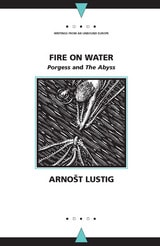
Fire on Water
Porgess and The AbyssArnost Lustig
Northwestern University Press, 2005
It occurred to me why I was able to forgive the Italians, but never the Germans. Was it because the Italians never slept on mattresses stuffed with the hair of Luster Leibling or Weltfeind Flusser?
In this pair of short novels, Arnošt Lustig continues his lifelong project of creating a universe-at once concrete and dreamlike-to examine the horrors of the Holocaust and the impossible burden of living as a survivor.
The Abyss is the fragmented memories of David Wiesenthal, aged twenty, tortured by what he has witnessed and by the knowledge that luck-not skill, not courage, certainly not goodness-separated the survivors from the doomed. He seeks solace remembering the women he's loved or desired, even the one who represents his death.
In Porgess, the narrator recounts the life of the title character, "the most handsome boy in Jewish Prague" who was paralyzed on the last day of World War II. The two discuss their mutual fascinations-women, jazz, the significance of numbers-in sometimes bitter, sometimes sardonic voices, but always with the specters of the dead and the guilt of survival close at hand.
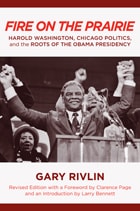
Fire on the Prairie
Harold Washington, Chicago Politics, and the Roots of the Obama PresidencyGary Rivlin
Temple University Press, 2012
Harold Washington’s historic and improbable victory over the vaunted Chicago political machine shook up American politics. The election of the enigmatic yet engaging Washington led to his serving five tumultuous years as the city’s first black mayor. He fashioned an uneasy but potent multiracial coalition that today still stands as a model for political change.
In this revised edition of Fire on the Prairie, acclaimed reporter Gary Rivlin chronicles Washington’s legacy—a tale rich in character and intrigue. He reveals the cronyism of Daley’s government and Washington’s rivalry with Jesse Jackson. Rivlin also shows how Washington’s success inspired a young community organizer named Barack Obama to turn to the electoral arena as a vehicle for change. While the story of a single city, , this political biography is anything but parochial.
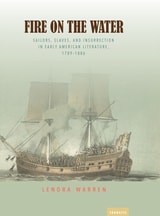
Fire on the Water
Sailors, Slaves, and Insurrection in Early American Literature, 1789-1886Warren, Lenora
Bucknell University Press, 2019
Published by Bucknell University Press. Distributed worldwide by Rutgers University Press.
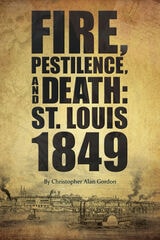
Fire, Pestilence, and Death
St. Louis, 1849Christopher Alan Gordon
Missouri Historical Society Press, 2018
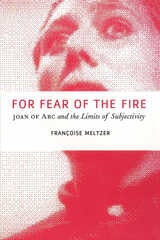
For Fear of the Fire
Joan of Arc and the Limits of SubjectivityFrançoise Meltzer
University of Chicago Press, 2001
Engaging a number of theorists, and alternating between Joan's historical and cultural context, Meltzer also explores the ways in which postmodern thinkers question subjectivity. She argues that the way masculine subjects imagine Joan betrays their fear of death and necessitates the role of women as cultural others: enigmatic, mysterious, dark, and impossible. As such, Joan serves as a useful model of the limits and risks of subjectivity. For Meltzer, she is both the first modern and the last medieval figure. From the ecclesial jury that burned her, to the theorists of today who deny their attraction to the supernatural, the philosophical assumptions that inform Joan's story, as Meltzer ultimately shows, have changed very little.
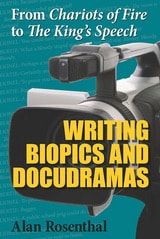
From Chariots of Fire to The King's Speech
Writing Biopics and DocudramasAlan Rosenthal
Southern Illinois University Press, 2014
Over the past decade, movie audiences have become hungry for films based on real people and historical events. Never was this more evident than during the best-picture showdown between The King’s Speech and The Social Network during the 2011 Academy Awards, a scene then repeated, with Argo, Lincoln and Zero Dark Thirty in the 2013 awards.. While Hollywood moguls have come to recognize the box-office revenue and critical acclaim that accompany such films and are now fast-tracking many docudramas into theaters, there remains a need for more reality-based film scripts.
In From “Chariots of Fire” to “The King’s Speech,” writer, director, and producer Alan Rosenthal presents a manual for screenwriters to develop their bio-pic or docudrama from concept to completion. This comprehensive guide begins with an overview of the genre before providing screenwriters with all the techniques and insights needed to navigate the often intimidating landscape of screenwriting for reality-based scripts. Included within the volume are tips for such challenges as inception and research, developing dialogue and narration, and capably addressing any legal and rights issues that may arise. Also included are appendixes containing useful marketing tips and broadcast guidelines.
A practical, down-to-earth manual for experienced and novice screenwriters alike, From “Chariots of Fire” to “The King’s Speech” is the only manual dedicated explicitly to writing the bio-pic and docudrama. Rosenthal shares his decades of experience in the film industry, along with hands-on tools and maps, to help screenwriters completely master this popular film genre.