Results by title
212 books match the query 'German' and 14 start with f
Faust
A Tragedy, Part IEugene Stelzig
Bucknell University Press, 2019
Published by Bucknell University Press. Distributed worldwide by Rutgers University Press.
Five Portraits
Modernity and the Imagination in Twentieth-Century German WritingMichael Bernstein
Northwestern University Press, 2000
Flowers for Otello
On the Crimes That Came Out of JenaEsther Dischereit
Seagull Books, 2022
Between 1998 and 2007 a series of killings in Germany, disdainfully styled “doner murders” by the media, were attributed by German police to internecine rivalries among immigrants. The victims included eight citizens of Turkish origin, a Greek citizen, and a German policewoman. Not until 2011 did the German public learn not only that the police had ignored signs pointing to the real perpetrators, a neo-Nazi group called the National Socialist Underground, but also that important files, possibly containing evidence implicating state agencies, had disappeared from the archives of Federal Police and intelligence organizations.
Esther Dischereit, one of the preeminent German-Jewish voices of the post-Holocaust generation, takes that failure of the state to protect its citizens from racist violence as the core of her performance text Flowers for Otello: On the Crimes That Came Out of Jena. Seeking an appropriate language with which to meet the bereaved, she also finds a way to raise the blanket of silence that is used by those who would prefer that we forget. Combining witness testimony, myth, and incidents from a history of violence against minorities, Flowers for Otello, in Iain Galbraith’s translation, refuses chaos, instead revealing the chilling, patterned order of tragedy while bringing a great writer’s humanism to the fore.
Food for the Soul
The Recipes of Schubert OgdenSchubert Ogden
Bridwell Press, 2022
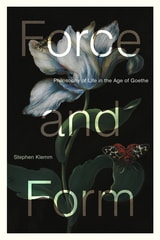
Force and Form
Philosophy of Life in the Age of GoetheStephen Klemm
Bucknell University Press, 2027
This book offers a bold rethinking of how modern ideas of life, nature, and subjectivity took shape in late-eighteenth- and early-nineteenth-century German thought. Moving beyond familiar narratives based on Kantian autonomy or Romantic irrationalism, it uncovers a vitalist tradition stretching from Herder to Schiller and Goethe, one that understood nature as dynamic, self-forming, and internally animated by life-force. Drawing on philosophy, the life sciences, and aesthetics, this innovative study reveals how these thinkers challenged mechanistic models of matter and resisted strict divisions between mind and nature. In doing so, they developed a historically contingent and embodied concept of subjectivity in which reason emerges from natural, cultural, and physiological processes rather than standing outside them. By situating this tradition within debates about epigenesis, form, and development, the book not only reshapes our understanding of German intellectual history but also sheds new light on contemporary debates about naturalism, posthumanism, and theories of life.
Published by Bucknell University Press. Distributed worldwide by Rutgers University Press.
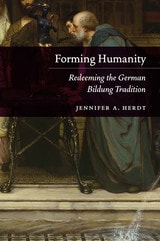
Forming Humanity
Redeeming the German Bildung TraditionJennifer A. Herdt
University of Chicago Press, 2019
Kant’s proclamation of humankind’s emergence from “self-incurred immaturity” left his contemporaries with a puzzle: What models should we use to sculpt ourselves if we no longer look to divine grace or received authorities? Deftly uncovering the roots of this question in Rhineland mysticism, Pietist introspection, and the rise of the bildungsroman, Jennifer A. Herdt reveals bildung, or ethical formation, as the key to post-Kantian thought. This was no simple process of secularization, in which human beings took responsibility for something they had earlier left in the hands of God. Rather, theorists of bildung, from Herder through Goethe to Hegel, championed human agency in self-determination while working out the social and political implications of our creation in the image of God. While bildung was invoked to justify racism and colonialism by stigmatizing those deemed resistant to self-cultivation, it also nourished ideals of dialogical encounter and mutual recognition. Herdt reveals how the project of forming humanity lives on in our ongoing efforts to grapple with this complicated legacy.
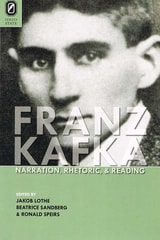
Franz Kafka
Narration, Rhetoric, and ReadingEdited by Jakob Lothe, Beatrice Sandberg, and Ronald Speirs
The Ohio State University Press, 2011
Franz Kafka: Narration, Rhetoric, and Reading presents essays by noted Kafka critics and by leading narratologists who explore Kafka’s original and innovative uses of narrative throughout his career. Collectively, these essays by Stanley Corngold, Anniken Greve, Gerhard Kurz, Jakob Lothe, J. Hillis Miller, Gerhard Neumann, James Phelan, Beatrice Sandberg, Ronald Speirs, and Benno Wagner examine a number of provocative questions that arise in narration and narratives in Kafka’s fiction. The arguments of the essays relate both to the peculiarities of Kafka’s story-telling and to general issues in narrative theory. They reflect, for example, the complexity of the issues surrounding the “somebody” doing the telling, the attitude of the narrator to what is told, the perceived purpose(s) of the telling, the implied or actual reader, the progression of events, and the progression of the telling. As the essays also demonstrate, Kafka’s narratives still present a considerable challenge to, as well as a great resource for, narrative theory and analysis.
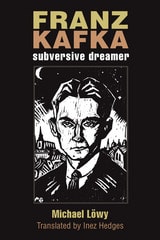
Franz Kafka
Subversive DreamerMichael Löwy, translated by Inez Hedges
University of Michigan Press, 2016

Freethinkers, Libertines and Schwarmer
Heterodoxy in German Literature, 1750-1800K. F. Hilliard
University of London Press, 2010
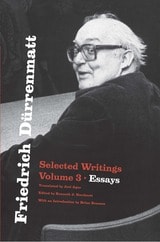
Friedrich Dürrenmatt
Selected Writings, Volume 3, EssaysFriedrich Dürrenmatt
University of Chicago Press, 2006
These translations of Friedrich Dürrenmatt’s essays introduce the writer to a new generation of readers.
The Swiss writer Friedrich Dürrenmatt (1921–90) was one of the most important literary figures of the second half of the twentieth century. During the years of the cold war, arguably only Beckett, Camus, Sartre, and Brecht rivaled him as a presence in European letters. Yet outside Europe, this prolific author is primarily known for only one work, The Visit. With these long-awaited translations of his plays, fictions, and essays, Dürrenmatt becomes available again in all his brilliance to the English-speaking world.
Dürrenmatt’s essays, gathered in this third volume of Selected Writings, are among his most impressive achievements. Their range alone is astonishing: he wrote with authority and charm about art, literature, philosophy, politics, and the theater. The selections here include Dürrenmatt’s best-known essays, such as “Theater Problems” and “Monster Essay on Justice and Law,” as well as the notes he took on a 1970 journey in America (in which he finds the United States “increasingly susceptible to every kind of fascism”). This volume also includes essays that shade into fiction, such as “The Winter War in Tibet,” a fantasy of a third world war waged in a vast subterranean labyrinth—a Plato’s Cave allegory rewritten for our own troubled times.
Dürrenmatt has long been considered a great writer, but one unfairly neglected in the modern world of letters. With these elegantly conceived and expertly translated volumes, a new generation of readers will rediscover his greatest works.
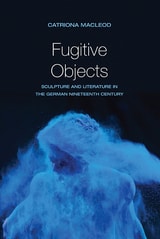
Fugitive Objects
Sculpture and Literature in the German Nineteenth CenturyCatriona MacLeod
Northwestern University Press, 2014
Winner of the 2014 Jean-Pierre Barricelli Prize for Best Book on Romanticism
In Fugitive Objects, Catriona MacLeod examines the question of why sculpture is both intensively discussed and yet rendered immaterial in German literature. She focuses on three forms of disappearance: sculpture’s vanishing as a legitimate art form at the beginning of the nineteenth century in German aesthetics, statues’ migration from the domain of high art into mass reproduction and popular culture, and sculpture’s dislodging and relocation into literary discourse. Through original readings of Clemens Brentano, Achim von Arnim, Adalbert Stifter, Leopold von Sacher-Masoch, and others, MacLeod reveals that if sculpture has disappeared from much of nineteenth-century German literature and aesthetics, it is a vanishing act that paradoxically relocates the statue back onto another cultural pedestal, attesting to the powerful force of the medium.

Fury
Elfriede Jelinek
Seagull Books, 2022
In Greek mythology, it is Hera who blinds the hero Heracles, so that, in a fit of fury, he kills his own family. In the twenty-first century, the gods have another name. So did the three young men who stormed a magazine’s editorial office and a Jewish supermarket in Paris in January 2015 and murdered twelve people. The blind fury, however, remained and more virulent than ever, not least because the weapons were so much more effective.
In this raging text, arguably one of her darkest, Nobel Prize winner Elfriede Jelinek investigates topical political events in the context of enduring history and myths. Fury expresses itself not only multi-voiced and from the changing perspective of Islamist terrorists (and their special hatred of Jews), in the shape of furious German citizens, individual narcissistic humiliation, or brutal distribution battles around the globe. Rather, fury also appears as the motor that has driven people with a devastating force for centuries.
With her characteristic linguistic power, Jelinek articulates her own disconcertedness in the face of these crimes. In passing, she returns repeatedly to the contradiction between religious laws against representation and the deluge of images online, where movies of assassination, severed heads, and other atrocities are exhibited for millions to see. Fury is a compact grand epic that starts in primal times and attempts to describe the indescribable, relating the inexplicable in our times.
Futurity
Contemporary Literature and the Quest for the PastAmir Eshel
University of Chicago Press, 2012
fleurs
Friederike Mayröcker
Seagull Books, 2026
Fleurs—flowers, flower petals—a title that might suggest a gentle world of blooming fields and soft breezes. But in the hands of Friederike Mayröcker, one of the greatest German-language poets of the twentieth and twenty-first centuries, this is a book of a very different kind. It is a wild, vivid journey into a rich, elemental landscape.
If you follow Mayröcker’s path, you find not a comfortable meadow but steep, stony ground—a place where her inimitable voice rings out in all its power and purity. Unsentimental and crystal clear, Mayröcker’s writing is driven by a single purpose: to create images of remarkable vividness in a language as free, bold, and fresh as if it were newly invented.
The final installment of Mayröcker’s trilogy, following études and cahier, fleurs is a book of memory and renewal, protest and revelation—a testimony to the enduring magic of writing itself.