Results by title
60 books match the query 'Ghana' and 3 start with f

Fanti Kinship and the Analysis of Kinship Terminologies
David B. Kronenfeld
University of Illinois Press, 2008
This book examines Fanti kinship terminology from a variety of analytic and formal perspectives. Based on work with a broad number of informants, David B. Kronenfeld details and analyzes internal variation in usage within the Fanti community, shows the relationship between terminology and social groups and communicative usage, and relates these findings to major theoretical work on kinship and on the intersections of language, thought, and culture.
The terminological analysis in this study employs a great variety of formal approaches, assesses the strengths and weaknesses of each approach, and covers a wide range of types of usage. This work also performs a systematic, formal analysis of behavior patterns among kin, joining this approach with the analysis of a kinship terminological system. Rather than treating kinship terminology as a special, isolated piece of culture, this study also ties its analysis to more general semantic and cultural theoretical issues. Including computational and comparative studies of kinship terminologies, this volume represents the fullest analysis of any kinship terminological system in the ethnographic record.

Floating Power
Energy, Infrastructure, and South-South RelationsGökçe Günel
Duke University Press, 2026
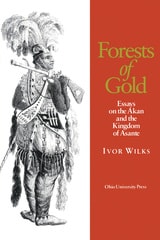
Forests of Gold
Essays on the Akan and the Kingdom of AsanteIvor Wilks
Ohio University Press, 1995
Forests of Gold is a collection of essays on the peoples of Ghana with particular reference to the most powerful of all their kingdoms: Asante. Beginning with the global and local conditions under which Akan society assumed its historic form between the fifteenth and seventeenth centuries, these essays go on to explore various aspects of Asante culture: conceptions of wealth, of time and motion, and the relationship between the unborn, the living, and the dead. The final section is focused upon individuals and includes studies of generals, of civil administrators, and of one remarkable woman who, in 1831, successfully negotiated peace treaties with the British and the Danes on the Gold Coast. The author argues that contemporary developments can only be fully understood against the background of long-term trajectories of change in Ghana.