168 books match the query 'Health Policy' and 4 start with f
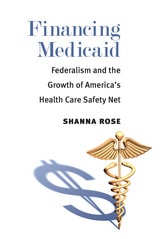
cover of Financing Medicaid: Federalism and the Growth of America's Health Care Safety Net

Financing Medicaid

Federalism and the Growth of America's Health Care Safety Net

Shanna Rose

University of Michigan Press, 2013

Conventional wisdom holds that programs for the poor are vulnerable to instability and retrenchment. Medicaid, however, has grown into the nation’s largest intergovernmental grant program, accounting for nearly half of all federal funding to state and local governments. Medicaid’s generous open-ended federal matching grants have given governors a powerful incentive to mobilize on behalf of its maintenance and expansion, using methods ranging from lobbying and negotiation to creative financing mechanisms and waivers to maximize federal financial assistance. Perceiving federal retrenchment efforts as a threat to states’ finances, governors, through the powerful National Governors’ Association, have repeatedly worked together in bipartisan fashion to defend the program against cutbacks.

Financing Medicaidengagingly intertwines theory, historical narrative, and case studies, drawing on sources including archival materials from the National Governors’ Association and gubernatorial and presidential libraries, Centers for Medicare and Medicaid Services data, the Congressional Record, and interviews.

[more]
cover of Formative Years: Children's Health in the United States, 1880-2000

Formative Years

Children's Health in the United States, 1880-2000

Alexandra Minna Stern and Howard Markel, Editors

University of Michigan Press, 2004

Much has changed in the lives of children, and in the health care provided to them, over the past century. Formative Years explores how children's lives have become increasingly medicalized, traces the emergence of the fields of pediatrics and child health, and offers fascinating case studies of important and timely issues.

With contributions from historians and physicians, this collection illuminates some of the most important transformations in children's health in the United States since the 1880s. Opening with a history of pediatrics as a medical specialty, the book addresses such topics as the formulation of normal growth curves, Better Babies contests at county fairs, the "discovery" of the sexual abuse of children, and the political radicalism of the founder of pediatrics, Dr. Abraham Jacobi.

One of the first long-term historical and analytical overviews of pediatrics and child health in the twentieth century, Formative Years will be a welcome addition to several fields, including the history of medicine and technology, the history of childhood, modern U.S. history, women's history, and American studies. It also has ramifications for policymakers concerned with child welfare and development and poses important questions about the direction of children's health in the twenty-first century.
Alexandra Minna Stern is Associate Director of the Center for the History of Medicine and Assistant Professor of Obstetrics and Gynecology and American Culture at the University of Michigan. Howard Markel is the George Edward Wantz Professor of the History of Medicine, Professor of Pediatrics and Communicable Diseases, and Professor of History at the University of Michigan, and Director of the Center for the History of Medicine.
[more]
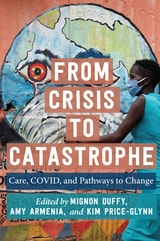
cover of From Crisis to Catastrophe: Care, COVID, and Pathways to Change

From Crisis to Catastrophe

Care, COVID, and Pathways to Change

Mignon Duffy

Rutgers University Press, 2023
The COVID pandemic has shaken the material and social foundations of the world more than any event in recent history and has highlighted and exacerbated a longstanding crisis of care. While these challenges may be freshly visible to the public, they are not new. Over the last three decades, a growing body of care scholarship has documented the inadequacy of the social organization of care around the world, and the effect of the devaluation of care on workers, families, and communities. In this volume, a diverse group of care scholars bring their expertise to bear on this recent crisis. In doing so, they consider the ways in which the existing social organization of care in different countries around the globe amplified or mitigated the impact of COVID. They also explore the global pandemic's impact on the conditions of care and  its role in exacerbating deeply rooted gender, race, migration, disability, and other forms of inequality.
[more]
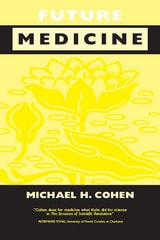
cover of Future Medicine: Ethical Dilemmas, Regulatory Challenges, and Therapeutic Pathways to Health Care and Healing in Human Transformation

Future Medicine

Ethical Dilemmas, Regulatory Challenges, and Therapeutic Pathways to Health Care and Healing in Human Transformation

Michael H. Cohen

University of Michigan Press, 2002

Future Medicine is an investigation into the clinical, legal, ethical, and regulatory changes occurring in our health care system as a result of the developing field of Complimentary and Alternative Medicine (CAM). Here Michael H. Cohen describes the likely evolution of the legal system and the health care system at the crossroads of developments in the way human beings care for body, mind, emotions, environment, and soul.
Through the use of fascinating and relevant case studies, Cohen presents stimulating questions that will challenge academics, intellectuals, and all those interested in the future of health care. In concise, evocative strokes, the book lays the foundation for a novel synthesis of ideas from such diverse disciplines as transpersonal psychology, political philosophy, and bioethics. Providing an exploration of regulatory conundrums faced by many healing professionals, Cohen articulates the value of expanding our concept of health care regulation to consider not only goals of fraud control and quality assurance, but also health care freedom, integration of global medicine, and human transformation.
Future Medicine provides a fair-minded, illuminating, and honest discussion that will interest hospice workers, pastoral counselors, and psychotherapists, as well as bioethicists, physicians and allied health care providers, complementary and alternative medical providers (such as chiropractors, acupuncturists, naturopaths, massage therapists, homeopaths, and herbalists), and attorneys, hospital administrators, health care executives, and government health care workers.
Michael H. Cohen is Director for Legal Programs, the Center for Research and Education in Complementary and Integrative Medical Therapies, Beth Israel Deaconess Medical Center, Harvard Medical School.
[more]