124 books match the query 'Health and hygiene' and 4 start with f
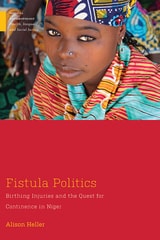
cover of Fistula Politics: Birthing Injuries and the Quest for Continence in Niger

Fistula Politics

Birthing Injuries and the Quest for Continence in Niger

Heller, Alison

Rutgers University Press, 2019
Obstetric fistula is a birthing injury caused by prolonged obstructed labor that results in urinary and fecal incontinence. It is nearly non-existent in the Global North. In contrast Niger, in West Africa, has one of the highest rates of fistula in the world. In Western humanitarian and media narratives, fistula is presented as deeply stigmatizing, resulting in divorce, abandonment by kin, exile from communities, depression and suicide. In Fistula Politics, Alison Heller illustrates the inaccuracy of these popular narratives and shows how they serve the interests not of the women so affected, but of humanitarian organizations, the media, and local clinics.  
[more]
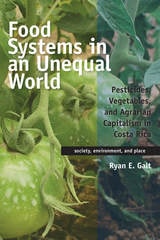
cover of Food Systems in an Unequal World: Pesticides, Vegetables, and Agrarian Capitalism in Costa Rica

Food Systems in an Unequal World

Pesticides, Vegetables, and Agrarian Capitalism in Costa Rica

Ryan E. Galt

University of Arizona Press, 2014

Pesticides, a short-term aid for farmers, can often be harmful, undermining the long-term health of agriculture, ecosystems, and people. The United States and other industrialized countries import food from Costa Rica and other regions. To safeguard the public health, importers now regulate the level and types of pesticides used in the exporters’ food production, which creates “regulatory risk” for the export farmers. Although farmers respond to export regulations by trying to avoid illegal pesticide residues, the food produced for their domestic market lacks similar regulation, creating a double standard of pesticide use.

Food Systems in an Unequal World examines the agrochemical-dependent agriculture of Costa Rica and how its uneven regulation in export versus domestic markets affects Costa Rican vegetable farmers. Examining pesticide-dependent vegetable production within two food systems, the author shows that pesticide use is shaped by three main forces: agrarian capitalism, the governance of food systems throughout the commodity chain, and ecological dynamics driving local food production. Those processes produce unequal outcomes that disadvantage less powerful producers who have more limited choices than larger farmers, who usually have access to better growing environments and thereby can reduce pesticide use and production costs.

 
Despite the rise of alternative food networks, Galt says, persistent problems remain in the conventional food system, including widespread and intensive pesticide use. Facing domestic price squeezes, vegetable farmers in Costa Rica are more likely to supply the national market with produce containing residues of highly toxic pesticides, while using less toxic pesticides on exported vegetables. In seeking solutions, Galt argues for improved governance and research into alternative pest control but emphasizes that the process must be rooted in farmers’ economic well-being.
[more]
cover of Formative Years: Children's Health in the United States, 1880-2000

Formative Years

Children's Health in the United States, 1880-2000

Alexandra Minna Stern and Howard Markel, Editors

University of Michigan Press, 2004

Much has changed in the lives of children, and in the health care provided to them, over the past century. Formative Years explores how children's lives have become increasingly medicalized, traces the emergence of the fields of pediatrics and child health, and offers fascinating case studies of important and timely issues.

With contributions from historians and physicians, this collection illuminates some of the most important transformations in children's health in the United States since the 1880s. Opening with a history of pediatrics as a medical specialty, the book addresses such topics as the formulation of normal growth curves, Better Babies contests at county fairs, the "discovery" of the sexual abuse of children, and the political radicalism of the founder of pediatrics, Dr. Abraham Jacobi.

One of the first long-term historical and analytical overviews of pediatrics and child health in the twentieth century, Formative Years will be a welcome addition to several fields, including the history of medicine and technology, the history of childhood, modern U.S. history, women's history, and American studies. It also has ramifications for policymakers concerned with child welfare and development and poses important questions about the direction of children's health in the twenty-first century.
Alexandra Minna Stern is Associate Director of the Center for the History of Medicine and Assistant Professor of Obstetrics and Gynecology and American Culture at the University of Michigan. Howard Markel is the George Edward Wantz Professor of the History of Medicine, Professor of Pediatrics and Communicable Diseases, and Professor of History at the University of Michigan, and Director of the Center for the History of Medicine.
[more]
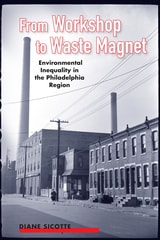
cover of From Workshop to Waste Magnet: Environmental Inequality in the Philadelphia Region

From Workshop to Waste Magnet

Environmental Inequality in the Philadelphia Region

Sicotte, Diane

Rutgers University Press, 2016

Like many industrialized regions, the Philadelphia metro area contains pockets of environmental degradation: neighborhoods littered with abandoned waste sites, polluting factories, and smoke-belching incinerators. However, other neighborhoods within and around the city are relatively pristine. This eye-opening book reveals that such environmental inequalities did not occur by chance, but were instead the result of specific policy decisions that served to exacerbate endemic classism and racism. 
 
From Workshop to Waste Magnet presents Philadelphia’s environmental history as a bracing case study in mismanagement and injustice. Sociologist Diane Sicotte digs deep into the city’s past as a titan of American manufacturing to trace how only a few communities came to host nearly all of the area’s polluting and waste disposal land uses. By examining the complex interactions among economic decline, federal regulations, local politics, and shifting ethnic demographics, she not only dissects what went wrong in Philadelphia but also identifies lessons for environmental justice activism today. 
 
Sicotte’s research tallies both the environmental and social costs of industrial pollution, exposing the devastation that occurs when mass quantities of society’s wastes mix with toxic levels of systemic racism and economic inequality. From Workshop to Waste Magnet is a compelling read for anyone concerned with the health of America’s cities and the people who live in them. 
 
[more]