Results by title
57 books match the query 'Horror' and 3 start with f
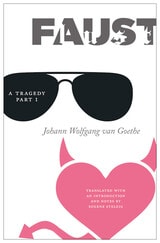
Faust
A Tragedy, Part IEugene Stelzig
Bucknell University Press, 2019
Published by Bucknell University Press. Distributed worldwide by Rutgers University Press.
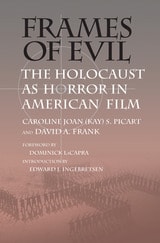
Frames of Evil
The Holocaust as Horror in American FilmCaroline J. S. Picart, and David A. Frank. Foreword by Dominick LaCapra. Introduction by Edward J. Ingebretsen
Southern Illinois University Press, 2006
Challenging the classic horror frame in American film
American filmmakers appropriate the “look” of horror in Holocaust films and often use Nazis and Holocaust imagery to explain evil in the world, say authors Caroline Joan (Kay) S. Picart and David A. Frank. In Frames of Evil: The Holocaust as Horror in American Film, Picart and Frank challenge this classic horror frame—the narrative and visual borders used to demarcate monsters and the monstrous. After examining the way in which directors and producers of the most influential American Holocaust movies default to this Gothic frame, they propose that multiple frames are needed to account for evil and genocide.
Using Schindler’s List, The Silence of the Lambs, and Apt Pupil as case studies, the authors provide substantive and critical analyses of these films that transcend the classic horror interpretation. For example, Schindler’s List, say Picart and Frank, has the appearance of a historical docudrama but actually employs the visual rhetoric and narrative devices of the Hollywood horror film. The authors argue that evil has a face: Nazism, which is configured as quintessentially innate, and supernaturally crafty.
Frames of Evil, which is augmented by thirty-six film and publicity stills, also explores the commercial exploitation of suffering in film and offers constructive ways of critically evaluating this exploitation. The authors suggest that audiences will recognize their participation in much larger narrative formulas that place a premium on monstrosity and elide the role of modernity in depriving millions of their lives and dignity, often framing the suffering of others in a manner that allows for merely “documentary” enjoyment.
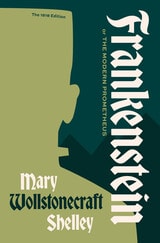
Frankenstein, or the Modern Prometheus
The 1818 TextMary Wollstonecraft Shelley
University of Chicago Press, 1982
When Mary Shelley published Frankenstein in 1818, she created a legend that, like the monster of her story, grew far beyond anything she could ever have dreamed of, or that anyone could ever control. With one book, she founded the field of science fiction, pushed the gothic into new territory, and gave us an unforgettable character capable of being monster, man, and metaphor, a symbol simultaneously of the potential and perils of science--even of humanity itself.
The novel was originally published in three volumes in March 1818. In 1831, a different publisher issued a single-volume edition that had been heavily rewritten by an older Mary Shelley. That edition served as the standard Frankenstein for well over a century. In recent decades, however, growing awareness of the role of Shelley's husband, Percy Bysshe Shelley, in the revision process, and corresponding interest in giving readers access to the original text from Mary Shelley's hand, has led to increasing attention to the original 1818 edition.
This edition reproduces the text of the 1818 edition with the addition, clearly indicated within the book, of minor changes that Mary Shelley made by hand in 1823. It also preserves the original three-volume structure within this single book, helping readers better understand the symmetries within the story as Shelley constructed it. Explanatory notes, meanwhile, explain references and provide historical and cultural context.
The result is a new look at a lasting classic, one that has as much to say to readers today as it did when first published more than two centuries ago.