Results by title
395 books match the query 'How' and 13 start with f
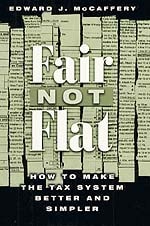
Fair Not Flat
How to Make the Tax System Better and SimplerEdward J. McCaffery
University of Chicago Press, 2002
In clear, easy-to-understand language, Edward J. McCaffery proposes a straightforward and fair alternative. A "fair not flat" tax that is consistent and progressive would tax spending, not income and savings. And if it were collected at its lower levels through a national sales tax, most people would not have to file a return. A supplemental tax on spending for the wealthiest individuals would make the national sales tax progressive. Under McCaffery's system, a family of four would pay no tax on their first $20,000 in spending, and 15 percent on the next $60,000. Only the few families who spend more than $80,000 a year would be subject to the supplemental tax. Necessities would be taxed less than ordinary and luxury items. No one would be taxed directly on savings. The estate and gift or so-called death tax would be abolished, for the simple reason that dead people don't spend. The "fair not flat" tax would fall on heirs when and as they spend their good fortune. Perhaps best of all, most Americans would not have to fill out tax returns.
Simpler, more efficient, fairer, and more reflective of America's current social values, McCaffery's "fair not flat" tax could help get us out of the tax mess that politicians and special interests have gotten us into, improving the whole country in the process. Read Fair Not Flat to find out how.
“In Fair Not Flat, Mr. McCaffery lays out the case for a consumption tax. He does so in a reader-friendly way, presenting his argument with very few footnotes, equations or technical terms. The consumption of the book, so to speak, is not at all taxing. And its argument is well worth pondering.”—Bruce Bartlett, Wall Street Journal
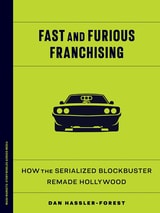
Fast and Furious Franchising
How the Serialized Blockbuster Remade HollywoodDan Hassler-Forest
University of Minnesota Press, 2026
What the popularity of the Fast and Furious film franchise says about Hollywood blockbusters and media production
Fast and Furious Franchising charts the transformation of Hollywood through the story of one of its most successful cinematic universes. Released in 2001, The Fast and the Furious became an unexpected hit, developing into a seven-billion-dollar media franchise with nine direct sequels (so far), one “sidequel,” copious spin-offs, and licensing deals from board games to theme park rides.
Dan Hassler-Forest shows how Fast and Furious paved the way for a new form of serialized storytelling that balanced new distribution practices and expansion into international markets with a savvy awareness of representational politics. By following the series’s development over the past twenty-five years, Fast and Furious Franchising reveals distinct phases that reflect larger media-industrial trends: the postclassical blockbuster era of the early 2000s; the emergence of the megafranchise between 2008 and 2014; the franchise’s “imperial” era, from 2015 through 2019; and the postpandemic crisis era of media saturation and franchise fatigue.
While examining this rapidly changing media landscape, Hassler-Forest offers lively, insightful analyses of the films as they have embraced ever-more-ludicrous plots and unlikely character turns while always maintaining their signature faith in the power of family. As he illuminates the role of the Fast and Furious movies in the global entertainment industry, Hassler-Forest shows how the films’ improbable success proves Dominic Toretto’s adage that, whether “you win by an inch or a mile . . . winning’s winning.”
Retail e-book files for this title are screen-reader friendly with images accompanied by short alt text and/or extended descriptions.
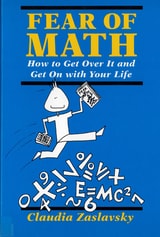
Fear Of Math
How to Get Over It and Get on With Your Life!Zaslavsky, Claudia
Rutgers University Press, 1994
Claudia Zaslavsky has helped thousands of men and women understand why math made them miserable. Let her introduce you to real people who, like you, fled from anything to do with math. All of them--White, African American, Asian American, Latino, artist, homemaker, manager, teacher, teenager, or grandparent--came to see that their math troubles were not their fault. Social stereotypes, poor schools, and well-meaning parents had convinced them that they couldnÕt, or shouldnÕt, do math.
Claudia Zaslavsky shows you how the school math you dreaded is a far cry from the math you really need in life (and probably know better than you ever suspected)! She gives a host of reassuring methods, drawn from many cultures, for tackling real-world math problems. She explodes the myth that women and minorities are not good at math. With Claudia Zaslavsky’s help, you can see why math matters and how to get over the math barrier that has been holding you back from your goals in life.
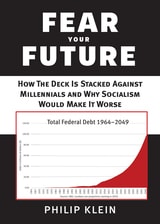
Fear Your Future
How the Deck Is Stacked against Millennials and Why Socialism Would Make It WorsePhilip Klein
Templeton Press, 2019
The aftershocks of the Great Recession, the skyrocketing cost of living, and the titanic weight of student loan debt have made the American Dream seem to be forever retreating toward the horizon. As if that weren’t enough, millennials will face the largest federal debt in history as boomers retire and extract trillions of dollars from Social Security and Medicare—far more than they contributed.
In this concise, data-driven book, Klein begins the work of brightening the future for millennials by analyzing the problem compassionately yet objectively. There are real reasons to worry about what lies ahead if nothing changes. But the facts laid out in Klein’s book can steer the conversation to realistic solutions.
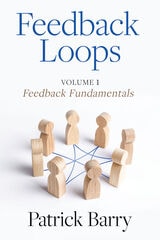
Feedback Loops
How to Give and Receive High-Quality FeedbackPatrick Barry
Michigan Publishing Services, 2023
Learning how to give and receive feedback is fundamental to the development of every student and professional. Yet few of us are ever taught anything like “feedback skills.”
This book, which is the first in the Feedback Loops series, is designed to change that. Here is what students who have taken the University of Michigan Law School course on which the series is based have said about it:
-
“One of the most memorable and useful classes I have taken in law school!”
-
“Excellent, full stop.”
-
“This class was always a fun highlight of my week.”
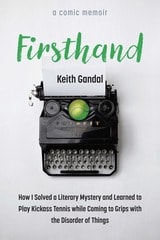
Firsthand
How I Solved a Literary Mystery and Learned to Play Kickass Tennis while Coming to Grips with the Disorder of ThingsKeith Gandal
University of Michigan Press, 2024
Keith Gandal combines this scholarly detective story with a comic personal narrative about how a midlife crisis accidentally sent him on a journey to write a research monograph that many in his profession—including at times himself—were dubious about. While researching how Hemingway, Fitzgerald, and Faulkner faced their forgotten crises of masculinity, Gandal discovers that his own crisis is instrumental to his creative process. Incorporating stories from Gandal’s comic romp through the hyper-competitive world of middle-aged men’s tennis, adopting pitbulls, and discussing Michel Foucault, Firsthand gives readers an inside look at how to acquire accurate knowledge—about the world, about history, and about oneself.
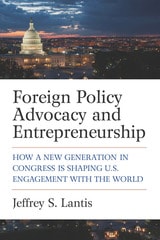
Foreign Policy Advocacy and Entrepreneurship
How a New Generation in Congress Is Shaping U.S. Engagement with the WorldJeffrey S. Lantis
University of Michigan Press, 2019
Cases of entrepreneurship by junior members of Congress represent a puzzle for traditional foreign policy studies that focus on seniority, party discipline, and rigid institutional systems on Capitol Hill. By melding entrepreneurship and policy advocacy literature, this book advances a new typology of foreign policy entrepreneurship, recognizing the impact of multidimensional strategies of influence. The arrival of new members of the 116th Congress, the most diverse in history, provides an exciting laboratory to further test these propositions.
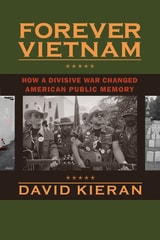
Forever Vietnam
How a Divisive War Changed American Public MemoryDavid Kieran
University of Massachusetts Press, 2014
Kieran focuses his analysis on the recent remembrance of six events, three of which occurred before the Vietnam War and three after it ended. The first group includes the siege of the Alamo in 1836, the incarceration of Union troops at Andersonville during the Civil War, and the experience of American combat troops during World War II. The second comprises the 1993 U.S. intervention in Somalia, the crash of United Airlines Flight 93 on September 11, 2001, and the Iraq and Afghanistan wars.
In each case a range of actors—military veterans, policymakers, memorial planners, and the general public—used memorial practices associated with the Vietnam War to reinterpret the contemporary significance of past events. A PBS program about Andersonville sought to cultivate a sense of national responsibility for the My Lai massacre. A group of Vietnam veterans occupied the Alamo in 1985, seeing themselves as patriotic heirs to another lost cause. A World War II veteran published a memoir in 1980 that reads like a narrative of combat in Vietnam. Through these and other examples, Forever Vietnam reveals not only the persistence of the past in public memory but also its malleability in the service of the political present.
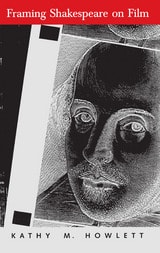
Framing Shakespeare on Film
How the Frame Reveals MeaningKathy M. Howlett
Ohio University Press, 2000
The aesthetics of frame theory form the basis of Framing Shakespeare on Film. This groundbreaking work expands on the discussion of film constructivists in its claim that the spectacle of Shakespeare on film is a problem-solving activity.
Kathy Howlett demonstrates convincingly how viewers’ expectations for understanding Shakespeare on film can be manipulated by the director’s cinematic technique. Emphasizing that the successful film can transform Shakespeare’s text while remaining rooted in Shakespearean conceptions, Howlett raises the question of how directors and audiences understand the genre of Shakespeare on film and reveals how the medium alters the patterns through which the audience views Shakespeare.
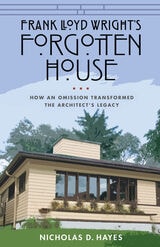
Frank Lloyd Wright's Forgotten House
How an Omission Transformed the Architect's LegacyNicholas D. Hayes
University of Wisconsin Press, 2021
When Nicholas and Angela Hayes became stewards of the unassuming Elizabeth Murphy House near Milwaukee, they began to unearth evidence that ultimately revealed a one-hundred-year-old fiasco fueled by competing ambitions and conflicting visions of America. The couple’s forensic pursuit of the truth untangled the ways Wright’s ASBH experiment led to the architect’s most productive, creative period. Frank Lloyd Wright’s Forgotten House includes a wealth of drawings and photographs, many of which have never been previously published. Historians, architecture buffs, and Wrightophiles alike will be fascinated by this untold history that fills a crucial gap in the architect’s oeuvre.
Free as Gods
How the Jazz Age Reinvented ModernismCharles A. Riley
University Press of New England, 2017
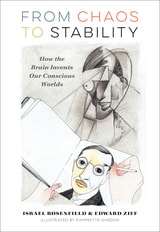
From Chaos to Stability
How the Brain Invents Our Conscious WorldsIsrael Rosenfield
University of Iowa Press, 2024
To make sense of this chaos, the brain must simplify the sensory inputs by creating, or inventing, the colors, sounds, smells, forms, and faces that are perceived in consciousness, which become a proxy for the chaotic world in which we live. The brain’s ability to generalize and categorize these invented perceptions, and to relate them to one another, enables it to form memories, which are not fixed representations of things past, but a dynamic and malleable function of the brain that is relational.
When formation of these worlds breaks down, neurological differences arise. Although the mechanisms that transform sensory chaos into the simplified perceptions experienced in consciousness remain elusive, Rosenfield and Ziff relate what they have learned by means of imaging brain activity and by mapping the neural circuits that comprise memory traces. In addition, the authors offer perspectives for future studies of consciousness.
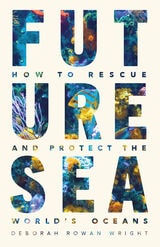
Future Sea
How to Rescue and Protect the World’s OceansDeborah Rowan Wright
University of Chicago Press, 2020
The world’s oceans face multiple threats: the effects of climate change, pollution, overfishing, plastic waste, and more. Confronted with the immensity of these challenges and of the oceans themselves, we might wonder what more can be done to stop their decline and better protect the sea and marine life. Such widespread environmental threats call for a simple but significant shift in reasoning to bring about long-overdue, elemental change in the way we use ocean resources. In Future Sea, ocean advocate and marine-policy researcher Deborah Rowan Wright provides the tools for that shift. Questioning the underlying philosophy of established ocean conservation approaches, Rowan Wright lays out a radical alternative: a bold and far-reaching strategy of 100 percent ocean protection that would put an end to destructive industrial activities, better safeguard marine biodiversity, and enable ocean wildlife to return and thrive along coasts and in seas around the globe.
Future Sea is essentially concerned with the solutions and not the problems. Rowan Wright shines a light on existing international laws intended to keep marine environments safe that could underpin this new strategy. She gathers inspiring stories of communities and countries using ocean resources wisely, as well as of successful conservation projects, to build up a cautiously optimistic picture of the future for our oceans—counteracting all-too-prevalent reports of doom and gloom. A passionate, sweeping, and personal account, Future Sea not only argues for systemic change in how we manage what we do in the sea but also describes steps that anyone, from children to political leaders (or indeed, any reader of the book), can take toward safeguarding the oceans and their extraordinary wildlife.