Results by title
95 books match the query 'Ideology' and 8 start with f
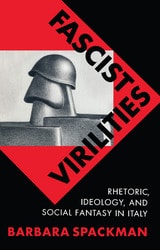
Fascist Virilities
Rhetoric, Ideology, and Social Fantasy in ItalyBarbara Spackman
University of Minnesota Press, 1996
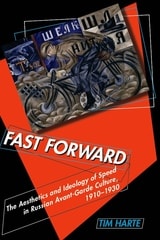
Fast Forward
The Aesthetics and Ideology of Speed in Russian Avant-Garde Culture, 1910–1930Tim Harte
University of Wisconsin Press, 2009
Although modernism arrived somewhat late in Russia, the increased tempo of life at the start of the twentieth century provided Russia’s avant-garde artists with an infusion of creative dynamism and crucial momentum for revolutionary experimentation. In Fast Forward Tim Harte presents a detailed examination of the images and concepts of speed that permeated Russian modernist poetry, visual arts, and cinema. His study illustrates how a wide variety of experimental artistic tendencies of the day—such as “rayism” in poetry and painting, the effort to create a “transrational” language (zaum’) in verse, and movements seemingly as divergent as neo-primitivism and constructivism—all relied on notions of speed or dynamism to create at least part of their effects.
Fast Forward reveals how the Russian avant-garde’s race to establish a new artistic and social reality over a twenty-year span reflected an ambitious metaphysical vision that corresponded closely to the nation’s rapidly changing social parameters. The embrace of speed after the 1917 Revolution, however, paradoxically hastened the movement’s demise. By the late 1920s, under a variety of historical pressures, avant-garde artistic forms morphed into those more compatible with the political agenda of the Russian state. Experimentation became politically suspect and abstractionism gave way to orthodox realism, ultimately ushering in the socialist realism and aesthetic conformism of the Stalin years.
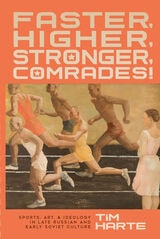
Faster, Higher, Stronger, Comrades!
Sports, Art, and Ideology in Late Russian and Early Soviet CultureTim Harte
University of Wisconsin Press, 2020
With interdisciplinary analysis of literature, painting, and film, Faster, Higher, Stronger, Comrades! traces how physical fitness had an even broader impact on culture and ideology in the Soviet Union than previously realized. From prerevolutionary writers and painters glorifying popular circus wrestlers to Soviet photographers capturing unprecedented athleticism as a means of satisfying their aesthetic ideals, the nation's artists embraced sports in profound, inventive ways. Though athletics were used for doctrinaire purposes, Tim Harte demonstrates that at their core, they remained playful, joyous physical activities capable of stirring imaginations and transforming everyday realities.

Feminist Theory
A Critique of IdeologyEdited by Nannerl Keohane, Michelle Z. Rosaldo, and Barbara C. Gelpi
University of Chicago Press, 1982
Feminist Theory: A Critique of Ideology meets that challenge. Collected from several issues of Signs–Journal of Women in Culture and Society, these essays explore the relationships between objectivity and masculinity, between psychology and political theory, and between family and state. In pursuing these critical explorations, the contributors–liberal, Marxist, socialist, and radical feminists–examine the foundations of power, of sexuality, of language, and of scientific thought.

Flower Worlds
Religion, Aesthetics, and Ideology in Mesoamerica and the American SouthwestEdited by Michael D. Mathiowetz and Andrew D. Turner
University of Arizona Press, 2021
The recognition of Flower Worlds is one of the most significant breakthroughs in the study of Indigenous spirituality in the Americas. These worlds are solar and floral spiritual domains that are widely shared among both pre-Hispanic and contemporary Native cultures in Mesoamerica and the American Southwest. Flower Worldsis the first volume to bring together a diverse range of scholars to create a truly multidisciplinary understanding of Flower Worlds. During the last thirty years, archaeologists, art historians, ethnologists, Indigenous scholars, and linguists have emphasized the antiquity and geographical extent of similar Flower World beliefs among ethnic and linguistic groups in the New World.
Flower Worlds are not simply ethereal, otherworldly domains, but rather they are embodied in lived experience, activated, invoked, and materialized through ritual practices, expressed in verbal and visual metaphors, and embedded in the use of material objects and ritual spaces. This comprehensive book illuminates the origins of Flower Worlds as a key aspect of religions and histories among societies in Mesoamerica and the American Southwest. It also explores the role of Flower Worlds in shaping ritual economies, politics, and cross-cultural interaction among Indigenous peoples.
Flower Worlds reaches into multisensory realms that extend back at least 2,500 years, offering many different disciplines, perspectives, and collaborations to understand these domains. Today, Flower Worlds are expressed in everyday work and lived experiences, embedded in sacred geographies, and ritually practiced both individually and in communities. This volume stresses the importance of contemporary perspectives and experiences by opening with living traditions before delving into the historical trajectories of Flower Worlds, creating a book that melds scientific and humanistic research and emphasizes Indigenous voices.
Contributors: Oswaldo Chinchilla Mazariegos, James M. Córdova, Davide Domenici, Ángel González López, Kelley Hays-Gilpin, Michael D. Mathiowetz, Cameron L. McNeil, Felipe S. Molina, Johannes Neurath, John M. D. Pohl, Alan R. Sandstrom, David Delgado Shorter, Karl A. Taube, Andrew D. Turner, Lorena Vázquez Vallín, Dorothy Washburn
Frances Burney and Narrative Prior to Ideology
Brian McCrea
University of Delaware Press, 2014
Frances Burney and Narrative Prior to Ideology works between Burney’s Journals and Letters and her fiction more thoroughly than any study of her in the past twenty-five years. By doing so, it offers significant reinterpretations of Burney’s four novels: Evelina, Cecilia, Camilla, and The Wanderer. It describes Burney’s eluding the major modern–isms through which critics have tried to read her: Feminism (with its “gendering” of beauty and reversal of gender roles); Capitalism and its Marxist critique (here the details of Burney’s housekeeping become important); Professionalism (as a response to status inconsistency and class conflict); and Ian Watt’s “Formal Realism” (Burney perhaps saved the novel from a sharp decline it suffered in the 1770s, even as she tried to distance herself from the genre).
Burney’s most successful writing appeared before the coining of “ideology.” But her standing “prior to ideology” is not a matter of chronological accident. Rather, she quietly but forcefully resisted shared explanations—domesticity as model for household management, debt as basis for family finance, professional status as a means to social confidence, the novel as the dominant literary genre—that became popular during her long and eventful life.
Frederic Jameson has described Paul de Man, “in private conversation,” claiming, “Marxism . . . has no way of understanding the eighteenth century.” Frances Burney and Narrative Prior to Ideology conjoins Burney’s “eighteenth-centuryness” with her modernity.
Published by University of Delaware Press. Distributed worldwide by Rutgers University Press.
From Text to Action
Essays in Hermeneutics, IIPaul Ricoeur
Northwestern University Press, 1991
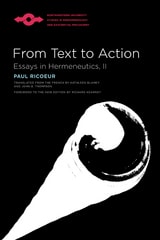
From Text to Action
Essays in Hermeneutics, IIPaul Ricoeur, Translated from the French by Kathleen Blamey and John B. Thompson, Foreword to the new edition by Richard Kearney
Northwestern University Press, 2007
From Text to Action is an essential companion to the classic The Conflict of Interpretations. Here, Ricoeur continues and extends his project of constructing a general theory of interpretation, positioning his work in relation to its philosophical background: Hegel, Husserl, Gadamer, and Weber. He also responds to contemporary figures like K. O. Apel and Jürgen Habermas, connecting his own theorization of ideology to their critique of ideology.
This new edition includes a foreword by Richard Kearney. It and other new editions of Ricoeur's texts published by Northwestern University Press have joined the canon of contemporary continental philosophy and continue to contribute to emergent discussions in the twenty-first century.