Results by title
69 books match the query 'Indiana' and 4 start with f
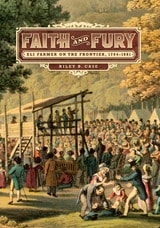
Faith and Fury
Eli Farmer on the Frontier, 1794–1881Riley B. Case
Indiana Historical Society Press, 2018
Some of America’s political and social identity today can be traced to the early frontier. After 1801 religion exploded across settlements in the Old Northwest and Kentucky. Not only were souls saved through camp meetings, but regular people also began applying the words “equal” and “independent” to themselves. The life of Eli P. Farmer, a circuit-riding preacher, politician, farmer, and businessman, is instructive. His autobiography includes accounts of Native Americans, brawls, flatboats, settlers, and revival meetings. Setting his story within the context of the Second Great Awakening, author Riley B. Case shows how Farmer’s life personified this religious movement, which gave birth to American evangelicalism, as well as values that would become idyllic to many Americans: self-sufficiency and individualism.
[more]

Family Practice Stories
Memories, Reflections, and Stories of Hoosier Family Doctors of the Mid-Twentieth CenturyRichard Feldman
Indiana Historical Society Press, 2013
An initiative of the Indiana Academy of Family Physicians and the Indiana Academy of Family Physicians Foundation, Family Practice Stories is a collection of tales told by, and about, Hoosier family doctors practicing in the middle of the twentieth century. The stories celebrate that time in America considered to be the golden age of generalism in medicine---a time that conjures up Norman Rockwell’s familiar archetypal images of the country family doctor and a time when the art of healing was at its zenith.
[more]
For Duty and Destiny
The Life and Civil War Diary of William Taylor Stott, Hoosier Soldier and EducatorLloyd A. Hunter
Indiana Historical Society Press, 2011
William Taylor Stott was a native Hoosier and an 1861 graduate of Franklin College, who later became the president who took the college from virtual bankruptcy in 1872 to its place as a leading liberal arts institution in Indiana. The story of Franklin College is the story of W. T. Stott, yet his influence was not confined to the school’s parameters. Stott was an inspirational and intellectual force in the Indiana Baptist community, and a foremost champion of small denominational colleges and of higher education in general. He also fought in the Eighteenth Indiana Volunteer Infantry during the Civil War, rising from private to captain by 1863. Stott’s diary reveals a soldier who was also a scholar.
[more]
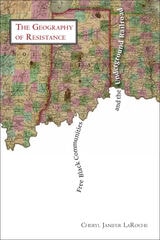
Free Black Communities and the Underground Railroad
The Geography of ResistanceCheryl Janifer LaRoche
University of Illinois Press, 2013
This enlightening study employs the tools of archaeology to uncover a new historical perspective on the Underground Railroad. Unlike previous histories of the Underground Railroad, which have focused on frightened fugitive slaves and their benevolent abolitionist accomplices, Cheryl LaRoche focuses instead on free African American communities, the crucial help they provided to individuals fleeing slavery, and the terrain where those flights to freedom occurred.
[more]