Results by title
220 books match the query 'Individual Artists' and 11 start with f
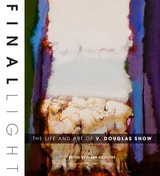
Final Light
The Life and Art of V. Douglas SnowFrank McEntire
University of Utah Press, 2013
A nationally recognized artist, Snow chose to stay in Utah where, when not teaching at the University of Utah, he roamed the southern Utah desert gaining inspiration from the red rock formations, especially the Cockscomb outside his studio near Capitol Reef National Park. Snow said, “Every artist probably wonders if he or she made the right decision to dig in to a certain place.” He dug into the landscape in and around Southern Utah and never regretted it. Just as “Tennessee Williams’s South, William Faulkner’s Mississippi, [or] John Steinbeck’s West Coast, formed their work,” the desert lands of the Colorado Plateau formed Snow’s. Their sense of place, “without provincialism,” said Snow “is what gives their art its enduring power.” Final Light will appeal to art historians and art lovers, especially those interested in abstract expressionism and the art of Utah, the West, and the Southwest.
Chosen by 15 Bytes, Utah's art magazine, as the most exceptional art book for 2014.
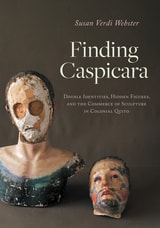
Finding Caspicara
Double Identities, Hidden Figures, and the Commerce of Sculpture in Colonial QuitoSusan Verdi Webster
University of Texas Press, 2024
2026 Eleanor Tufts Award, Society for Iberian Global Art, College Art Association
An examination of sculpture and authorship in eighteenth-century Quito that documents Caspicara as a participant in the innovative artistic production of the city’s workshops and its widespread commerce of polychrome sculptures.
Who is Caspicara? Nothing is known of Caspicara’s life, and not a single sculpture has been documented as his work. Yet traditional histories laud him as a prolific Indigenous sculptor in eighteenth-century Quito who created exquisite polychrome figures and became a national artistic icon. Drawing on extensive archival, historical, and object research, Susan Verdi Webster peels away layers of historiographical fabrication to reveal what we do and do not know about Caspicara and his work.
Rather than being a solitary master, Caspicara collaborated with other, largely Indigenous artists in Quito’s protoindustrial workshops, manufacturing sculptures now credited to him alone. The high quality of Quito sculptures produced by anonymous artists turned the city into a hub of wide-ranging commerce in religious icons. The art world and post-independence Ecuadorians have lionized the one named sculptor, Caspicara, according to the Western model of the artist-genius, amplifying the market for works bearing his name and creating a national hero on par with European masters. Lost in this process were the artists themselves. Webster returns to their world, detailing their methods and labor and, for the first time, documenting a sculpture made by Caspicara.
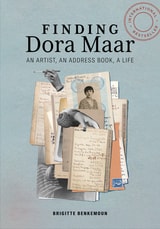
Finding Dora Maar
An Artist, an Address Book, a LifeBrigitte Benkemoun
J. Paul Getty Trust, The, 2020
“[A] spirited and deeply researched project…. [Benkemoun’s] affection for her subject is infectious. This book gives a satisfying treatment to a woman who has been confined for decades to a Cubist’s limited interpretation.” — Joumana Khatib, The New York Times
Merging biography, memoir, and cultural history, this compelling book, a bestseller in France, traces the life of Dora Maar through a serendipitous encounter with the artist’s address book.
In search of a replacement for his lost Hermès agenda, Brigitte Benkemoun’s husband buys a vintage diary on eBay. When it arrives, she opens it and finds inside private notes dating back to 1951—twenty pages of phone numbers and addresses for Balthus, Brassaï, André Breton, Jean Cocteau, Paul Éluard, Leonor Fini, Jacqueline Lamba, and other artistic luminaries of the European avant-garde.
After realizing that the address book belonged to Dora Maar—Picasso’s famous “Weeping Woman” and a brilliant artist in her own right—Benkemoun embarks on a two-year voyage of discovery to learn more about this provocative, passionate, and enigmatic woman, and the role that each of these figures played in her life.
Longlisted for the prestigious literary award Prix Renaudot, Finding Dora Maar is a fascinating and breathtaking portrait of the artist.
This work received support from the French Ministry of Foreign Affairs and the Cultural Services of the French Embassy in the United States through their publishing assistance program.
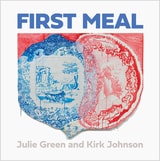
First Meal
Julie Green
Oregon State University Press, 2023
Wrongful convictions haunt the American criminal justice system, as revealed in recent years by DNA and other investigative tools. And every wrongfully convicted person who walks free, exonerated after years or decades, carries part of that story. From those facts, artist Julie Green posed a seemingly simple question: When you have been denied all choice, what do you choose to eat on the first day of freedom?
In the small details of life at such pivotal moments, a vast new landscape of the world can emerge, and that is the core concept of First Meal. Partnering with the Center on Wrongful Convictions at Northwestern University’s Pritzker School of Law, Green and her coauthor, award-winning journalist Kirk Johnson, have created a unique melding of art and narration in the portraits and stories of twenty-five people on the day of their release.
Food and punishment have long been intertwined. The tradition of offering a condemned person a final meal before execution, for example, has been explored by psychologists, filmmakers, and others—including Green herself in an earlier series of criminal-justice themed paintings, The Last Supper. First Meal takes on that issue from the other side: food as a symbol of autonomy in a life restored. Set against the backdrop of a flawed American legal system, First Meal describes beauty, pain, hope and redemption, all anchored around the idea—explored by writers from Marcel Proust to Michael Pollan—that food touches us deeply in memory and emotion.
In Green’s art, state birds and surreal lobsters soar over places where wrongful convictions unfolded, mistaken witnesses shout their errors, glow-in-the-dark skylines evoke homecoming. Johnson’s essays take us inside those moments—from the courtrooms where things went wrong to the pathways of faith and resilience that kept people sane through their years of injustice. First Meal seeks to inform and spread awareness, but also celebrate the humanity that unites us, and the idea that gratitude and euphoria—even as it mixes with grief and the awareness of loss—can emerge in places we least expect.
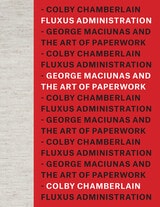
Fluxus Administration
George Maciunas and the Art of PaperworkColby Chamberlain
University of Chicago Press, 2024
Though widely recognized as the founder of the legendary Fluxus movement, George Maciunas has long been a puzzling figure in the history of twentieth-century art. Many have questioned whether he should be considered an artist at all. In Fluxus Administration, critic and art historian Colby Chamberlain reveals the consistent artistic practice hidden behind Maciunas’s varied work in architecture, music, performance, publication, graphic design, film, and real estate as an attempt to create models for community through structures of bureaucracy.
In this deeply researched study, Chamberlain traces how Maciunas’s art insinuated itself into settings as unlikely as the routes of the postal service, the fine print of copyright law, the zoning strictures of urban planning, and the corridors of hospitals. These shifting frames of reference expand our understanding of where an artistic practice can operate and what forms it might assume. In particular, Chamberlain draws on media theory to highlight Maciunas’s ingeniously crafted paperwork, much of which is beautifully reproduced here for the first time.
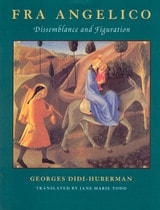
Fra Angelico
Dissemblance and FigurationGeorges Didi-Huberman
University of Chicago Press, 1995
A Florentine painter who took Dominican vows, Fra Angelico (1400-1455) approached his work as a largely theological project. For him, the problems of representing the unrepresentable, of portraying the divine and the spiritual, mitigated the more secular breakthroughs in imitative technique. Didi-Huberman explores Fra Angelico's solutions to these problems—his use of color to signal approaching visibility, of marble to recall Christ's tomb, of paint drippings to simulate (or stimulate) holy anointing. He shows how the painter employed emptiness, visual transformation, and displacement to give form to the mystery of faith.
In the work of Fra Angelico, an alternate strain of Renaissance painting emerges to challenge rather than reinforce verisimilitude. Didi-Huberman traces this disruptive impulse through theological writings and iconographic evidence and identifies a widespread tradition in Renaissance art that ranges from Giotto's break with Byzantine image-making well into the sixteenth century. He reveals how the techniques that served this ultimately religious impulse may have anticipated the more abstract characteristics of modern art, such as color fields, paint spatterings, and the absence of color.
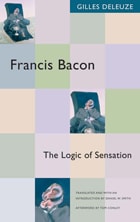
Francis Bacon
The Logic of SensationGilles Deleuze
University of Minnesota Press, 2005
Afterword by Tom Conley
Gilles Deleuze had several paintings by Francis Bacon hanging in his Paris apartment, and the painter’s method and style as well as his motifs of seriality, difference, and repetition influenced Deleuze’s work. This first English translation shows us one of the most original and important French philosophers of the twentieth century in intimate confrontation with one of that century’s most original and important painters.
In considering Bacon, Deleuze offers implicit and explicit insights into the origins and development of his own philosophical and aesthetic ideas, ideas that represent a turning point in his intellectual trajectory. First published in French in 1981, Francis Bacon has come to be recognized as one of Deleuze’s most significant texts in aesthetics. Anticipating his work on cinema, the baroque, and literary criticism, the book can be read not only as a study of Bacon’s paintings but also as a crucial text within Deleuze’s broader philosophy of art.
In it, Deleuze creates a series of philosophical concepts, each of which relates to a particular aspect of Bacon’s paintings but at the same time finds a place in the “general logic of sensation.” Illuminating Bacon’s paintings, the nonrational logic of sensation, and the act of painting itself, this work—presented in lucid and nuanced translation—also points beyond painting toward connections with other arts such as music, cinema, and literature. Francis Bacon is an indispensable entry point into the conceptual proliferation of Deleuze’s philosophy as a whole.
Gilles Deleuze (1925–1995) was professor of philosophy at the University of Paris, Vincennes–St. Denis. He coauthored Anti-Oedipus and A Thousand Plateaus with Félix Guattari. These works, as well as Cinema 1, Cinema 2, The Fold, Proust and Signs, and others, are published in English by Minnesota.
Daniel W. Smith teaches in the Department of Philosophy at Purdue University.

Franklin Furnace and the Spirit of the Avant-Garde
A History of the FutureToni Sant
Intellect Books, 2011
Franklin Furnace is a renowned New York–based artsorganization whose mission is to preserve, document, and present works of avant-garde art by emerging artists—particularly those whose works may be vulnerable due to institutional neglect or politically unpopular content. Over more than thirty years, Franklin Furnace has exhibited works by hundreds of avant-garde artists, some of whom—Laurie Anderson, Vito Acconci, Karen Finley, Guillermo Gómez-Peña, Jenny Holzer, and the Blue Man Group, to name a few—are now established names in contemporary art.
Here, for the first time, is a comprehensive history of this remarkable organization from its conception to the present. Organized around the major art genres that emerged in the second half of the twentieth century, this book intersperses first-person narratives with readings by artists and scholars on issues critical to the organization's success as well as Franklin Furnace's many contributions to avant-garde art.
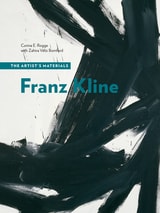
Franz Kline
The Artist's MaterialsCorina E. Rogge
J. Paul Getty Trust, The, 2022
Although Franz Kline was one of the seminal figures of the American Abstract Expressionist movement, he is less well known than contemporaries such as Jackson Pollock and Willem de Kooning. This is partly because Kline, unlike most artists in his circle, did not like to write or talk about his own art. In fact, when asked in a panel to discuss abstract art, Kline said, “I thought that was the reason for trying to do it, because you couldn’t [talk about it].” Still, his impact was such that the critic and art historian April Kingsley wrote, “Abstract Expressionism as a movement died with him.”
This volume, the newest addition to the Artist’s Materials series from the Getty Conservation Institute, looks closely at both Kline's life and work, from his early years in Pennsylvania to his later success in New York City. Kline's iconic paintings are poised on a critical cusp: some have already undergone conservation, but others remain unaltered and retain the artist’s color, gloss, and texture, and they are surprisingly vulnerable. The authors’ presentation of rigorous examination and scientific analysis of more than thirty of Kline’s paintings from the 1930s through the 1960s provides invaluable insight into his life, materials, and techniques. This study provides conservators with essential information that will shape future strategies for the care of Kline’s paintings, and offers readers a more thorough comprehension of this underappreciated artist who is so central to American Abstract Expressionism.
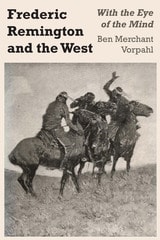
Frederic Remington and the West
With the Eye of the MindBy Ben Merchant Vorpahl
University of Texas Press, 1978
Frederic Remington and the West sheds new light on the remarkably complicated and much misunderstood career of Frederic Remington. This study of the complex relationship between Remington and the American West focuses on the artist’s imagination and how it expressed itself. Ben Merchant Vorpahl takes into account all the dimensions of Remington’s extensive work—from journalism to fiction, sculpture, and painting. He traces the events of Remington’s life and makes extensive use of literary and art criticism and nineteenth-century American social cultural and military history in interpreting his work.
Vorpahl reveals Remington as a talented, sensitive, and sometimes neurotic American whose work reflects with peculiar force the excitement and distress of the period between the Civil War and the Spanish-American War. Remington was not a “western” artist in the conventional sense; neither was he a historian: he lacked the historian’s breadth of vision and discipline, expressing himself not through analysis but through synthesis. Vorpahl shows that, even while Remington catered to the sometimes maudlin, sometimes jingoistic tastes of his public and his editors, his resourceful imagination was at work devising a far more demanding and worthwhile design—a composite work, executed in prose, pictures, and bronze. This body of work, as the author demonstrates, demands to be regarded as an interrelated whole. Here guilt, shame, and personal failure are honestly articulated, and death itself is confronted as the artist’s chief subject.
Because Remington was so prolific a painter, sculptor, illustrator, and writer, and because his subjects, techniques, and media were so apparently diverse, the deeper continuity of his work had not previously been recognized. This study is a major contribution to our understanding of an important American artist. In addition, Vorpahl illuminates the interplay between history, artistic consciousness, and the development of America’s sense of itself during Remington’s lifetime.
Frida Kahlo
Gannit Ankori
Reaktion Books, 2013