130 books match the query 'Indonesia' and 7 start with f

cover of Fantasizing the Feminine in Indonesia

Fantasizing the Feminine in Indonesia

Laurie J. Sears, ed.

Duke University Press, 1996

The stories of Indonesian women have often been told by Indonesian men and Dutch men and women. This volume asks how these representations—reproduced, transformed, and circulated in history, ethnography, and literature—have circumscribed feminine behavior in colonial and postcolonial Indonesia. Presenting dialogues between prominent scholars of and from Indonesia and Indonesian women working in professional, activist, religious, and literary domains, the book dissolves essentialist notions of “women” and “Indonesia” that have arisen out of the tensions of empire.
The contributors examine the ways in which Indonesian women and men are enmeshed in networks of power and then pursue the stories of those who, sometimes at great political risk, challenge these powers. In this juxtaposition of voices and stories, we see how indigenous patriarchal fantasies of feminine behavior merged with Dutch colonial notions of proper wives and mothers to produce the Indonesian government’s present approach to controlling the images and actions of women. Facing the theoretical challenge of building a truly cross-cultural feminist analysis, Fantasizing the Feminine takes us into an ongoing conversation that reveals the contradictions of postcolonial positionings and the fragility of postmodern identities.
This book will be welcomed by readers with interests in contemporary Indonesian politics and society as well as historians, anthropologists, and other scholars concerned with literature, gender, and cultural studies.

Contributors. Benedict R. O’G. Anderson, Sita Aripurnami, Jane Monnig Atkinson, Nancy K. Florida, Daniel S. Lev, Dédé Oetomo, Laurie J. Sears, Ann Laura Stoler, Saraswati Sunindyo, Julia I. Suryakusuma, Jean Gelman Taylor, Sylvia Tiwon, Anna Lowenhaupt Tsing, Diane L. Wolf

[more]
cover of Feelings at the Margins: Dealing with Violence, Stigma and Isolation in Indonesia

Feelings at the Margins

Dealing with Violence, Stigma and Isolation in Indonesia

Edited by Birgitt Röttger-Rössler and Thomas Stodulka

Campus Verlag, 2014

Feelings at the Margins offers a uniquely interdisciplinary take on the contemporary phenomenon of marginalization in Indonesia and its emotional impact on affected individuals and groups. By combining anthropological, political, and historical perspectives on Indonesian particularities with more universal conclusions, this volume is sure to attract not only scholars with a regional interest in the archipelago, but also researchers more broadly concerned with the interplay between stigma, marginality, culture, and emotion. Moreover, the book’s vivid ethnographic case studies—detailing recurring acts of violence against communities based on their ethnicity, gender, sexuality, descent, and religion—and discussion of significant sociocultural and political developments in early twenty-first-century Indonesia will make it a valuable resource for scholars of social and political activism.
[more]
cover of Financing Local Government in Indonesia: Mis Sea#84

Financing Local Government in Indonesia

Mis Sea#84

Nick Devas

Ohio University Press, 1989

Considering the size and importance of Indonesia, remarkably little has been published in the West about the society and government of that country. With over 160 million people, it is the fifth most populous country in the world. It is an archipelago of some 13,000 islands, stretching over 5,000 kilometers from from east to west, and contains within it an amazing array of cultures, as well as ethnic, economic, and religious variations.

Not surprisingly in view of the country's great size, vast regional differences, and cultural diversity, local government in Indonesia is on a massive scale. The task of managing and financing a system of local government is a troublesome one; the development needs of different regions are vast and the tasks facing local government are generally far beyond their limited resources. It is the purpose of this book not only to describe the existing system of local government but also to analyze it, identify weaknesses and problems with the present arrangement, and to propose realistic lines of reform. This collection of essays will provide a useful and constructive contribution to the discussion of issues central to the system of local government in Indonesia.
[more]
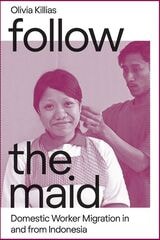
cover of Follow the Maid: Domestic Worker Migration from Indonesia

Follow the Maid

Domestic Worker Migration from Indonesia

Olivia Killias

National University of Singapore Press, 2017

This fascinating study unveils the workings of the Indonesian migration regime, one that sends hundreds of thousands of women abroad as domestic workers each year. Drawing on extended ethnographic research since 2007, the book literally follows migrant women from one particular village in Central Java and tracks the moral, social, economic and legal processes by which they are turned into ‘maids’. From recruitment by local brokers to the ‘training’ received in secluded camps in Jakarta, employment in gated middle-class homes in Malaysia and back home again, Olivia Killias highlights the implications of the migration process on gendered practices of labour mobility (and immobilisation). She also reveals the disciplinary power that states, recruitment agencies and employers exercise over migrant domestic workers as well as highlighting frictions within the system. Killias’s analysis demonstrates that ironically, the “legalisation” of the migration industry, under the joint pressures of the Indonesian migration bureaucracy and international humanitarian agencies, does not automatically improve the situation of the women who embark on the migration adventure. Rather, Killias unmasks the gendered moralizing discourses on “illegal” migration and “trafficking” as legitimizing indentured labour and constraining migrant mobility. By exploring the workings of the Indonesian state’s overseas legal labour migration regime for migrants, she brings the reader directly into the nerve-racking lives of migrant village women, and reveals the richness and ambiguity of their experiences, going beyond stereotypical representations of them as “victims of trafficking”.

[more]
cover of Freedom in Entangled Worlds: West Papua and the Architecture of Global Power

Freedom in Entangled Worlds

West Papua and the Architecture of Global Power

Eben Kirksey

Duke University Press, 2012
Eben Kirksey first went to West Papua, the Indonesian-controlled half of New Guinea, as an exchange student in 1998. His later study of West Papua's resistance to the Indonesian occupiers and the forces of globalization morphed as he discovered that collaboration, rather than resistance, was the primary strategy of this dynamic social movement. Accompanying indigenous activists to Washington, London, and the offices of the oil giant BP, Kirksey saw the revolutionaries' knack for getting inside institutions of power and building coalitions with unlikely allies, including many Indonesians. He discovered that the West Papuans' pragmatic activism was based on visions of dramatic transformations on coming horizons, of a future in which they would give away their natural resources in grand humanitarian gestures, rather than watch their homeland be drained of timber, gold, copper, and natural gas. During a lengthy, brutal occupation, West Papuans have harbored a messianic spirit and channeled it in surprising directions. Kirksey studied West Papua's movement for freedom while a broad-based popular uprising gained traction from 1998 until 2008. Blending ethnographic research with indigenous parables, historical accounts, and narratives of his own experiences, he argues that seeking freedom in entangled worlds requires negotiating complex interdependencies.
[more]
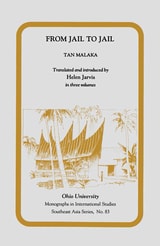
cover of From Jail to Jail: Mis Sea#83 Tpg#8

From Jail to Jail

Mis Sea#83 Tpg#8

Tan Malaka

Ohio University Press, 1991

From Jail to Jail  is the political autobiography of Sutan Ibrahim gelar Tan Malaka, an enigmatic and colorful political thinker of twentieth-century Asia, who was one of the most influential figures of the Indonesian Revolution. Variously labeled a communist, Trotskyite, and nationalist, Tan Malaka managed to run afoul of nearly every political group and faction involved in the Indonesian struggle for independence. During his decades of political activity, he spent periods of exile and hiding in nearly every country in Southeast Asia. As a Marxist who was expelled from and became a bitter enemy of his country’s Communist Party and as a nationalist who was imprisoned and murdered by his own government’s forces as a danger to its anticolonial struggle, Tan Malaka was and continues to be soaked in contradiction and controversy.
[more]
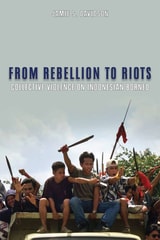
cover of From Rebellion to Riots: Collective Violence on Indonesian Borneo

From Rebellion to Riots

Collective Violence on Indonesian Borneo

Jamie S. Davidson

University of Wisconsin Press, 2008

From Rebellion to Riots is a critical analysis of the roots of contemporary violence in one of Indonesia’s most ethnically heterogeneous provinces, West Kalimantan. Since the late 1960s, this province has suffered periodic outbreaks of ethnic violence among its Dayak, Malay, Madurese, and ethnic Chinese populations. Citing evidence from his research, internal military documents, and ethnographic accounts, Jamie S. Davidson refutes popular explanations for these flare-ups. The recurrent violence has less to do with a clash of cultures, the ills of New Order-led development, or indigenous marginalization than with the ongoing politicization of ethnic and indigenous identity in the region.
            Looking at key historical moments, markedly different in their particulars, Davidson reveals the important links between ethnic violence and subnational politics. In one case, army officers in Soeharto’s recently established New Order regime encouraged anti-Chinese sentiments. To move against communist-inspired rebellion, they recruited indigenous Dayaks to expunge tens of thousands of ethnic Chinese from interior towns and villages. This counter-insurgent bloodshed inadvertently initiated a series of clashes between Dayaks and Madurese, another migrant community. Driven by an indigenous empowerment movement and efforts by local elites to control benefits provided by decentralization and democratization, these low-intensity riots rose to immense proportions in the late 1990s. From Rebellion to Riots demonstrates that the endemic violence in this vast region is not the inevitable outcome of its ethnic diversity, and reveals that the initial impetus for collective bloodshed is not necessarily the same as the forces that sustain it.

“A comprehensive case study . . . . Essential reading for students of the West Kalimantan violence.”—Dave McRae, Indonesia
[more]