Results by title
328 books match the query 'Islam' and 12 start with f
Faithful Interpretations
Truth and Islam in Catholic Theology of ReligionsPhilip Geister
Catholic University of America Press, 2021
Faithful Transformations
Islamic Self-Help in Contemporary SingaporeNurhaizatul Jamil
University of Illinois Press, 2025
The Islamic self-help classes in this book exist at the nexus of sacred texts, aphorisms, and social media engagements, scaffolded by the neoliberal economy that shapes idealized Muslim subjectivities. Within a context whereby the Singapore state discursively frames Malayness in terms of cultural deficiency, Malay Muslim women’s inward focus on transformative ethics rather than societal change underscores the appeal of gendered pious self-help discourses. At the same time, Jamil’s referencing of Black, Indigenous, and Ethnic studies offers a compelling analytical frame that places affective transformation within the context of racial capitalism, historical trauma, and embodied healing.
A provocative and rich ethnography, Faithful Transformations tells the stories of Malay Muslim women desiring piety and self-improvement as minoritized subjects in contemporary Singapore while exploring the limitations of self-care.
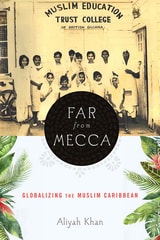
Far from Mecca
Globalizing the Muslim CaribbeanAliyah Khan
Rutgers University Press, 2020
Far from Mecca: Globalizing the Muslim Caribbean is the first academic work on Muslims in the English-speaking Caribbean. Khan focuses on the fiction, poetry, and music of Islam in Guyana, Trinidad, and Jamaica. Combining archival research, ethnography, and literary analysis, Khan argues for a historical continuity of Afro- and Indo-Muslim presence and cultural production in the Caribbean. Case studies explored range from Arabic-language autobiographical and religious texts written by enslaved Sufi West Africans in nineteenth-century Jamaica, to early twentieth-century fictions of post-indenture South Asian Muslim indigeneity and El Dorado, to the attempted government coup in 1990 by the Jamaat al-Muslimeen in Trinidad, as well as the island’s calypso music, to contemporary judicial cases concerning Caribbean Muslims and global terrorism. Khan argues that the Caribbean Muslim subject, the “fullaman,” a performative identity that relies on gendering and racializing Islam, troubles discourses of creolization that are fundamental to postcolonial nationalisms in the Caribbean.
Fatal Future?
Transnational Terrorism and the New Global DisorderBy Richard M. Pearlstein
University of Texas Press, 2004
The nature and goals of terrorist organizations have changed profoundly since the Cold War standoff among the U.S., Soviet, and Chinese superpowers gave way to the current "polyplex" global system, in which the old rules of international engagement have been shattered by a new struggle for power among established states, non-state actors, and emerging nations. In this confusing state of global disorder, terrorist organizations that are privately funded and highly flexible have become capable of carrying out incredibly destructive attacks anywhere in the world in support of a wide array of political, religious, and ethnic causes.
This groundbreaking book examines the evolution of terrorism in the context of the new global disorder. Richard M. Pearlstein categorizes three generations of terrorist organizations and shows how each arose in response to the global conditions of its time. Focusing extensively on today's transnational (i.e., privately funded and internationally operating) terrorist organizations, he devotes thorough attention to the two most virulent types: ethnoterrorism and radical Islamic terrorism. He also discusses the terrorist race for weapons of mass destruction and the types of attacks, including cyberterrorism, that are likely to occur in coming years. Pearlstein concludes with a thought-provoking assessment of the many efforts to combat transnational terrorism in the post-September 11 period.

Fighting the Greater Jihad
Amadu Bamba and the Founding of the Muridiyya of Senegal, 1853–1913Cheikh Anta Babou
Ohio University Press, 2007
In Senegal, the Muridiyya, a large Islamic Sufi order, is the single most influential religious organization, including among its numbers the nation’s president. Yet little is known of this sect in the West. Drawn from a wide variety of archival, oral, and iconographic sources in Arabic, French, and Wolof, Fighting the Greater Jihad offers an astute analysis of the founding and development of the order and a biographical study of its founder, Cheikh Ahmadu Bamba Mbakke.
Cheikh Anta Babou explores the forging of Murid identity and pedagogy around the person and initiative of Amadu Bamba as well as the continuing reconstruction of this identity by more recent followers. He makes a compelling case for reexamining the history of Muslim institutions in Africa and elsewhere in order to appreciate believers’ motivation and initiatives, especially religious culture and education, beyond the narrow confines of political collaboration and resistance. Fighting the Greater Jihad also reveals how religious power is built at the intersection of genealogy, knowledge, and spiritual force, and how this power in turn affected colonial policy.
Fighting the Greater Jihad will dramatically alter the perspective from which anthropologists, historians, and political scientists study Muslim mystical orders.
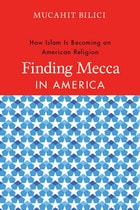
Finding Mecca in America
How Islam Is Becoming an American ReligionMucahit Bilici
University of Chicago Press, 2012
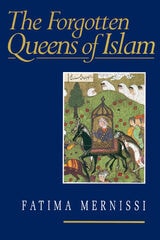
Forgotten Queens Of Islam
Fatima Mernissi
University of Minnesota Press, 1997

France and Islam, Volume 30
Patricia Lorcin and Paula Sanders
Duke University Press, 0

Fraternal Critique
The Politics of Muslim Community in FranceKirsten Wesselhoeft
University of Chicago Press, 2025
The conversation about Islam in France is framed by the presumption that Muslim communities are a threat to secular solidarity or fraternité. In the face of state repression, French Muslims have not closed ranks around a narrow range of voices; instead, Kirsten Wesselhoeft finds that young Muslim activists have continued to purposefully spark debate about the values that anchor community life. Wesselhoeft argues that such disagreements, far from dividing communities, actually constitute a form of belonging. Some activists call this ethic “fraternal critique,” and Wesselhoeft finds in it profound insights about the place for critique in civic life. The French state has reacted to Muslim solidarity with repression, but Wesselhoeft argues that unity need not come at the expense of dissent. Instead, fraternal critique can teach us how to build communities that are worth fighting over and fighting for.
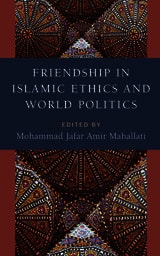
Friendship in Islamic Ethics and World Politics
Edited by Mohammad Jafar Amir Mahallati
University of Michigan Press, 2019
Based on a decade of direct diplomatic engagement with the United Nations, a decade of teaching on international relations, and another decade of research and teaching on Islamic and comparative peace studies, this book offers a friendship-related academic framework that examines shared moral concepts, philosophical paradigms, and political experiences that can develop and expand multidisciplinary conversations between the Christian West and the Muslim East. By advancing multicultural and interreligious discourses on friendship, this book helps promote actual friendships among diverse cultures and peoples.
This is not a monologue. It provides a model of conversations among scholars and political actors who come from diverse international and interreligious backgrounds. The word “Islamic” should not mislead the reader to suspect that this edited volume delves only into religious discourses. Rather, it provides a forum for conversations within and between religious and philosophical perspectives. It sparks friendship conversations thematically and through disciplinary and cultural diversity. The result of the work of many prominent international scholars and diplomats over many years, it conveys at least one message clearly: friendship matters for not only our happiness but also for our survival.
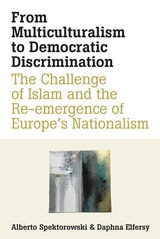
From Multiculturalism to Democratic Discrimination
The Challenge of Islam and the Re-emergence of Europe’s NationalismAlberto Spektorowski and Daphna Elfersy
University of Michigan Press, 2020

From the Far Right to the Mainstream
Islamophobia in Party Politics and the MediaEdited by Humayun Ansari and Farid Hafez
Campus Verlag, 2012