Results by title
403 books match the query 'Journalism' and 19 start with f
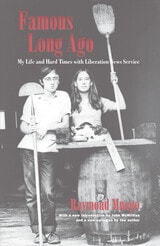
Famous Long Ago
My Life and Hard Times with Liberation News ServiceRaymond Mungo
University of Massachusetts Press, 2012
Originally published in 1970, Raymond Mungo's picaresque account of his adventures with Liberation News Service in the wild years of 1967 and 1968 has been variously described as youthful, passionate, lyrical, demented, and an iconic symbol of the sixties counterculture. A review in The Nation described it as “hip Huck Finn.”
A college editor at the height of the Vietnam War, Mungo found himself smack in the middle of a mad swirl of activism and dissent, vigorously protesting everything from the draft to abortion laws to the university itself. Then he connected with Marshall Bloom to cofound LNS in Washington, D.C., as a news service catering to the burgeoning underground press. One thing led to another, until LNS, like so many other radical organizations, eventually disintegrated into violently warring factions. Mungo's memoir tracks its development and destruction with wicked humor and literary panache.
In an introduction to this new edition, John McMillian discusses the enduring appeal of Famous Long Ago and situates it within its broader historical context, while the author provides his own retrospective take in a new afterword.
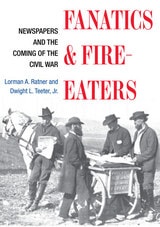
Fanatics and Fire-eaters
Newspapers and the Coming of the Civil WarLorman A. Ratner and Dwight L. Teeter Jr.
University of Illinois Press, 2003
In the troubled years leading up to the Civil War, newspapers in the North and South presented the arguments for and against slavery, debated the right to secede, and in general denounced opposing viewpoints with imagination and vigor. At the same time, new technologies like railroads and the telegraph lent the debates an immediacy that both enflamed emotions and brought the slavery issue into every home.
Lorman A. Ratner and Dwight L. Teeter Jr. look at the power of America's fast-growing media to influence perception and the course of events prior to the Civil War. Drawing on newspaper accounts from across the United States, the authors look at how the media covered—and the public reacted to—major events like the Dred Scott decision, John Brown's raid on Harper's Ferry, and the election of 1860. They find not only North-South disputes about the institution of slavery but differing visions of the republic itself—and which region was the true heir to the legacy of the American Revolution.
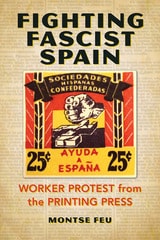
Fighting Fascist Spain
Worker Protest from the Printing PressMontse Feu
University of Illinois Press, 2020
Montse Feu merges España Libre's story with the drama of the Spanish immigrant community's fight against fascism. The periodical emerged as part of a transnational effort to link migrants and new exiles living in the United States to antifascist networks abroad. In addition to showing how workers' culture and politics shaped their antifascism, Feu brings to light creative works that ranged from literature to satire to cartoons to theater. As España Libre opened up radical practices, it encouraged allies to reject violence in favor of social revolution's potential for joy and inclusion.
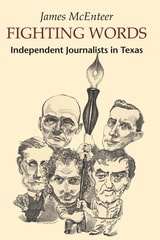
Fighting Words
Independent Journalists in TexasBy James McEnteer
University of Texas Press, 1992
Fighting Words profiles five journalists who published the truth as they saw it, no matter how their reporting angered politicians, social and religious leaders, or other journalists.
The five journalists are William Brann (1855–1898), Don Biggers (1868–1957), John Granbery (1874–1953), Archer Fullingim (1902–1984), and Stoney Burns [Brent Stein] (1942–2011). Though they lived in different eras, all these men dealt with issues that society continues to face—racism, official corruption, religious freedom, educational reform, political extremism of the left and right, the clash of urban and rural values, and the fear of change. Their lives and work constitute a unique, alternative perspective on Texas history and the history of journalism itself.
In addition to the troubling questions they raised on social issues, these independent journalists challenge us, as they challenged the mainline media of their own times, to define the function of journalism and to examine the mandate of the First Amendment. We may doubt the wisdom of some of their convictions, but not the courage they needed to express them in the face of ridicule, hostility, intimidation, and even death. More than the specific causes they fought for, the independents’ passion for truth and their absolute belief in free speech constitute their greatest legacy to us and to journalism.
Foreign News
Exploring the World of Foreign CorrespondentsUlf Hannerz
University of Chicago Press, 2003
Hannerz draws on extensive interviews with correspondents in cities as diverse as Jerusalem, Tokyo, and Johannesburg. He shows not only how different story lines evolve in different correspondent beats, but also how the correspondents' home country and personal interests influence the stories they write. Reporting can go well beyond coverage of a specific event, using the news instead to reveal deeper insights into a country or a people to link them to long-term trends or structures of global significance. Ultimately, Hannerz argues that both anthropologists and foreign correspondents can learn from each other in their efforts to educate a public about events and peoples far beyond our homelands.
The result of nearly a decade's worth of work, Foreign News is a provocative study that will appeal to both general readers and those concerned with globalization.
Forming the Public
A Critical History of Journalism in the United StatesFrank D. Durham and Thomas P. Oates
University of Illinois Press, 2024
Weaving eyewitness history through US history, Forming the Public reveals what understanding the journalism landscape can teach us about the nature of journalism’s own interests in race, gender, and class while tracing the factors that shaped the contours of dominant American culture.
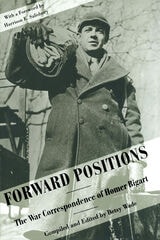
Forward Positions
The War Correspondence of Homer BigartHomer Bigart
University of Arkansas Press, 1992
Among journalists—and particularly war correspondents—Homer Bigart was both legend and example. In a career of four decades, first with the New York Herald Tribuneand then, through 1972, with The New York Times, Bigart distinguished himself as a superb writer and tireless digger for the realities that could be learned only in the field and not at headquarters. In 1943 Bigart sailed for England to cover the air war and was soon on mule-back in Sicily, and hanging on at Anzio. He then went to the Pacific, where his dispatches won him his first Pulitzer Prize for foreign correspondence. When hostilities erupted in Korea he was again on the front lines in the front lines in the Orient, and again recipient of a Pulitzer. By the time of the American involvement in Vietnam, he was an old-timer, a seasoned correspondent admired and celebrated for his wit but regarded with awe for his masterly stories, in which straightforward prose, informed by tenacious reporting, cut to the heart of the issues.
Previously available only n crumbling library copies of the Tribune and the Times, or in microfilm repositories, his dispatches, with their rare insights into warefar and he minds of those who wage war, are now collected in Forward Positions: The War Correspondence of Home Bigart, edited by Betsy Wade and introduced by Harrison E. Salisbury, himself the winner of a Pulitzer Prize for journalism.
Forward Positions does honor to a breed of journalist that had passed into history by the time of Bigart’s death. It includes one of the first accounts of the atomic annihilation of Hiroshima, a report on the war-crimes trial of Adolf Eichmann, a number of dispatches on “hot” battles of the Cold War, and a probing dispatch on Lieutenant William Calley’s testimony on the Mỹ Lai Massacre. With this representative selection of more than fifty of Bigart’s accounts of war on the ground, in the air, and in the courtroom, Wade provides a wealth of background material about his career, as well as glimpses of his impact on journalism. The book promises hours of captivating and informative reading for journalists, historians, veterans, and anyone who likes a good story tautly told.
Four Theories of the Press
The Authoritarian, Libertarian, Social Responsibility, and Soviet Communist Concepts of What the Press Should Be and DoFredrick S. Siebert, Theodore Peterson, and Wilbur Schramm
University of Illinois Press, 1956
Presented here are four major theories behind the functioning of the world's presses: (1) the Authoritarian theory, which developed in the late Renaissance and was based on the idea that truth is the product of a few wise men; (2) the Libertarian theory, which arose from the works of men like Milton, Locke, Mill, and Jefferson and avowed that the search for truth is one of man's natural rights; (3) the Social Responsibility theory of the modern day: equal radio and television time for political candidates, the obligations of the newspaper in a one-paper town, etc.; (4) the Soviet Communist theory, an expanded and more positive version of the old Authoritarian theory.
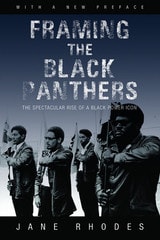
Framing the Black Panthers
The Spectacular Rise of a Black Power IconJane Rhodes
University of Illinois Press, 2017
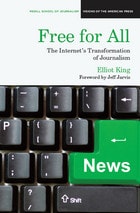
Free for All
The Internet's Transformation of JournalismElliot King
Northwestern University Press, 2010
In Free for All, longtime scholar of digital media Elliot King begins with a brief history of the technological development of news media from the appearance of newspapers in the sixteenth century to the rise of broadcasting and the Internet.
Within that context, King demystifies the emergence of online communication and social media as the third major technological platform for news, making the current pace of change appear less vertiginous. Free for All provides anyone with an interest in the future of journalism the grounding necessary for an informed discussion.
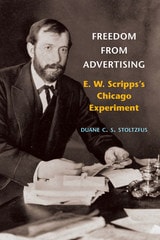
Freedom from Advertising
E. W. Scripps's Chicago ExperimentDuane C. S. Stoltzfus
University of Illinois Press, 2006
Though the Day Book’s financial losses steadily declined over the years, it never became profitable, and publication ended in 1917. Nevertheless, Stoltzfus explains that the Day Book served as an important ally of workers, a keen watchdog on advertisers, and it redefined news by providing an example of a paper that treated its readers first as citizens with rights rather than simply as consumers.
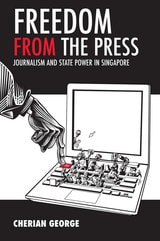
Freedom from the Press
Journalism and State Power in SingaporeCherian George
National University of Singapore Press, 2011
Freedom of the Air and the Public Interest
First Amendment Rights in Broadcasting to 1935Louise M. Benjamin
Southern Illinois University Press, 2006
Drawing on primary resources from sixteen archives plus contemporary secondary sources, Benjamin analyzes interactions among the players involved and argues that First Amendment rights in radio evolved in the 1920s and 1930s through the interaction of many entities having social, political, or economic interests in radio. She shows how free speech and First Amendment rights were defined and perceived up to 1935.
Focusing on the evolution of various electronic media rights, Benjamin looks at censorship, speakers’ rights of access to the medium, broadcasters’ rights to use radio as they desired, and listeners’ rights to receive information via the airwaves. With many interested parties involved, conflict was inevitable, resulting in the establishment of industry policies and government legislation—particularly the Radio Act of 1927. Further debate led to the Communications Act of 1934, which has provided the regulatory framework for broadcasting for over sixty years. Controversies caused by new technology today continue to rage over virtually the same rights and issues that Benjamin deals with.

From Black Sox to Three-Peats
A Century of Chicago's Best Sportswriting from the "Tribune," "Sun-Times," and Other NewspapersEdited by Ron Rapoport
University of Chicago Press, 2013
In From Black Sox to Three-Peats, veteran Chicago sports columnist Ron Rapoportassembles one hundred of the best columns and articles from the Tribune, Sun-Times, Daily News, Defender, and other papers to tell the unforgettable story of a century of Chicago sports. From Ring Lardner to Rick Telander, Westbrook Pegler to Bob Verdi, Mike Royko to Hugh Fullerton , Melissa Isaacson to Brent Musburger, and on and on, this collection reminds us that Chicago sports fans have enjoyed a wealth of talent not just on the field, but in the press box as well. Through their stories we relive the betrayal of the Black Sox, the cocksure power of the ’85 Bears, the assassin’s efficiency of Jordan’s Bulls, the Blackhawks’ stunning reclamation of the Stanley Cup, the Cubs’ century of futility—all as seen in the moment, described and interpreted on the spot by some of the most talented columnists ever to grace a sports page.
Sports are the most ephemeral of news events: once you know the outcome, the drama is gone. But every once in a while, there are those games, those teams, those players that make it into something more—and great writers can transform those fleeting moments into lasting stories that become part of the very identity of a city. From Black Sox to Three-Peats is Chicago history at its most exciting and celebratory. No sports fan should be without it.
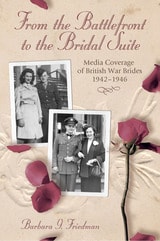
From the Battlefront to the Bridal Suite
Media Coverage of British War Brides, 1942-1946Barbara G. Friedman
University of Missouri Press, 2007
With their gregarious natures and casual styles, American GIs in wartime England were instantly attractive to British women—especially in the absence of their fighting men. As a result, some seventy thousand British war brides returned to the United States—with many on the home front at first suspecting that the GIs were somehow being exploited.
The war brides’ stories have been told in memoirs, romantic novels, and immigration history. Barbara Friedman sheds new light on their experiences by focusing on media representations of sexuality and marriage in wartime, showing how mass media interpretations turned from public suspicion of war brides to popular acceptance.
Friedman tells how British media first insisted that GIs had come to fight, not to woo the locals, and shrugged off the first brides as an “American problem.” Yet, as Friedman shows, the British media were complicit in encouraging the relationships in the first place: the British press promoted a hospitality program that deemed the entertainment of American troops “patriotic duty,” while women’s magazines hailed American men as ideal husbands and the United States as a promised land.
From the American perspective, Friedman reveals, despite rules against foreign marriages, the U.S. Army encouraged GI-civilian fraternization through armed service publications, attitudes toward GI sexuality, and participation in the hospitality program. Armed service publications went from depicting British women as “frowsy dames” to honoring them as models of domesticity, while newspapers back home eventually legitimized the marriages by casting the brides as welcome additions to American society. Meanwhile, American women’s magazines viewed them as more similar to than different from their American counterparts and called on readers to help British brides master American homemaking.
By combining letters and diaries of brides with published accounts, Friedman identifies accuracies and inaccuracies in the media record as well as gaps in coverage. She considers how the brides saw themselves compared to their media images and shows how the media co-opted brides as symbols of the Anglo-American “special friendship,” postwar power imbalance, and gendered ideals of marriage and domestication.
From the Battlefront to the Bridal Suite is the untold story of overlooked participants in the most celebrated drama of the twentieth century—women whose lives were shaped profoundly by a war that was more than just a male enterprise. It shows the power of the press in the most unlikely matters and suggests a broader definition of the wartime experience.
From the Dance Hall to Facebook
Teen Girls, Mass Media, and Moral Panic in the United States, 1905-2010Shayla Thiel-Stern
University of Massachusetts Press, 2014
In From the Dance Hall to Facebook, Shayla Thiel-Stern takes a close look at several historical snapshots, including working-class girls in dance halls of the early 1900s; girls' track and field teams in the 1920s to 1940s; Elvis Presley fans in the mid-1950s; punk rockers in the late 1970s and early 1980s; and girls using the Internet in the early twenty-first century. In each case, issues of gender, socioeconomic status, and race are explored within their historical context. The book argues that by marginalizing and stereotyping teen girls over the past century, mass media have perpetuated a pattern of gendered crisis that ultimately limits the cultural and political power of the young women it covers.
Front Page Economics
Gerald D. Suttles, with Mark D. Jacobs
University of Chicago Press, 2010
In an age when pundits constantly decry overt political bias in the media, we have naturally become skeptical of the news. But the bluntness of such critiques masks the highly sophisticated ways in which the media frame important stories. In Front Page Economics, Gerald Suttles delves deep into the archives to examine coverage of two major economic crashes—in 1929 and 1987—in order to systematically break down the way newspapers normalize crises.
Poring over the articles generated by the crashes—as well as the people in them, the writers who wrote them, and the cartoons that ran alongside them—Suttles uncovers dramatic changes between the ways the first and second crashes were reported. In the intervening half-century, an entire new economic language had arisen and the practice of business journalism had been completely altered. Both of these transformations, Suttles demonstrates, allowed journalists to describe the 1987 crash in a vocabulary that was normal and familiar to readers, rendering it routine.
A subtle and probing look at how ideologies are packaged and transmitted to the casual newspaper reader, Front Page Economics brims with important insights that shed light on our own economically tumultuous times.
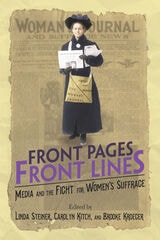
Front Pages, Front Lines
Media and the Fight for Women's SuffrageEdited by Linda Steiner, Carolyn Kitch, and Brooke Kroeger
University of Illinois Press, 2020
This collection offers new research on media issues related to the women's suffrage movement. Contributors incorporate media theory, historiography, and innovative approaches to social movements while discussing the vexed relationship between the media and debates over suffrage. Aiming to correct past oversights, the essays explore overlooked topics such as coverage by African American and Mormon-oriented media, media portrayals of black women in the movement, suffragist rhetorical strategies, elites within the movement, suffrage as part of broader campaigns for social transformation, and the influence views of white masculinity had on press coverage.
Contributors: Maurine H. Beasley, Sherilyn Cox Bennion, Jinx C. Broussard, Teri Finneman, Kathy Roberts Forde, Linda M. Grasso, Carolyn Kitch, Brooke Kroeger, Linda J. Lumsden, Jane Marcellus, Jane Rhodes, Linda Steiner, and Robin Sundaramoorthy
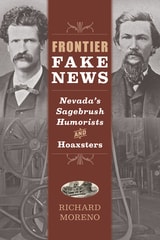
Frontier Fake News
Nevada's Sagebrush Humorists and HoaxstersRichard Moreno
University of Nevada Press, 2023
When readers see the names Mark Twain and Dan De Quille, fake news may not be the first thing that comes to mind. But these legendary journalists were some of the original, and most prolific, fake news writers in the early years of Nevada’s history. Frontier Fake News puts a spotlight on the hoaxes, feuds, pranks, outright lies, witty writing, and other literary devices utilized by a number of the Silver State’s frontier newsmen from the mid-nineteenth through the early twentieth centuries. Often known collectively as the Sagebrush School, these journalists were opinionated, talented, and individualistic.
While Mark Twain (Samuel Clemens), who got his start at Virginia City’s Territorial Enterprise, and Dan De Quille (William Wright), who some felt was a better writer than Twain, are the most well-known members of the Sagebrush School, author Richard Moreno includes others such as Fred Hart, who concocted a fake social club and reported on its gatherings for Austin’s Reese River Reveille, and William Forbes, who enjoyed sprinkling clever puns with political undertones in his newspaper articles.
Moreno traces the beginnings of genuine fake news from founding father Benjamin Franklin’s “Supplement to the Boston Independent Chronicle, Number 705, March 1782,” a fake newspaper aimed at swaying British public opinion, to the fake news articles of New York and Baltimore papers in the early 1800s. But these examples are only a prelude to the amazing accounts of petrified men, freeze-inducing solar armor, magically magnetic rocks, blood-curdling massacres, and other nonsense stories that appeared in Nevada’s frontier newspapers and beyond.