118 books match the query 'Land tenure' and 4 start with f
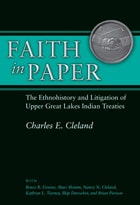
cover of Faith in Paper: The Ethnohistory and Litigation of Upper Great Lakes Indian Treaties

Faith in Paper

The Ethnohistory and Litigation of Upper Great Lakes Indian Treaties

Charles E. Cleland

University of Michigan Press, 2011
Faith in Paper is about the reinstitution of Indian treaty rights in the Upper Great Lakes region during the last quarter of the 20th century. The book focuses on the treaties and legal cases that together
have awakened a new day in Native American sovereignty and established the place of Indian tribes on the modern political landscape.
 
In addition to discussing the historic development of Indian treaties and their social and legal context, Charles E. Cleland outlines specific treaties litigated in modern courts as well as the impact of treaty litigation on the modern Indian and non-Indian communities of the region. Faith in Paper is both an important contribution to the scholarship of Indian legal matters and a rich resource for Indians
themselves as they strive to retain or regain rights that have eroded over the years.
 
Charles E. Cleland is Michigan State University Emeritus Professor of Anthropology and Curator of Anthropology and Ethnology. He has been an expert witness in numerous Native American land claims and fishing rights cases and written a number of other books on the subject, including Rites of Conquest: The History and Culture of Michigan's Native Americans; The Place of the Pike (Gnoozhekaaning): A History of the Bay Mills Indian Community; and (as a contributor) Fish in the Lakes, Wild Rice, and Game in Abundance: Testimony on Behalf of Mille Lacs Ojibwe Hunting and Fishing Rights.
[more]
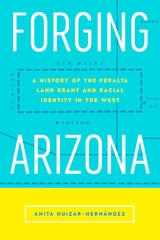
cover of Forging Arizona: A History of the Peralta Land Grant and Racial Identity in the West

Forging Arizona

A History of the Peralta Land Grant and Racial Identity in the West

Anita Huizar-Hernández

Rutgers University Press, 2019
In Forging Arizona Anita Huizar-Hernández looks back at a bizarre nineteenth-century land grant scheme that tests the limits of how ideas about race, citizenship, and national expansion are forged. During the aftermath of the U.S.-Mexico War and the creation of the current border, a con artist named James Addison Reavis falsified archives around the world to pass his wife off as the heiress to an enormous Spanish land grant so that they could claim ownership of a substantial portion of the newly-acquired Southwestern territories. Drawing from a wide variety of sources including court records, newspapers, fiction, and film, Huizar-Hernández argues that the creation, collapse, and eventual forgetting of Reavis’s scam reveal the mechanisms by which narratives, real and imaginary, forge borders. An important addition to extant scholarship on the U.S Southwest border, Forging Arizona recovers a forgotten case that reminds readers that the borders that divide nations, identities, and even true from false are only as stable as the narratives that define them. 
[more]
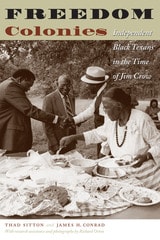
cover of Freedom Colonies: Independent Black Texans in the Time of Jim Crow

Freedom Colonies

Independent Black Texans in the Time of Jim Crow

By Thad Sitton and James H. Conrad

University of Texas Press, 2005

Friends of the Dallas Public Library Award, 2006
Best Book on East Texas, East Texas Historical Association, 2007

In the decades following the Civil War, nearly a quarter of African Americans achieved a remarkable victory—they got their own land. While other ex-slaves and many poor whites became trapped in the exploitative sharecropping system, these independence-seeking individuals settled on pockets of unclaimed land that had been deemed too poor for farming and turned them into successful family farms. In these self-sufficient rural communities, often known as "freedom colonies," African Americans created a refuge from the discrimination and violence that routinely limited the opportunities of blacks in the Jim Crow South.

Freedom Colonies is the first book to tell the story of these independent African American settlements. Thad Sitton and James Conrad focus on communities in Texas, where blacks achieved a higher percentage of land ownership than in any other state of the Deep South. The authors draw on a vast reservoir of ex-slave narratives, oral histories, written memoirs, and public records to describe how the freedom colonies formed and to recreate the lifeways of African Americans who made their living by farming or in skilled trades such as milling and blacksmithing. They also uncover the forces that led to the decline of the communities from the 1930s onward, including economic hard times and the greed of whites who found legal and illegal means of taking black-owned land. And they visit some of the remaining communities to discover how their independent way of life endures into the twenty-first century.
[more]
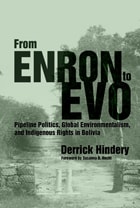
cover of From Enron to Evo: Pipeline Politics, Global Environmentalism, and Indigenous Rights in Bolivia

From Enron to Evo

Pipeline Politics, Global Environmentalism, and Indigenous Rights in Bolivia

Derrick Hindery; Foreword by Susanna B. Hecht

University of Arizona Press, 2013

Throughout the Americas, a boom in oil, gas, and mining development has pushed the extractive frontier deeper into Indigenous territories. Centering on a long-term study of Enron and Shell’s Cuiabá pipeline, From Enron to Evo traces the struggles of Bolivia’s Indigenous peoples for self-determination over their lives and territories. In his analysis of their response to this encroaching development, author Derrick Hindery also sheds light on surprising similarities between neoliberal reform and the policies of the nation’s first Indigenous president, Evo Morales.

Drawing upon extensive interviews and document analysis, Hindery argues that many of the structural conditions created by neoliberal policies—including partial privatization of the oil and gas sector—still persist under Morales. Tactics employed by both Morales and his neoliberal predecessors utilize the rhetoric of environmental protection and Indigenous rights to justify oil, gas, mining, and road development in Indigenous territories and sensitive ecoregions.

Indigenous peoples, while mindful of gains made during Morales’s tenure, are increasingly dissatisfied with the administration’s development model, particularly when it infringes upon their right to self-determination. From Enron to Evo demonstrates their dynamic and pragmatic strategies to cope with development and adversity, while also advancing their own aims.

Offering a critique of both free-market piracy and the dilemmas of resource nationalism, this is a groundbreaking book for scholars, policy-makers, and advocates concerned with Indigenous politics, social movements, environmental justice, and resistance in an era of expanding resource development.
[more]