Results by title
135 books match the query 'Landscape' and 3 start with f
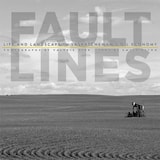
Fault Lines
Life and Landscape in Saskatchewan's Oil EconomyValerie Zink
University of Manitoba Press, 2016
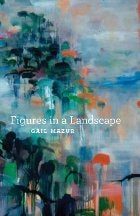
Figures in a Landscape
Gail Mazur
University of Chicago Press, 2011
A new inclusiveness, a heady freedom, grounded in the facts of mortality, inform Gail Mazur’s recent poems, as if making them has served as both a bunker and a promontory, a way to survive, and to be exposed to, the profound underlying subject of this book: a husband’s approaching death. The intimate particulars of a shared life are seen from a great height—and then there’s the underlife of the bunker: endurance, holding on, life as uncompromising reality. This new work, possessed by the unique devil-may-care intensity of someone writing at the end of her nerves, makes Figures in a Landscape feel radiant, visionary, and exhilarating, rather than elegiac. Mazur’s masterly fusion of abstraction with the facts of a life creates a coming to terms with what Yeats called “the aboriginal ice.”

Fruitful Sites
Garden Culture in Ming Dynasty ChinaCraig Clunas
Duke University Press, 1996
Who owned Ming gardens? Who visited them? How were they represented in words, in paintings, and in visual culture generally, and what meanings did these representations hold at different levels of Chinese society? How did the discourse of gardens intersect with other discourses such as those of aesthetics, agronomy, geomancy, and botany? By examining the gardens of the city of Suzhou from a number of different angles, Craig Clunas provides a rich picture of a complex cultural phenomenon—one that was of crucial importance to the self-fashioning of the Ming elite.
Drawing on a wide range of recent work in cultural theory, the author provides for the first time a historical and materialist account of Chinese garden culture, and replaces broad generalizations and orientalist fantasy with a convincing picture of the garden’s role in social life. Fruitful Sites will appeal to all students of China’s cultural history, to students of garden history from any part of the world, to art historians, and to readers engaged in Asian and cultural studies.