Results by title
71 books match the query 'Language and culture' and 2 start with f

Fanti Kinship and the Analysis of Kinship Terminologies
David B. Kronenfeld
University of Illinois Press, 2008
This book examines Fanti kinship terminology from a variety of analytic and formal perspectives. Based on work with a broad number of informants, David B. Kronenfeld details and analyzes internal variation in usage within the Fanti community, shows the relationship between terminology and social groups and communicative usage, and relates these findings to major theoretical work on kinship and on the intersections of language, thought, and culture.
The terminological analysis in this study employs a great variety of formal approaches, assesses the strengths and weaknesses of each approach, and covers a wide range of types of usage. This work also performs a systematic, formal analysis of behavior patterns among kin, joining this approach with the analysis of a kinship terminological system. Rather than treating kinship terminology as a special, isolated piece of culture, this study also ties its analysis to more general semantic and cultural theoretical issues. Including computational and comparative studies of kinship terminologies, this volume represents the fullest analysis of any kinship terminological system in the ethnographic record.
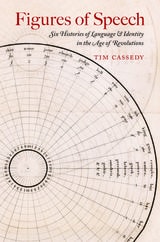
Figures of Speech
Six Histories of Language and Identity in the Age of RevolutionsTim Cassedy
University of Iowa Press, 2018
Tim Cassedy’s fascinating study examines the role that language played at the turn of the nineteenth century as a marker of one’s identity. During this time of revolution (U.S., French, and Haitian) and globalization, language served as a way to categorize people within a world that appeared more diverse than ever. Linguistic differences, especially among English-speakers, seemed to validate the emerging national, racial, local, and regional identity categories that took shape in this new world order.
Focusing on six eccentric characters of the time—from the woman known as “Princess Caraboo” to wordsmith Noah Webster—Cassedy shows how each put language at the center of their identities and lived out the possibilities of their era’s linguistic ideas. The result is a highly entertaining and equally informative look at how perceptions about who spoke what language—and how they spoke it—determined the shape of communities in the British American colonies and beyond.
This engagingly written story is sure to appeal to historians of literature, culture, and communication; to linguists and book historians; and to general readers interested in how ideas about English developed in the early United States and throughout the English-speaking world.