Results by title
78 books match the query 'Legends' and 3 start with f

Fire in the Water, Earth in the Air
Legends of West Texas MusicBy Christopher J. Oglesby
University of Texas Press, 2006
From Buddy Holly and the Crickets to the Flatlanders, Terry Allen, and Natalie Maines, Lubbock, Texas, has produced songwriters, musicians, and artists as prolifically as cotton, conservatives, and windstorms. While nobody questions where the conservatives come from in a city that a recent nonpartisan study ranked as America's second most conservative, many people wonder why Lubbock is such fertile ground for creative spirits who want to expand the boundaries of thought in music and art. Is it just that "there's nothing else to do," as some have suggested, or is there something in the character of Lubbock that encourages creativity as much as conservatism?
In this book, Christopher Oglesby interviews twenty-five musicians and artists with ties to Lubbock to discover what it is about this community and West Texas in general that feeds the creative spirit. Their answers are revealing. Some speak of the need to rebel against conventional attitudes that threaten to limit their horizons. Others, such as Joe Ely, praise the freedom of mind they find on the wide open plains. "There is this empty desolation that I could fill if I picked up a pen and wrote, or picked up a guitar and played," he says. Still others express skepticism about how much Lubbock as a place contributes to the success of its musicians. Jimmie Dale Gilmore says, "I think there is a large measure of this Lubbock phenomenon that is just luck, and that is the part that you cannot explain."
As a whole, the interviews create a portrait not only of Lubbock's musicians and artists, but also of the musical community that has sustained them, including venues such as the legendary Cotton Club and the original Stubb's Barbecue. This kaleidoscopic portrait of the West Texas music scene gets to the heart of what it takes to create art in an isolated, often inhospitable environment. As Oglesby says, "Necessity is the mother of creation. Lubbock needed beauty, poetry, humor, and it needed to get up and shake its communal ass a bit or go mad from loneliness and boredom; so Lubbock created the amazing likes of Jimmie Dale Gilmore, Butch Hancock, Terry Allen, and Joe Ely."
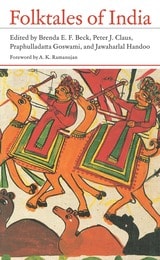
Folktales of India
Edited by Brenda E. F. Beck, Peter J. Claus, Praphulladatta Goswami, and Jawahar
University of Chicago Press, 1986
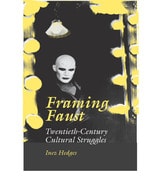
Framing Faust
Twentieth-Century Cultural StrugglesInez Hedges
Southern Illinois University Press, 2009
In this interdisciplinary cultural history that encompasses film, literature, music, and drama, Inez Hedges follows the thread of the Faustian rebel in the major intellectual currents of the last hundred years. She presents Faust and his counterpart Mephistopheles as antagonistic—yet complementary—figures whose productive conflict was integral to such phenomena as the birth of narrative cinema, the rise of modernist avant-gardes before World War II, and feminist critiques of Western cultural traditions.
Framing Faust: Twentieth-Century Cultural Struggles pursues a dialectical approach to cultural history. Using the probing lens of cultural studies, Hedges shows how claims to the Faustian legacy permeated the struggle against Nazism in the 1930s while infusing not only the search for socialist utopias in Russia, France, and Germany, but also the quest for legitimacy on both sides of the Cold War divide after 1945.
Hedges balances new perspectives on such well-known works as Thomas Mann’s Dr. Faustus and Jack Kerouac’s Dr. Sax with discussions of previously overlooked twentieth-century expressions of the Faust myth, including American film noir and the Faust films of Stan Brakhage. She evaluates musical compositions—Hanns Eisler’s Faust libretto, the opera Votre Faust by Henri Pousseur and Michel Butor, and Alfred Schnittke’s Faust Cantata—as well as works of fiction and drama in French and German, many of which have heretofore never been discussed outside narrow disciplinary confines.
Enhanced by twenty-four illustrations, Framing Faust provides a fascinating and focused narrative of some of the major cultural struggles of the past century as seen through the Faustian prism, and establishes Faust as an important present-day frame of reference.