Results by title
172 books match the query 'Legislative Branch' and 6 start with f
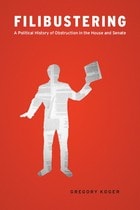
Filibustering
A Political History of Obstruction in the House and SenateGregory Koger
University of Chicago Press, 2010
In the modern Congress, one of the highest hurdles for major bills or nominations is gaining the sixty votes necessary to shut off a filibuster in the Senate. But this wasn’t always the case. Both citizens and scholars tend to think of the legislative process as a game played by the rules in which votes are the critical commodity—the side that has the most votes wins. In this comprehensive volume,Gregory Koger shows, on the contrary, that filibustering is a game with slippery rules in which legislators who think fast and try hard can triumph over superior numbers.
Filibustering explains how and why obstruction has been institutionalized in the U.S. Senate over the last fifty years, and how this transformation affects politics and policymaking. Koger also traces the lively history of filibustering in the U.S. House during the nineteenth century and measures the effects of filibustering—bills killed, compromises struck, and new issues raised by obstruction. Unparalleled in the depth of its theory and its combination of historical and political analysis, Filibustering will be the definitive study of its subject for years to come.

For the Many or the Few
The Initiative, Public Policy, and American DemocracyJohn G. Matsusaka
University of Chicago Press, 2004
Drawing upon a century of evidence, Matsusaka argues against the popular belief that initiative measures are influenced by wealthy special interest groups that neglect the majority view. Examining demographic, political, and opinion data, he demonstrates how the initiative process brings about systematic changes in tax and expenditure policies of state and local governments that are generally supported by the citizens. He concludes that, by and large, direct democracy in the form of the initiative process works for the benefit of the many rather than the few.
An unprecedented, comprehensive look at the historical, empirical, and theoretical components of how initiatives function within our representative democracy to increase political competition while avoiding the tyranny of the majority, For the Many or the Few is a most timely and definitive work.

Foreign Policy Advocacy and Entrepreneurship
How a New Generation in Congress Is Shaping U.S. Engagement with the WorldJeffrey S. Lantis
University of Michigan Press, 2019
Cases of entrepreneurship by junior members of Congress represent a puzzle for traditional foreign policy studies that focus on seniority, party discipline, and rigid institutional systems on Capitol Hill. By melding entrepreneurship and policy advocacy literature, this book advances a new typology of foreign policy entrepreneurship, recognizing the impact of multidimensional strategies of influence. The arrival of new members of the 116th Congress, the most diverse in history, provides an exciting laboratory to further test these propositions.

Forward for the People
The Autobiography of America's Longest Serving LegislatorFred A. Risser and Doug Moe
Wisconsin Historical Society Press, 2025
When Fred Risser retired from the Wisconsin Senate in 2021, his sixty-four years in state government made him the longest serving legislator in US history. Now, in this candid and illuminating autobiography, Risser shares his singular perspective on events that transformed the state and the nation over the course of his remarkable career. From his role in the “Joe Must Go” drive to recall US Senator Joseph McCarthy in the 1950s to his position as the senior senator among the “Fab Fourteen” Wisconsin Democrats who opposed Governor Scott Walker’s Act 10 legislation against collective bargaining in 2011, Risser was a leader in state politics for decades, always maintaining an unwavering belief that political action can change people’s lives for the better.
Forward for the People provides a unique peek behind the political curtain from the viewpoint of someone who saw it all. Risser worked with thirteen governors and authored more than 240 bills that became law, championing public health and safety, environmental protection, women’s and reproductive rights, organized labor, civil rights, and social justice, among many other causes. Risser also recounts interactions with prominent national politicians, including Robert La Follette Jr., Hubert Humphrey, Jimmy Carter, and Bill Clinton. More than forty photographs from Risser’s personal collection and the Wisconsin Senate paint a vivid picture of his six-decade journey through Wisconsin politics.
Forward for the People details Risser’s experiences out of state, from a stint in the Panama Canal Zone as a navy hospital corpsman to his undergraduate debate-team days at Minnesota’s Carleton College to his years studying law at the University of Oregon and his travels to all seven continents. The book also depicts the quirky habits that made Risser a memorable and beloved politician: biking his age in miles every birthday and never taking the elevator in his sixty-four years at the Wisconsin State Capitol. Enhanced with details sourced from correspondence, personal notes, newspaper accounts, and recollections from friends and former colleagues, Risser and coauthor Doug Moe have crafted an engaging account of an extraordinary life in public service.
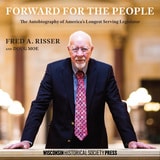
Forward for the People
The Autobiography of America's Longest Serving LegislatorFred A. Risser and Doug Moe
Wisconsin Historical Society Press, 2026
When Fred Risser retired from the Wisconsin Senate in 2021, his sixty-four years in state government made him the longest serving legislator in US history. Now, in this candid and illuminating autobiography, Risser shares his singular perspective on events that transformed the state and the nation over the course of his remarkable career. From his role in the “Joe Must Go” drive to recall US Senator Joseph McCarthy in the 1950s to his position as the senior senator among the “Fab Fourteen” Wisconsin Democrats who opposed Governor Scott Walker’s Act 10 legislation against collective bargaining in 2011, Risser was a leader in state politics for decades, always maintaining an unwavering belief that political action can change people’s lives for the better.
Forward for the People provides a unique peek behind the political curtain from the viewpoint of someone who saw it all. Risser worked with thirteen governors and authored more than 240 bills that became law, championing public health and safety, environmental protection, women’s and reproductive rights, organized labor, civil rights, and social justice, among many other causes. Risser also recounts interactions with prominent national politicians, including Robert La Follette Jr., Hubert Humphrey, Jimmy Carter, and Bill Clinton.
Forward for the People details Risser’s experiences out of state, from a stint in the Panama Canal Zone as a navy hospital corpsman to his undergraduate debate-team days at Minnesota’s Carleton College to his years studying law at the University of Oregon and his travels to all seven continents. The book also depicts the quirky habits that made Risser a memorable and beloved politician: biking his age in miles every birthday and never taking the elevator in his sixty-four years at the Wisconsin State Capitol. Enhanced with details sourced from correspondence, personal notes, newspaper accounts, and recollections from friends and former colleagues, Risser and coauthor Doug Moe have crafted an engaging account of an extraordinary life in public service.
From Inclusion to Influence
Latino Representation in Congress and Latino Political Incorporation in AmericaWalter Clark Wilson
University of Michigan Press, 2017