Results by title
905 books match the query 'Literary' and 24 start with f
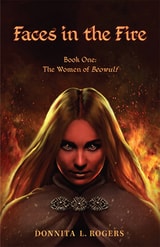
Faces in the Fire
The Women of Beowulf: Book OneDonnita L. Rogers
Arizona Center for Medieval and Renaissance Studies, 2013
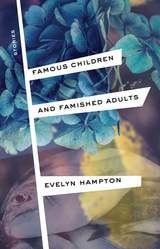
Famous Children and Famished Adults
StoriesEvelyn Hampton
University of Alabama Press, 2019
Stories that remap the world to reveal hidden places we have always suspected of existing and scenarios that show us glimpses of ourselves
In these stories, readers encounter a wizened, silent child; a documentary filmmaker lost in the Amazon; a writer physically overwhelmed by the amount of content she has generated; the disappearance of the world’s cats; and an enormous houseplant that has become quietly malevolent. Through these encounters, which are presented with insightful, intricate, and often very funny writing, readers come to know the scintillating zone where fiction and reality become indistinguishable.
Working in the tradition of voice impressionists like Maria Bamford, Hampton draws on a wide range of styles and voices to tell stories that seem at once familiar and strange, spoofed and invented. Readers who have enjoyed the work of Shirley Jackson, George Saunders, Lydia Davis, or Robert Walser will be at home in these pages, but so too will readers who have given up on fiction. These stories show us that insouciance can be beautiful, confusion can be intricate and ordered, and rule-breaking can be a discipline all its own.

Fanny Herself
Edna Ferber
University of Illinois Press, 1917
"You could not have lived a week in Winnebago without being aware of Mrs. Brandeis," Ferber begins, and likewise the story of Fanny Brandeis is inextricable from that of her vigorous, enterprising mother. Molly Brandeis is the owner and operator of Brandeis' Bazaar, a modest general store left to her by her idealistic, commercially inept late husband. As Fanny strives to carve out her own sense of herself, Molly becomes the standard by which she measures her intellectual and spiritual progress.
Fanny's ambivalent feelings about being Jewish, her self-deprecating attitude toward her gift for sketching and drawing, and her inspired success as a businesswoman all contribute to the flesh-and-blood complexity of Ferber's youthful, eminently believable protagonist. She is accompanied on her journey by impeccably drawn characters such as Father Fitzpatrick, the Catholic priest in Winnebago; Ella Monahan, buyer for the glove department of the Haynes-Cooper mail order house; Fanny's brother, Theodore, a gifted violinist for whose musical education Molly sacrifices Fanny's future; and Clarence Heyl, the scrappy columnist who never forgot how Fanny rescued him from the school bullies.
Ferber's only work of fiction with a strong autobiographical element, Fanny Herself showcases the author's enduring interest in the capacity of strong women to transcend the limitations of their environment and control their own circumstances. Through Fanny's honest struggle with conflicting values–financial security and corporate success versus altruism and artistic integrity–Ferber grapples with some of the most deeply embedded contradictions of the American spirit.
Fantastic Stories
Abram Tertz
Northwestern University Press, 1986
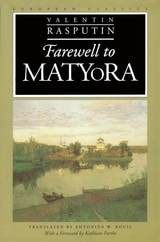
Farewell to Matyora
Valentin Rasputin
Northwestern University Press, 1995
It is the final summer of the peasant village of Matyora. A dam will be completed in the fall, destroying the village. Although their departure is inevitable, the characters over when, and even whether, they should leave. A haunting story with a heartfelt theme, Farewell to Matyora is a passionate plea for humanity and an eloquent cry for a return to an organic life.
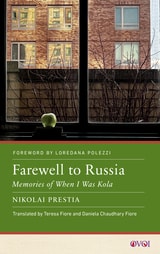
Farewell to Russia
Memories of When I Was KolaNikolai Prestia
Rutgers University Press, 2026
Growing up in 1990s Russia in a family marked by poverty, substance abuse, and neglect, Kola and his sister are eventually admitted into the orphanage system. Here, Kola comes face to face with a different but equally daunting challenge: navigating an unfamiliar and sometimes hostile world haunted by the absence of his mother. The ensuing journey, which eventually culminates in the adoption by an Italian family, alternates moments of both trauma and deliverance, while asking fundamental questions about our ability to reconcile ourselves with unfathomable loss.
Harrowing yet lyrical, Nikolai Prestia’s prize-winning 2021 novel is a testament to the duality of memory in its ability to both hurt and heal, and to the transformative power of those figures, adults and peers alike, who contribute to a child’s development. Translated into English as part of a collaboration between the author and a mother-daughter translator duo, the novel serves up a wrenching glimpse into the back stories that often precede the adoption of an older child.
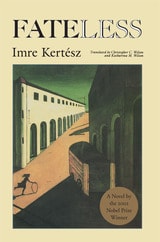
Fateless
Imre Kertesz
Northwestern University Press, 1992
One of Publishers Weekly's Fifty Best Books of 1992
Fateless is a moving and disturbing novel about a Hungarian Jewish boy’s experiences in German concentration camps and his attempts to reconcile himself to those experiences after the war. Upon his return to his native Budapest still clad in his striped prison clothes, fourteen-year-old George Koves senses the indifference, even hostility, of people on the street. His former neighbors and friends urge him to put the ordeal out of his mind, while a sympathetic journalist refers to the camps as "the lowest circle of hell." The boy can relate to neither cliche and is left to ponder the meaning of his experience alone.
George's response to his experience is curiously ambivalent. In the camps he tries to adjust to his ever-worsening situation by imputing human motives to his inhumane captors. By imposing his logic--that of a bright, sensitive, though in many ways ordinary teenager - he maintains a precarious semblance of normalcy. Once freed, he must contend with the "banality of evil" to which he has become accustomed: when asked why he uses words like "naturally," "undeniably," and "without question" to describe the most horrendous of experiences, he responds, "In the concentration camp it was natural." Without emotional or spiritual ties to his Jewish heritage and rejected by his country, he ultimately comes to the conclusion that neither his Hungarianness nor his Jewishness was really at the heart of his fate: rather, there are only "given situations, and within these, further givens."
Fertility and Other Stories
Vsevolod Ivanov
Northwestern University Press, 1998
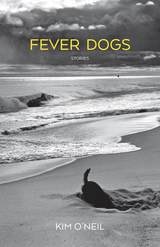
Fever Dogs
StoriesKim O'Neil
Northwestern University Press, 2017
Kim O’Neil’s debut collection, Fever Dogs, is a fictional biography of three generations of women. It begins at the turn of the twenty-first century with Jean, a young woman at an impasse. Romantically adrift, in a dying profession, she decides that to make herself a future, she must first make herself a past.
To deal with a violent history, Jean’s mother has violently erased it. Starting from a bare outline that includes an unspoken death, a predatory father, and a homeless stint, Jean reconstructs the life her mother, Jane, might have lived. But origin stories can never completely cover their tracks: like Jean’s story, Jane’s cannot be told apart from that of her own mother.
What follows is a set of stories spanning nearly a century in response to questions the narrator wishes she had asked her mother and to which she has disjointed answers at best. In the absence of answers, the narrator, in various points of view, invents them. As the stories progress backward in time, the footholds in fact grow fewer and the shift to fabulism greater. But in her attempt to unravel her mother's origin and her own, Jean finds that the stories she invents—like the dogs who run through them as witnesses, allies, and objects of desire—serve as well as any other in the makeshift task of authoring a life.
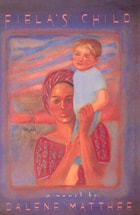
Fiela's Child
Dalene Matthee
University of Chicago Press, 1992
Set in nineteenth-century rural Africa, Fiela's Child tells the gripping story of Fiela Komoetie and a white, three-year old child, Benjamin, whom she finds crying on her doorstep. For nine years Fiela raises Benjamin as one of her own children. But when census takers discover Benjamin, they send him to an illiterate white family of woodcutters who claim him as their son. What follows is Benjamin's search for his identity and the fundamental changes affecting the white and black families who claim him.
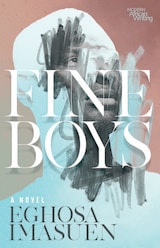
Fine Boys
A NovelEghosa Imasuen
Ohio University Press, 2021
A coming-of-age tale told from the perspective of Nigeria’s Generation X, caught amid the throes of a nascent pro-democracy movement, demoralizing corruption, and campus violence.
Ewaen is a Nigerian teenager, bored at home in Warri and eager to flee from his parents’ unhappy marriage and incessant quarreling. When Ewaen is admitted to the University of Benin, he makes new friends who, like him, are excited about their newfound independence. They hang out in parking lots, trading gibes in pidgin and English and discovering the pleasures that freedom affords them. But when university strikes begin and ruthlessly violent confraternities unleash mayhem on their campus, Ewaen and his new friends must learn to adapt—or risk becoming the confras' next unwilling recruits.
In his trademark witty, colloquial style, critically acclaimed author Eghosa Imasuen presents everyday Nigerian life against the backdrop of the pro-democracy riots of the 1980s and 1990s, the lost hopes of June 12 (Nigeria’s Democracy Day), and the terror of the Abacha years. Fine Boys is a chronicle of time, not just in Nigeria, but also for its budding post-Biafran generation.
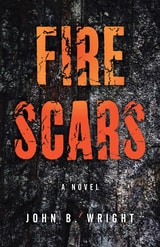
Fire Scars
A NovelJohn B. Wright
University of Nevada Press, 2023
In John B. Wright’s debut environmental mystery, Matt Solberg is charged with discovering who is lighting fires in the forests that surround Missoula, Montana. A geographer with a deep personal need to bring people out of danger, Matt leads a search and rescue team whose job is to head directly into the mouth of hell, hiking into blazing backcountry to find missing residents. Matt and his team not only rely on their hard-won knowledge of Montana’s wild landscape, but also on Matt’s mentor, Dr. Bill Knight, a fire ecologist who understands the burning beast better than anyone.
When a suspicious fire destroys the mansion of a movie star, Matt must hike in to find his missing daughter and save her from the chaos. Then fires begin to explode everywhere as climate change drives temperatures over 100 degrees and rain refuses to fall, threatening thousands of homes. Who is setting these fires? Is it the Montana Tree Monkeys, an eco-radical group determined to scare off the newcomers? Or is it a retired smokejumper with an axe to grind about the encroaching mansions? Could it be Paladin, a shadowy figure leaving strange clues around the state? It’s Matt’s mission to find answers to these questions during a summer of heat, smoke, and unimaginable loss. Weaving together gripping drama and intriguing fire science, Fire Scars reveals the physical and psychological wounds we all carry—and the power we have to overcome.
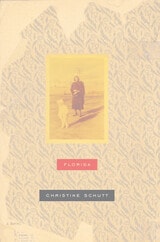
Florida
Christine Schutt
Northwestern University Press, 2003
Florida is the portrait of the artist as a young woman, an orphan's story full of loss and wonder, a familiar tale told in original language. Alice Fivey, fatherless at age seven, is left in the care of her relatives at ten when her love-wearied mother loses custody of her and submits to the sanitarium and years of psychiatric care. A namesake daughter locked in the orphan's move-around life, she must hold still while the seamstress pins her into someone not her mother. But they share the same name, so she is her mother, isn't she?
Alice finds consolation in books and she herself is a storyteller who must build a home for herself word by right word. Florida is her story, recalled in brief scenes of spare beauty and strangeness as Alice moves from house to house, ever further from the desolation of her mother's actions, ever closer to the meaning of her experience. In this most elegiac and luminous novel, Schutt gives voice to the feast of memory, the mystery of the mad and missing, and above all, the life-giving power of language.
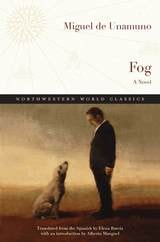
Fog
A NovelMiguel de Unamuno, Translated from the Spanish by Elena Barcia with an introduction by Alberto Manguel
Northwestern University Press, 2017
The novel’s central character, Augusto, is a pampered, aimless young man who falls in love with Eugenia, a woman he randomly spots on the street. Augusto’s absurd infatuation offers an irresistible target for the philosophical ruminations of Unamuno’s characters, including Eugenia’s guardian aunt and “theoretical anarchist” uncle, Augusto’s comical servants, and his best friend, Victor, an aspiring writer who introduces him to a new, groundbreaking type of fiction. In a desperate moment, Augusto consults his creator about his fate, arguing with Unamuno about what it means to be “real.” Even Augusto’s dog, Orfeo, offers his canine point of view, reflecting on the meaning of life and delivering his master’s funeral oration.
Fog is a comedy, a tragic love story, a work of metafiction, and a novel of ideas. After more than a century, Unamuno’s classic novel still moves us, makes us laugh, and invites us to question our assumptions about literature, relationships, and mortality.
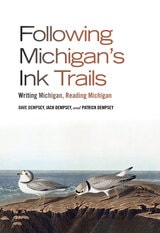
Following Michigan's Ink Trails
Writing Michigan, Reading MichiganDave Dempsey
Michigan State University Press, 2027
Michigan is renowned for its natural beauty and automotive history, yet its rich literary heritage often goes unrecognized. This engaging and extensively researched book aims to change that by providing vivid portraits of both well-known and overlooked authors. It also offers an enjoyable tour through the state’s libraries and bookstores. The book takes readers on a fascinating journey across the back roads and highways of Michigan writing, showcasing the remarkable diversity of authors who have called the state home as well as those who have found it inspirational. It is perfect for anyone interested in reading, Michigan’s literary heritage, and its culture.
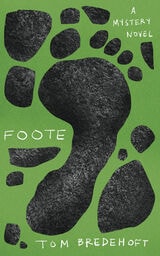
Foote
A Mystery NovelTom Bredehoft
West Virginia University Press, 2022
In the space of one weekend in Morgantown, West Virginia, private investigator Big Jim Foote finds himself at the center of two murder investigations. Suspected of one killing at a local festival, he locates the body of a missing person immediately after. The cops are watching him, and Big Jim has a secret he dares not reveal: he is a bigfoot living in plain sight, charged with keeping his people in the surrounding hills from being discovered. To protect the bigfoot secret, he must solve both murders—and convince himself it wasn’t a bigfoot who pulled the trigger.
Through the course of his investigations, Big Jim is helped by unique and well-rendered characters and friends in both his bigfoot and human communities. Readers are introduced to Appalachian mountain folk and traditional culture in new ways, even while Big Jim experiences the impact of the opioid epidemic on his own bigfoot kin. By centering a mythical creature as the unlikely protagonist in this enchanting literary murder mystery, Foote offers a winsome redefinition of a cryptid “monster” and breathes new life into the PI genre.

Former Virgin
Cris Mazza
University of Alabama Press, 2026
When innocence becomes history, desire rewrites the story.
In this collection of stories, critically acclaimed writer Cris Mazza shines a kleig light on the dark underside of relationships in a disturbing look at the ambiguous nature of our own desires. From women who foster their own abusive relationships, to failed suicide attempts, to furtive -- and horribly violent -- encounters in steamy basements, Mazza's stories cut to the heart of doomed human relationships, landing squarely in the murky territory between desire and despair, between freedom and loss of control.
Fragments of a Mortal Mind
A Nonfiction NovelDonald Anderson
University of Nevada Press, 2021
At once a memoir, a reading journal, and a novel, Fragments of a Mortal Mind is a daring, contemporary commonplace book. Donald Anderson, critically acclaimed author of Gathering Noise from My Life and Below Freezing, shows us how the disparate elements of our lives collect to construct our deepest selves and help us to make sense of it all. Anderson layers his personal experiences and reflections with those of others who have wrestled with inner and outer social, cultural, and political memories that are not as accurate as history might suggest but that each of us believe nonetheless. He challenges the reader’s sense of memory and fact, downplaying the latter in explaining how each of us crafts our own personal histories.
As Anderson weaves his voice among numerous other voices and ideas that rest upon other ideas, we are faced with larger issues of human existence: war, memory, trauma, mortality, religion, fear, joy, ugliness, and occasional beauty. What we have here is a meditation on living in America. We are shown how the world we consume becomes us as we metabolize it. How we, as humans, through our own fragments of memories, influences, and experiences become our true selves. By charting fragments of thoughts over a lifetime, Anderson exposes a way of thinking and perceiving the world that is refreshingly intuitive and desperately needed. Fragments of a Mortal Mind is a powerful masterpiece that closely resembles our lived experiences and is a vivid reflection of our time.
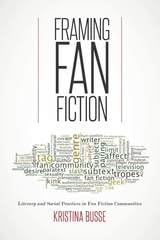
Framing Fan Fiction
Literary and Social Practices in Fan Fiction CommunitiesKristina Busse
University of Iowa Press, 2017
Framing Fan Fiction deploys personal history and the interpretations of specific stories to contextualize fan fiction culture and its particular forms of intertextuality and performativity. In doing so, it highlights the way fans use fan fiction’s reimagining of the source material to explore issues of identities and peformativities, gender and sexualities, within a community of like-minded people. In contrast to the celebration of originality in many other areas of artistic endeavor, fan fiction celebrates repetition, especially the collective creation and circulation of tropes.
An essential resource for scholars, Framing Fan Fiction is also an ideal starting point for those new to the study of fan fiction and its communities of writers.
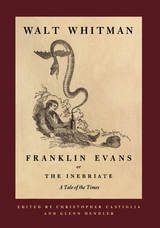
Franklin Evans, or The Inebriate
A Tale of the TimesWalt Whitman
Duke University Press, 2007
The novel tells the rags-to-riches story of Franklin Evans, an innocent young man from the Long Island countryside who seeks his fortune in New York City. Corrupted by music halls, theaters, and above all taverns, he gradually becomes a drunkard. Until the very end of the tale, Evans’s efforts to abstain fail, and each time he resumes drinking, another series of misadventures ensues. Along the way, Evans encounters a world of mores and conventions rapidly changing in response to the vicissitudes of slavery, investment capital, urban mass culture, and fervent reform. Although Evans finally signs a temperance pledge, his sobriety remains haunted by the often contradictory and unsettling changes in antebellum American culture.
The editors’ substantial introduction situates Franklin Evans in relation to Whitman’s life and career, mid-nineteenth-century American print culture, and many of the developments and institutions the novel depicts, including urbanization, immigration, slavery, the temperance movement, and new understandings of class, race, gender, and sexuality. This edition includes a short temperance story Whitman published at about the same time as he did Franklin Evans, the surviving fragment of what appears to be another unfinished temperance novel by Whitman, and a temperance speech Abraham Lincoln gave the same year that Franklin Evans was published.
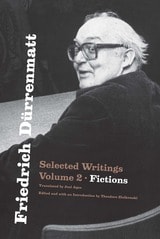
Friedrich Dürrenmatt
Selected Writings, Volume 2, FictionsFriedrich Dürrenmatt
University of Chicago Press, 2006
These translations of Friedrich Dürrenmatt’s fiction introduce the writer to a new generation of readers.
The Swiss writer Friedrich Dürrenmatt (1921–90) was one of the most important literary figures of the second half of the twentieth century. During the years of the cold war, arguably only Beckett, Camus, Sartre, and Brecht rivaled him as a presence in European letters. Yet outside Europe, this prolific author is primarily known for only one work, The Visit.
This second volume of Selected Writings reveals a writer who may stand as Kafka’s greatest heir. Dürrenmatt’s novellas and short stories are searing, tragicomic explorations of the ironies of justice and the corruptibility of institutions. The most well-known work included here is The Pledge, a requiem to the detective story that was made into a film starring Jack Nicholson. The evocative novellas The Assignment tells the story of a woman filmmaker investigating a mysterious murder in an unnamed Arab country; it has been hailed by Sven Birkerts as “a parable of hell for an age consumed by images.” The novella Traps, meanwhile, is a chilling comic novella about a traveling salesman who agrees to play the role of the defendant in a mock trial among dinner companions—and then pays the ultimate penalty.
Dürrenmatt has long been considered a great writer, but one unfairly neglected in the modern world of letters. With these elegantly conceived and expertly translated volumes, a new generation of readers will rediscover his greatest works.
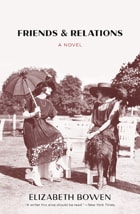
Friends and Relations
A NovelElizabeth Bowen
University of Chicago Press, 2012
In his introduction to a collection of criticism on the Anglo-Irish author Elizabeth Bowen, Harold Bloom wrote, “What then has Bowen given us except nuance, bittersweet and intelligent? Much, much more.” Born in 1899, Bowen became part of the famous Bloomsbury scene, and her novels have a much-deserved place in the modernist canon. In recent years, however, her work has not been as widely read or written about, and as Bloom points out, her evocative and sometimes enigmatic prose requires careful parsing. Yet in addition to providing a fertile ground for criticism, Bowen’s novels are both wonderfully entertaining, with rich humor, deep insight, and a tragic sense of human relationships.
Friends and Relations follows the exploits of four wealthy families whose lives are changed forever by a torrid affair. The Studdart sisters each take a husband; for beautiful Laurel there is Edward Tilney, and for the introverted Janet there is Rodney Meggatt. But the marriages are complicated by changeable passions, and each character must navigate the conflict between familial piety and individual desire. With Bowen’s signature blend of tragedy and comedy, Friends and Relations is truly an investigation into the human heart, and the book is as beautiful, mysterious, and moving as its subject.
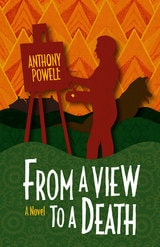
From a View to a Death
A NovelAnthony Powell
University of Chicago Press, 2014
From a View to a Death takes us to a dilapidated country estate where an ambitious artist of questionable talent, a family of landed aristocrats wondering where the money has gone, and a secretly cross-dressing squire all commingle among the ruins.
Written from a vantage point both high and necessarily narrow, Powell’s early novels nevertheless deal in the universal themes that would become a substantial part of his oeuvre: pride, greed, and what makes people behave as they do. Filled with eccentric characters and piercing insights, Powell’s work is achingly hilarious, human, and true.
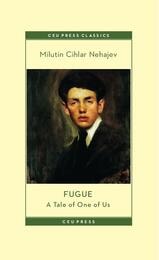
Fugue
A Tale of One of UsMilutin Nehajev
Central European University Press, 2024