Results by title
534 books match the query 'Making' and 13 start with f
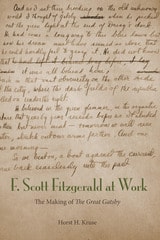
F. Scott Fitzgerald at Work
The Making of "The Great Gatsby"Horst H. Kruse
University of Alabama Press, 2014
The essays in F. Scott Fitzgerald at Work examine fresh facts that illuminate the experiences and source materials upon which Fitzgerald based this quintessentially American masterpiece. They confirm author Horst Kruse’s view that Fitzgerald’s flights of fancy, even at their most spectacular, are firmly grounded in biographical experience as well as in the social, literary, and philosophical circumstances of his era.
In the first essay, Kruse reconstructs the life story of the individual who allegedly inspired the character of Jay Gatsby: Max von Gerlach. Kruse recounts his journeys to various archives and libraries in the United States as well as in Germany to unearth new facts about the genesis of the Gatsby characters. In another journey, readers travel with Kruse to Long Island to explore its physical and moral geography in relation to Fitzgerald, specifically the role of certain elite Long Island families in the advancement of the “science of eugenics” movement. The final two essays take Kruse across the globe to various destinations to consider the broader place of The Great Gatsby in American and international intellectual history.
Replete with fascinating discoveries and insights, F. Scott Fitzgerald at Work both corrects previous assumptions about The Great Gatsby and deepens our appreciation and understanding of Fitzgerald‘s imagination.
Faith in the Fire
Race, Resistance, and the Making of Black SpringfieldTodd E. Robinson
University of Massachusetts Press, 2027
An intimate history that puts the Black church at the heart of New England’s struggle with race, power, and belonging
On the eve of Barack Obama’s historic election in 2008, the Macedonia Church of God in Christ in Springfield, Massachusetts—a church built by historian Todd E. Robinson’s family—was set ablaze in an act of racial terror. This devastating event echoes a long history of attacks on Black churches, institutions that have served as vital centers of faith, civic life, and community organization.
In Faith in the Fire, Robinson charts the evolution of Springfield’s Black community from its seventeenth-century beginnings through the Great Migration and into the twenty-first century. Centering the Black church, he demonstrates how African Americans shaped the city’s industrial, cultural, and civic landscape, building social networks and organizations that became enduring anchors of community life. From the League of Gileadites, an all-Black armed anti-slavery militia, to twentieth-century initiatives like the Springfield Plan—a pioneering but short-lived experiment in interracial education—Robinson uncovers the city’s deep history of Black resistance to white supremacy. In doing so, he exposes the limits of New England’s mythic racial tolerance. Racial violence, police brutality, economic inequality, educational disparities, and housing segregation, Robinson argues, are not aberrations of the South but also enduring features of Northern life and culture.
Drawing on extensive archival research and his own family’s experience, Robinson offers a powerful and deeply personal narrative that links past and present. Through the intertwined story of Springfield’s Black community and the destruction of one of its most cherished institutions, he illuminates how the long struggle for freedom, justice, and belonging continues to shape the life of Black Americans and the nation as a whole.
Finding Thoreau
The Meaning of Nature in the Making of an Environmental IconRichard W. Judd
University of Massachusetts Press, 2018
In his 1862 eulogy for Henry David Thoreau, Ralph Waldo Emerson reflected that his friend “dedicated his genius with such entire love to the fields, hills, and waters of his native town, that he made them known and interesting to all reading Americans, and to people over the sea.” Finding Thoreau traces the reception of Thoreau's work from the time of his death to his ascendancy as an environmental icon in the 1970s, revealing insights into American culture's conception of the environment.
Moving decade by decade through this period, Richard W. Judd unveils a cache of commentary from intellectuals, critics, and journalists to demonstrate the dynamism in the idea of nature, as Americans defined and redefined the organic world around them amidst shifting intellectual, creative, and political forces. This book tells the captivating story of one writer's rise from obscurity to fame through a cultural reappraisal of the work he left behind.
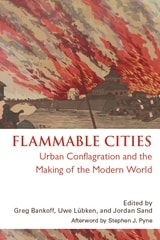
Flammable Cities
Urban Conflagration and the Making of the Modern WorldGreg Bankoff
University of Wisconsin Press, 2012
In most cities today, fire has been reduced to a sporadic and isolated threat. But throughout history the constant risk of fire has left a deep and lasting imprint on almost every dimension of urban society. This volume, the first truly global study of urban conflagration, shows how fire has shaped cities throughout the modern world, from Europe to the imperial colonies, major trade entrepôts, and non-European capitals, right up to such present-day megacities as Lagos and Jakarta. Urban fire may hinder commerce or even spur it; it may break down or reinforce barriers of race, class, and ethnicity; it may serve as a pretext for state violence or provide an opportunity for displays of state benevolence. As this volume demonstrates, the many and varied attempts to master, marginalize, or manipulate fire can turn a natural and human hazard into a highly useful social and political tool.
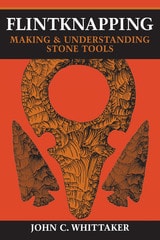
Flintknapping
Making and Understanding Stone ToolsBy John C. Whittaker
University of Texas Press, 1994
Flintknapping is an ancient craft enjoying a resurgence of interest among both amateur and professional students of prehistoric cultures. John C. Whitaker's bestselling guide is a detailed handbook on flintknapping, written from the archaeological perspective of interpreting stone tools as well as making them.
Flintknapping contains detailed, practical information on making stone tools. Whittaker starts at the beginner level and progresses to discussion of a wide range of techniques. He includes information on necessary tools and materials, as well as step-by-step instructions for making several basic stone tool types. Numerous diagrams allow the reader to visualize the flintknapping process, and drawings of many stone tools illustrate the discussions and serve as models for beginning knappers.
Written for a wide amateur and professional audience, Flintknapping will be essential for practicing knappers as well as for teachers of the history of technology, experimental archaeology, and stone tool analysis.
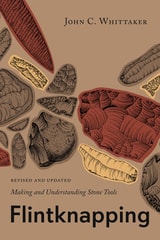
Flintknapping
Making and Understanding Stone ToolsJohn C. Whittaker
University of Texas Press, 2026
An updated edition of the classic guide to the ancient skill of flintknapping.
Flintknapping, the art of making stone tools, is an ancient craft generating renewed interest among both amateurs and professional students of prehistoric cultures. John C. Whittaker’s best-selling guide is a foundational and highly regarded handbook that combines practical instruction with the archaeological perspective of interpreting as well as making stone tools.
This updated edition provides clear, step-by-step guidance on tools, materials, and techniques for producing basic stone tool types. Diagrams and illustrations help readers visualize each stage and model their work. Whittaker also introduces the history of the field, the role of stone tools in human technological development, and experimental archaeology, concluding with an accessible discussion of how archaeologists study stone tools to understand the lives of our ancestors. For more than thirty years, Flintknapping has been essential for knappers, archaeologists, and teachers. This expanded and revised edition adds new insights, illustrations, and guidance for a new generation of readers.
For Customers Only
Public Bathrooms and the Making of American InequalityBryant Simon
University of Chicago Press, 2026
Public toilets determine who gets everyday dignity, freedom of movement, and civic belonging—and who doesn’t.
Americans have nowhere to go. Nationwide, countless public spaces lack one crucial thing: bathrooms, never mind ones that are safe and functional. Yet in the past, political leaders celebrated the opening of public bathrooms with boisterous press conferences and showy ribbon-cutting ceremonies.
For Customers Only is the first book to tell the larger history of public bathrooms in the United States, a fascinating story characterized by persistent discrimination, squeamishness about unknown bodies, and disinvestment in public amenities. Acclaimed writer and historian Bryant Simon argues that restrooms aren’t only an architectural feature, but an emblem of control and inequality. In the late nineteenth century, cities vied for the newest and biggest comfort stations to meet the demands of their bustling economies and accommodate a broad and growing public. They built restrooms with gold-domed entrances and ornamented stall doors to inspire cleanliness and order.
But officials soon grew anxious about who might take advantage of this privacy: gay men, the unhoused, and eventually drug users. And as the civil rights movement challenged segregation, officials in the north and south closed public toilets rather than integrate them. By the end of the twentieth century, only people with means could use private bathrooms while out and about—provided they made a purchase at a business. Today, as the fights over trans rights reveal, bathroom access remains a flash point across the country. Meanwhile, some municipalities are again calling for widely available public toilets, but as a tool for economic revitalization, not a public necessity.
The political and cultural history of a squirm-inducing subject, For Customers Only reveals the real and symbolic power of the most ordinary of things. Bathrooms, Simon shows, have always reflected our fragmented national values. Whether these spaces will ever become more accessible and inclusive is ultimately up to us.
Fossils in the Making
Vertebrate Taphonomy and PaleoecologyAnna K. Behrensmeyer and Andrew P. Hill
University of Chicago Press, 1988
"Taphonomy is plainly here to stay, and this book makes a first class introduction to its range and appeal."—Anthony Smith, Interdisciplinary Science Reviews
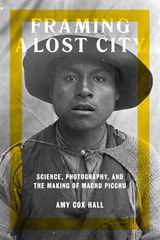
Framing a Lost City
Science, Photography, and the Making of Machu PicchuBy Amy Cox Hall
University of Texas Press, 2017
When Hiram Bingham, a historian from Yale University, first saw Machu Picchu in 1911, it was a ruin obscured by overgrowth whose terraces were farmed a by few families. A century later, Machu Picchu is a UNESCO world heritage site visited by more than a million tourists annually. This remarkable transformation began with the photographs that accompanied Bingham’s article published in National Geographic magazine, which depicted Machu Picchu as a lost city discovered. Focusing on the practices, technologies, and materializations of Bingham’s three expeditions to Peru (1911, 1912, 1914–1915), this book makes a convincing case that visualization, particularly through the camera, played a decisive role in positioning Machu Picchu as both a scientific discovery and a Peruvian heritage site.
Amy Cox Hall argues that while Bingham’s expeditions relied on the labor, knowledge, and support of Peruvian elites, intellectuals, and peasants, the practice of scientific witnessing, and photography specifically, converted Machu Picchu into a cultural artifact fashioned from a distinct way of seeing. Drawing on science and technology studies, she situates letter writing, artifact collecting, and photography as important expeditionary practices that helped shape the way we understand Machu Picchu today. Cox Hall also demonstrates that the photographic evidence was unstable, and, as images circulated worldwide, the “lost city” took on different meanings, especially in Peru, which came to view the site as one of national patrimony in need of protection from expeditions such as Bingham’s.
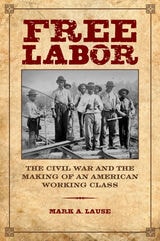
Free Labor
The Civil War and the Making of an American Working ClassMark A. Lause
University of Illinois Press, 2015
Mark A. Lause describes how the working class radicalized during the war as a response to economic crisis, the political opportunity created by the election of Abraham Lincoln, and the ideology of free labor and abolition. His account moves from battlefield and picket line to the negotiating table, as he discusses how leaders and the rank-and-file alike adapted tactics and modes of operation to specific circumstances. His close attention to women and African Americans, meanwhile, dismantles notions of the working class as synonymous with whiteness and maleness.
In addition, Lause offers a nuanced consideration of race's role in the politics of national labor organizations, in segregated industries in the border North and South, and in black resistance in the secessionist South, creatively reading self-emancipation as the largest general strike in U.S. history.
From Borderland to Burgenland
Science, Geopolitics, Identity, and the Making of a RegionFerenc Jankó
Central European University Press, 2024
The area that constitutes the Austrian federal province of Burgenland belonged to the Hungarian part of the Habsburg empire until the end of World War I. This book helps us realize that geographical knowledge does not come ready-made. Instead, it is created by knowledge makers: geographers, historians, statisticians etc. This knowledge-making helped to legitimatize the area transferred between Austria and Hungary, shape the Burgenland identity, and depict its geopolitical role in the rise of national socialism. This book is about how those studying Burgenland, the creators of its geographical knowledge, saw and represented the province. It explores how they grasped the geographical characteristics of the region through their own perspective, influenced by their own professional positions, individual careers, motivations, and by the broader historical and social medium.
The way the area between the provinces of Lower Austria and Styria came about as Burgenland is enthralling, as is how the people there experienced this change of sovereignty and how everyday social and economic relationships were transformed. Tracing the geographical discourses in the interwar period and beyond, the book argues that Burgenland became a successful geographical project, and departs from thoughts of subdivision, unviability, and backwardness, concentrating instead on fertility, unity, and modernization.
From the Valley of Making
Essays on the Craft of PoetryDavid Wojahn
University of Michigan Press, 2015
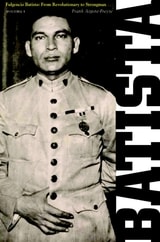
Fulgencio Batista
The Making of a DictatorArgote-Freyre, Frank
Rutgers University Press, 2000
Pawn of the U.S. government. Right-hand man to the mob. Iron-fisted dictator. For decades, public understanding of the pre-Revolutionary Cuban dictator Fulgencio Batista has been limited to these stereotypes. While on some level they all contain an element of truth, these superficial characterizations barely scratch the surface of the complex and compelling career of this important political figure.
Second only to Fidel Castro, Batista is the most controversial leader in modern Cuban history. And yet, until now, there has been no objective biography written about him. Existing biographical literature is predominantly polemical and either borders on hero worship or launches a series of attacks aimed at denigrating his entire legacy.
In this book, the first of two volumes, Frank Argote-Freyre provides a full and balanced portrait of this historically shadowed figure. He describes Batista's rise to power as part of a revolutionary movement and the intrigues and dangers that surrounded him. Drawing on an extensive review of Cuban newspapers, government records, memos, oral history interviews, and a selection of Batista's personal documents, Argote-Freyre moves beyond simplistic caricatures to uncover the real man-one with strengths and weaknesses and with a career marked by accomplishments as well as failures.
This volume focuses on Batista's role as a revolutionary leader from 1933 to 1934 and his image as a "strongman" in the years between 1934 and 1939. Argote-Freyre also uses Batista as an interpretive prism to review an entire era that is usually ignored by scholars-the Republican period of Cuban history. Bringing together global and local events, he considers the significance and relationship of the worldwide economic depression, the beginnings of World War II, and in Cuba, the Revolution of 1933, the expansion of the middle class, and the gradual development of democratic institutions.
Fulgencio Batista and most of Cuba's past prior to the Revolution of 1959 has been lost in the historical mists. Cuba had a rich and fascinating history before the Marxist Revolution and the reign of Fidel Castro. This captivating and long-overdue book uncovers it.